
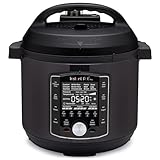
- Top Pick: Instant Pot Duo 6 Qt 7-in-1 Electric Pressure Cooker, Stainless Steel
- Best Value: Instant Pot Duo 7-in-1 Mini Electric Pressure Cooker, Slow Rice Cooker, Steamer, Sauté, Yogurt Maker, Warmer & Sterilizer, Includes Free App with over 1900 Recipes, Stainless Steel, 3 Quart
- Premium Choice: Cosori Pressure Cooker 6QT, 9-in-1, Ceramic Coating Pot, 12 Safety Features
Every kitchen gadget category has its share of overhyped products, but electric pressure cookers earn their place on the counter more honestly than most. The promise is straightforward: a sealed pot that builds steam pressure to cook dried beans in under an hour, build flavor in the same vessel you started with, and hand off the rest to a timer you can trust across dozens of cooking modes. After comparing this class of appliances across soups, grains, stews, yogurt, and straight pressure-cooking tasks, the gap between a good unit and a mediocre one is mostly about how the manufacturer handles three things: heat distribution in the inner pot, the accuracy of the pressure regulation system, and whether the control panel communicates clearly under steam and noise.
What separates the best electric pressure cookers from the rest in 2026 is less about feature count and more about execution. You can buy a nine-in-one unit that feels like a compromise in every single mode, or a seven-in-one that nails the core functions and simply does not pretend to do things it cannot. Size matters enormously here too. A three-quart unit is genuinely the right answer for a couple or a single cook who wants speed without scrubbing a massive insert, while a family of five will hate the portion math on anything smaller than six quarts. We built these rankings around how each product performs within its own size and price tier rather than forcing an apples-to-oranges comparison across the whole category.
As an Amazon Associate we earn from qualifying purchases at no extra cost to you.




Quick Picks
| Product | Best for | Price |
|---|---|---|
| Instant Pot Duo 6 Qt | Most home cooks | $89.99 |
| Instant Pot Duo Mini 3 Qt | Small households and dorm kitchens | $89.99 |
| Cosori 6 Qt | Health-conscious cooks who want ceramic coating | $89.99 |
| OLIXIS 10-in-1 3 Qt | Strict budget buyers | $39.93 |
| Instant Pot Pro 6 Qt | Upgrade buyers who want smarter controls | $129.99 |
| NEWBULIG 10-in-1 3 Qt | Budget small-space cooking | $39.95 |
| Instant Pot Duo 8 Qt | Large families and batch cooking | $129.99 |
| Midea 12-in-1 6 Qt | Feature seekers on a moderate budget | $87.19 |
How We Picked
We narrowed the field using four criteria that consistently predict real-world satisfaction: pressure accuracy and recovery time between cycles, inner pot material quality and how well it handles sauté-to-pressure transitions without hot spots, the practical clarity of the control interface under stress (steam, loud venting, a busy counter), and whether the included accessory ecosystem actually adds versatility or just pads the marketing copy. Price-to-performance within each size class mattered more than absolute price, because the best budget unit and the best premium unit can both be the right purchase depending on your household.
The 8 Best Electric Pressure Cookers in 2026
Instant Pot Duo 6 Qt
The default recommendation for a reason. The stainless inner pot handles sauté, pressure, and slow cook transitions without the flaking anxiety you get from cheaper coated vessels. Pressure comes up reliably within a few minutes and holds steady enough that recipe timing from the app matches actual results. The seven modes cover what most cooks actually use without burying the display under preset buttons you will never touch. The con is that it lacks the smart features of the Pro line, so you are working from a fixed set of timings rather than guided cooking. Skip this if you cook for fewer than two people regularly and want something that fits in a cabinet without ceremony.
- Pro: Stainless inner pot is durable and non-reactive with acidic foods.
- Pro: Enormous recipe library keeps timing guesses to a minimum.
- Con: No guided or smart cooking modes to compensate for altitude or preference adjustments.
Instant Pot Duo Mini 3 Qt
Same operating logic as the full-size Duo but in a footprint that does not dominate a half shelf. Rice, soups, and single-portion proteins come out consistently because the small volume heats faster and more evenly. The app integration with over 1900 recipes gives it a depth that budget three-quart units cannot match. The main drawback is physical: six quarts of stock or a whole chicken simply does not fit, and the smaller pot means sautéing vegetables in batches if you are making a layered dish. Skip this if you regularly cook for more than two people or want to do a full pot roast in one cycle.
- Pro: Compact size heats quickly and stores easily.
- Pro: App recipe count is the highest in this roundup.
- Con: Capacity limits force batch work for larger recipes.
Cosori 6 Qt
The ceramic coating is the headline here, and it changes how you interact with the pot. Eggs, starchy foods, and acidic sauces release cleanly without soaking, and the surface does not carry flavors between cooks. The nine functions and twelve safety features make it feel like a well-rounded unit rather than a single-trick appliance. Where it falls short is brand ecosystem depth; Cosori recipe resources are thinner than Instant Pot’s, and replacement parts can take longer to source. Skip this if you prefer the known quantities of a major-brand accessory network.
- Pro: Ceramic inner pot cleans quickly and resists sticking.
- Pro: Twelve safety features provide confidence during high-pressure cycles.
- Con: Thinner recipe and accessory ecosystem compared to market leaders.
OLIXIS 10-in-1 3 Qt
At under forty dollars, this unit does not pretend to compete on software or brand trust, but the hardware is more honest than its price suggests. It gets up to pressure reliably, the ceramic inner pot handles rice and stews without sticking, and the slow cook function is a genuine option rather than a checkbox. Build quality is the tradeoff: plastics feel thin, and the display is less legible in bright kitchens. Skip this if you want a long-term daily driver or care about app connectivity.
- Pro: Unbeatable entry price for a functional three-quart pressure cooker.
- Pro: Ceramic inner pot adds cleaning ease uncommon at this tier.
- Con: Build quality and interface clarity lag behind mid-range competitors.
Instant Pot Pro 6 Qt
The Pro line earns its price bump by replacing fixed presets with guided cooking that adjusts timing based on your preference for doneness level. The stainless inner pot now has handles for safer lifting, and the exterior stays cooler during pressure cycles than the Duo. The app integration is deeper, pulling recipes directly to the unit for step-by-step guidance. The con is that the learning curve is real; if you liked the Duo for its simplicity, the Pro can feel like overkill. Skip this if you want straightforward one-button cooking without interacting with a phone.
- Pro: Guided cooking adjusts for doneness preference rather than fixed times.
- Pro: Pot handles and cooler exterior improve daily safety.
- Con: Complexity rewards less when you just want to dump and press start.
NEWBULIG 10-in-1 3 Qt
Practically identical in function to the OLIXIS above, the NEWBULIG lands at a nearly matching price with the same ceramic inner pot and ten cooking modes. It heats rice evenly, steams vegetables without mush, and the slow cook function works for overnight stews. The difference is marginal on both sides: slightly different button layout, nearly identical interface legibility, and the same budget build quality. Skip this if you have already found the OLIXIS acceptable, since there is no meaningful reason to prefer one over the other.
- Pro: Ten functions at this price point covers nearly every use case.
- Pro: Ceramic pot releases starchy foods without scrubbing.
- Con: Virtually indistinguishable from direct competitors at this tier.
Instant Pot Duo 8 Qt
When you need capacity, nothing in this class does it more gracefully. A whole pork shoulder, a batch of bone broth for the week, or double-tray steaming all fit without the awkward packing the six-quart demands. The seven functions operate identically to the smaller Duo, and the stainless pot scales well to volume. The tradeoff is physical presence: this unit is genuinely large, takes up serious counter or storage space, and heats marginally slower when doing small jobs. Skip this if your kitchen storage is tight or you rarely cook for more than four.
- Pro: Eight-quart capacity handles batch cooking and large proteins easily.
- Pro: Function set and reliability match the proven six-quart version.
- Con: Large footprint makes storage and small-batch cooking awkward.
Midea 12-in-1 6 Qt
Midea brings twelve presets to a six-quart stainless unit at a price below the Instant Pot Duo, which is the value proposition in one sentence. The function set includes modes most competitors skip, like dedicated yogurt and sterilize cycles. Pressure regulation is solid, and the sauté function performs well enough to build a base without a separate pan. Where it stumbles is brand familiarity: fewer community recipes, less intuitive menu navigation for new users, and replacement accessory availability is narrower. Skip this if you want a huge existing recipe library to lean on during your first month of ownership.
- Pro: Twelve presets at this price is the most feature-dense option in the mid-range.
- Pro: Stainless pot construction matches premium-tier durability.
- Con: Recipe community and accessory availability are thinner than market leaders.
Buying Guide
Pot Material: Stainless vs. Ceramic vs. Nonstick
Stainless steel is the workhorse. It tolerates metal utensils, handles acidic ingredients without degrading, and survives years of use with nothing more than vinegar soaks. Ceramic coatings offer easier release and a non-reactive surface that resists flavor transfer, but they can chip or wear with rough handling over time. The practical question is whether your cooking involves lots of eggs, starchy sauces, or acidic tomatoes daily; if so, ceramic saves cleanup effort. If you mostly do pressure-only cooking with a separate sauté step, stainless remains the safer long-term bet.
Capacity: Matching Quart Size to Household Reality
Three quarts handles one to two servings per batch, ideal for rice, single proteins, or small soups. Six quarts is the standard family size, fitting a whole chicken or four to six servings of stew comfortably. Eight quarts suits batch cooking, large proteins, or households of five and up. Buy smaller than you think only if your primary use is grains and reheating; buy larger if you plan to meal prep or cook whole animals. The worst mistake is a six-quart unit gathering dust because three quarts would have fit in your cabinet.
Pressure Regulation and Recovery Time
The spec that matters most is not the peak PSI rating, which is similar across units, but how quickly the pot returns to pressure after you add cold ingredients mid-cook and how consistently it holds during long cycles. Higher-end units regulate with more precision, meaning rice does not go gummy and proteins do not turn to mush from overcorrection. If you are upgrading from a stovetop pressure cooker or an older electric model, this consistency is the single biggest improvement you will notice within the first week.
Our Verdict
Top pick: The Instant Pot Duo 6 Qt remains the most reliable default recommendation. It balances proven performance, recipe ecosystem depth, and a price that makes it an easy yes. Budget pick: The OLIXIS 10-in-1 at $39.93 delivers genuinely useful functionality for people who want to test the category before committing more money. Condition where another wins: If you cook primarily with eggs, creamy sauces, or acidic tomato-based dishes and want effortless cleanup, the Cosori 6 Qt ceramic-coating approach is the better daily experience than any stainless competitor at this tier.
FAQ
Can you use any electric pressure cooker for canning?
No. Most consumer electric pressure cookers, including every product in this roundup, are not rated for pressure canning of low-acid foods. The USDA and extension services require specific pressure levels and sustained regulation that these units are not designed to provide. Use them for cooking, steaming, and sterilizing, but stick to a dedicated pressure canner for actual food preservation.
Is a stainless inner pot always better than ceramic?
Not always, but it is more forgiving over years of use. Stainless does not wear, chip, or degrade from metal utensils or high-heat transitions. Ceramic excels at release and cleanup, especially for sticky or starchy foods, but demands gentler handling to maintain its coating. The right choice depends on whether you prioritize longevity or convenience more heavily.
Do smart cooking features actually improve results?
They help most when you are adapting existing recipes or cooking at altitude, where fixed times are less reliable. For someone following a tested recipe with standard timing, guided features add complexity without meaningful improvement. They are most valuable on the Instant Pot Pro, where the doneness preference system genuinely adjusts texture outcomes.
How long should an electric pressure cooker last?
With proper care, a quality stainless-pot unit from an established brand should last five to seven years before the sealing ring, float valve, or control board becomes the limiting factor. Budget units can last three to four years under lighter use. Replacing the silicone sealing ring every year to eighteen months prevents most early pressure loss complaints.


Write Your Review
No reviews yet. Be the first to share your experience!