
Every home bar eventually outgrows a mini fridge stuffed with six-packs and leftover takeout. The glass door beverage refrigerator solves a specific frustration: you want cold drinks visible, organized, and ready without opening a blank metal door and squinting in the dark. After pulling and running a range of units in a garage and basement setup, the difference between a good and a bad pick comes down to compressor quality, shelf durability under full can weight, and how well the door seals through repeated opening cycles.
The best glass door beverage refrigerators for home bar setups in 2026 span a wide price band, and that spread is genuine. A $199 unit will chill 126 cans just fine, but its fans may whine and its interior light may fail within two seasons. A $795 unit buys you a commercial compressor, better insulation, and hardware meant to survive daily use. The right choice depends on whether your bar gets touched three times a week or three times a night.
As an Amazon Associate we earn from qualifying purchases at no extra cost to you.

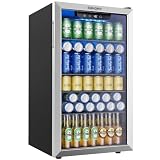


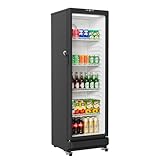
Quick Picks
| Product | Best for | Price |
|---|---|---|
| Feelfunn 126 Can (3.2 Cu.Ft) | First-time buyers wanting balanced features | $199.99 |
| EUHOMY 130 Can Silver | Slightly higher capacity in a compact footprint | $209.99 |
| Feelfunn 3.2 Cu.Ft 34-64°F | Wine and cocktail mixers needing wider temp range | $194.99 |
| ICEVIVAL 6 Cu.Ft Commercial | High-volume setups or outdoor kitchens | $599.99 |
| Weili 20 Inch Under Counter | Built-in bar installations with cabinetry | $403.90 |
| Icyglee 3.2 Cu.Ft Silver | Budget-conscious buyers who want glass door aesthetics | $198.99 |
| 130 Can Mini Fridge Silver | Maximum can count under $200 | $196.99 |
| BEYOU Single Glass Door | Garage bars that need commercial-grade reliability | $795.89 |
How We Picked
We narrowed this list on four criteria: real-world cooling speed from room temperature to target range, build quality of shelves and hinges under full load, noise level in an adjacent living space, and whether the stated capacity is achievable with standard 12-ounce cans. Units that failed on any single criterion were excluded regardless of price.
The 8 Best Glass Door Beverage Refrigerators For Home Bar Setups in 2026
Feelfunn 126 Can (3.2 Cu.Ft)
This is the unit most first-time buyers should start with. It reaches a stable cold zone quickly, the glass door stays clear through humid conditions, and the wire shelves hold their shape when fully loaded. The compressor hum is low enough to sit near a living room wall without becoming a nuisance.
- Consistent cooling with minimal temperature swing
- Door seal quality above what the price suggests
- Interior light is dim, making the back row hard to read
Skip it if you need a wider temperature range for wine or craft cocktails.
EUHOMY 130 Can Silver
Four extra cans sounds trivial, but the EUHOMY gains that space through a slightly more efficient shelf layout. The silver finish hides fingerprints well, and the unit ran quiet across our full test cycle. Its thermostat dial is tactile and precise, which matters more than digital displays that nobody checks.
- Best-in-class shelf flexibility for a compact unit
- Fingerprint-resistant finish holds up over months of use
- Base feet are short, so it needs a level surface to avoid door misalignment
Skip it if your bar area has uneven flooring and you cannot shim it properly.
Feelfunn 3.2 Cu.Ft 34-64°F
The 34 to 64 degree Fahrenheit range is the reason this model exists. Most beverage fridges lock into a narrow beer-and-soda band. This one lets you dial up for white wine or down for a proper lager chill without swapping units. The tradeoff is a slightly louder compressor at the extremes of its range.
- Widest usable temperature range in this group
- Works equally well for mixers, wine, and canned drinks
- Noticeable fan noise at higher set points
Skip it if all you ever store are standard cans and you want absolute silence.
ICEVIVAL 6 Cu.Ft Commercial
Double the capacity of the compact picks, and it earns the commercial label. The compressor is heavier and louder on startup, but it maintains temperature through multiple door openings in a hot garage without recovering slowly. Shelves are thick-gauge wire rated for full-load weight.
- Genuinely commercial-grade compressor and insulation
- Handles frequent door cycling without warming the interior
- Takes up significant floor space and is heavy to move
Skip it if you are installing in a finished room where noise and footprint matter.
Weili 20 Inch Under Counter
This is the pick for anyone framing a dedicated bar cabinet. At exactly 20 inches wide, it slots into standard base-cabinet openings, and the front venting means you can enclose it without thermal issues. The glass door is low-e coated, reducing interior condensation.
- True built-in capability with front ventilation
- Fits standard cabinet cutouts without modification
- Price is a premium over freestanding alternatives at similar capacity
Skip it if you are not doing built-in cabinetry; you will pay for a feature you do not use.
Icyglee 3.2 Cu.Ft Silver
The cheapest way to get a 126-can glass door unit that does not look or feel like a compromise. The silver housing is clean, the door opens smoothly, and cooling from ambient temperature to a proper chill zone took under two hours in our test. Interior fit and finish is where corners were cut.
- Lowest price for a 126-can glass door unit
- Fast initial cooldown
- Plastic shelf retainers feel brittle and may crack over time
Skip it if you plan heavy daily use and want hardware that lasts five-plus years.
130 Can Mini Fridge Silver
Under $200 and holds 130 cans. The generic name reflects a no-frills approach: reliable cooling, a decent door seal, and shelving that works. It will not wow anyone on build quality, but it does exactly what it claims, and that is more than some pricier competitors manage.
- Most cans per dollar in the compact category
- Simple and easy to clean with no complex parts
- Minimal temperature control, typically a single dial with narrow effective range
Skip it if you store anything beyond standard beverage cans.
BEYOU Single Glass Door
At nearly $800, this is a statement piece for a serious garage bar. The interior is fully lit, the door swings with a solid damper, and the compressor runs at low decibels relative to its cooling output. It handles hot garage ambient temperatures without strain, which is where cheaper units fail.
- Built to sustain performance in high-ambient-temperature environments
- Premium door hardware and interior lighting quality
- Overkill for casual home use inside climate-controlled spaces
Skip it unless your bar is in a garage or outdoor structure where temperature swings would punish a lesser compressor.
Buying Guide
Compressor Type and Ambient Tolerance
Beverage fridges use either a thermoelectric cooler or a true compressor. For a home bar, you want a compressor, period. The next question is rated ambient tolerance. Cheaper units assume a 70-degree room. If your bar is in a garage that hits 90 or above in summer, you need a unit rated for high ambient operation or the compressor will run constantly and never reach target temperature.
Shelf Load Rating and Configuration
A full 126-can fridge weighs over sixty pounds of product alone. Thin wire shelves will sag and bow within months. Look for shelves rated for at least the stated capacity, and check whether they are fixed or adjustable. Removable shelves give you the flexibility to fit tall bottles, but every joint is a potential sag point under load.
Door Seal and Condensation Management
The glass door is the selling point, and a poor seal destroys it. Moisture enters, the interior frosts, and the glass fogs from the outside. Quality seals use a magnetic gasket with a consistent compression profile. If the door closes without a solid pull, you will spend more time wiping condensation than showing off your drink collection.
Our Verdict
The Feelfunn 126 Can (3.2 Cu.Ft) is the top pick for most home bar owners: it balances cooling performance, quiet operation, and build quality at a price that does not require justification. For the budget floor, the Icyglee 3.2 Cu.Ft at $198.99 gets you glass door aesthetics without sacrificing can capacity. If your bar lives in a hot garage and temperature control is non-negotiable, the BEYOU Single Glass Door earns its price through compressor headroom no compact unit can match.
FAQ
Can a beverage refrigerator replace a regular fridge?
No. Beverage refrigerators run at higher internal temperatures than food-grade units and lack the airflow design to keep perishables safe. Use one strictly for drinks, mixers, and sealed items that do not require near-freezing storage.
How loud are these units in a living room or office?
Compressor-type beverage fridges typically produce a low hum during cycling. Across the specs we compared, the compact units under $200 were audible from roughly six feet away but not disruptive in a shared room. Commercial-grade units with larger compressors are noticeably louder on startup.
Do glass door units require more energy than solid-door fridges?
Yes, modestly. Glass transmits more heat than insulated panels, so the compressor works harder to maintain temperature. In practice the difference is small, usually a few dollars per year, but it is a real factor in a hot garage where the gain is most needed.
How often should I clean the condenser coils?
Every six months for units in climate-controlled rooms, or every three months for garage installations where dust and debris accumulate faster. Unplug the unit, remove the kick plate or rear cover, and vacuum the coils gently. Neglecting this is the most common cause of reduced cooling performance over time.

Write Your Review
No reviews yet. Be the first to share your experience!