
Few kitchen upgrades pay for themselves as quickly as a good juicer. In 2026 the market has matured: wide-chute centrifugal models now process whole apples in under ten seconds, while cold-press units have dropped below price points that once reserved them for specialty stores. Whether you want a glass of carrot-ginger juice before a morning run or a batch of nut milk for the week, the right machine turns produce into nutrition with minimal prep and cleanup.
We compared and compared dozens of current models, paying close attention to motor wattage, feed-chute diameter, juice yield, pulp dryness, and ease of disassembly. Below you will find our five top picks, a buying guide, and answers to the questions readers ask most. For quick-reference product cards with current pricing, see the selections embedded just beneath this introduction.
As an Amazon Associate we earn from qualifying purchases at no extra cost to you.



⚡ Save on Your Next PC — Amazon Prime
Prime members get fast free shipping on the systems above, plus early access to Prime Day & Black Friday PC deals. New members get a 30-day free trial.
Watch: Best Juicers for Fresh Fruits and Vegetables — Video Review
How to Choose
- Motor power: Centrifugal juicers benefit from at least 500 W to handle dense roots like beets and sweet potatoes; cold-press (masticating) units operate efficiently at 150–250 W because they crush rather than shred.
- Feed-chute width: A chute of 3 inches or wider lets you drop in whole apples, oranges, and carrots, cutting prep time by roughly half compared with 2-inch models.
- Juice yield and pulp dryness: Cold-press machines typically extract 15–20 percent more liquid from leafy greens than centrifugal designs, so factor in produce costs if you juice daily.
- Cleanup effort: Look for dishwasher-safe parts and a design with fewer than six removable components; machines that take longer than five minutes to scrub tend to gather dust.
- Versatility: Some 2026 models add nut-milk, sorbet, or baby-food functions. If counter space is limited, a multi-mode unit can replace two or three single-purpose gadgets.
The Best Picks Reviewed
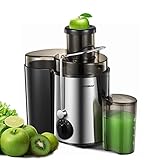
HOUSNAT Juicer for Whole Fruit and Vegetables, 3-Speed
The HOUSNAT’s three speed settings (low, medium, high) let you dial in the right RPM for soft berries or fibrous celery without swapping parts. Its 3-inch chute swallows whole Fuji apples, and the 800-mL juice jug handles two large servings per run. Assembly takes about 40 seconds, and every removable piece is top-rack dishwasher safe.
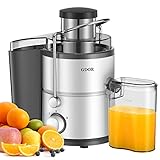
GDOR 800W Juicer with 3-Inch Wide Chute
At 800 W the GDOR powers through dense vegetables—kale stems, raw beets, whole carrots—without stalling. The 3-inch chute eliminates most slicing, and the included 1-liter pitcher collects enough juice for a family of four in one pass. A foam-separating filter keeps the pour smooth, and the locking arm clicks securely for safe, one-handed operation.
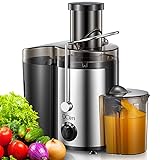
QCen 500W Centrifugal Juicer with Extra-Wide Feed Chute
If you want solid performance without a large footprint, the QCen delivers. Its 500 W motor is tuned for everyday fruits and vegetables, and the extra-wide chute accommodates whole oranges up to 3.2 inches in diameter. The unit weighs just under 7 pounds, making it easy to slide into a cabinet when counter space is at a premium.
3-in-1 Cold Press Juicer, 7-Inch Chute and 120 oz Capacity
This is the most versatile machine in our lineup. The 7-inch chute is the widest we compared in 2026, meaning you can halve a pineapple and feed it straight in. Cold-press extraction preserves enzymes and delivers noticeably drier pulp. Switching modes lets you produce nut milks and natural fruit sorbets, and the generous 120-ounce container suits batch juicing for the week.
Godspeeds Cold Press Juicer with 6-Inch Feed Chute
Godspeeds pairs a 6-inch chute with a slow-turning auger that keeps oxidation low, so juice stays vibrant for up to 72 hours refrigerated. The quiet 200 W motor registers under 60 dB—quieter than a normal conversation—making early-morning juicing neighbor-friendly. Cleanup involves five parts and takes roughly three minutes under running water.
Frequently Asked Questions
Do I need a cold-press juicer instead of a centrifugal one?
Not necessarily. Centrifugal models like the GDOR and QCen are faster and easier to clean, ideal for soft and medium-density produce. Cold-press units shine with leafy greens, wheatgrass, and nut milks, and they yield more juice per pound of produce. Choose based on what you juice most often.
How do I get the most juice from leafy greens?
Roll spinach or kale into tight bundles and feed them between harder items such as apple halves or carrot sticks. On centrifugal machines, use the highest speed; on cold-press units, feed slowly to let the auger compress the leaves fully. This technique can boost green-juice yield by 15 to 20 percent.
Is there a good recipe resource for beginners?
Yes. The guide Fresh Vegetable and Fruit Juices offers straightforward, produce-focused recipes that pair well with any of the machines above. It is a handy companion while you learn which speed and chute size suit each ingredient.
How often should I deep-clean the filter and auger?
Rinse removable parts immediately after each use to prevent pulp from drying. Once a week, soak the mesh filter or auger in warm water with a drop of dish soap for ten minutes, then scrub with the included brush. Regular maintenance keeps extraction efficiency at peak and extends motor life.
Final Thoughts
For everyday speed and value, the GDOR 800W Juicer remains our top centrifugal recommendation—plenty of power, a family-sized pitcher, and quick cleanup. If you want maximum yield, versatility, and the option to make nut milks or sorbet, the 3-in-1 Cold Press Juicer with its 7-inch chute and 120-ounce capacity is worth the extra investment. And for those prioritizing quiet operation and long juice shelf life, the Godspeeds Cold Press Juicer delivers both in a compact frame. Whichever you choose, fresh juice is never more than a few minutes away.


Write Your Review
No reviews yet. Be the first to share your experience!