
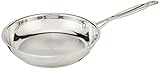
- Top Pick: Cuisinart 8-Inch Open Skillet, Stainless Steel Skillet, Large Kitchen Pan, Dishwasher Safe, Compatible with Induction, Electric, Gas Cooktops, Oven Safe Saucepan, Cool Grip Handles
- Best Value: EWFEN 12 Inch Tri-Ply Stainless Steel Frying Pan, Compatible with All Cooktops Up to 600℉, Large Frying Pan Induction-Ready Skillet, Dishwasher and Oven Safe, Even Heat, 12" Skillet
- Premium Choice: VocVoi Stainless Steel Pan, 12 Inch with Lid Stainless Steel Frying Pan
Ask ten serious home cooks which skillet they reach for most and you will start an argument. Cast iron loyalists swear by the searing heat and lifetime durability of their well-seasoned pans, while stainless steel devotees point to responsiveness, easy maintenance, and the fond that builds the base of a great pan sauce. The truth is that neither is universally better; they are different tools that excel at different jobs, and the right choice depends on how you actually cook.
This guide breaks down the real differences between stainless steel and cast iron skillets, heat behavior, maintenance, weight, and cost, so you can decide which belongs on your stove, or whether, like most experienced cooks, you should own both. Along the way we highlight standout stainless steel skillets worth considering, since a good tri-ply pan is the versatile daily driver most kitchens are missing. Here is how the two stack up.
As an Amazon Associate we earn from qualifying purchases at no extra cost to you.



⚡ Save on Your Next PC — Amazon Prime
Prime members get fast free shipping on the systems above, plus early access to Prime Day & Black Friday PC deals. New members get a 30-day free trial.
Watch: Stainless Steel vs. Cast Iron Skillets: Which is Right for You? — Video Review
How to Choose
- Heat responsiveness: Stainless steel, especially tri-ply with an aluminum core, heats and cools quickly for precise control. Cast iron heats slowly but holds heat like a furnace, ideal for a steady, screaming sear.
- Maintenance: Stainless is dishwasher-safe and needs no seasoning. Cast iron must be hand-washed, dried immediately, and re-seasoned to keep its non-stick patina and avoid rust.
- Cooking tasks: Stainless excels at pan sauces, deglazing, and delicate proteins; cast iron dominates steaks, cornbread, and anything moving from stovetop to oven.
- Weight and handling: Stainless pans are lighter and easier to maneuver, while cast iron is heavy, which some cooks find reassuring and others find fatiguing.
- Reactivity: Stainless is non-reactive, so it handles acidic tomato and wine sauces without issue. Bare cast iron can react with acidic foods and strip seasoning.
The Best Picks Reviewed
EWFEN 12-Inch Tri-Ply Stainless Steel Frying Pan
At around $17, the EWFEN tri-ply is the value standout, with a full aluminum core sandwiched in stainless for even heating up to 600 degrees Fahrenheit. It is oven- and dishwasher-safe and induction-ready, making it a large, versatile daily driver that punches well above its price for searing, sauteing, and sauce work.
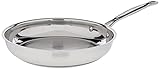
Cuisinart 10-Inch Open Skillet
Cuisinart’s classic stainless skillet delivers the brand’s reliable build with cool-grip handles and compatibility across induction, electric, and gas cooktops. The 10-inch size is the everyday workhorse most cooks use most, and its non-reactive surface makes it perfect for the deglazing and pan sauces where stainless shines over cast iron.
Cuisinart 8-Inch Open Skillet
For eggs, single servings, and quick jobs, the 8-inch Cuisinart at under $20 is the nimble companion to a larger pan. Its light weight and fast heat response highlight exactly what stainless does better than heavy cast iron: precise, responsive cooking for delicate tasks.
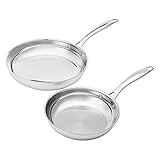
Amazon Basics Stainless Steel Frying Pan Set (8 and 10-Inch)
This two-piece set is the smart starter buy, pairing the two most-used skillet sizes in even-heating, oven-safe, induction-compatible stainless for around $30. For a cook building a kitchen from scratch, it covers most stovetop tasks in one affordable purchase.
Kordichef 10-Inch Tri-Ply Stainless Steel Frying Pan
The Kordichef tri-ply undercuts most competitors while offering PFOA-free construction, a stay-cool handle, and compatibility across induction, ceramic, and gas. It is the budget tri-ply pick for cooks who want the even heating of a clad pan without spending on a premium brand.
Frequently Asked Questions
Which is better for searing steak, stainless or cast iron?
Cast iron traditionally wins for steak because it holds intense heat and delivers a deep, even crust without dropping temperature when the meat hits the pan. That said, a heavy tri-ply stainless skillet preheated properly can sear beautifully and makes a better pan sauce afterward.
Is stainless steel or cast iron easier to maintain?
Stainless steel is far lower maintenance: it is dishwasher-safe, needs no seasoning, and will not rust. Cast iron requires hand-washing, immediate drying, and periodic re-seasoning to protect its non-stick patina, which some cooks enjoy and others find tedious.
Can I use stainless steel on an induction cooktop?
Yes, virtually all stainless steel skillets, including all the picks here, are induction-compatible because stainless is magnetic. Cast iron works on induction too. Both are among the most cooktop-flexible materials you can buy.
Do I really need both types?
Many experienced cooks do keep both, using cast iron for high-heat searing and baking and stainless for sauces, acidic dishes, and delicate proteins. If you can only own one, a versatile tri-ply stainless skillet handles the widest range of everyday cooking.
Final Thoughts
If you want one versatile, low-maintenance pan for everyday cooking, sauces, and acidic dishes, a tri-ply stainless steel skillet like the EWFEN 12-inch or a Cuisinart is the right call. If your priority is the deepest sear and lifetime durability, cast iron earns its place. The honest answer for most kitchens is to own both and let each do what it does best, but if you are starting out, a quality stainless skillet is the more flexible first purchase.








Write Your Review
No reviews yet. Be the first to share your experience!