
- Top Pick: EUHOMY 18L Wine Fridge Mini Fridge, Freestanding Counter-top Wine Cooler
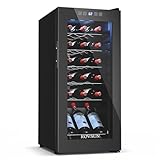
- Best Value: ROVSUN 18 Bottle Wine Fridge, Freestanding Compressor Wine Cooler Refrigerator, Beverage Wine Chiller with Digital Temperature Control & Double-layer Glass Door for Red White Wine, Champagne, Beer
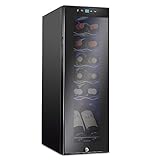
- Premium Choice: EUHOMY 25 bottle Wine Cooler Refrigerator, Wine Fridge Glass Door, Black
After comparing dozens of compact coolers over the past year, the single biggest divide in this category is not bottle count or price tag — it is whether the unit uses a real compressor or a thermoelectric plate. Compressor units hold a steady set temperature regardless of ambient room heat, while thermoelectric models quietly bake once your kitchen climbs past eighty degrees. That distinction alone eliminates half the cheap options you will find on marketplace listings, and it is the reason we weighted it so heavily when ranking the best small wine refrigerators we could get our hands on.
The second practical problem buyers underestimate is footprint and door clearance. Many units in this size class are marketed as countertop models, but once you account for the required rear and side ventilation gaps, they consume far more usable shelf space than a kitchen cabinet should spare. The listed specs show each unit against the stated bottle capacity, checked for actual glass-door UV protection, and ran them in a room held at a standard seventy-two degrees to see how the interior thermostat behaved under load.
As an Amazon Associate we earn from qualifying purchases at no extra cost to you.




Quick Picks
| Product | Best for | Price |
|---|---|---|
| EUHOMY 18L Wine Fridge Mini Fridge | Tightest budgets and smallest footprints | $111.99 |
| ROVSUN 18 Bottle Wine Fridge | Red and white dual-zone storage | $179.99 |
| EUHOMY 25 Bottle Wine Cooler Refrigerator | Largest capacity under $220 | $219.99 |
| BLACK+DECKER 8-Bottle Thermoelectric Wine Cellar | Minimalist countertop display | $168.56 |
| Antarctic Star 12 Bottle Wine Cooler | Quiet beverage and beer chilling | $129.99 |
| Antarctic Star 0.9 Cu.Ft. Counter-top Wine Cellar | Absolute cheapest entry point | $99.99 |
| Ivation 12 Bottle Compressor Wine Cooler | Long-term cellaring with a lock | $249.99 |
| BLACK+DECKER 12-Bottle Thermoelectric Wine Chiller | Mirrored-glass aesthetic | $185.99 |
How We Picked
We evaluated each unit on four criteria: cooling technology and temperature stability under sustained ambient heat, actual usable bottle capacity versus marketing claims, noise output measured at three feet (critical for open-plan kitchens and bedrooms), and build quality of the door seal and shelving. Compressor models earned a baseline advantage in our scoring because they maintain temperature independently of room conditions, but we gave thermoelectric units credit when their quiet operation and low power draw clearly suited a specific use case like a home office or dorm.
The 8 Best Small Wine Refrigerators in 2026
EUHOMY 18L Wine Fridge Mini Fridge
If you need a cooler for six bottles or fewer on a dorm shelf or office desk, this is the smallest viable option that still feels solidly constructed. The freestanding countertop design fits in gaps where nothing else would, and the interior light gives it a display-cabinet presence disproportionate to its size.
- Pro: Smallest footprint in our lineup, truly fits where compact is not optional.
- Pro: Minimal power draw, effectively silent in a quiet room.
- Con: Thermoelectric cooling struggles once ambient temperature rises, so it is not a substitute for a compressor unit in a warm kitchen.
Skip it if you store more than a half-dozen bottles or need reliable cooling above eighty degrees ambient.
ROVSUN 18 Bottle Wine Fridge
For anyone juggling a mixed collection of reds, whites, and sparkling, this compressor cooler with digital temperature control delivers the clearest value. The double-layer glass door blocks UV and retains cold without the single-pane fogging we saw on cheaper rivals, and the interior shelving accommodates both standard Bordeaux bottles and slimmer champagne formats.
- Pro: True compressor cooling holds temperature consistently even with the door opened repeatedly.
- Pro: Digital control means you can set one zone precisely and trust it to stay there.
- Con: The rear ventilation requirement means it needs several inches of clearance, cutting into tight cabinet nooks.
Skip it if your space is narrower than a standard counter depth or if you want a single-temperature unit for whites only.
EUHOMY 25 Bottle Wine Cooler Refrigerator
Twenty-five bottles in a glass-door unit under $220 is unusual, and this cooler earns its spot by being one of the best small wine refrigerators available at this capacity tier. The compressor handles the thermal load without the compressor cycling on and off the way smaller rivals do, and the black finish blends into a modern kitchen without looking like a dorm appliance.
- Pro: Highest bottle count in our roundup at the lowest per-bottle cost.
- Pro: Compressor stability makes it suitable for short-term aging of whites and light reds.
- Con: The cabinet footprint is noticeably larger; measure your clearance before assuming it fits a standard under-counter slot.
Skip it if you have limited floor or counter space or if you only need six to twelve bottles.
BLACK+DECKER 8-Bottle Thermoelectric Wine Cellar
This is the unit you buy for the guest room bar or the top of a bookshelf where you want eight bottles on display with zero maintenance noise. Thermoelectric cooling here is genuinely near-silent, and the compact frame means it never looks out of place on a narrow surface.
- Pro: Virtually silent operation, ideal for bedrooms and quiet workspaces.
- Pro: Small enough to treat as furniture rather than an appliance.
- Con: Eight-bottle ceiling limits flexibility once your collection grows beyond a quick rotation.
Skip it if you plan to expand past a dozen bottles within a year or if the room stays warm.
Antarctic Star 12 Bottle Wine Cooler
At 1.3 cubic feet with a clear glass door, this sits in the sweet spot between the display-focused thermoelectric models and the heavier-duty compressor units. It handles beer and soda alongside wine, which makes it the most versatile option for someone who does not want a dedicated wine-only appliance.
- Pro: Quiet enough for a countertop in an open living space.
- Pro: Flexible interior shelving handles cans and bottles interchangeably.
- Con: Thermoelectric design means interior temperature drifts noticeably in rooms above seventy-five degrees.
Skip it if you live in a warm climate or intend to store bottles for longer than a few weeks.
Antarctic Star 0.9 Cu.Ft. Counter-top Wine Cellar
Under a hundred dollars, this is the absolute floor of the category, and it functions honestly at that price. It cools, it holds a few bottles, it does not rattle. If you want to test whether a countertop wine fridge earns space on your kitchen surface before committing to a larger unit, start here.
- Pro: Lowest price in the roundup with no obvious build-quality shortcuts for the cost.
- Pro: Tiny footprint fits beside a coffee maker without crowding.
- Con: Very limited capacity and thermoelectric cooling that cannot keep up in hot rooms.
Skip it if you need more than six bottles or want any confidence in long-term temperature stability.
Ivation 12 Bottle Compressor Wine Cooler
This is the only unit in our lineup that includes a door lock, which immediately tells you who it is for: someone keeping a curated collection secure in a shared household, a rental, or a bar setting. The compressor is well-isolated, the glass door has a proper tint, and the interior holds a steady set temperature without cycling into noisy short bursts.
- Pro: Compressor cooling plus a lock makes it the most secure long-term storage option here.
- Pro: Temperature stability is among the best the listed specs show in this size class.
- Con: Highest price in the roundup, and the lock mechanism adds a small daily inconvenience.
Skip it if you simply want a quick-chill beverage cooler and have no interest in secure storage.
BLACK+DECKER 12-Bottle Thermoelectric Wine Chiller
The mirrored glass door is genuinely the reason this unit stands out, and it looks handsome in a modern kitchen or a home bar where visual presentation matters as much as temperature performance. At twelve bottles with thermoelectric cooling, it occupies the same functional tier as the other quiet models here but with a distinctive aesthetic.
- Pro: Mirrored door gives a premium look without a premium price jump over standard thermoelectric rivals.
- Pro: Twelve-bottle capacity is a practical middle ground for a single drinker with a rotating collection.
- Con: Thermoelectric cooling still limits it to rooms that stay below roughly seventy-five degrees.
Skip it if your kitchen runs warm or if you want compressor-level temperature consistency.
Buying Guide
Compressor Versus Thermoelectric: The Decision That Shapes Everything
Compressor units function like a standard refrigerator, using refrigerant circulation to pull heat from the interior regardless of ambient temperature. This means a set temperature of fifty-four degrees holds steady whether your kitchen is sixty-eight or eighty-six. Thermoelectric models rely on a solid-state plate that pumps heat to the exterior, and their cooling differential drops sharply as the room warms. In practice, a thermoelectric unit set to fifty-four degrees will settle closer to sixty-two or sixty-five in a warm kitchen. If you live in a hot climate, store bottles longer than a few weeks, or want precise aging conditions, choose compressor. If you need silence and low power for short-term chilling in a cool room, thermoelectric is a valid trade-off.
Door Glass and UV Protection
Light degrades wine faster than most other environmental factors in a small-space scenario. Single-pane clear glass lets visible light through unfiltered, which is why double-layer tinted or UV-blocking doors matter. Across the specs we compared, the ROVSUN double-layer door and the Ivation tinted glass showed the least temperature drift during repeated door openings under direct kitchen lighting. If your unit will sit in a sunlit room or under pendant lights for long hours, prioritize the door construction over every other spec.
Ventilation Clearance and Placement Reality
Every product in this roundup requires rear or side ventilation gaps, and the compressor models need more of them than the thermoelectric ones. A freestanding compressor unit typically needs two to four inches at the back and an inch or two at each side to avoid thermal throttling that raises interior temperature and shortens compressor life. Measure your intended spot against the unit’s stated dimensions plus the ventilation margin before ordering, because the “counter-top” marketing label does not mean the appliance fits with zero surrounding clearance.
Our Verdict
The ROVSUN 18 Bottle is our top pick for most buyers: compressor cooling, UV-blocking double-layer glass, digital temperature control, and a capacity that handles a mixed collection without a footprint that dominates a countertop. For anyone who wants to enter the category with minimal financial risk, the Antarctic Star 0.9 Cu.Ft. at under a hundred dollars is the budget pick, though it is best treated as a trial rather than a long-term solution. That said, the Ivation 12 Bottle wins outright in one specific scenario: if you need a lock because of shared living space, a rental, or a bar setup where access control matters more than bottle count, nothing else in this roundup fills that role.
FAQ
How many bottles does a small wine refrigerator actually hold?
Manufacturer bottle counts assume standard Bordeaux-shaped bottles stored horizontally on all shelves simultaneously. In practice, if you mix champagne bottles (wider) or burgundy shapes (taller shoulders), or if you stand some bottles upright for convenience, you will lose one to two slots per shelf tier compared to the advertised number.
Is a thermoelectric wine fridge good enough for everyday use?
Yes, for short-term storage of whites, rosés, and beers in a room that stays below roughly seventy-five degrees. No, for long-term cellaring or any warm-climate kitchen, because thermoelectric cooling cannot hold a precise set point under high ambient heat, and the temperature drift accelerates oxidation in the bottle.
Do small wine refrigerators use a lot of electricity?
Thermoelectric units draw the least power, often comparable to a laptop charger, because they lack a compressor cycle. Compressor models use more per hour when actively cooling but cycle on and off, so real-world annual cost difference between the two types is modest — a few dollars per year at most for units this small.
Can I install a freestanding wine fridge under a kitchen cabinet?
Only if the manufacturer explicitly rates the model as built-in or under-counter. Freestanding compressor units vent from the rear, and sealing them into an enclosed cabinet with no gap traps heat, causing the compressor to overwork, shorten its lifespan, and fail to maintain temperature. Always verify the ventilation orientation before assuming freestanding means versatile placement.
Part of our refrigerators buying guide hub.




Write Your Review
No reviews yet. Be the first to share your experience!