
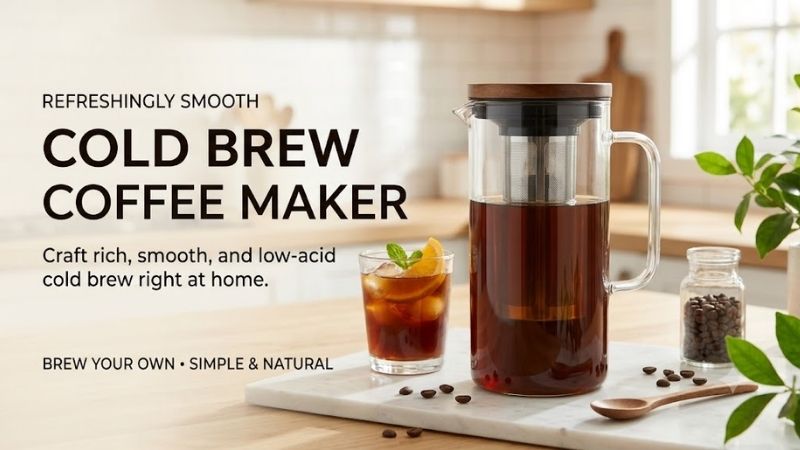
A cold brew coffee maker should simplify long-steep coffee without leaving messy grounds, sediment, or an awkward container in your refrigerator. We compare six brewers for concentrated and ready-to-drink coffee, examining capacity, filtration, storage, cleanup, and how each design fits your preferred serving size and brewing routine.
Quick Verdict: Best Cold Brew Coffee Makers
Best Overall: OXO Brew Cold Brew Coffee Maker. Its Rainmaker water-distribution component, reusable stainless steel mesh filter, and controlled concentrate-release mechanism provide a practical combination for people regularly preparing several servings.
For smaller refrigerators, the OXO Compact offers a more manageable brewing system. The Takeya Deluxe works as a convenient pitcher-style option, while the Toddy Cold Brew System suits people who prioritize concentrate preparation and fine filtration.
Quick Comparison Table
| Cold Brew Maker | Best For | Brewing Format | Main Advantage | Main Limitation |
|---|---|---|---|---|
| OXO Brew Cold Brew Coffee Maker | Best overall | Countertop concentrate brewer | Rainmaker and controlled draining | Requires counter height |
| OXO Compact Cold Brew Coffee Maker | Small spaces | Compact concentrate brewer | Nesting design and glass storage carafe | Smaller batches |
| Takeya Deluxe Cold Brew Coffee Maker | Simple refrigerator brewing | Filter-in-pitcher system | Easy preparation and storage | Filter removal can be messy |
| Toddy Cold Brew System | Traditional concentrate brewing | Immersion with filtration | Large concentrate-oriented batches | Separate filters and accessories |
| KitchenAid Cold Brew Coffee Maker | Convenient dispensing | Glass-and-steel dispenser | Built-in tap for serving | Heavier storage vessel |
| Hario Mizudashi Cold Brew Coffee Pot | Ready-to-drink coffee | Pitcher with mesh filter | Straightforward Japanese-style immersion | Less suitable for very large concentrate batches |
How We Selected These Cold Brew Coffee Makers
Cold brew equipment should be evaluated according to how it handles three stages: steeping, separating coffee from grounds, and storing the finished beverage.
We considered the following criteria.
Filtration effectiveness. A poorly designed filter can leave sediment in the beverage or require additional straining.
Brewing method. Some products are designed around producing concentrated coffee for later dilution. Others function more like ready-to-drink pitchers.
Working capacity. The amount of water a brewing vessel holds is not the same as the final yield, because coffee grounds retain liquid.
Storage practicality. A tall or wide vessel may be inconvenient in a crowded refrigerator.
Cleanup. Wet coffee grounds can be messy. Filters, openings, and detachable parts significantly affect maintenance.
Material and construction. Glass, plastic, stainless steel, silicone seals, and replacement-filter availability influence durability and convenience.
We did not independently measure extraction yield, caffeine concentration, filtration performance, or the acidity of finished coffee. Recommendations reflect published design characteristics and practical use.
Detailed Reviews of the Best Cold Brew Coffee Makers
1. OXO Brew Cold Brew Coffee Maker — Best Overall
Best For: People who regularly prepare cold brew concentrate for several days of drinks.
Why We Picked It
The full-size OXO brewer separates steeping and dispensing into distinct operations.
Instead of lifting a dripping filter bag or manually pouring through a strainer, users release the concentrate into a glass carafe after steeping.
That makes it a practical choice for people who brew regularly.
Key Specifications
- Product: OXO Brew Cold Brew Coffee Maker
- Brewing container capacity: Approximately 40 oz
- Water distribution: Rainmaker component
- Filtration: Reusable stainless steel mesh
- Collection vessel: Borosilicate glass carafe
- Dispensing: Controlled release switch
- Operation: No electricity
Features and Benefits
The Rainmaker component distributes water across the coffee bed rather than concentrating the initial pour in one area.
The release switch allows the finished beverage to drain into a separate carafe.
A reusable filter reduces the need to purchase disposable paper filters for every batch.
The glass carafe includes markings that help when portioning concentrate.
Performance and Practical Use
This brewer suits someone making cold brew for several workdays.
A large batch can be diluted differently depending on whether the user wants black coffee, iced milk coffee, or a stronger drink.
However, a concentrate-oriented design requires learning the correct dilution ratio.
Serving the concentrate undiluted can result in a much stronger beverage than intended.
The brewer also occupies vertical space during filtration, so cabinet and counter clearance matter.
What Makes It Different
The controlled draining system reduces the need for awkward pouring or moving wet coffee grounds directly over a drinking container.
Pros
- Large concentrate-oriented format.
- Reusable filter.
- Controlled draining.
- Separate storage carafe.
- No electrical power.
Cons
- Taller than simple pitchers during use.
- Several components require washing.
- Final concentrate yield is smaller than water input.
Buy If: You routinely prepare multi-day supplies of cold brew concentrate.
Skip If: You only want one small refrigerated pitcher of ready-to-drink coffee.
2. OXO Compact Cold Brew Coffee Maker — Best for Small Spaces
Best For: Apartments and smaller households that want concentrate without a large brewing system.
Why We Picked It
The Compact retains the useful Rainmaker-and-filter approach of the larger OXO model while reducing the storage footprint.
Key Specifications
- Brewing container: 24 oz
- Suggested coffee load: Approximately 6 oz / 175 g in OXO’s recipe
- Water input in referenced recipe: 24 oz
- Typical concentrate yield: Approximately 16 oz
- Filter: Reusable stainless steel mesh
- Collection vessel: Glass carafe
- Storage: Nesting components
Features and Benefits
The brewing chamber sits above the receiving carafe when it is time to drain.
The nesting arrangement helps reduce storage space when the brewer is not in use.
The glass carafe can hold finished concentrate in the refrigerator.
Performance and Practical Use
For one person drinking diluted cold brew over several days, the Compact may be sufficient.
Because the grounds retain part of the brewing water, the finished concentrate volume is lower than the 24-ounce water input.
That distinction matters when estimating how many drinks a batch will make.
Users should also consider that coarse-ground coffee takes up substantial space, even before water is added.
What Makes It Different
It provides a more manageable concentrate-brewing setup for kitchens where a full-size brewer is impractical.
Pros
- Compact footprint.
- Concentrate-oriented design.
- Reusable filter.
- Nesting storage.
Cons
- Smaller finished yield.
- Requires separate dilution.
- Several parts still need cleaning.
Buy If: You want concentrate without a large cold brew station.
Skip If: You routinely serve cold brew to a group.
3. Takeya Deluxe Cold Brew Coffee Maker — Best Pitcher-Style Option
Best For: Beginners who want a straightforward pitcher for brewing and storing cold coffee.
Why We Picked It
The Takeya Deluxe simplifies cold brew around a familiar arrangement: add coffee to a filter basket, fill the pitcher, and let the beverage steep.
Key Specifications
- Brewing method: Immersion
- Vessel: Pitcher-style
- Filter: Removable fine-mesh insert
- Lid: Airtight-style closure
- Material: Plastic pitcher construction
- Capacity: Available in different sizes
- Electrical power: None
Features and Benefits
The pitcher functions as both brewing vessel and serving container.
A removable filter basket holds grounds while the coffee steeps.
After brewing, users can remove the filter and keep the beverage refrigerated.
Performance and Practical Use
This setup is useful for people who want ready-to-drink cold brew and do not need a separate dispensing stand.
However, the internal filter basket can be messy when lifted because wet grounds retain water.
The amount of coffee loaded into the filter, water level, and steeping time all affect final concentration.
Users should avoid treating a nominal pitcher capacity as the exact finished beverage yield.
What Makes It Different
Its integrated pitcher format reduces the number of separate vessels required.
Pros
- Simple brewing process.
- Refrigerator-friendly format.
- Removable filter.
- No electrical components.
Cons
- Removing wet grounds can be messy.
- Working capacity varies with grounds.
- Filtration may not satisfy everyone who prefers completely sediment-free coffee.
Buy If: You want a simple cold brew pitcher with minimal equipment.
Skip If: You prioritize precision concentrate dispensing.
4. Toddy Cold Brew System — Best for Traditional Concentrate
Best For: Coffee drinkers who prepare larger batches of cold brew concentrate using a classic immersion method.
Why We Picked It
The Toddy system is built around steeping grounds in a dedicated container and separating the resulting concentrate into a storage vessel.
Key Specifications
- Brewing method: Extended immersion
- Intended beverage: Cold brew concentrate
- Filtration: Toddy-compatible filtration components
- Collection: Separate storage decanter
- Heating: None
- Brewing time: Recipe-dependent extended steeping
Features and Benefits
The Toddy uses a purpose-built brewing container rather than a household jar.
Its filtration system aims to separate fine coffee particles from the finished concentrate.
The resulting liquid can be diluted with water or milk.
Performance and Practical Use
The Toddy is particularly suitable for someone who prefers preparing one substantial batch rather than brewing every day.
However, cleaning and replacing filtration components add recurring responsibilities.
The coffee-to-water ratio must be matched to the system’s instructions. A concentrate recipe should not be confused with a ready-to-drink recipe.
What Makes It Different
Its traditional immersion-and-filtration system emphasizes concentrate preparation rather than compact refrigerator storage.
Pros
- Designed for concentrate.
- Established brewing method.
- Suitable for repeat batch preparation.
Cons
- Filter management.
- Separate collection vessel.
- Less compact than a narrow pitcher.
- Requires planning ahead.
Buy If: You regularly make batches of concentrate and prefer dedicated filtration.
Skip If: You want one small pitcher ready to pour.
5. KitchenAid Cold Brew Coffee Maker — Best for Easy Dispensing
Best For: People who want to store cold brew in the refrigerator and serve directly from a built-in tap.
Why We Picked It
The KitchenAid uses a dispensing arrangement that can reduce the need to lift and tilt a heavy beverage container each time you want coffee.
Key Specifications
- Brewing method: Immersion
- Construction: Glass and stainless steel components
- Filter: Removable stainless steel steeper
- Dispensing: Integrated tap
- Storage: Refrigerator-compatible form
- Electrical power: None
Features and Benefits
The tap is the major advantage.
Users can place the vessel on a suitable refrigerator shelf and dispense coffee into a glass without repeatedly lifting the entire container.
The removable steeper holds coffee grounds during preparation.
Performance and Practical Use
This is convenient for people who drink cold brew frequently throughout the week.
However, the machine’s weight increases when filled. Shelf depth and support must be considered.
The dispensing tap also requires appropriate cleaning to prevent coffee residue accumulation.
What Makes It Different
Its design prioritizes serving convenience after extraction, not just the brewing process.
Pros
- Built-in dispenser.
- Durable-feeling material combination.
- Useful for multiple servings.
- No electricity.
Cons
- Heavier than plastic pitchers.
- Requires suitable refrigerator space.
- Tap cleaning adds maintenance.
Buy If: You want cold brew ready to dispense from your refrigerator.
Skip If: You need the lightest, easiest-to-store vessel.
6. Hario Mizudashi Cold Brew Coffee Pot — Best for Ready-to-Drink Coffee
Best For: People who want a straightforward Japanese-style cold brew pitcher for daily drinking.
Why We Picked It
The Hario Mizudashi offers a simple immersion approach with an integrated mesh filter.
It is particularly appealing to users who prefer making an ordinary refrigerated coffee beverage rather than managing a concentrated brew.
Key Specifications
- Brewing method: Cold immersion
- Filter: Reusable mesh insert
- Vessel: Glass pitcher
- Capacity: Multiple model sizes
- Operation: No electricity
- Primary format: Ready-to-drink cold coffee
Features and Benefits
The coffee grounds remain contained inside the removable filter.
The glass vessel provides a straightforward serving format.
Users can experiment with coffee concentration by adjusting the recipe while keeping the core brewing process simple.
Performance and Practical Use
The Mizudashi is well suited to people who prefer lower-effort cold brew at home.
It may require additional filtration if a completely sediment-free result is desired.
The glass container also needs careful handling during storage and cleaning.
What Makes It Different
It emphasizes simplicity and ready-to-drink convenience rather than separate concentrate collection.
Pros
- Straightforward preparation.
- Glass serving pitcher.
- Reusable filter.
- Compact configurations available.
Cons
- Glass can break.
- Smaller models limit batch size.
- Less specialized for concentrate than OXO or Toddy.
Buy If: You want uncomplicated cold brew you can pour directly from a pitcher.
Skip If: You primarily make strong concentrate for later dilution.
Cold Brew Coffee Maker Buying Guide
1. Concentrate vs. Ready-to-Drink Coffee
This is the most important distinction in the category.
Concentrate is brewed at a relatively high coffee-to-water ratio and is usually diluted before drinking.
Ready-to-drink cold brew is prepared closer to the desired final drinking strength.
Neither is inherently better.
Concentrate offers flexibility: the same batch can be diluted with water, milk, or ice in different proportions.
Ready-to-drink coffee reduces preparation when serving.
2. Cold Brew Is Not Iced Coffee
Cold brew uses cool or cold water for extended extraction.
Iced coffee is typically prepared using hot extraction and then cooled or poured over ice.
The flavor profiles can differ because temperature and contact time affect which compounds dissolve from coffee.
A machine with an Over Ice button does not necessarily make cold brew.
3. Choose an Appropriate Grind
Cold brew recipes commonly use coarse-ground coffee.
Very fine grounds can create sediment and make filtration more difficult.
However, grind recommendations vary by brewing system.
Follow the product instructions and adjust carefully rather than assuming the coarsest grinder setting is automatically ideal.
4. Coffee-to-Water Ratio
Different recipes produce different concentrations.
A common starting point for ready-to-drink cold brew is approximately 1 part coffee to 8–12 parts water by weight, although exact recipes vary.
Concentrate often uses a stronger ratio.
For example, 100 grams of coffee with 800 grams of water creates a 1:8 input ratio.
The final beverage yield will be lower than the water input because wet grounds retain liquid.
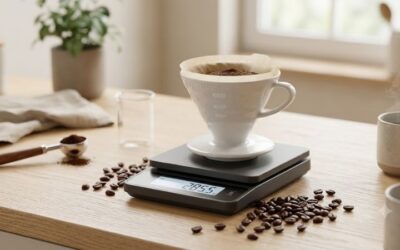
Use a scale for consistency.
5. Steeping Time
Cold brew generally requires several hours.
Many recipes fall within a broad range of approximately 12–24 hours, depending on temperature, grind size, and concentration.
Longer is not automatically better.
Excessively long steeping may produce flavors that you do not enjoy.
Follow the brewer’s instructions and experiment systematically.
6. Countertop vs. Refrigerator Brewing
Some manufacturers allow brewing at room temperature, while others recommend refrigeration.
For safe food handling and predictable storage, use an approved recipe and follow the manufacturer’s instructions.
Refrigeration is especially practical when preparation includes milk or ingredients beyond coffee and water.
Do not assume all homemade cold brew has an identical safe storage life.
7. Filter Design
Reusable mesh filters reduce disposable waste but may allow very fine particles through.
Paper and specialty filtration can produce a cleaner beverage, though replacements add ongoing cost.
Evaluate how easy the filter is to empty and clean.
8. Capacity and Yield
A 32-ounce brewing vessel does not necessarily deliver 32 ounces of finished coffee.
Coffee grounds absorb liquid.
Concentrate also needs dilution, so its serving count depends on how strong you make each drink.
Estimate your actual weekly consumption before choosing a capacity.
9. Materials
Glass is easy to inspect and generally resists retaining coffee aromas, but it can break.
Plastic is lightweight and practical for refrigerator storage.
Stainless steel can offer durability and useful filtration components.
Consider cleaning access and replacement parts rather than choosing material based only on appearance.
10. Storage and Freshness
Transfer finished coffee into a clean, closed container and refrigerate according to appropriate instructions.
Do not add milk to an entire stored batch unless following suitable food-storage guidance.
If coffee develops unexpected odor, visible growth, or other signs of spoilage, discard it.
11. Caffeine Strength
Cold brew is not automatically lower in caffeine than hot coffee.
Caffeine concentration depends on bean type, coffee dose, extraction, serving size, and dilution.
Concentrate can be especially strong when consumed without dilution.
12. Cleaning the Brewer
Wet coffee grounds and residue can accumulate inside filters, seals, and dispensing taps.
Clean these components after each batch and allow them to dry appropriately.
Avoid using cleaning products or dishwasher cycles not approved for the specific vessel.
Common Cold Brew Problems
Coffee Tastes Weak
Check the coffee-to-water ratio, steeping time, and dilution. You may be preparing a ready-to-drink recipe while expecting concentrate.
Coffee Tastes Harsh
Consider roast selection, grind, brewing duration, and concentration. Change one variable at a time.
There Is Too Much Sediment
Try a more appropriate grind, allow grounds to settle, or use a supplementary filter if compatible with the recipe.
The Batch Yields Less Than Expected
Coffee grounds retain water. This is normal and should be considered when planning serving quantities.
Coffee Takes Too Much Refrigerator Space
A compact brewer or concentrated recipe may fit better than a large ready-to-drink pitcher.
Frequently Asked Questions
What is the best cold brew coffee maker overall?
The OXO Brew Cold Brew Coffee Maker offers a useful combination of controlled draining, reusable filtration, and concentrate preparation.
Can you make cold brew in a regular jar?
Yes, with an appropriate recipe and method for separating grounds. Dedicated cold brew makers mainly improve filtration and serving convenience.
How long should cold brew steep?
Many recipes use approximately 12–24 hours, but the correct duration depends on the brewer and preparation method.
Is cold brew stronger than regular coffee?
It can be, especially when prepared as concentrate. Final caffeine content depends on dose, volume, and dilution.
What coffee beans are best for cold brew?
Many roast levels can work. Choose according to your preferred flavor and use a suitable grind.
Do you need special filters?
Not always. Some pitchers use reusable mesh, while other systems require specialized filters.
Can you heat cold brew coffee?
Yes. Properly prepared cold brew concentrate can be diluted with hot water, although its flavor will differ from freshly brewed hot coffee.
How long does homemade cold brew last?
Follow the brewer’s food-storage instructions and refrigerate promptly. Shelf life varies with preparation, sanitation, and added ingredients.
Conclusion
The OXO Brew Cold Brew Coffee Maker is our best overall choice for preparing concentrated coffee with controlled draining and reusable filtration. Choose OXO Compact for smaller spaces, Takeya Deluxe for easy pitcher brewing, Toddy for traditional concentrate, or KitchenAid for tap dispensing. Match capacity to your weekly coffee consumption.

Write Your Review
No reviews yet. Be the first to share your experience!