
Opening a small ice cream shop, artisanal gelato window, or adding a premium dessert program to an existing café requires balancing capital expenditure with operational reliability. In 2026, the landscape of commercial dessert equipment offers incredible variety, but wading through technical specifications can quickly overwhelm even experienced operators. Choosing the right machine is not simply about buying the most expensive option on the market; it is about matching your specific menu, customer volume, and spatial constraints to a reliable piece of hardware that performs consistently under pressure.
- Understanding Batch Freezers Versus Soft Serve Units
- Evaluating Output Capacity and Peak Hour Demands
- Navigating Electrical and Plumbing Requirements
- Air-Cooled Versus Water-Cooled Systems
- Prioritizing Ease of Cleaning and Sanitation
- Avoiding Common Sizing and Investment Mistakes
- Related Guides
- FAQ
- Related Guides
Many first-time buyers make the critical mistake of focusing entirely on the upfront purchase price while ignoring utility requirements, daily cleaning demands, and batch turnaround rates. A machine that looks affordable on paper can quickly become a financial burden if it requires expensive electrical upgrades, constant maintenance, or fails to keep up during weekend rushes. To help you navigate this major investment, we will break down the exact metrics that matter, highlight common pitfalls, and guide you through selecting a machine that supports sustainable business growth.
As an Amazon Associate we earn from qualifying purchases at no extra cost to you.
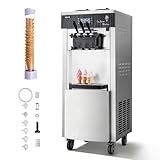
Understanding Batch Freezers Versus Soft Serve Units
The single most foundational decision you will make is choosing between a hard-scoop batch freezer and a soft serve machine. While both produce frozen dairy treats, their operational workflows, ingredients, and customer appeal differ entirely. Batch freezers introduce air more slowly and freeze the mix into a dense, scoopable consistency ideal for traditional ice cream, gelato, and sorbet. They require you to extract the finished product into pans, harden it in a blast chiller or display case, and serve it with a scoop.
Soft serve machines, on the other hand, pump liquid mix directly from a hopper into a freezing cylinder, whipping in air and dispensing it continuously on demand. For small shops with limited square footage and high turnover, soft serve can maximize speed of service with minimal labor. However, batch freezers offer much greater menu flexibility, allowing you to rotate seasonal flavors, experiment with mix-ins, and command higher price points for artisanal scoops. Always align your machine type with your core concept rather than trying to force a hybrid approach without adequate space.
Evaluating Output Capacity and Peak Hour Demands
Manufacturers often advertise maximum hourly output, but these numbers can be deeply misleading in a real-world retail environment. Peak hour demand dictates your true equipment needs. If your shop experiences a massive rush between two and five o’clock on summer afternoons, your machine must be able to cycle batches quickly enough to prevent empty display cases. Consider the cylinder size and the freezing cycle time, which typically ranges from six to fifteen minutes depending on the unit’s compressor horsepower.
For a small boutique shop, a countertop or small floor-standing batch freezer that produces a few quarts per batch is usually sufficient, provided your staff manages a steady rotation. Do not buy an oversized industrial unit thinking it future-proofs your business; oversized cylinders will struggle to properly churn and freeze smaller test batches, resulting in poor texture and wasted ingredients.
Navigating Electrical and Plumbing Requirements
One of the most expensive surprises shop owners face after purchasing equipment is realizing their kitchen infrastructure cannot support it. Commercial ice cream machines draw significant electrical current, especially during the compressor startup phase. Smaller countertop units may run on standard 115V circuits, but high-performance batch freezers and larger soft serve machines almost universally require dedicated 208V to 230V single-phase or three-phase power.
Before pulling the trigger on any purchase, consult with a licensed electrician to evaluate your commercial kitchen’s panel capacity. Furthermore, consider water requirements if you opt for a water-cooled condenser. While water-cooled units run quietly and efficiently in hot environments, they require a constant water supply and drainage line, which can dramatically increase your monthly utility bills and complicate installation layout.
Air-Cooled Versus Water-Cooled Systems
The method your machine uses to dissipate heat plays a massive role in its daily performance and placement within your shop. Air-cooled machines use built-in fans to blow air across the condenser coils. They are easier and cheaper to install because they do not require plumbing connections, but they generate significant ambient heat and noise. If your small shop lacks powerful air conditioning, a bank of air-cooled freezers will quickly make the workspace uncomfortable for staff.
Water-cooled units use building water to absorb and wash away heat. They operate much quieter, maintain consistent freezing efficiency regardless of ambient room temperature, and do not heat up your service area. However, they rely entirely on local water utility rates and municipal plumbing codes. Weigh your shop’s spatial ventilation and local utility costs carefully before committing to a cooling type.
Prioritizing Ease of Cleaning and Sanitation
Health department regulations and food safety standards mean your commercial ice cream machine must be disassembled, washed, rinsed, and sanitized at regular intervals—often daily. The complexity of this process varies wildly between models. Machines with excessive numbers of O-rings, hidden seals, removable dashers, and complex augers turn closing shifts into exhausting marathons.
When evaluating models, ask the distributor for a demonstration of the teardown and reassembly process. Look for stainless steel construction, food-safe removable scrapers, and clean-in-place (CIP) features where applicable. A machine that is easy to clean encourages compliance among staff, drastically reducing the risk of contamination and mechanical wear caused by improper reassembly.
Avoiding Common Sizing and Investment Mistakes
A frequent error among new shop owners is prioritizing brand prestige over service availability. Even the most reputable machine will eventually require replacement parts or technician servicing. Buying an obscure import brand to save a few hundred dollars upfront often backfires when a seal blows during peak season and local technicians refuse to touch it due to a lack of spare parts availability.
Additionally, avoid underestimating your ingredient formulation. Commercial machines are calibrated to handle specific sugar, fat, and total solids percentages. Pushing cheap, poorly balanced mixes through a high-end machine will cause freezing-up, motor strain, and structural damage to the cylinder walls, regardless of how much money you spent on the hardware itself.
Related Guides
To explore specific brand breakdowns, performance benchmarks, and detailed pricing tiers, check out our comprehensive best commercial ice cream machines roundup for expert purchasing insights.
FAQ
Do I need a three-phase electrical hookup for a small shop ice cream machine?
Not necessarily, as many compact commercial batch freezers and soft serve units are engineered to run on standard single-phase 208V-230V circuits. However, larger high-output floor models almost always require three-phase power to handle heavy compressor loads efficiently. Always check your shop’s electrical panel capacity before purchasing.
How often does a commercial ice cream machine need to be cleaned?
Health codes and food safety standards typically require daily disassembly, washing, rinsing, and sanitizing of all food-contact parts. Soft serve machines may also feature automated heat-treatment or standby cycles, but manual deep cleaning remains mandatory at regular intervals to prevent bacterial growth.
Can I use standard grocery store ice cream mix in a commercial machine?
No, commercial machines require specific liquid bases formulated with precise ratios of fats, sugars, and stabilizers to achieve proper overrun and freezing consistency. Using improvised recipes or consumer-grade mixes can cause the product to freeze solid inside the cylinder, damaging the internal blades and motor.
What is the typical lifespan of a commercial ice cream machine?
With proper daily maintenance, timely replacement of wear items like O-rings and scrapers, and professional preventive servicing, a high-quality commercial ice cream machine can easily last between 8 to 15 years. Neglecting regular cleaning and running unbalanced mixes will drastically shorten this operational lifespan.
Write Your Review
No reviews yet. Be the first to share your experience!