
Placing an appliance in an unconditioned garage changes the rules of refrigeration entirely. Standard kitchen freezers rely on stable indoor temperatures to operate efficiently, but a garage introduces extreme seasonal shifts, ranging from freezing winter nights to sweltering summer afternoons. Buying an upright freezer for this challenging space requires looking past standard aesthetic features and focusing on core engineering capabilities that withstand fluctuating environments.
- 1. Prioritize True Garage-Ready Certification
- 2. Understand Frost-Free vs. Manual Defrost Mechanics
- 3. Sizing, Clearance, and Spatial Planning
- 4. Insulation Density and Energy Efficiency
- 5. Gasket Integrity and Door Seal Quality
- 6. Internal Organization: Shelving Versus Baskets
- 7. When to Spend More on Premium Features
- Related Guides
- FAQ
- Related Guides
Navigating the appliance market requires understanding that not all units built for food storage can survive the elements. Choosing the right model prevents premature compressor burnout, ruined groceries, and frustrating maintenance headaches. This guide breaks down the critical specifications, common pitfalls, and practical considerations that actually matter when selecting an upright freezer for your garage.
As an Amazon Associate we earn from qualifying purchases at no extra cost to you.
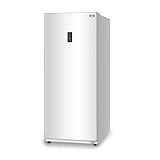
1. Prioritize True Garage-Ready Certification
The single most important specification to look for is garage-ready or garage-optimized status. Standard freezers use a single thermostat that senses the temperature inside the cabinet, not outside. When a garage drops below freezing during winter, the exterior ambient temperature tricks the thermostat into thinking the freezer is already cold enough. As a result, the compressor refuses to turn on, allowing the internal temperature to rise and thawing your frozen goods.
Garage-ready freezers incorporate dual thermostats or specialized low-ambient heaters that override this cycle. They ensure the compressor activates regardless of how cold or hot it gets outside the unit. Always verify the manufacturer’s specified operating temperature range, noting whether the freezer is rated to function in sub-zero winters or high-heat summer conditions.
2. Understand Frost-Free vs. Manual Defrost Mechanics
Upright freezers typically come in two configurations: frost-free and manual defrost. Frost-free models use internal heating coils and fans to circulate air, preventing ice buildup. While this offers immense convenience because you never have to scrape frost manually, it introduces more moving parts and slightly higher energy consumption.
In a garage environment, manual defrost freezers often hold up better over long operational lifespans because they have fewer electrical components that can fail due to humidity and condensation. However, manual units require you to empty and clean the interior once or twice a year. Consider your personal maintenance tolerance and climate humidity levels before deciding which defrost system suits your workflow.
3. Sizing, Clearance, and Spatial Planning
Garages are notoriously tight spaces cluttered with vehicles, tools, and storage bins. Before shopping for an upright freezer, measure your available floor space and account for door swing clearance. Upright models require enough clearance to swing the door open past ninety degrees so you can easily pull out wire baskets, slide-out drawers, and meal-prep containers.
Additionally, leave at least one to two inches of clearance around the back and sides of the appliance for proper ventilation. Restricting airflow forces the compressor to work harder, generating excess heat and driving up your monthly utility bills. Always measure the height of your garage ceiling or low-hanging garage door tracks if you are considering a tall, high-capacity upright unit.
4. Insulation Density and Energy Efficiency
Because garages experience extreme temperature swings, insulation density plays a massive role in maintaining stable internal temperatures. Thicker foam insulation walls prevent ambient heat from seeping into the cabinet during hot summer months. Look for units boasting high-density cyclopentane insulation or advanced thermal barriers.
Energy efficiency ratings also matter significantly when an appliance operates in a non-climate-controlled space. A freezer working overtime to combat garage heat will consume more electricity than one sitting inside an air-conditioned kitchen. Check the energy guide label for estimated yearly kilowatt-hour usage, keeping in mind that actual consumption may trend higher based on your local climate extremes.
5. Gasket Integrity and Door Seal Quality
Door gaskets are the first line of defense against warm, humid garage air infiltrating your freezer. Poor seals allow moisture to enter, which rapidly turns into heavy frost buildup, strains the cooling system, and causes energy waste. Inspect the magnetic rubber seal around the door to ensure it creates a tight, uniform bond against the cabinet frame.
In humid coastal regions or damp garages, inspect the gasket material for anti-microbial treatments and structural durability. A sturdy, multi-layer magnetic gasket withstands frequent opening and closing, maintaining its flexibility even when exposed to fluctuating seasonal temperatures.
6. Internal Organization: Shelving Versus Baskets
Upright freezers offer superior organization compared to chest models because you can view your inventory at a glance. However, the configuration of shelves and drawers heavily impacts usability. Fixed wire shelves allow cool air to circulate freely throughout the cabinet, preventing localized hot spots.
Conversely, solid glass shelves might block vertical airflow, though they prevent spills from dripping down through multiple levels. Look for adjustable shelving options and deep pull-out bottom baskets that accommodate bulky items like whole turkeys, large meal-prep containers, or bulk meat packages without wasting vertical space.
7. When to Spend More on Premium Features
Deciding when to upgrade to a higher price tier depends on your specific storage habits and climate severity. Entry-level models provide basic freezing capabilities, but premium units introduce valuable features such as external digital temperature displays, rapid-freeze modes, audible door-ajar alarms, and high-temperature warning lights.
If you store hundreds of dollars worth of homegrown meat, harvested game, or bulk groceries, spending extra on reliable alarms and rugged commercial-grade compressors is a smart safeguard. These features give you early warnings before a mechanical failure or an unlatched door ruins your entire inventory.
Related Guides
To explore more cooling options for auxiliary spaces, check out our comprehensive Best Upright Freezers for Garages in 2026: Compared and Ranked roundup. If you prefer top-loading storage with maximum capacity, read our Best Chest Freezers for Garages in 2026: Compared and Ranked guide. For chilling drinks and entertaining essentials, review our Best Beverage Refrigerators for Garages in 2026: Compared and Ranked selection.
FAQ
Can I put a standard kitchen upright freezer in my garage?
Putting a standard freezer in an unconditioned garage is risky because external temperature drops can trick the thermostat into shutting off the compressor. This causes the internal temperature to rise and thaws your food. Always choose a certified garage-ready model.
How do I know if an upright freezer is truly garage-ready?
Check the manufacturer specifications for explicit mention of garage optimization or low-ambient performance ratings. These units feature specialized heating elements or dual thermostats designed to operate reliably in freezing winters and hot summers.
Should I choose frost-free or manual defrost for a garage?
Frost-free models offer convenience by preventing ice buildup, but manual defrost units often feature fewer electronic components to fail in humid garages. Your choice depends entirely on whether you prefer automated maintenance or simpler, highly durable mechanical systems.
Why is my garage freezer building up frost rapidly?
Rapid frost buildup usually indicates a compromised door seal, a cracked gasket, or frequent door openings in a humid garage environment. Ensure the door closes tightly and that the rubber magnetic gasket is clean, flexible, and completely intact.




Write Your Review
No reviews yet. Be the first to share your experience!