
Buying a budget-friendly refrigerator does not mean you have to settle for an appliance that spoils food quickly or breaks down after two years. In recent years, lower-tier models have inherited modern cooling technology, improved door gaskets, and far more efficient compressors. However, navigating the entry-level market requires knowing where manufacturers trim costs and identifying which missing features represent genuine dealbreakers versus minor inconveniences.
Whether you are outfitting an apartment, replacing a failed primary unit on a strict budget, or picking up a secondary appliance for extra food storage, understanding core specifications will keep you from overpaying or underbuying. This guide breaks down door configurations, crucial cooling mechanics, real-world sizing rules, and the exact trade-offs that make an affordable refrigerator worth your hard-earned money.
As an Amazon Associate we earn from qualifying purchases at no extra cost to you.

Prioritizing Door Configurations for Value
The door style of a refrigerator directly dictates both its price tag and its internal storage efficiency. Top-freezer models remain the absolute gold standard for value-driven buyers. Because the cooling mechanism sits directly adjacent to the freezer compartment, top-freezer units use simple gravity-assisted airflow to chill the fresh food section below. This efficient design allows manufacturers to deliver high internal volume at lower prices while maintaining low long-term repair rates.
Bottom-freezer and side-by-side configurations cost slightly more to build, but they offer distinct ergonomic advantages. Bottom-freezers place fresh groceries at eye level, reducing bending for daily cooking tasks. Side-by-side models excel in narrow kitchens where wide door swings are impossible, though their narrow compartments struggle with wide items like pizza boxes or baking sheets. French door options at lower price points often compromise on door seal quality or display electronics, so proceed with caution if shopping for a French door layout under a strict budget cap.
Accurate Sizing, Clearance, and Installation Paths
One of the most common mistakes when purchasing an entry-level refrigerator is measuring only the cutout space in the kitchen while ignoring installation clearance and delivery routes. You must account for three critical dimensions: the outer dimensions of the cabinet, the swing clearance for doors and drawers, and the airflow gaps required around the sides, top, and rear of the unit.
A refrigerator needs room to breathe. Trapping heat around the cabinet forces the compressor to run constantly, raising utility bills and causing premature component failure. Standard freestanding models require at least one-half inch of clearance on both sides, one inch above the cabinet, and one to two inches behind the unit for electrical and plumbing clearance. Additionally, measure every doorway, hallway, and stairwell along the delivery path from the front door to the kitchen to ensure the appliance can actually reach its destination.
Cooling Systems and Humidity Controls
Most affordable refrigerators operate on a single-evaporator cooling system. In these setups, cold air is generated in the freezer compartment and blown down into the fresh food section via a motorized damper. While effective, single-evaporator systems share air between compartments, which can dry out fresh produce or transfer pungent food odors to your ice supply. Keeping temperature controls at recommended mid-range settings prevents moisture buildup and freezer burn in these systems.
Pay close attention to internal humidity controls when comparing entry-level models. Look for adjustable crisper drawers with manual sliders that allow you to open or close air vents. High humidity settings keep leafy greens crisp by retaining moisture, while low humidity settings allow ethylene gas to escape, preserving fruits like apples and pears. Even basic mechanical sliders offer substantial control over produce longevity, making them a must-have feature on budget appliances.
Features Worth Having vs. Gimmicks to Avoid
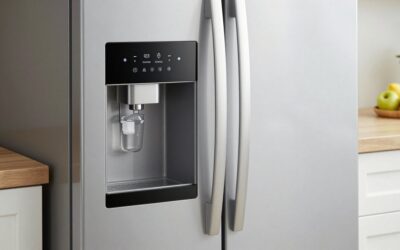
Manufacturers trim production costs on budget models by omitting secondary components, but not all omissions are negative. In-door water and ice dispensers are statistically the most common source of repair calls across the entire appliance industry. Skipping through-the-door dispensers on a budget model saves money upfront, prevents potential kitchen floor leaks, and grants you significantly more usable door shelf space.
Instead, prioritize practical interior features that improve daily storage usability. Full-width, spill-proof tempered glass shelves are far superior to open wire racking, as glass stops liquid leaks from dripping onto lower shelves and provides a flat surface for thin containers. Gallon-capacity door bins are another valuable asset, allowing you to store bulky milk jugs or beverage cartons on the door, freeing up primary shelf space for prepared meals and produce.
Energy Consumption and Compressor Standards
Operating costs play a significant role in the true long-term price of any major kitchen appliance. Modern energy standards ensure that current refrigeration units consume far less electricity than models produced a decade ago. As manufacturing standards advance in 2026, even budget-tier compressors are significantly quieter and more energy-efficient than older entry-level counterparts.
To keep operating costs manageable, look for an Energy Star certification badge when shopping. An certified model typically runs on 10 to 15 percent less electricity than units meeting only the baseline federal efficiency standards. Over a standard ten-year appliance lifespan, selecting an energy-efficient model can save enough money on utility bills to offset a substantial portion of the original purchase price.
When to Buy Budget vs. Upgrading
Determining whether to stick with a bare-bones affordable refrigerator or step up to a mid-tier model depends on your household size and cooking habits. A standard entry-level unit with 14 to 18 cubic feet of capacity is ideal for small households, rental properties, secondary garage storage, or home buyers looking to minimize upfront costs. These simpler mechanical units often outlast high-end electronics-heavy fridges because there are fewer complex components to break down.
However, larger families or avid home cooks who store high volumes of fresh meat and delicate produce may benefit from stepping up slightly in price to secure dual-evaporator cooling or linear inverter compressors. If quiet operation is critical due to an open-concept living space, investing slightly more for lower decibel ratings (under 40 dB) can also be worth the extra expense.
Related Guides
If you are ready to start shopping for a specific model, explore our complete breakdown of the tested budget refrigerator rankings to see how top performers compare in hands-on evaluation. For additional model assessments and alternative low-cost recommendations, consult our secondary list of top budget refrigerator picks. If you are specifically looking for auxiliary cooling for canned drinks or wine rather than a full-size unit, browse our guide to the compact drink refrigerators.
FAQ
What is the average lifespan of an affordable refrigerator?
Most budget-friendly refrigerators last between 8 and 12 years with routine care and maintenance. Because lower-cost models often rely on simpler mechanical components rather than complex electronic mainboards, they can be remarkably resilient over time. Keeping the rear condenser coils free of dust and checking door gaskets periodically will maximize the unit’s operating life.
Are top-freezer refrigerators really more reliable than French door options?
Yes, top-freezer configurations are statistically the most reliable door style available. They utilize a single evaporator and rely on natural cold-air descent, eliminating the complex air ducts, secondary evaporators, and ice maker water lines that frequently fail in budget French door models. This structural simplicity leads to fewer mechanical service calls over time.
Is an internal ice maker worth adding to a budget refrigerator?
Adding a simple, factory-designed internal ice maker inside the freezer cavity is generally fine if you consume a lot of ice daily. However, through-the-door dispensers should be avoided on budget models because they introduce multiple failure points and increase ambient heat leakage into the freezer. An internal ice kit keeps the exterior door completely sealed, preserving cooling efficiency.
How much ventilation space does a standard freestanding refrigerator require?
A standard freestanding refrigerator requires roughly one-half inch of clearance on each side, one inch above the top hinge, and one to two inches behind the rear cabinet. Proper clearance allows heat generated by the compressor and condenser coils to dissipate freely into the kitchen. Restricting airflow causes the compressor to overheat, increasing electricity bills and shortening the appliance’s lifespan.








Write Your Review
No reviews yet. Be the first to share your experience!