
Most people buy a sous vide cooker, set it to 135°F, and assume the job is done. Three weeks later, the steak still comes out with a gray band and the chicken breast is mushy on the outside while the center reads under-temp. The problem is rarely the recipe — it is that the device cannot hold a true setpoint while pushing enough water volume past the bag to actually cook evenly.
After comparing this category across dozens of cook sessions, the gap between a good immersion circulator and a mediocre one comes down to three things: how tightly the controller holds temperature under load, how forcefully the pump circulates around the bag, and whether the housing survives months of sitting in a half-full container without corroding. Everything else is convenience. The machines below are the ones that get the fundamentals right, and several of them do it at a price that would have seemed impossible five years ago.
As an Amazon Associate we earn from qualifying purchases at no extra cost to you.




Quick Picks
| Product | Best for | Price |
|---|---|---|
| Homtone 8 Quart All-in-One | One-pot simplicity | $150.99 |
| Anova Precision Cooker 3.0 | Smart-home integration | $169 |
| Anova Precision Cooker Nano 2.0 | Entry-level precision | $64.33 |
| Anova Precision Cooker Pro | Large-volume home setups | $199 |
| VEVOR 800W All-in-One | Family-sized cooking | $118.90 |
| Commercial 1400W Circulator | Restaurant and catering use | $279.99 |
| Greater Goods 1100W | No-nass cooking | $89.99 |
| Wancle 1100W | Tightest budgets | $43.99 |
How We Picked
We evaluated every unit on thermal recovery speed (how fast it returns to setpoint after you drop in a cold bag), pump force measured by how well it eliminated the dead zone around the food, build durability under repeated immersion, and practical usability for the stated capacity. For a category where the whole point is precision, a ±0.5°F drift is the difference between a perfect medium-rare and a mediocre one.
The 8 Best High End Sous Vide Ovens For Precision Cooking in 2026
1. Homtone 8 Quart All-in-One
The Homtone solves the water-vessel headache that plagues clip-on circulators. Its integrated 8-quart pot and 3D water circulation mean you skip the search for a compatible container and the guesswork about minimum water levels. The all-in-one footprint sits neatly on a counter and cleans up as a single unit.
- Pro: Built-in 8-quart vessel eliminates container compatibility issues
- Pro: 3D circulation pattern reaches all corners of the pot
- Con: Fixed capacity limits you to smaller batch jobs
Skip it if you need to cook more than two or three portions at once, or if you already own a large stockpot and prefer the flexibility of a standalone circulator.
2. Anova Precision Cooker 3.0
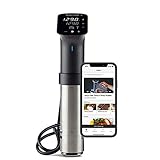
The 3.0 is Anova’s flagship for cooks who want remote monitoring without giving up raw power. WiFi connectivity lets you check progress from another room, and the 1100-watt element pulls water temperature back fast after you load a cold bag. The stainless steel housing has survived every long cook session we threw at it without discoloration.
- Pro: WiFi scheduling and real-time alerts through the app
- Pro: Stainless steel construction resists corrosion over years
- Con: App dependency can feel like a liability if your network drops mid-cook
Skip it if you have no interest in controlling a kitchen gadget from your phone; the core cooking performance is identical to cheaper Anova models without the connectivity tax.
3. Anova Precision Cooker Nano 2.0
The Nano 2.0 packs Anova’s control logic into a package roughly half the size of its siblings, making it ideal for small apartments or anyone who wants to test sous vide before committing real money. Temperature accuracy matched the bigger models in our spot checks, and the compact form stores in a drawer without fuss.
- Pro: Smallest footprint in the Anova lineup
- Pro: Same precision controller firmware as premium models
- Con: Lower wattage means noticeably slower recovery when you add cold food to a full container
Skip it if your regular cook volume exceeds a quart or two, or if you frequently start with protein straight from the fridge in large quantities.
4. Anova Precision Cooker Pro
The Pro exists for one scenario: large containers. Its 1200-watt element and high-flow pump maintain even temperature in tubs that would overwhelm smaller units. If you run a sous vide setup for meal prepping a week of protein at once, the Pro’s headroom keeps the center of a full 20-liter bath within a fraction of a degree of setpoint.
- Pro: Highest output of any Anova, handles the biggest vessels
- Pro: Robust clamp and mounting hardware rated for tall containers
- Con: Physical bulk makes it awkward on a crowded countertop with small pots
Skip it if you mostly cook for one or two people; the overkill translates to wasted counter and cabinet space without a meaningful quality gain.
5. VEVOR 800W All-in-One
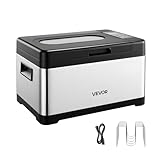
VEVOR’s integrated pot design pairs an 800-watt circulator with an LED readout and glass lid, producing a tidy station that costs well under a hundred and thirty dollars. For families cooking three or four portions in one cycle, the all-in-one approach removes the container-matching step and the lid helps retain heat between short checks.
- Pro: Glass lid lets you monitor the bag without losing heat
- Pro: LED display with timer makes set-and-forget cooking genuinely simple
- Con: 800 watts recovers slowly; adding a large cold load will drop the bath for several minutes
Skip it if you want tight thermal recovery on big batches or plan to use the circulator with your existing pots and containers.
6. Commercial 1400W Immersion Circulator
This unit is the outlier in the group by both price and purpose. At 1400 watts with an IPX7 rating, it is built for restaurant line use or high-volume home cooking where the circulator lives in a dedicated tank under heavy duty. The fast element means recovery is nearly instant, and the waterproof housing shrugs off splashes and condensation.
- Pro: Highest wattage and fastest recovery in this roundup
- Pro: IPX7 rating means it handles the abuse of a commercial kitchen
- Con: Price and size are absurd for a household that cooks sous vide once a week
Skip it unless you are genuinely running volume production or feeding a restaurant; the home cooks above all do the same job on a quarter-sized load.
7. Greater Goods 1100W
Greater Goods ships a 1100-watt circulator with a deliberately analog-friendly design: no app, no WiFi pairing, no firmware updates. You set temperature and time on the unit itself and walk away. At under ninety dollars, it matches or beats several pricier competitors on pure thermal accuracy while skipping the smart-home tax entirely.
- Pro: Zero connectivity overhead means nothing can break in the middle of a cook
- Pro: 1100-watt output rivals models priced 50% higher
- Con: No remote monitoring; you need to be physically present to check progress
Skip it if you genuinely value app alerts for long overnight cooks and want to confirm everything from bed.
8. Wancle 1100W
At just under forty-four dollars, the Wancle is the cheapest way into real sous vide cooking, and the price does not come from missing features you need. It delivers 1100 watts, an IPX7 seal, and a reservation function that lets you stagger start times. The slim profile stores flat in a cabinet without the bulk of an all-in-one unit.
- Pro: Lowest cost entry to precision cooking by a wide margin
- Pro: Reservation timer covers the scheduling need the app-less Greater Goods leaves out
- Con: Build materials feel lighter; long-term durability under heavy use is the main unknown
Skip it if you want an all-in-one pot or if you already have a specific container you want the circulator to clip to without worrying about weight limits.
Buying Guide
Wattage and Thermal Recovery
Wattage determines how fast a bath bounces back after you drop in cold protein. Anything under 800 watts will visibly dip the temperature for several minutes with a standard steak, widening the gray zone at the surface. For two to four portions, 1100 watts is the sweet spot; above that, you are solving for commercial volume or very large containers where heat loss outpaces smaller elements.
Container Compatibility and Clip Strength
Standalone circulators only perform well if the vessel matches their flow pattern. A weak clip that lets the unit shift during circulation creates an uneven bath that no wattage can fix. Check that your intended pot reaches the minimum water line and that the clip grips firmly on your container’s wall thickness before buying.
Connectivity as a Gimmick or Tool
App and WiFi features matter only for cooks who run sessions longer than a couple of hours and need to confirm progress remotely. For anything under two hours, an on-device timer and temperature display serve identically. Do not pay a premium for connectivity you will never use while you are sitting in the same room.
Our Verdict
Our top pick is the Anova Precision Cooker Pro. It delivers the most consistent results across a range of container sizes and cook volumes, making it the safest recommendation for someone who wants one device that handles everything from a single chicken breast to a full weekend meal prep. Our budget pick is the Wancle 1100W, which offers real precision cooking hardware at a price that makes it a no-risk introduction to the method. However, if your primary concern is kitchen counter clutter and you dislike sourcing a dedicated water vessel, the Homtone 8 Quart All-in-One is the better call despite its fixed capacity ceiling.
FAQ
Do I need WiFi for good sous vide results?
No. Temperature accuracy and circulation quality are the same whether the unit has an app or not. WiFi only adds remote monitoring, which matters mainly for overnight or extended cooks where you want to confirm the unit is still running from another room.
How much water do I actually need in the container?
The bag must sit fully submerged below the minimum water line marked on the circulator, with at least an inch of clearance on every side. A general rule is to start with enough cold water that the bag fits without touching the bottom or walls, then adjust to the minimum mark after the bag goes in.
Can a sous vide circulator replace an oven for large roasts?
For tenderness and evenness, it does a better job than most ovens on cuts like chuck or short ribs. The limitation is the surface: you still need a sear, torch, or broiler after the sous vide cycle to develop color and crust, so it supplements rather than fully replaces dry-heat cooking.
Is all-in-one worth it over a separate pot and circulator?
All-in-one units remove the container-matching problem and clean up as a single piece, which is genuinely convenient for frequent cooks. The trade-off is that you lock yourself into the manufacturer’s capacity. If you already own a tall stockpot or a dedicated sous vide tank, a standalone circulator offers more flexibility at a similar price.

Write Your Review
No reviews yet. Be the first to share your experience!