
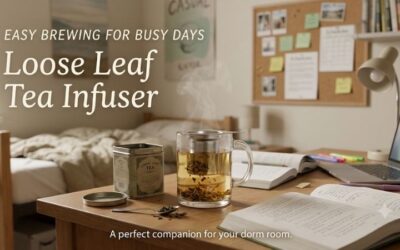
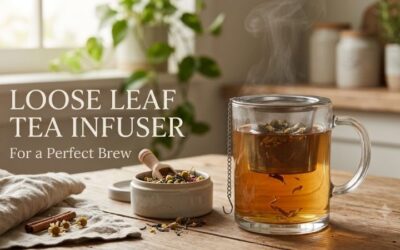
A tea infuser for home baristas should make loose-leaf brewing as controlled and repeatable as a good coffee routine. The right basket gives leaves room to expand, filters fine particles, and lifts out cleanly when steeping ends. This guide explains how to choose an infuser for straight tea, iced drinks, and tea-based lattes without extra equipment.
What makes a tea infuser for home baristas worth buying?
A well-designed tea infuser supports the same goals that make coffee equipment valuable: consistent extraction, predictable results, and a smooth preparation routine. Rather than choosing by appearance, home baristas should examine brewing space, filtration, heat resistance, and how conveniently the infuser fits existing cups.
Choose a spacious basket for better leaf expansion
Loose tea leaves need space to absorb water, expand, and circulate throughout the brewing chamber. A narrow infuser ball may work for finely cut tea, but larger leaves can become tightly compressed. A wide basket generally offers more consistent extraction, particularly when brewing oolong, whole-leaf black tea, or herbal blends.
A full-depth basket is particularly useful when preparing tea in a tall mug. When water reaches more of the leaf material, brewing becomes easier to control without aggressively stirring or shaking the infuser.
For example, tightly rolled oolong leaves can expand considerably during steeping. If the infuser is nearly full before water is added, there may be insufficient room for the leaves to unfurl.
Choose a basket that allows tea leaves to occupy only a modest portion of the available space when dry. More breathing room generally produces more predictable flavor than squeezing additional leaves into a small tea ball.
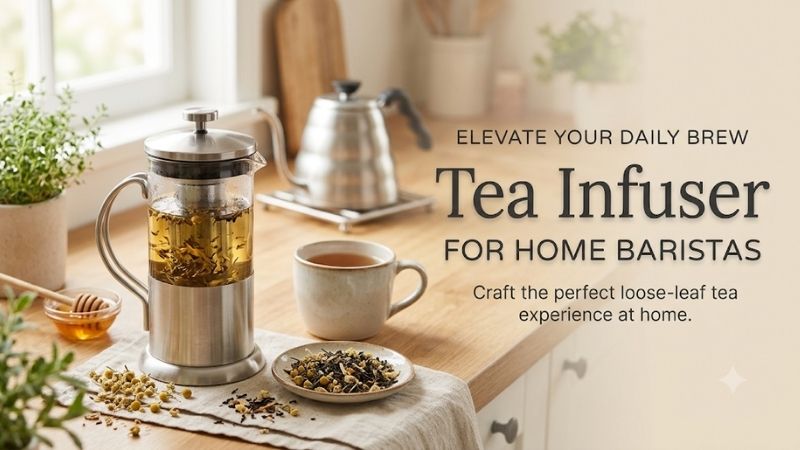
Look for fine mesh that controls sediment without clogging
Mesh quality directly affects the drinking experience, especially when preparing rooibos, broken black tea, or herbal ingredients with small particles. An effective infuser should hold back most loose material while allowing water to move freely through the tea. Extremely restrictive filtration can slow circulation and complicate cleaning.
Stainless steel baskets with fine perforations are an excellent starting point because they combine durability with straightforward maintenance.
However, finer filtration is not always automatically better. Some sediment may pass through even high-quality mesh, particularly when using powdered ingredients or unusually small particles.
Consider the tea varieties you prepare most often. Whole-leaf teas are generally forgiving, while rooibos and finely cut herbal blends require closer attention to perforation size.
Also inspect the bottom of the basket. Designs with multiple filtering surfaces can encourage more even water movement than products with limited openings.
Check mug compatibility and heat-resistant handling
A tea infuser becomes inconvenient when its handles slip into the cup, its basket cannot reach the water, or its lid becomes difficult to lift. Before buying, compare the infuser’s dimensions with your favorite mugs and teapots. Comfortable handles and a stable supporting rim are particularly important when removing the basket from hot water.
A removable basket should rest securely on the mug without wobbling. If the cup has a narrow opening, an oversized infuser may not fit despite appearing suitable in product photographs.
Look for a lid that doubles as a drip tray. This small design feature makes a substantial difference when preparing several drinks because the wet infuser has a designated resting place.
Silicone-covered handles can provide a more comfortable grip, although the metal body and surrounding water may still be hot.
If you regularly move between ceramic mugs, glass vessels, and insulated cups, measure the smallest opening before deciding on an infuser.
How to choose a tea infuser for home baristas by drink type
The ideal infuser also depends on what you plan to make. A delicate cup of green tea calls for a different preparation approach than a strong black tea concentrate intended for milk. Match the brewing vessel to portion size, tea texture, and how quickly you need to separate the leaves from the finished infusion.
Use a removable basket for everyday single-cup tea
For home baristas preparing one drink at a time, a removable basket offers an efficient balance between brewing quality and convenience. It can sit directly inside a favorite mug, eliminating the need for a separate teapot. Once steeping finishes, removing the basket stops most additional extraction from the submerged leaves.
A basket is particularly practical when switching between black tea, green tea, and herbal infusions throughout the day.
Start with approximately 2–3 grams of tea for 8 ounces of water, then adjust according to the tea’s instructions and preferred strength. This is only a starting point, not a universal formula.
Use the same mug, measured leaf quantity, and steeping time for several sessions before changing variables.
That process helps identify whether bitterness comes from excessive temperature, prolonged steeping, or an overly concentrated recipe.
Choose open brewing space for repeated oolong infusions
Some whole-leaf teas can produce several satisfying infusions from the same leaves. An open brewing chamber is valuable here because it allows leaves to expand without becoming trapped. A removable infuser also makes successive short steeps easier, helping maintain control over flavor development throughout the session.
For rolled oolong, begin with a brewing method appropriate to the tea and evaluate the first infusion before extending subsequent steeps.
Later infusions may need slightly more time as the soluble flavor compounds become less concentrated.
Avoid squeezing or pressing wet leaves into the basket. Doing so can damage delicate material and make cleaning unnecessarily difficult.
If repeated infusions are your priority, a small teapot or gaiwan may eventually offer more control, but a spacious basket remains a versatile starting point for home use.
Select easy-to-remove infusers for tea lattes and concentrates
Tea lattes, iced chai, and milk-based drinks often require a stronger infusion than ordinary drinking tea. The infuser must accommodate an appropriate quantity of leaves while remaining easy to remove at the planned brewing time. A wide basket can support these recipes without leaving loose particles in the concentrate.
The key is to increase strength deliberately rather than simply steeping any tea for an excessive period.
For a black tea latte, try increasing the leaf-to-water ratio while maintaining a reasonable steeping time. This can produce a concentrated tea base without relying entirely on prolonged extraction.
Prepare the concentrate in a heat-safe vessel, remove the infuser, and then combine it with warm or cold milk as desired.
For iced drinks, account for the dilution caused by melting ice. A measured tea concentrate makes repeatable results easier than guessing with every serving.
Buying mistakes and maintenance habits to avoid
Even a quality tea infuser can produce disappointing results when used incorrectly or neglected after brewing. The most common problems involve selecting unsuitable materials, treating all teas as though they require identical temperatures, and allowing residue to accumulate. A simple care routine protects flavor and extends the useful life of the equipment.
Compare stainless steel, silicone, and disposable alternatives
Stainless steel infusers are generally a strong choice for regular use because they resist ordinary wear and can offer fine filtration. Silicone models may be colorful and inexpensive, but small cavities can restrict leaf movement. Disposable tea filters simplify cleanup, although they create recurring supply costs.
For daily brewing, a stainless steel basket with a removable lid is usually the most versatile investment.
Silicone tea balls and novelty infusers can be convenient for occasional cups, particularly when using finely cut blends that do not expand substantially. However, their capacity should be evaluated carefully.
Paper filters can be valuable for travelers, shared workspaces, and particularly messy herbal mixtures.
The best material depends on whether you prioritize repeated use, storage convenience, or cleaning speed. Avoid paying extra for decorative features that do not improve brewing.
Control water temperature and steeping time separately
A tea infuser does not compensate for water that is significantly hotter than the tea requires. Temperature affects extraction, while steeping duration determines how long water remains in contact with the leaves. Treat these as separate variables rather than assuming every tea should be prepared with boiling water.
As a general starting point, delicate green teas often work around 160–185°F, while many black teas tolerate approximately 200–212°F. Specific teas may require different conditions.
White and oolong teas cover broad processing styles, so follow supplier guidance when available.
Using a variable-temperature kettle simplifies this process. Otherwise, a food-safe thermometer can help establish a repeatable routine.
Record your preferred temperatures and times for favorite blends. A small recipe note is especially useful when developing tea beverages for guests.
Clean the infuser thoroughly and replace damaged components
Tea leaves, aromatic oils, and mineral deposits gradually accumulate around mesh openings and contact surfaces. A poorly maintained infuser may develop lingering odors or reduced water flow. Prompt rinsing after brewing is the easiest way to prevent buildup, particularly when switching between strongly flavored and delicate teas.
Empty the basket once it has cooled enough to handle safely, rinse thoroughly, and allow all surfaces to dry.
Follow the manufacturer’s dishwasher instructions. Some baskets are dishwasher-safe, while decorative components or special finishes may require handwashing.
For stubborn tea stains, use a cleaning method approved for the material and rinse completely before brewing again.
Inspect sharp edges, loose mesh, cracked plastic, and damaged handles. Replace components that no longer hold the basket securely over hot water.
Conclusion
The best tea infuser for home baristas is a spacious, easy-to-clean basket that fits existing mugs, filters the teas you drink, and allows consistent steeping control. Prioritize practical filtration, safe handling, and repeatable brewing over decorative details. For most home setups, a stainless steel basket with a drip-tray lid provides the flexibility needed for everyday tea, multiple infusions, and café-style drinks.


Write Your Review
No reviews yet. Be the first to share your experience!