
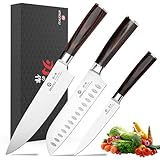
- Top Pick: HOSHANHO 3 Pieces Knife Set, Professional Japanese Kitchen Knife Set
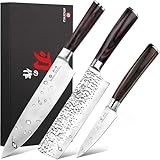
- Best Value: imarku 3 Pieces Knife Set, Japanese High Carbon Stainless Steel Chef Knives
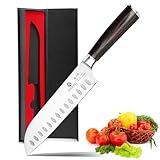
- Premium Choice: MOSFiATA 8" Super Sharp Professional Chef's Knife with Finger Guard and Knife Sharpener, German High Carbon Stainless Steel EN1.4116 with Micarta Handle and Gift Box
A chef’s knife is the one tool you’ll reach for in nearly every recipe, so the difference between a cheap blade and a well-made one shows up in every meal you cook. A quality knife glides through an onion instead of crushing it, holds its edge for weeks instead of days, and feels like a natural extension of your hand rather than a hazard. Yet the market is flooded with confusing terms, high-carbon steel, full tang, Rockwell hardness, that make choosing genuinely hard.
This guide cuts through the jargon and explains exactly what separates a high-quality chef’s knife from the rest, covering steel, construction, balance, handle, and maintenance, so you can invest once and cut with confidence for years.
As an Amazon Associate we earn from qualifying purchases at no extra cost to you.




⚡ Save on Your Next PC — Amazon Prime
Prime members get fast free shipping on the systems above, plus early access to Prime Day & Black Friday PC deals. New members get a 30-day free trial.
Watch: What to Look For in a High-Quality Chef’s Knife — Video Review
Blade Steel: The Heart of the Knife
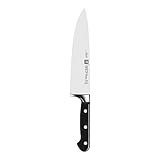
Steel determines how sharp a knife gets and how long it stays that way. High-carbon stainless steel is the sweet spot for home cooks, it takes a keen edge, resists rust better than plain carbon, and is forgiving to maintain. Japanese blades like the imarku chef knife often use harder steel (around 60 on the Rockwell scale) for a razor edge and thinner profile, while German steels such as the ZWILLING Professional S formula prioritize toughness and easy resharpening. Neither is universally better; harder steel holds an edge longer but chips more easily, while softer steel is more durable and quicker to hone.
Construction: Full Tang and Forged vs. Stamped
A full-tang knife runs the steel all the way through the handle, giving it strength and balance you can feel. Forged blades, hammered from a single steel bar, tend to be heavier and sturdier than stamped blades cut from a sheet, though modern stamped knives have narrowed the gap. Look for a smooth, seamless transition where the blade meets the handle; gaps there trap food and bacteria.
Balance and Weight
Pick up the knife and pinch the blade just ahead of the handle. A well-balanced chef’s knife feels neutral at that grip, neither tipping forward nor back. Weight is personal: some cooks love a hefty German blade that powers through squash, while others prefer a nimble, lighter Japanese knife for precise work. A finger guard or bolster, like the one on the MOSFiATA 8-inch, adds safety and control for newer cooks.
Handle Comfort and Grip
You’ll hold this knife for long prep sessions, so the handle matters as much as the blade. Ergonomic pakkawood handles, found on several imarku sets, resist moisture and give a secure grip even with wet hands, while micarta handles like MOSFiATA’s offer durability and a natural feel. Test that your fingers don’t touch the cutting board when you grip near the blade, a sign the handle is shaped for real use.
Tips for Choosing and Caring for Your Knife
- Choose an 8-inch blade as your first chef’s knife, it’s the most versatile size for chopping, slicing, and mincing.
- Hand wash and dry immediately; the dishwasher dulls edges and can crack handles even on dishwasher-safe models.
- Hone weekly with a steel and sharpen every few months to keep the edge slicing cleanly.
- Store on a magnetic strip or in a block, never loose in a drawer where the edge bangs against other tools.
Frequently Asked Questions
What size chef’s knife should I buy?
An 8-inch blade is the best all-rounder for most home cooks, long enough to slice large vegetables yet controllable for detailed work. Cooks with larger hands or big prep loads sometimes prefer a 10-inch.
Is Japanese or German steel better?
Neither is objectively better. Japanese steel is harder and holds a razor edge longer but chips more easily; German steel is tougher, more forgiving, and simpler to resharpen. Choose based on your cutting style and maintenance habits.
Do I need a full-tang knife?
A full tang adds strength, durability, and balance, and it’s a good marker of quality construction. For a knife you’ll use daily for years, it’s worth prioritizing.
How often should I sharpen a chef’s knife?
Hone the edge weekly with a honing steel to keep it aligned, and fully sharpen every three to six months depending on use. A knife that crushes tomatoes instead of slicing them is overdue.
Conclusion
A high-quality chef’s knife comes down to good steel, solid full-tang construction, comfortable balance, and a handle that fits your grip. Whether you lean toward a razor-sharp Japanese imarku or a rugged German ZWILLING, buy the best blade you can afford, treat it well, and it will reward you with cleaner cuts and safer, faster cooking for a decade or more.


Write Your Review
No reviews yet. Be the first to share your experience!