
- Top Pick: Oceanstar – TB1323 Bamboo Tea Box, 12 Inch, Natural
- Best Value: Coloch Wooden Tea Bag Storage Box with Carved Lid, 8-Compartment Tea Chest Organizer Spice Packets Container for Living Room, Kitchen, Office, Home Decor
- Premium Choice: Acrylic Coffee Bar Station, Countertop Snack Tea Organizer & Condiment Tray
Choosing between a wooden tea bag box and an acrylic tea organizer tray is less about storing tea and more about how you use your counter every day. Both can separate tea bags, reduce cabinet clutter, and make a coffee or tea station feel intentional. The real decision is whether you want a contained, furniture-like box that hides visual mess or an open tray that keeps every option immediately visible.
Wood generally brings warmth, privacy, and a more decorative presence. Acrylic prioritizes visibility, quick access, and easy matching with modern kitchens. Capacity, cleaning habits, available counter space, and the number of people reaching for tea may matter more than the material itself. In 2026, both styles are available at accessible prices, but they solve slightly different organization problems.
As an Amazon Associate we earn from qualifying purchases at no extra cost to you.


Quick Verdict
Choose a wooden tea bag box if you want tea storage that looks like part of your decor, protects packets from dust and light, and keeps the counter visually calm. It is especially suitable for a traditional kitchen, a guest room, an office, or anyone who prefers a lidded container.
Choose an acrylic tea organizer tray if you want to see your entire collection at a glance, refill sections quickly, and serve several people without opening a lid. Acrylic is usually the more practical choice for a busy family kitchen, a coffee bar, or a small space where speed matters.
For most buyers, the simplest rule is this: wood is better for concealed, attractive storage; acrylic is better for accessible, high-turnover storage.
Side by Side
| Category | Wooden tea bag box | Acrylic tea organizer tray |
|---|---|---|
| Comfort | Feels warm and substantial; a lid adds a deliberate serving ritual | Fast one-handed access; no lid to open or close |
| Durability | Often resists everyday scuffs and can last for years if kept dry | Does not rust, but can scratch, crack, or cloud after rough cleaning |
| Price range | About $15–$35 for a basic box; larger or finished models may cost $40–$60 | About $9–$35 for a basic tray; multi-use station organizers can cost more |
| Maintenance | Wipe with a barely damp cloth; avoid soaking and dishwasher use | Usually easy to wipe or hand-wash; avoid abrasive sponges |
| Space needed | Typically 10–14 inches wide, 8–12 inches deep, and 3–5 inches tall | Often 10–16 inches wide, 5–10 inches deep, and 2–4 inches tall |
| Look | Warm, classic, farmhouse, transitional, or handcrafted | Clean, minimal, contemporary, and visually light |
| Resale appeal | More likely to read as a decorative home accessory | More functional than collectible; condition matters greatly |
| Best for | Decor-conscious homes, guest areas, offices, and moderate collections | Busy counters, shared kitchens, coffee bars, and frequently used teas |
Where Wooden Tea Bag Box Wins
The strongest advantage of a wooden tea bag box is visual warmth. A bamboo or wood container softens the appearance of a countertop filled with appliances, stainless steel, and packaged goods. With the lid closed, colorful tea wrappers disappear, making the box look closer to a small decor piece than a storage bin.
Wood also offers a more contained storage system. Many boxes have six to eight compartments, while larger designs may provide 12 or more sections. A compartment measuring roughly 3 by 3 inches can hold a useful supply of individually wrapped tea bags, although the actual capacity depends on packet thickness and whether bags are stored flat or upright. A household that drinks tea occasionally may refill a box only every few weeks.
A lid can help keep out countertop dust, crumbs, and direct sunlight. That is helpful for tea stored near a toaster, cooktop, or sunny window. It does not make tea airtight, however. If humidity is a concern, keep the box away from steam and store tea in sealed inner packaging rather than relying on the wood lid.
Wooden boxes are also easier to integrate into rooms beyond the kitchen. A carved or finished box can sit on a dining-room sideboard, office credenza, or guest-room beverage station without looking overly commercial. For example, the Coloch Wooden Tea Bag Storage Box with Carved Lid is listed at $19.99, while the Oceanstar TB1323 Bamboo Tea Box, 12 Inch, Natural is listed at $16.73. Those prices illustrate why wood can provide a decorative appearance without reaching specialty-furniture pricing.
The tradeoff is maintenance. Do not submerge a wooden box, place it in a dishwasher, or leave wet tea spills inside. Wipe it promptly with a soft cloth and dry it fully. Hinges, magnets, and thin dividers can also be failure points on inexpensive models, so inspect construction if the box will be opened many times each day.
Where Acrylic Tea Organizer Tray Wins
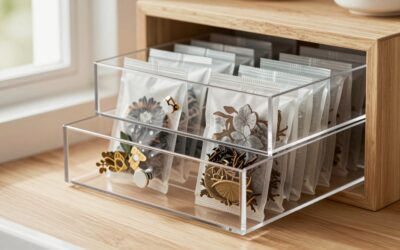
Acrylic wins on visibility. You can identify chamomile, green tea, black tea, and caffeine-free options without opening anything or moving packets between compartments. That small convenience becomes significant when several people are making tea during breakfast or when guests are serving themselves.
Open trays also make inventory easier. If a section is nearly empty, the shortage is obvious. This can prevent buying another box of a flavor already stored in the back. Clear walls allow the organizer to coordinate with nearly any counter color, and the material does not compete with patterned backsplashes or colorful appliances.
Acrylic is generally easy to clean after a spill. Remove the tea bags, wipe the tray with mild dish soap and water, and dry it with a nonabrasive cloth. Avoid harsh solvents, rough scrubbers, and dragging ceramic mugs across the surface. Clear plastic can develop fine scratches that make it look cloudy over time, especially when cleaned aggressively.
The open format is particularly useful for a coffee bar. The Acrylic Coffee Bar Station, Countertop Snack Tea Organizer & Condiment Tray is listed at $32.90 and represents the larger, multipurpose end of this category. A more basic product such as the Tasybox Tea Bag Organizer is listed at $8.99. Before buying, check whether the tray is intended only for packets or also has room for stirrers, sweeteners, napkins, or small snacks.
Acrylic has two drawbacks. First, it exposes visual clutter rather than hiding it. A tray packed with torn wrappers and half-used packets can look untidy quickly. Second, lightweight models may slide when a user pulls out a tea bag. Non-slip feet or a thin drawer liner can solve that problem without taking up much space.
Cost Over 5 Years
Purchase price alone does not create a major difference. A basic wooden box may cost $15–$35, while a basic acrylic organizer may cost $9–$35. Over five years, the more important variables are breakage, replacement, and whether the organizer prevents wasted tea.
Assume a $22 wooden box and a $20 acrylic tray. If each lasts the full five years, the purchase cost works out to about $4.40 per year for wood and $4 per year for acrylic. Add approximately $1–$3 per year for cleaning supplies or a replacement liner, and both remain inexpensive household tools.
Acrylic may need replacement sooner if it is dropped, scratched heavily, or exposed to high heat. Wood may need replacement if it swells from moisture or its hinge fails. A realistic five-year budget is about $22–$45 for a wooden box and $20–$60 for an acrylic tray, depending on whether a second unit is needed. Neither should be placed directly beside a stovetop, kettle vent, or sink where heat and moisture shorten its life.
Which One for Your Home
Small apartment
Choose based on the shape of your available counter, not just capacity. An acrylic tray that is 12 inches wide and 7 inches deep may fit beside a coffee maker while keeping every tea visible. If your limited counter already looks busy, choose a compact wooden box around 10–12 inches wide so the collection appears contained. A lidded box is often better when one surface must serve as both a prep area and a dining space.
Family with kids or pets
A wooden box with a secure lid is usually the calmer choice. It hides small packets and keeps tea from being scattered during busy mornings. Look for a sturdy base, rounded edges, and a lid that does not slam. If children frequently make their own drinks, acrylic may be more convenient, but select a heavier tray with non-slip feet and keep hot-water equipment out of reach.
Rental
Acrylic is a strong rental-friendly option because it is lightweight, easy to move, and unlikely to leave marks when used with care. It can also move from a kitchen counter to a desk or office shelf. A wood box is equally portable, but its decorative finish may be more vulnerable to water rings if it is placed wherever space is available. For renters who want a neutral look, clear acrylic usually blends in with existing finishes.
Long-term home
Choose the format that matches your daily routine and the room’s design. A well-made wooden box is a better long-term decorative investment for a traditional or transitional kitchen, especially if tea is served to guests. Acrylic is better for a permanent beverage station that changes frequently or includes coffee pods, sweeteners, napkins, and snacks. In a large home, using both can make sense: wood in a guest area and acrylic at the main family coffee bar.
FAQ
Does a wooden tea box keep tea fresher than acrylic?
Not by itself. A wooden lid can reduce exposure to dust and light, but neither a standard wood box nor an acrylic tray is airtight. Keep tea in its original sealed packets or inner bags, and store the organizer away from steam, heat, and direct sun.
How many tea bags fit in a typical organizer?
A six- to eight-compartment box commonly holds roughly 40–80 standard tea bags, depending on packet thickness and how tightly each section is filled. A large tray may hold more, but usable capacity depends on its section dimensions and whether you also store sweeteners or stirrers.
Is acrylic safer than wood around a kettle?
Neither should touch a kettle, hot plate, or steam outlet. Acrylic can deform or become damaged by high heat, while wood can dry, discolor, or absorb moisture. Leave several inches of clearance around heat-producing appliances and wipe condensation promptly.
Can I use either organizer for coffee pods?
Sometimes. A tea box’s compartments may be too small or shallow for coffee pods, while a multipurpose acrylic tray may accommodate pods, packets, sugar, and napkins. Measure the pod diameter and organizer compartments before buying; tea-bag storage dimensions do not automatically suit coffee capsules.
Ready to decide? Our #1 pick for 2026 is the Comfort.
Live price & availability on Amazon.


Write Your Review
No reviews yet. Be the first to share your experience!