
A drip coffee maker should brew a consistent pot without demanding complicated controls or leaving coffee stale on a warming plate. We compare six machines for everyday households, coffee enthusiasts, and busy mornings, focusing on brewing capacity, temperature management, glass versus thermal carafes, maintenance, and practical value.
Quick Verdict: Best Drip Coffee Makers
Best Overall: Technivorm Moccamaster KBGV Select. The KBGV Select offers a thoughtfully engineered automatic drip-brewing system with selectable half- and full-carafe brewing, a 40-ounce capacity, and recognized specialty-coffee certification.
It is a premium choice and not necessarily the best fit for every kitchen. For households that value programming, the OXO Brew 9-Cup is a compelling alternative. The Bonavita 8-Cup focuses on straightforward specialty-oriented brewing. The Breville Precision Brewer Thermal offers greater adjustment for people who enjoy experimenting with different recipes.
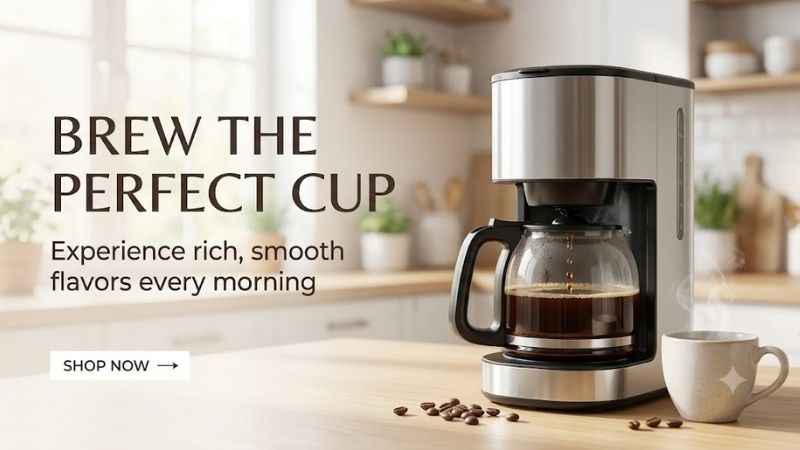
Quick Comparison Table
| Coffee Maker | Best For | Capacity | Carafe | Main Advantage |
|---|---|---|---|---|
| Technivorm Moccamaster KBGV Select | Best overall | 40 oz | Glass | Half/full batch selector |
| OXO Brew 9-Cup Coffee Maker | Programmable mornings | 9 coffee-maker cups | Thermal | Automatic brewing with scheduling |
| Bonavita 8-Cup Coffee Brewer | Simple specialty brewing | Approximately 40 oz | Glass or thermal, depending on version | One-touch brewing and preinfusion option |
| Breville Precision Brewer Thermal | Brewing customization | 60 oz | Thermal | Adjustable brewing parameters |
| Cuisinart DCC-3200 PerfecTemp | Family value | 14 coffee-maker cups | Glass | Large capacity and programming |
| Braun MultiServe Coffee Machine KF9170SI | Multiple batch sizes | Up to 10 coffee-maker cups | Glass | Several serving-size selections |
How We Selected These Drip Coffee Makers
Automatic drip brewers can appear similar from the outside, but important design choices influence extraction and usability.
We examined four main areas.
Brew temperature and water distribution. Coffee extraction depends on how effectively hot water reaches the grounds and how long it remains in contact with them. We prioritized documented brewing approaches over marketing claims about superior flavor.
Batch flexibility. A machine designed for ten cups may not handle two cups equally well. Some models offer dedicated small-batch settings.
Carafe performance. Glass and thermal carafes serve different needs. Glass often relies on a warming plate, while insulated thermal carafes retain heat without continuous heating.
Maintenance and longevity. Removable components, filter availability, descaling requirements, and manufacturer support all affect ownership.
We also considered controls, programming, countertop clearance, and the kinds of households each machine suits.
These editorial recommendations are based on published features and external certification where applicable. They are not presented as independent laboratory tests conducted for this article.
Detailed Reviews of the Best Drip Coffee Makers
1. Technivorm Moccamaster KBGV Select — Best Overall
Best For: People who regularly prepare high-quality filter coffee and value simple controls, repairability, and batch consistency.
Why We Picked It
The KBGV Select combines a relatively straightforward brewing interface with features specifically designed for half- and full-carafe preparation.
Its recognized specialty-coffee certification provides more meaningful evidence of brewing design than vague claims about café-quality flavor.
Key Specifications
- Model: KBGV Select
- Capacity: 1.25 liters / 40 oz
- Coffee-maker cups: 10
- Carafe: Glass
- Hotplate: Yes
- Brew-volume selector: Half or full
- Brewing time: Approximately 4–6 minutes under the manufacturer’s stated conditions
- Filter: No. 4 paper
- Brewing certification: SCA-recognized configuration
- US power: 120V
Features and Benefits
The half/full selector adjusts the brewer’s operation to accommodate different coffee volumes.
This is important because brewing a small batch through a system optimized exclusively for a full pot may produce different extraction conditions.
The water-distribution arm helps spread water across the coffee bed.
The glass carafe rests on a separately controlled warming plate.
Performance and Practical Use
The KBGV Select suits someone who drinks several cups of filter coffee daily and values consistent preparation.
A measured coffee dose, appropriate grind, and suitable water help the machine operate as intended.
Its certification is relevant, but it does not imply every roast or recipe will taste excellent automatically.
The machine also lacks certain convenience features found on cheaper programmable brewers. People who insist on waking up to coffee already brewed may miss a scheduling function.
What Makes It Different
It emphasizes brewing engineering, half-batch functionality, and manufacturer support over a long list of digital features.
Pros
- Recognized brewing certification.
- Half- and full-batch selector.
- Straightforward controls.
- Replaceable components and manufacturer service support.
Cons
- Premium purchase price.
- Glass carafe and warming plate rather than thermal storage.
- Limited scheduling options.
- Taller construction requires clearance.
Buy If: You prioritize traditional filter-coffee brewing and want a machine intended for long-term ownership.
Skip If: You want extensive programmable scheduling or a low initial price.
2. OXO Brew 9-Cup Coffee Maker — Best for Programmable Mornings
Best For: Households that want automatic filter coffee ready at a predictable time.
Why We Picked It
The OXO 9-Cup combines programmable operation with an insulated carafe and a brewing system aimed at consistent filter coffee.
Key Specifications
- Type: Automatic drip
- Capacity: 9 coffee-maker cups
- Carafe: Stainless steel thermal
- Programming: Scheduled brewing
- Brewing controls: Integrated digital interface
- Showerhead: Designed to distribute water
- Grinder: Not integrated
Features and Benefits
The programmable timer is useful for households following a consistent schedule.
The thermal carafe retains heat without a conventional warming plate.
That can be attractive to people who drink the pot gradually rather than immediately after brewing.
Performance and Practical Use
The main advantage is a simpler morning.
Coffee and water can be prepared beforehand, allowing the brewer to start at the chosen time.
However, pre-ground coffee sitting overnight is not identical to beans ground immediately before brewing.
Freshness-focused users may prefer to grind just before starting the machine.
The thermal carafe also requires attention to cleaning, especially around the lid and pouring mechanism.
What Makes It Different
It combines convenience-oriented programming with a more deliberate automatic drip design.
Pros
- Programmable brewing.
- Thermal carafe.
- Suitable for household batches.
- No warming plate needed for heat retention.
Cons
- Carafe lid and pouring components require cleaning.
- Larger than compact drip machines.
- No integrated grinder.
Buy If: You want scheduled morning filter coffee.
Skip If: You prefer a mechanical brewer with minimal controls.
3. Bonavita 8-Cup Coffee Brewer — Best for Simple Specialty Brewing
Best For: People seeking straightforward automatic filter coffee without extensive programming.
Why We Picked It
Bonavita’s 8-Cup brewing systems emphasize suitable water distribution, practical brewing temperature, and uncomplicated controls.
Key Specifications
- Type: Automatic drip
- Capacity: Approximately 40 oz on common 8-cup configurations
- Carafe: Glass or thermal, depending on version
- Preinfusion: Supported on selected models
- Water distribution: Showerhead
- Brewing controls: Simple
- Certification: Select versions appear on SCA certified brewer listings
Features and Benefits
The optional preinfusion feature wets the coffee grounds before the main brewing cycle.
That can help release trapped gas, particularly in fresher roasted coffee.
The broad water-distribution arrangement aims to wet the coffee bed more evenly than a narrow stream.
Performance and Practical Use
Bonavita is a sensible choice for buyers who care about basic extraction conditions but do not want a large digital interface.
Correct coffee dose and grind remain important.
Because Bonavita has released several similar 8-Cup machines, buyers should confirm the exact model number, carafe type, reservoir arrangement, and certification rather than assuming every version is identical.
What Makes It Different
It focuses on core brewing functions instead of extensive convenience features.
Pros
- Simple controls.
- Preinfusion on appropriate models.
- Specialty-oriented brewing design.
- Multiple configurations available.
Cons
- Model differences require careful checking.
- Limited advanced programming on simple versions.
- Carafe design affects daily convenience.
Buy If: You want an uncomplicated brewer designed around filter-coffee fundamentals.
Skip If: You want several saved brewing profiles.
4. Breville Precision Brewer Thermal — Best for Brewing Customization
Best For: Coffee enthusiasts who want to adjust brewing variables instead of relying exclusively on one default program.
Why We Picked It
The Breville Precision Brewer Thermal offers selectable brewing profiles and more deliberate control over aspects of the extraction process.
Key Specifications
- Type: Automatic drip
- Capacity: Up to 60 oz
- Carafe: Thermal
- Brewing modes: Multiple presets
- Temperature customization: Supported
- Flow and contact-time adjustments: Available through supported functions
- Cold brew program: Supported
- Pour-over adapter: Optional compatibility, depending on configuration
Features and Benefits
The adjustable settings are valuable for people who experiment with roast levels, coffee doses, and extraction profiles.
A thermal carafe avoids the need to keep brewed coffee on a hotplate.
Different modes support various brewing preferences.
Performance and Practical Use
The Breville is most useful when a household intends to use its customization features.
For someone who simply presses the same default button daily, the extra complexity may not justify the added expense.
The included cold brew functionality should also be evaluated separately from dedicated cold brew immersion equipment.
Brewing programs differ in operation and should not be treated as interchangeable.
What Makes It Different
It provides more control over automatic drip brewing than most entry-level household machines.
Pros
- Customizable brewing.
- Multiple presets.
- Large capacity.
- Thermal carafe.
Cons
- More complicated interface.
- Premium purchase tier.
- Requires learning to benefit from adjustments.
Buy If: You enjoy experimenting with brewing parameters.
Skip If: You prefer one simple switch.
5. Cuisinart DCC-3200 PerfecTemp — Best for Family Value
Best For: Households that prioritize capacity, programming, and everyday practicality.
Why We Picked It
The DCC-3200 provides a generous carafe size and familiar household coffee-maker functions.
Key Specifications
- Type: Automatic drip
- Carafe: 14-cup glass
- Programming: 24-hour programmable start
- Brewing strength: Regular and bold
- Small-batch option: 1–4 cup setting
- Keep-warm: Adjustable function
- Water filtration: Supported
Features and Benefits
A large carafe is useful when several people drink coffee at breakfast.
The smaller-batch setting provides an alternative when fewer servings are needed.
Scheduling helps people prepare coffee for a routine morning.
Performance and Practical Use
The DCC-3200 is appropriate for a family that values convenience more than extensive extraction control.
It does not provide the same level of temperature customization as the Breville.
The glass carafe also relies on warming-plate operation for holding coffee, which can affect flavor over time.
What Makes It Different
It balances larger household capacity with familiar programmable functions.
Pros
- Large carafe.
- Programmable start.
- Bold setting.
- Small-batch option.
Cons
- Glass carafe can break.
- Coffee may change in flavor during extended hotplate holding.
- Less control over brewing variables.
Buy If: You need a substantial pot and practical scheduling.
Skip If: You want premium specialty-brewing controls.
6. Braun MultiServe KF9170SI — Best for Multiple Batch Sizes
Best For: Households where coffee consumption varies between individual cups and larger pots.
Why We Picked It
The Braun MultiServe provides more serving-size flexibility than a conventional full-pot-only drip brewer.
Key Specifications
- Type: Automatic drip
- Serving sizes: Multiple selections
- Maximum capacity: Full carafe
- Brewing programs: Multiple styles
- Carafe: Glass
- Controls: Digital
- Coffee format: Ground coffee
Features and Benefits
Selectable serving sizes help prevent unnecessary full-pot brewing.
Different brewing styles also give households options for adjusting their coffee routine.
Unlike pod-based dual machines, this is primarily a ground-coffee brewing system.
Performance and Practical Use
The MultiServe makes sense for someone who drinks one cup on weekdays but occasionally needs a carafe.
However, selecting a smaller serving still requires an appropriate coffee dose.
Different model generations can vary in exact programs, so buyers should check the US-specific specifications.
What Makes It Different
It places serving-size flexibility within a single automatic drip-brewing system.
Pros
- Multiple serving volumes.
- Uses ground coffee.
- Suitable for individuals and families.
- Several brew programs.
Cons
- More complex than basic drip machines.
- Glass carafe requires care.
- Not a pod brewer.
Buy If: Your required batch size changes regularly.
Skip If: You brew the same full pot every day.
Drip Coffee Maker Buying Guide
1. Look Beyond the Number of Cups
A coffee-maker cup is typically smaller than a conventional 8-ounce drinking cup.
A machine labeled 10-cup may hold approximately 40–50 fluid ounces, depending on the manufacturer.
Always check actual water capacity.
For example, a 40-ounce brewer provides five 8-ounce portions before accounting for water retained in the grounds.
2. Brewing Temperature Matters
Water temperature influences which compounds are extracted from coffee.
Well-designed automatic brewers aim to maintain suitable conditions during brewing.
However, a manufacturer’s advertised heating-element wattage does not directly reveal brew-water temperature or cup quality.
Recognized brewing certification can provide useful additional evidence.
3. Water Distribution and Showerheads
A showerhead spreads water across the grounds.
Broad, even wetting can help reduce areas that receive too much or too little water.
Actual extraction still depends on grind distribution, coffee dose, basket shape, and brewing time.
4. Paper Filter vs. Reusable Filter
Paper filters generally remove more suspended oils and fine particles.
Metal mesh filters allow more oils and sometimes more sediment into the beverage.
Neither produces a universally better flavor.
Choose according to your preferred cup profile and cleaning routine.
5. Cone vs. Flat-Bottom Baskets
Cone-shaped and flat-bottom baskets organize the coffee bed differently.
The design affects flow and may influence sensitivity to grind and pouring conditions.
Do not assume one geometry automatically outperforms every alternative.
6. Glass vs. Thermal Carafes
A glass carafe commonly sits on a warming plate.
A thermal carafe retains heat through insulation.
Glass may be more convenient for seeing the remaining volume, while thermal designs avoid prolonged direct heating of the beverage.
If you finish a pot quickly, either may work.
If coffee remains in the carafe for hours, thermal storage may be more appealing.
7. Programmable Timers
Scheduling can help busy households.
However, coffee left in a filter basket overnight may not retain the same aroma as beans ground immediately before brewing.
Decide whether morning convenience or maximum freshness matters more.
8. Small-Batch Performance
A large brewer does not always handle small quantities optimally.
Dedicated half-batch settings can adjust brewing behavior.
If you regularly make only two cups, consider a brewer with appropriate small-batch functionality or a smaller machine.
9. Grind Size
Automatic drip brewing generally works with a medium-range grind, but the ideal setting depends on the filter, basket, brewer, and recipe.
Too fine a grind may slow flow and produce harsh extraction.
Too coarse a grind may produce weak coffee.
Adjust gradually and maintain a consistent dose.
10. Coffee-to-Water Ratio
A useful starting point is approximately 1 gram of coffee for every 15–17 grams of water.
For example, 60 grams of coffee with 1,000 grams of water gives a 1:16.7 ratio.
This is a starting point rather than a universal requirement.
Adjust for roast, grind, brewing system, and taste preferences.
11. Cleaning and Descaling
Coffee oils can accumulate on baskets, carafes, and lids.
Mineral deposits can form inside the heating system.
Clean removable parts after use and descale according to water hardness and manufacturer instructions.
12. Repairability and Long-Term Value
Premium brewers may justify their higher purchase price through available spare parts and serviceability.
For any machine, check filter compatibility, carafe replacement availability, warranty conditions, and support.
A broken proprietary carafe can make an otherwise functional brewer inconvenient.
Common Drip Coffee Problems
Coffee Tastes Sour or Weak
Review coffee dose, grind, water temperature, and contact time. Inadequate extraction may be responsible.
Coffee Tastes Bitter
Try a suitable grind adjustment, a different coffee roast, or a revised dose.
Brewing Takes Too Long
Check filter placement, grind fineness, water-flow restrictions, and descaling needs.
Coffee Cools Quickly
Preheat an insulated carafe where recommended and serve promptly.
Small Batches Taste Inconsistent
Use a model-supported small-batch mode and measure coffee carefully.
Frequently Asked Questions
What is the best drip coffee maker overall?
The Technivorm Moccamaster KBGV Select is a strong premium choice for consistent automatic filter brewing and half/full batch functionality.
Are expensive drip coffee makers worth it?
They can be, especially when they provide documented brewing performance, good serviceability, and features you use regularly.
Is a thermal carafe better than a glass carafe?
Thermal carafes are useful for retaining heat without a warming plate. Glass carafes may be preferable when you consume coffee promptly.
What grind size works best for drip coffee?
A medium-range grind is a common starting point, but adjust according to the brewer and filter.
Can you make just one cup in a drip coffee maker?
Some models support individual or small-batch brewing. Not every full-size brewer performs equally well with very small volumes.
How often should you clean a drip coffee maker?
Wash coffee-contact parts regularly and follow the manufacturer’s internal cleaning and descaling schedule.
Does a stronger setting use more coffee?
Not necessarily. Some machines adjust extraction behavior without changing the coffee dose.
What does SCA certification mean?
It indicates that an identified brewer configuration has met the Specialty Coffee Association’s relevant testing requirements.
Conclusion
The Technivorm Moccamaster KBGV Select is our best drip coffee maker for consistent half- and full-carafe brewing. Choose OXO Brew 9-Cup for scheduling, Bonavita for simplicity, Breville Precision Brewer for customization, or Cuisinart DCC-3200 for family capacity. Consider brew volume, carafe type, and cleaning before buying.



Write Your Review
No reviews yet. Be the first to share your experience!