
A milk frother for everyday use can help prepare cappuccinos, lattes, iced coffee, matcha, and other drinks at home. However, not all frothers create the same texture or heat milk in the same way. The best choice depends on whether you need airy foam, smooth microfoam, quick mixing, or automatic heating. This guide explains the differences, essential features, cleaning requirements, and practical buying decisions for daily use.
- Quick Verdict: Which Milk Frother Should You Buy?
- Understanding How Milk Frothing Works
- Understanding Different Milk Frother Designs
- Choosing Based on Your Favorite Drinks
- Heating Features That Matter
- Choosing the Right Capacity
- Milk Compatibility and Foam Quality
- Frothing Performance: What to Evaluate
- Everyday Cleaning and Maintenance
- Storage and Kitchen Space
- Safety and Food Handling
- Choosing by Budget
- Common Buying Mistakes
- Frequently Asked Questions
- Conclusion
Quick Verdict: Which Milk Frother Should You Buy?
For most households preparing coffee drinks regularly, an automatic electric milk frother with both hot and cold settings is a convenient starting category.
It can reduce manual preparation and may provide more consistent results than a basic handheld whisk for certain drinks.
However, a handheld frother is often a better value when you mainly want to mix matcha, whisk powdered beverages, or add a light foam topping to coffee.
If you want traditional espresso-style microfoam suitable for detailed latte art, a well-designed steam wand generally offers greater control.
| Frother Type | Best For | Main Limitation |
|---|---|---|
| Handheld whisk | Quick foam, matcha, simple mixing | Usually does not heat milk |
| Automatic jug frother | Convenient hot or cold foam | Texture options depend on model |
| Espresso steam wand | Heated milk and fine-textured microfoam | Requires technique and cleaning |
| Manual plunger frother | Foaming without electricity | Requires manual effort and separate heating |
| Multifunction beverage frother | Several drink textures and heating programs | May cost more and require additional cleaning |
The correct choice depends on your daily drinks, not the number of foam settings advertised.
Understanding How Milk Frothing Works
What Creates Milk Foam?
Milk foam forms when air becomes incorporated into liquid and is stabilized by the milk’s components.
Proteins play an important role in the structure of foam.
Fat, temperature, processing, and other ingredients can influence texture and stability.
The method of introducing air also matters.
A fast-moving whisk may create relatively large bubbles, while carefully controlled steam can create a finer texture.
However, no appliance produces identical results with every milk type.
Foam Volume vs. Foam Texture
These are different characteristics.
Foam volume describes how much the milk expands as air is incorporated.
Foam texture describes bubble size, consistency, smoothness, and how the foam combines with liquid milk.
A large amount of stiff foam may be suitable for one beverage but less desirable for another.
For example, a latte generally benefits from milk with a smooth, integrated texture rather than a thick layer of dry bubbles.
Do not evaluate frothers only by how high the foam rises.
What Is Microfoam?
Microfoam is finely textured milk containing small bubbles distributed throughout the liquid.
It can produce a glossy, pourable texture associated with properly prepared espresso-based milk drinks.
Creating good microfoam requires control over aeration and temperature.
Some automatic frothers attempt to produce a similar texture.
However, not every automatic jug can match the control offered by a skilled user with a suitable steam wand.
For buyers interested in latte art, texture control is especially important.
Understanding Different Milk Frother Designs
Handheld Milk Frothers
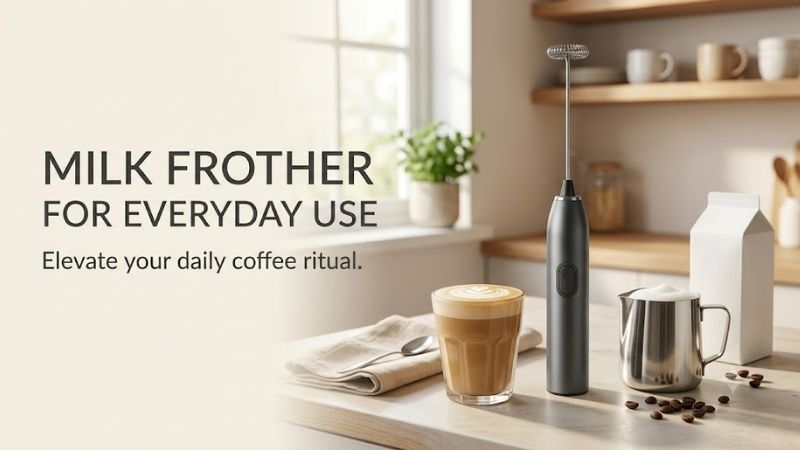
A handheld frother typically uses a battery-powered or rechargeable motor to rotate a small whisk.
The user places the whisk into milk and controls its position.
These devices are compact, inexpensive in many cases, and easy to store.
They can be useful for quick mixing tasks.
However, most handheld frothers do not heat milk.
If you want a hot latte, you generally need to heat milk separately using an appropriate method.
The resulting foam may also be coarser than carefully prepared steam microfoam.
Automatic Electric Frothers
Automatic frothers usually contain a jug or vessel with a mixing mechanism and electrical heating system.
Some provide separate programs for warm milk, hot foam, cold foam, or different foam densities.
These functions can be convenient for daily preparation.
However, advertised program names vary.
A model with a cold-foam button may produce a different texture from another appliance with the same label.
Check usable capacity, washing requirements, and whether the intended program works with your preferred milk.
Steam-Wand Frothers
An espresso machine’s steam wand heats milk using steam while incorporating air.
This method offers substantial control over texture when properly designed and used.
However, it requires practice.
Incorrect wand position may produce large bubbles, insufficient aeration, or milk that becomes too hot.
Steam wands also require immediate cleaning after use.
For a household that does not own an espresso machine, buying an entire espresso setup solely to froth milk may be unnecessary.
Manual Plunger Frothers
Manual frothers use repeated movement of a plunger or mesh screen to introduce air.
They do not necessarily require electrical power.
However, milk generally needs separate heating if a hot drink is desired.
A manual frother may be useful for occasional beverages, but daily operation involves more physical effort.
Some designs also have multiple mesh components that require careful cleaning.
Choosing Based on Your Favorite Drinks
Cappuccinos
Cappuccinos typically include espresso and textured milk.
Some styles emphasize a noticeable layer of foam.
An automatic frother can be convenient when you want a consistent foam topping.
However, a steam wand may offer finer control when the goal is a more integrated cafe-style texture.
Choose according to the beverage style you prefer.
Lattes
Lattes generally contain a greater proportion of milk relative to espresso than traditional cappuccinos.
A smooth, pourable texture is usually desirable.
An automatic jug that primarily makes stiff foam may be less appropriate than a model offering a lower-foam or warm-milk setting.
If you regularly prepare lattes, evaluate the amount of warm liquid milk left beneath the foam.
Iced Coffee and Cold Foam
Cold foam can add texture to iced coffee without heating the milk.
Some automatic frothers include dedicated cold-frothing programs.
Handheld whisks may also be useful for certain cold foam preparations.
However, cold foam results vary with milk composition, temperature, and ingredients.
A machine that produces excellent hot foam does not automatically perform equally well with cold milk.
Matcha Lattes
A handheld frother is often useful for mixing matcha with an appropriate amount of liquid.
However, matcha can form clumps when powder is added improperly.
A frother may help disperse the powder, but it does not replace careful preparation.
For hot matcha lattes, a separate milk-heating method may still be needed.
Hot Chocolate
Some automatic beverage frothers support mixing and heating chocolate-based drinks.
Others are intended only for milk.
Chocolate powder, syrups, and melted chocolate can create residue or interfere with the mixing mechanism.
Use these ingredients inside the frother only when the manufacturer permits it.
Otherwise, prepare the chocolate separately and froth the milk according to instructions.
Heating Features That Matter
Hot Froth vs. Warm Milk
An automatic frother may include both a foaming program and a milk-heating program.
These serve different purposes.
A foaming program introduces air into the milk.
A heating-only program is intended to warm milk without necessarily producing substantial foam.
For daily lattes, both can be useful.
If your machine only makes a thick foam, you may need to adjust your drink preparation process.
Temperature Control
Some frothers offer preset temperatures.
Others provide only a basic hot setting.
Temperature matters because overheating can change milk flavor, texture, and handling characteristics.
However, a digital temperature display does not guarantee perfect accuracy.
If precise beverage temperature matters, look for reliable measurement information.
Do not use a milk frother to heat liquids beyond its approved temperature and ingredient limits.
Automatic Shutoff
An automatic shutoff function can simplify operation.
However, it does not justify leaving the appliance running without attention.
Check whether the device stops at the end of the program or under abnormal operating conditions.
Also review its minimum milk-level requirements.
Minimum and Maximum Fill Levels
Automatic frothers often specify different maximum capacities for heating and frothing.
Milk expands when foam is created.
As a result, a vessel may support more milk in heating-only mode than in a high-foam program.
This distinction is essential.
Overfilling can cause spills, while underfilling may interfere with the mixing system.
Choosing the Right Capacity
One-Person Coffee Routine
A small automatic frother may be sufficient for one morning drink.
However, consider whether you prefer a large latte or a smaller cappuccino.
The usable capacity for foam may be lower than the jug’s total physical volume.
Choose based on your actual recipe.
Couples
For two people preparing drinks together, a larger capacity may reduce repeated cycles.
However, check whether the machine can froth enough milk for both beverages in one operation.
A large jug that produces only a small amount of warm liquid milk may not suit two substantial lattes.
Families
A higher-capacity milk frother may be useful for preparing several milk-based drinks.
However, certain models require separate batches.
For children, avoid serving excessively hot beverages and follow appropriate safe handling practices.
Occasional Guests
If you rarely make more than one drink, avoid buying a large appliance solely for occasional gatherings.
A smaller model may be easier to clean and store.
For frequent entertaining, larger usable capacity can provide meaningful convenience.
Milk Compatibility and Foam Quality
Whole Dairy Milk
Whole milk contains protein and fat that influence foam structure and mouthfeel.
It can produce a rich, creamy texture when properly frothed.
However, results depend on the appliance and milk processing.
Whole milk is not guaranteed to produce the largest foam volume in every machine.
For daily drinks, choose the texture and flavor you prefer.
Reduced-Fat and Skim Milk
Lower-fat dairy milk can behave differently during frothing.
Some preparations may produce a relatively large foam volume, but the mouthfeel may be less rich.
The exact result depends on protein content and frothing method.
A machine that handles whole milk well may create a different texture with skim milk.
Oat Milk
Oat milk is popular in coffee beverages, but formulations vary substantially.
Products marketed for barista use may contain ingredients intended to improve texture and performance.
However, the word barista is not a guarantee of perfect foaming.
Try a suitable milk product and follow the frother’s recommendations.
Soy Milk
Soy beverages contain proteins that can support foam formation.
However, stability varies with formulation, acidity, temperature, and preparation method.
Some soy beverages may behave differently when combined with acidic coffee.
Evaluate how the particular product works with your usual drink.
Almond Milk
Almond milk products differ in protein, fat, stabilizers, and other ingredients.
Some create limited foam.
Others may work reasonably well in certain frothers.
Do not assume all almond milks produce identical results.
Lactose-Free Dairy Milk
Lactose-free milk may still contain dairy proteins that contribute to frothing.
However, taste and performance can vary.
If you prefer lactose-free milk, choose a frother based on its practical performance with that product rather than assuming it is incompatible.
Frothing Performance: What to Evaluate
Foam Consistency
A useful frother should produce reasonably repeatable results when used with the same milk, volume, and program.
Inconsistent foam may result from differences in ingredient temperature, whisk position, fill level, or device performance.
When evaluating models, look for controlled demonstrations using similar conditions.
Bubble Size
Large bubbles can produce an airy topping.
Fine bubbles are generally preferable for smooth, pourable milk.
The right texture depends on your drink.
For latte art, a lower-volume, integrated microfoam is often more desirable than a thick mound of foam.
Foam Stability
Some foam collapses relatively quickly after preparation.
Stability depends on milk composition and processing.
A frother should be evaluated with the milk you intend to use.
A manufacturer demonstration using dairy milk may not predict results with an alternative beverage.
Heating Uniformity
An automatic frother may heat milk while mixing it.
However, the actual temperature may vary with fill level and starting milk temperature.
Choose a model with clear operating instructions and appropriate temperature controls.
Noise
Handheld whisks, automatic jugs, and steam wands produce different sounds.
A quiet appliance may matter during early morning preparation.
However, the terms quiet and low noise are not standardized performance measurements.
Everyday Cleaning and Maintenance
Why Milk Residue Matters
Milk contains proteins, fats, and sugars that can leave residue on heated surfaces.
If the appliance is not cleaned promptly, deposits can become harder to remove.
They may also create unpleasant odors.
For everyday use, cleaning access can matter more than the number of drink presets.
Nonstick Interior Coatings
Some automatic frothers have coated interiors.
These can simplify cleaning but require appropriate utensils and detergents.
Do not use abrasive pads on surfaces that prohibit them.
Dishwasher-Safe Components
Certain frothers have removable jugs that are dishwasher safe.
Others contain integrated electrical components and require handwashing or wiping.
Never assume the entire frother is immersible.
Check the exact instructions.
Cleaning Handheld Whisks
The whisk head commonly contacts milk directly.
Clean it after use as directed.
Avoid immersing the motor housing or charging port.
Inspect for residue around the whisk attachment.
Steam-Wand Cleaning
Steam wands require prompt cleaning after frothing.
Follow the espresso machine manufacturer’s wiping and purging instructions.
Do not allow milk residue to remain inside the steam outlet.
Steam can cause serious burns, so use the approved procedure rather than improvising.
Storage and Kitchen Space
Handheld Models
Handheld frothers generally occupy little storage space.
Some include stands.
However, a stand may not be necessary if the device can be stored safely and hygienically.
Automatic Jugs
An automatic frother usually needs a dedicated base and some counter space.
Check height and clearance beneath cabinets.
Also consider whether the lid and whisk assembly require separate storage.
Cord Management
Keep electrical cords away from sinks and hot surfaces.
Some models include cord storage.
A rechargeable handheld device may reduce countertop cords but introduces battery maintenance.
Multi-Appliance Coffee Stations
If you already own an espresso machine with a steam wand, another frother may duplicate existing capabilities.
However, an automatic cold-foam maker could still provide a distinct function.
Choose based on the actual gap in your setup.
Safety and Food Handling
Milk Is Perishable
Milk and most refrigerated plant-based beverages must be stored according to their labels.
Do not leave milk at room temperature for extended periods while preparing drinks.
As a general US food-safety rule, perishable ingredients should not remain unrefrigerated for more than two hours, reduced to one hour when ambient temperatures exceed 90°F.
Avoid Excessively Hot Milk
Heated milk and steam can cause burns.
Use the temperature setting appropriate for the appliance and beverage.
Do not handle a hot jug or steam wand without following its safety instructions.
Do Not Reheat Old Foam Repeatedly
Repeatedly heating and cooling milk may create food-quality and handling problems.
Prepare quantities that match your immediate needs.
Refrigerate unused milk appropriately.
Cleaning Between Different Milk Types
When preparing dairy and nondairy drinks, clean food-contact components appropriately.
This matters for people with milk allergies or other dietary restrictions.
Shared equipment may create cross-contact risks.
Choosing by Budget
Basic Handheld Frothers
These are useful when the main goal is quick mixing or simple foam.
They generally require minimal space.
However, they do not provide the heating convenience of an automatic jug.
Midrange Automatic Frothers
This category may offer hot foam, cold foam, and heating-only functions.
For daily milk-based drinks, these can be valuable.
However, evaluate usable capacity and cleaning convenience before paying for additional presets.
Premium Frothers
Higher-priced appliances may offer more control over temperature or texture.
However, price alone does not guarantee better foam.
Compare practical performance with your preferred milk and drink style.
Total Ownership Value
Consider cleaning effort, replacement whisk availability, electrical requirements, and warranty coverage.
An appliance used every morning should remain convenient after the novelty wears off.
Common Buying Mistakes
Buying Only by Foam Volume
A large amount of foam may not have the texture you want.
Assuming Every Frother Heats Milk
Most handheld whisk frothers do not contain a milk-heating system.
Ignoring Cold-Foam Capability
Hot frothing and cold frothing are different functions.
Overlooking Fill Limits
Foaming milk expands, so the maximum frothing volume may be lower than the heating capacity.
Assuming All Plant Milks Froth the Same
Formulation affects performance.
Choosing a Difficult-to-Clean Jug
Daily residue removal matters more than decorative features.
Frequently Asked Questions
What Type of Milk Frother Is Best for Everyday Use?
An automatic frother with useful hot and cold programs is convenient for regular milk-based drinks. A handheld model may be sufficient for simple foam and mixing.
Do Handheld Milk Frothers Heat Milk?
Most do not. They primarily introduce air or mix ingredients. Milk must be heated separately when needed.
Can I Froth Oat Milk?
Yes, many oat milk products can be frothed, but results depend on the formulation and appliance.
Is a Milk Frother the Same as a Steam Wand?
No. A steam wand uses steam to heat and texture milk, while many electric frothers use rotating whisks or other mixing systems.
Can I Put an Automatic Frother in the Dishwasher?
Only when the manufacturer explicitly approves the relevant components for dishwasher cleaning.
Is a Milk Frother Worth Buying if I Own an Espresso Machine?
It depends on whether your machine already provides suitable milk steaming and whether you need additional functions such as cold foam.
Conclusion
The best milk frother for everyday use should match the beverages you prepare most often, the milk you prefer, and the cleaning effort you can manage. A handheld frother offers compact, affordable mixing, while an automatic jug adds heating and convenient programs. For refined espresso milk texture, a suitable steam wand remains a strong option. Prioritize foam quality, usable capacity, safe operation, and easy cleaning rather than paying for unnecessary presets.






Write Your Review
No reviews yet. Be the first to share your experience!