
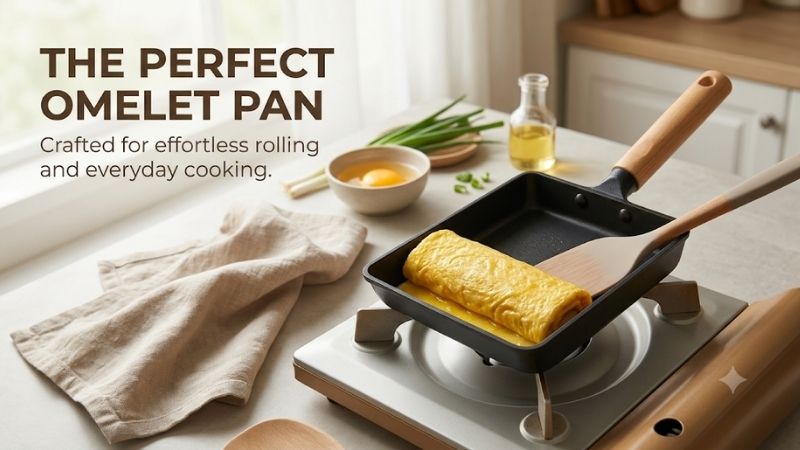
Choosing the right omelet pan can make folding eggs, controlling heat, and cleaning up after breakfast much easier. The best choice depends on cooking surface, shape, weight, and the number of eggs you usually prepare. This guide compares six real cookware options and explains which features matter most for different home cooks.
Quick verdict: Which omelet pan should you choose?
A good omelet pan should offer controlled heat, a cooking surface that releases delicate eggs, and sides that make folding and transferring food manageable. Beginners may prefer coated aluminum, while experienced cooks might favor seasoned carbon steel. The following selections cover different budgets, materials, and cooking preferences rather than treating one construction type as universally superior.
| Category | Recommended product | Main reason |
|---|---|---|
| Best dedicated omelet pan | de Buyer MINERAL B Omelette Pan | Rounded sides for folding |
| Best coated omelet/crepe design | SCANPAN CLASSIC Omelet/Crepe Pan | Low-profile nonstick surface |
| Best everyday nonstick | All-Clad HA1 Expert 10-Inch Fry Pan | Versatile flared sides |
| Best for ceramic nonstick | GreenPan Lima 8-Inch Frypan | Small, lightweight breakfast pan |
| Best practical family option | Tramontina Pots & Pans 10-Inch Nonstick Fry Pan | Broad everyday cooking surface |
| Best traditional cast iron | Lodge 8-Inch Cast Iron Skillet | Durable uncoated cooking surface |
For most beginners, an appropriately sized nonstick pan is easier to manage than uncoated cookware. The de Buyer is particularly attractive when folding technique and traditional cooking are priorities.
Quick comparison table
Pan size alone does not determine omelet performance because the diameter measured at the rim can be substantially larger than the flat cooking area. Materials, sidewall curvature, and weight also influence whether eggs slide cleanly and whether the pan can be tilted comfortably. These six choices provide meaningfully different approaches to cooking eggs.
| Product | Material | Size | Best for | Main trade-off |
|---|---|---|---|---|
| de Buyer MINERAL B Omelette Pan | Carbon steel | 9.5 inches | Traditional folded omelets | Requires seasoning |
| SCANPAN CLASSIC Omelet/Crepe Pan | Coated aluminum | 9.75 inches | Delicate eggs and crepes | Coating care |
| All-Clad HA1 Expert Fry Pan | Hard-anodized aluminum, PTFE coating | 10 inches | Everyday eggs and general cooking | Coating wears with use |
| GreenPan Lima Frypan | Hard-anodized aluminum, ceramic coating | 8 inches | Small portions | Not induction compatible |
| Tramontina Pots & Pans Fry Pan | Aluminum, nonstick coating | 10 inches | Family breakfast portions | Not listed for induction |
| Lodge Cast Iron Skillet | Seasoned cast iron | 8 inches | Traditional multiuse cooking | Weight and seasoning care |
How we selected these omelet pans
The most important criteria for an omelet pan are egg release, usable cooking surface, appropriate heat control, and how comfortably the cook can fold the finished omelet. Product construction, verified manufacturer specifications, and care requirements informed these recommendations. No firsthand testing, cooking measurements, or comparative durability experiments are claimed.
Material selection influences the learning curve. Nonstick coatings reduce the need for developed seasoning, while carbon steel and cast iron require a more deliberate cooking process.
Shape also matters. Rounded walls can make rolling an omelet easier, while sharply angled sides may interfere with the movement of a spatula.
Finally, cleaning requirements should match the owner’s habits. A pan used nearly every morning benefits from uncomplicated maintenance.
Detailed omelet pan recommendations
Each of these six pans supports egg cooking, but they do so with different compromises. A specialized carbon steel omelet pan rewards users who prefer traditional techniques, while a lightweight coated frying pan may provide better convenience for rushed mornings. The reviews explain what makes each option useful and when another design would be preferable.
de Buyer MINERAL B Omelette Pan — Best traditional omelet pan
The de Buyer MINERAL B Omelette Pan is a French-made carbon steel pan with gently curved sides designed to assist with flipping, folding, and sliding omelets onto a plate. The 9.5-inch model has a 7.7-inch cooking surface, a 2.5 mm body, and a listed weight of approximately 3 pounds, making it particularly relevant for two- or three-egg preparations.
Best for: Experienced home cooks who enjoy traditional omelet techniques.
Why we picked it: Its shape is specifically designed for omelet preparation rather than general frying alone.
Key specifications:
-
Diameter: 9.5 inches.
-
Cooking surface: 7.7 inches.
-
Material: Carbon steel.
-
Thickness: 2.5 mm.
-
Weight: approximately 3 pounds.
-
Riveted, epoxy-coated steel handle.
-
Manufacturer-listed oven flash use: up to 400°F for less than 10 minutes.
Features and practical performance
The rounded sidewalls support folding an omelet by tilting the pan or guiding the eggs with a spatula.
Carbon steel can develop a cooking surface that releases eggs effectively when seasoning, heat, and fat are managed correctly.
Unlike manufactured nonstick coatings, its surface needs continued seasoning care.
It may not be the simplest choice for someone who has never cooked with carbon steel.
What makes it different: A dedicated omelet profile with traditional seasoned metal construction.
Pros:
-
Rounded walls designed for omelet folding.
-
Durable metal cooking surface.
-
Useful for scrambled eggs and other everyday recipes.
Cons:
-
Requires seasoning and prompt drying.
-
Less forgiving than coated cookware for beginners.
Buy if: You regularly prepare folded omelets and want a traditional pan.
Skip if: You prefer dishwasher cleaning and minimal maintenance.
SCANPAN CLASSIC Omelet/Crepe Pan — Best coated specialty pan
The SCANPAN CLASSIC Omelet/Crepe Pan combines a 9.75-inch cooking format with relatively low sides intended for easy crepe preparation and omelet cooking. Its coated aluminum construction and rivetless handle design make it appealing to people who want a specialized breakfast pan without maintaining traditional iron seasoning.
Best for: Delicate omelets, thin crepes, and frequent breakfast cooking.
Why we picked it: The manufacturer identifies omelets and crepes as its principal uses.
Key specifications:
-
Nominal size: 9.75 inches.
-
CLASSIC nonstick cookware construction.
-
Low-profile sides.
-
Rivetless Bakelite handle.
-
Manufacturer-listed dishwasher and oven compatibility.
-
Compatible with several conventional stovetops; induction is not listed for this CLASSIC model.
Features and practical performance
A smooth coated cooking surface can help delicate eggs release without tearing.
The absence of interior handle rivets also removes a common area where cooking residue can accumulate.
Low sides make it easier to reach beneath a thin omelet.
However, coating longevity still depends on appropriate utensils, temperature control, and cleaning.
What makes it different: A purpose-oriented shape that also accommodates crepes.
Pros:
-
Designed for delicate egg preparation.
-
Low sides for easy access.
-
No traditional seasoning required.
Cons:
-
Specialized shape may not suit deeper recipes.
-
Nonstick finish needs appropriate care.
Buy if: You frequently make French-style omelets or crepes.
Skip if: You specifically need induction-compatible cookware.
All-Clad HA1 Expert 10-Inch Fry Pan — Best everyday nonstick
The All-Clad HA1 Expert 10-Inch Fry Pan uses hard-anodized aluminum with a PTFE nonstick interior and an induction-compatible stainless steel base. Its flared sides are designed to facilitate turning and moving food, making it a practical option for American-style omelets, scrambled eggs, and ordinary pan-frying.
Best for: Households that want one frying pan for breakfast and other meals.
Why we picked it: It combines a convenient omelet size with broad cooking versatility.
Key specifications:
-
Diameter: 10 inches.
-
Hard-anodized aluminum body.
-
PTFE nonstick surface.
-
Stainless steel base.
-
Induction compatible.
-
Oven safe up to 500°F.
-
Dishwasher-safe according to the manufacturer.
Features and practical performance
The nonstick surface reduces the difficulty of releasing eggs.
Flared sides help a spatula reach the underside of a finished omelet and support transferring food to a plate.
Aluminum construction provides responsive heat transfer, although even cooking still depends on burner size and preheating.
All-Clad recommends gentle utensils and hand washing to protect the coating despite its dishwasher-safe designation.
What makes it different: Broad stove compatibility and general-purpose construction.
Pros:
-
Compatible with induction.
-
Useful for multiple cooking tasks.
-
Convenient nonstick food release.
Cons:
-
PTFE coating requires appropriate heat management.
-
Not an uncoated lifetime cooking surface.
Buy if: You want a versatile egg pan for everyday cooking.
Skip if: You want cookware without a manufactured nonstick coating.
GreenPan Lima 8-Inch Frypan — Best ceramic nonstick option
The GreenPan Lima 8-Inch Frypan combines hard-anodized aluminum construction with a ceramic nonstick coating designed for convenient food release. Its listed 1.17-pound weight makes it substantially lighter than many iron pans, while the compact diameter suits individual breakfast portions and small kitchens.
Best for: Single-person breakfasts and buyers seeking ceramic-coated cookware.
Why we picked it: Its small size, relatively low weight, and coating type provide a distinct alternative to heavier pans.
Key specifications:
-
Diameter: 8 inches.
-
Weight: 1.17 pounds.
-
Hard-anodized aluminum body.
-
Ceramic nonstick surface.
-
Manufacturer states the coating is made without intentionally added PFAS.
-
Oven safe up to 600°F.
-
Hand wash only.
-
Not compatible with induction.
Features and practical performance
A small, lightweight pan is easy to reposition while eggs are cooking.
The ceramic-coated surface supports relatively simple release and cleanup when used appropriately.
However, ceramic nonstick performance can decline with wear and improper heat exposure.
GreenPan recommends gentle utensils and hand washing.
What makes it different: Lightweight ceramic-coated construction for smaller servings.
Pros:
-
Easy to handle.
-
Compact storage footprint.
-
No traditional seasoning.
Cons:
-
Not induction compatible.
-
Limited capacity for larger omelets.
Buy if: You cook one- or two-egg breakfasts on a compatible stove.
Skip if: You frequently prepare large family portions.
Tramontina Pots & Pans 10-Inch Nonstick Fry Pan — Best practical family option
The Tramontina Pots & Pans 10-Inch Nonstick Fry Pan uses heavy-gauge aluminum construction, a reinforced nonstick interior, and a soft-grip silicone-covered handle. Its broad cooking surface can accommodate larger omelets and ordinary fried foods, making it attractive for households that want practical daily cookware without choosing a specialty omelet design.
Best for: Family breakfasts and general stovetop cooking.
Why we picked it: The pan combines a useful diameter with straightforward cleaning and broad everyday usability.
Key specifications:
-
Diameter: 10 inches.
-
Heavy-gauge aluminum body.
-
Reinforced nonstick interior.
-
Silicone-covered handle.
-
Compatible with gas, electric, and ceramic glass cooktops.
-
Oven safe up to 350°F.
-
Dishwasher safe.
Features and practical performance
The cooking surface provides room for larger omelets containing vegetables, cheese, and other fillings.
Its coated interior helps prevent delicate eggs from adhering when the pan is used correctly.
The handle offers comfortable everyday control, although users should follow the manufacturer’s precautions concerning heat.
The model is more of a multipurpose frying pan than a dedicated French omelet pan.
What makes it different: Everyday versatility and a user-friendly handle arrangement.
Pros:
-
Useful for omelets and general frying.
-
Dishwasher-compatible according to the manufacturer.
-
Broad cooking surface.
Cons:
-
Induction compatibility is not listed.
-
Larger than necessary for a single egg.
Buy if: You prepare breakfast for several people and want one general-purpose pan.
Skip if: You need a dedicated folding shape or induction compatibility.
Lodge 8-Inch Cast Iron Skillet — Best traditional cast iron
The Lodge 8-Inch Cast Iron Skillet offers a compact, traditionally seasoned cooking surface that can prepare eggs, breakfast meats, vegetables, and other skillet foods. Although it is not specifically shaped for French omelet folding, it provides a durable alternative for home cooks who already understand cast iron temperature control and seasoning maintenance.
Best for: Cast iron enthusiasts who want versatile cookware.
Why we picked it: Its traditional construction is useful for households that prefer uncoated cooking surfaces.
Key characteristics:
-
Nominal diameter: 8 inches.
-
Seasoned cast iron construction.
-
Pouring spouts.
-
Conventional skillet handle.
-
Compatible with common stovetops, including induction, subject to manufacturer guidance.
Features and practical performance
Cast iron retains heat effectively but responds more slowly to changes in burner temperature than many lightweight aluminum pans.
For omelets, this means careful preheating and moderate heat are particularly important.
Eggs may stick when seasoning is inadequate or the surface is overheated.
The skillet’s main advantage is versatility rather than dedicated omelet geometry.
What makes it different: Traditional seasoned cast iron construction without a disposable nonstick finish.
Pros:
-
Durable.
-
Multipurpose cooking surface.
-
Suitable for different heat sources.
Cons:
-
Less convenient for delicate French omelets.
-
Heavier and more maintenance-intensive than coated aluminum.
Buy if: You already enjoy cast iron cooking.
Skip if: You need effortless egg release from the first use.
Buying guide: What matters when choosing an omelet pan?
An omelet pan should match the number of eggs you cook, the style of omelet you prefer, and your willingness to maintain its cooking surface. A large frying pan may be convenient for ingredient-heavy American omelets, while a smaller, rounded pan can offer better control when preparing a delicate French omelet.
Pan size and the number of eggs
Pan diameter influences omelet thickness, folding difficulty, and available space for fillings. A small pan spreads the egg mixture into a thicker layer, while a larger pan distributes the same quantity more thinly. Neither result is inherently better, but the cooking technique should match the chosen dimensions.
For one or two eggs, an 8-inch pan is often practical.
For two or three eggs, approximately 9–10 inches provides useful flexibility.
Large family portions may require a 10–12-inch pan, depending on the amount of filling.
Do not assume a larger pan is always easier to use.
Surface material and food release
Eggs contain proteins that can adhere strongly to cooking surfaces when heat and surface preparation are unsuitable. Nonstick coatings, developed carbon steel seasoning, and well-maintained cast iron can all reduce adhesion, but they involve different trade-offs.
Coated aluminum generally offers the lowest initial learning curve.
Carbon steel rewards consistent technique and maintenance.
Cast iron is versatile but may require more deliberate temperature control.
Choose the material according to your cooking habits rather than assuming one is automatically best.
Rounded sides versus straight sides
Rounded or flared sides help guide cooked eggs toward the edge of the pan during folding and serving. A sharp transition between the base and sidewall can make it more difficult to roll a delicate omelet with a spatula, especially when the eggs remain soft inside.
A dedicated French omelet pan benefits from smooth curvature.
An American omelet containing substantial fillings may work well in an ordinary nonstick skillet.
A high-sided sauté pan is less convenient for traditional folding techniques.
Weight, handle control, and cooktop compatibility
Weight matters because omelet preparation frequently involves tilting, lifting, and gently moving the pan. A heavier pan can feel stable but may become tiring during repeated cooking. Handle length and attachment also influence comfort, while compatibility with induction or other burners must be verified separately.
A lightweight aluminum pan is often convenient for beginners.
Carbon steel offers a middle ground in many sizes.
Cast iron is usually heavier and requires more effort to reposition.
Before purchasing, confirm that the pan works on your stove and fits your burner.
How to cook a better omelet in any pan
Good cookware makes omelet preparation easier, but technique determines whether the eggs turn out tender, evenly cooked, and easy to fold. Pan temperature, egg mixture, cooking fat, and timing all influence the result. These fundamentals apply across different materials, although specific adjustments may be necessary for each pan.
Prepare the eggs and fillings before heating
Omelets cook quickly, so ingredients should be ready before the eggs enter the pan. Vegetables that release considerable water or require longer cooking should generally be prepared separately to prevent excess moisture from interfering with the egg mixture.
Beat the eggs until the mixture is reasonably uniform.
Prepare cheese, herbs, and other fillings.
Cook raw ingredients that require separate preparation.
Keep everything close enough to add promptly.
Avoid overloading a delicate omelet with excessively large fillings.
Use moderate and controlled heat
Excessive heat can cause egg proteins to contract rapidly, producing a dry or rubbery texture. Gentle and controlled cooking is particularly important for French-style omelets, while somewhat firmer cooking may be appropriate for an American folded omelet.
Preheat the pan gradually.
Add a suitable amount of cooking fat.
Pour in the eggs when the surface is ready.
Adjust the heat according to how quickly the mixture sets.
Avoid assuming maximum heat produces better results.
Fold the omelet without tearing
Folding works best when the egg mixture has developed enough structure to move but remains flexible. If the omelet is lifted too early, the center may tear; if cooked excessively, the edges can become dry and difficult to fold neatly.
Loosen the perimeter with an appropriate spatula.
Gently lift one side.
Fold the cooked egg over the filling or toward the center.
Transfer it carefully to a serving plate.
Use utensils compatible with the pan’s coating.
Frequently Asked Questions
Omelet pan buyers often want to know whether a dedicated model is necessary, which diameter is most practical, and how to prevent delicate eggs from sticking. These questions are important because successful omelet cooking depends on the relationship between cookware and technique rather than the brand alone.
What size omelet pan is best for two eggs?
An 8-inch pan often works well for two eggs, especially when preparing a compact omelet with modest fillings. A 9- or 10-inch pan can produce a thinner layer and provide additional room for folding, but cooking times and handling will differ.
Choose based on your preferred omelet thickness.
Is a nonstick pan better for omelets?
A properly maintained nonstick pan is often easier for beginners because delicate eggs can release with less difficulty. Carbon steel and cast iron can also work well, but usually require greater attention to seasoning, heat, and cooking fat.
Nonstick convenience should be balanced against coating care requirements.
Can I make omelets in a stainless steel pan?
Yes. Stainless steel can be used for omelets, but it is generally less forgiving when the surface temperature or fat application is incorrect. Proper preheating, controlled heat, and suitable cooking fat are important for preventing eggs from sticking.
Beginners may find coated cookware easier.
How do I avoid a rubbery omelet?
Rubbery eggs often result from excessive cooking temperatures or cooking too long. Use moderate heat, monitor the eggs closely, and stop cooking according to the desired texture while still ensuring any fillings have been prepared safely.
Avoid repeatedly leaving the omelet on a very hot pan after it has set.
Conclusion
The best omelet pan depends on your technique, preferred surface, and typical portion size. The de Buyer MINERAL B Omelette Pan is suited to traditional folded omelets, while the SCANPAN CLASSIC offers a dedicated coated alternative. The All-Clad HA1 Expert and Tramontina nonstick frying pans provide broader everyday versatility, while GreenPan and Lodge address different material preferences. Prioritize manageable dimensions, controlled heat, easy food release, and realistic maintenance requirements to make breakfast preparation more reliable.



Write Your Review
No reviews yet. Be the first to share your experience!