
A soup pot and a stock pot look almost identical at a glance. Both are tall-sided pots with two loop handles and a lid, and both spend their lives simmering liquid. Yet the two shapes serve different jobs, and picking the wrong one can mean soup that takes forever to reduce or stock that boils over.
The core difference is geometry. A soup pot is wider than it is tall, usually holding 5 to 8 quarts, with a broad base that heats liquid fast and lets steam escape. A stock pot is taller than it is wide, usually holding 12 quarts or more, with high sides that slow evaporation so a long simmer stays gentle. Once you understand that one shape favors evaporation and the other fights it, the choice gets simple.
This guide compares the two shapes side by side, then looks at five solid pots: three soup pots and two stock pots.
What Is a Soup Pot?
A soup pot is a wide, mid-capacity pot built for everyday soups, chowders, stews, and chili. Most soup pots hold 5 to 8 quarts, which feeds a family of four to six with leftovers for lunch the next day. The diameter is close to the height, so the cooking surface is generous and the liquid sits in a relatively shallow layer.
That wide base does three useful things. First, it heats liquid faster, because more of the pot touches the burner. Second, it gives you room to saute onions, garlic, and aromatics right in the pot before you add broth. Third, it lets steam escape, which helps a soup thicken as it simmers.
Soup pots usually come with a lid, but you will often cook with the lid ajar or off entirely. For most home cooks, a soup pot in the 6-quart range is the pot that gets used two or three times a week.
What Is a Stock Pot?
A stock pot is a tall, high-capacity pot built for long, slow simmering. Most stock pots hold 12 quarts or more, with sides that rise well above the liquid line. The tall shape is deliberate: it reduces the surface area of the liquid, which slows evaporation during a simmer that can last four hours or longer.
That shape suits a different set of jobs. Stock pots are the tool for homemade chicken stock, beef stock, and vegetable stock, where bones and vegetables need to stay submerged for hours. They also handle big-batch cooking: a large pot of chili for a crowd, a full batch of tomato sauce, corn on the cob for a gathering, or pasta water for a pound or two of spaghetti.
The narrow base relative to the volume means a stock pot heats more slowly than a soup pot of the same capacity, and it needs a burner that matches its diameter. A stock pot is a specialist, and it earns its shelf space when you cook in bulk or simmer for hours.
Soup Pot vs Stock Pot: The Key Differences
Shape and dimensions
The most visible difference is the ratio of width to height. A soup pot is about as wide as it is tall, sometimes wider. A stock pot is clearly taller than it is wide. That ratio drives almost every other difference between the two.
A wide soup pot spreads heat across a large base, so a 6-quart soup pot can bring water to a simmer noticeably faster than a 12-quart stock pot holding the same amount of liquid. A tall stock pot concentrates heat at the bottom and relies on convection to move heat upward through a deep column of liquid.
Capacity
Soup pots usually hold 5 to 8 quarts, enough for a family dinner, a batch of soup for the week, and a pot of chili. Stock pots usually hold 12 quarts or more, with 16- and 20-quart models common for canning and very large batches. If you cook for one or two people, a 12-quart stock pot will feel oversized. If you cook for eight or freeze meals in bulk, a 6-quart soup pot will feel small.
Evaporation and reduction
A soup pot has a large open surface, so steam escapes freely. That is a benefit when you want a soup to thicken or a sauce to reduce. A stock pot has a small open surface relative to its volume, so liquid loss during a long simmer stays low. That is a benefit when you want a stock to stay at a steady level for hours without topping up.
The practical rule is simple: if you want liquid to reduce, pick the soup pot. If you want liquid to stay put, pick the stock pot.
Heat control and sauteing
A soup pot wins for sauteing. The wide base lets you brown onions, sear meat, and bloom spices in a single layer with good contact. A stock pot has a narrower base, so ingredients pile up and steam instead of browning. Many cooks saute in a separate pan and transfer everything to the stock pot, which adds a step and a dish to wash.
At a Glance: Soup Pot vs Stock Pot
| Feature | Soup Pot | Stock Pot |
|---|---|---|
| Typical capacity | 5 to 8 quarts | 12 quarts or more |
| Shape | Wide, about as wide as tall | Tall, taller than wide |
| Best for | Everyday soup, chili, stew | Stock, big batches, pasta |
| Evaporation | Faster, good for reduction | Slower, good for long simmers |
| Sauteing | Excellent, wide base | Limited, narrow base |
| Storage | Fits standard cabinets | Needs tall shelf space |
The Soup Pot Side
1. Tramontina Signature Tri-Ply Clad Stainless Steel 6-Quart Sauce Pot
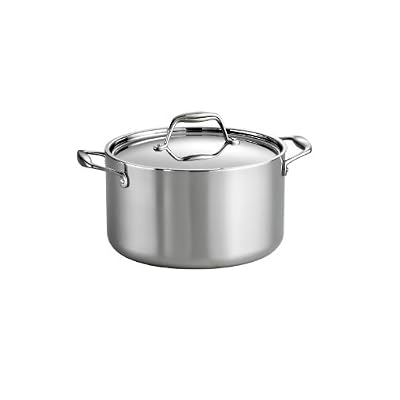
The Tramontina Signature Tri-Ply Clad 6-Quart Sauce Pot is a classic soup pot shape in a tri-ply build. Three bonded layers run through the base and walls: 18/10 stainless steel inside, an aluminum core in the middle, and magnetic stainless steel outside.
At 6 quarts, it sits right in the sweet spot for a family soup pot. The whole pot is dishwasher safe, and it is NSF certified, which tells you the build meets commercial kitchen standards.
Specs:
– Capacity: 6 quarts
– Construction: Tri-ply clad, 18/10 stainless steel with aluminum core
– Compatibility: Induction, gas, electric, glass cooktops
– Lid: Stainless steel lid included
– Care: Dishwasher safe, NSF certified
– ASIN: B00JAQ83WM
2. Daniks Classic 6.5 Quart Stainless Steel Stock Pot with Glass Lid

The Daniks Classic 6.5 Quart pot leans on a glass lid, which is a genuine advantage for soup. You can watch the simmer without lifting the lid and losing heat, and the built-in measuring scale on the interior wall helps you add the right amount of liquid. The tri-ply bottom spreads heat evenly across the base.
At 6.5 quarts, it holds a little more than the Tramontina, which helps when you cook for six or want extra leftovers. The 18/0 stainless steel body resists rust and will not react with acidic ingredients like tomatoes.
Specs:
– Capacity: 6.5 quarts
– Construction: 18/0 stainless steel with tri-ply bottom
– Lid: Heat-resistant glass lid
– Interior: Built-in measuring scale
– Compatibility: All stovetops including induction
– ASIN: B0849Z9BBL
3. All-Clad D3 Stainless Steel 6 Quart Stockpot With Lid

The All-Clad D3 6 Quart Stockpot is the premium pick on the soup pot side. It is made in the USA with three bonded layers of stainless steel and aluminum, handcrafted in the All-Clad factory in Canonsburg, Pennsylvania.
What sets this pot apart is the way it handles a full range of jobs. The wide base sautes aromatics well, the tall-enough sides hold a family batch of soup, and the lid seals tightly for a slow simmer. It is oven safe and induction compatible, so it moves from stovetop to oven without a second pan.
Specs:
– Capacity: 6 quarts
– Construction: 3-ply bonded stainless steel with aluminum core
– Origin: Made in the USA
– Compatibility: Induction, oven safe
– Lid: Stainless steel lid included
– ASIN: B004T6J88Q
The Stock Pot Side
4. Kirecoo Stainless Steel Stock Pot, 12 Quart
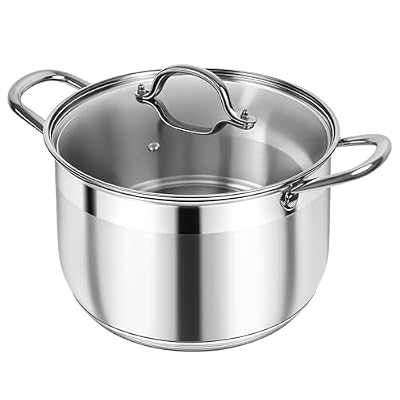
The Kirecoo 12 Quart Stock Pot is a straightforward big-batch pot. The 5-layer thickened bottom is about 10 mm thick, built from aluminum, iron, and a magnetic base, which spreads heat across the wide bottom and resists warping.
At 12 quarts, this pot handles a full batch of stock, a large pot of pasta, or chili for a crowd. The riveted stainless steel handles give a secure grip when the pot is full. One note: the maker says this size is not ideal for induction, because the large diameter weakens the magnetic field, so gas and electric cooktops suit it best.
Specs:
– Capacity: 12 quarts
– Construction: Stainless steel with 5-layer thickened bottom, about 10 mm
– Lid: Tempered glass lid
– Handles: Riveted stainless steel side and lid handles
– Compatibility: Gas, electric, ceramic, halogen; not ideal for induction
– ASIN: B0DNYYLFM1
5. Viking 3-Ply Stainless Steel Stock Pot, 12 Quart

The Viking 3-Ply 12 Quart Stock Pot brings a professional build to the stock pot side. The 3-ply construction pairs a non-reactive 304 stainless steel interior with an aluminum core and a magnetic stainless exterior, so heat moves efficiently through the whole pot. The mirror finish and rolled rims give it a clean, professional look.
At 12 quarts, it is sized for stock, gumbo, pasta, chili, and sauces in large quantities. The pot is dishwasher safe, oven safe, and induction ready, which makes it more flexible than many large stock pots.
Specs:
– Capacity: 12 quarts
– Construction: 3-ply stainless steel, 304 interior with aluminum core
– Compatibility: Induction, gas, electric; oven safe
– Lid: Stainless steel lid included
– Care: Dishwasher safe
– ASIN: B016K5MI5I
How to Choose Between a Soup Pot and a Stock Pot
Match the pot to the job you do most often. If you make soup, chili, or stew two or three times a week for a household of four to six, a soup pot in the 6-quart range is the right call. It heats fast, sautes well, reduces nicely, and stores easily. The Tramontina, Daniks, and All-Clad picks above all sit in that range, and they cover budget, mid-range, and premium builds.
If you make stock from scratch, cook for a crowd, or batch-cook and freeze meals, a stock pot in the 12-quart range earns its place. It holds a full chicken carcass with vegetables and water, keeps evaporation low over a four-hour simmer, and handles pasta water for a pound of spaghetti without boiling over. The Kirecoo and Viking picks above both serve that role, with the Viking offering induction compatibility and the Kirecoo offering a thick multi-layer base at a lower tier.
If you can only own one pot, pick the soup pot. A 6-quart soup pot can make a small batch of stock, and it handles everyday cooking far better than a 12-quart stock pot handles a weeknight soup. If you already own a soup pot and find yourself topping up a simmering stock or splitting a batch across two pots, that is the signal to add a stock pot.
FAQ
Can I use a soup pot to make stock?
Yes, a soup pot can make stock, but you will get a smaller yield and lose more liquid to evaporation. For a full batch of stock from a whole chicken carcass, a 12-quart stock pot works better.
Can I use a stock pot to make soup?
Yes, a stock pot can make soup, but it heats more slowly and sautes less well than a soup pot of the same volume. A stock pot works best for soup when you cook a large batch for a crowd.
What size soup pot is best for a family of four?
A 6-quart soup pot is the best size for most families of four. It holds a full batch of soup with room to spare, feeds four with leftovers, and fits a standard burner and cabinet.
Is a glass lid or a metal lid better for a soup pot?
A glass lid lets you watch the simmer without lifting the lid, which keeps heat and moisture in the pot. A metal lid is more durable, handles higher oven temperatures, and will not crack if dropped. For oven use and long-term durability, a metal lid is the safer choice.
Disclosure: As an Amazon Associate, we earn from qualifying purchases made through links on this page, at no extra cost to you.
Write Your Review
No reviews yet. Be the first to share your experience!