
Chia seeds earn their place in the pantry by doing a lot with very little effort. A spoonful thickens a smoothie, turns milk into pudding overnight, binds a vegan egg for baking, and adds fiber, protein, and plant-based omega-3 fats to oatmeal, yogurt, and salads. The seeds are tiny, mild in flavor, and shelf stable, which makes them one of the easiest pantry upgrades for everyday cooking.
The catch is that most chia bags look alike. Black or white, organic or conventional, whole or ground, one pound or two and a half — the differences sit in the details on the label. This guide compares five chia seed options sold on Amazon, each from a different brand, so you can match a bag to how you actually cook.
Disclosure: As an Amazon Associate, this site earns from qualifying purchases made through links in this article.
How to Choose Chia Seeds
Black chia vs white chia
Most chia sold on Amazon is black chia, the dark speckled seed most people picture. White chia comes from a different flower color of the same plant family and looks pale cream. Nutrition is close between the two, with black chia carrying a little more fiber and white chia a little more protein and omega-3 fats in ALA form. The practical difference is visual: white chia disappears into pale batters, light smoothies, and yogurt, while black chia shows up as dark specks. For pale muffins or vanilla pudding, white chia blends in better; for oatmeal, chocolate smoothies, and savory dishes, black chia works just as well.
Whole vs ground chia
Whole chia seeds gel when they meet liquid, forming a soft coating that thickens puddings and drinks. That gel is the reason chia works as an egg substitute and a thickener. Ground chia, milled from whole seeds, skips the gel texture and mixes smoothly into flour, sauces, and dressings. Ground chia is handy for baking and for anyone who dislikes the texture of whole seeds in a drink, but it loses the visible gel that makes chia pudding work.
Organic and other labels
Organic certification means the seeds were grown without synthetic pesticides and fertilizers, and many organic bags also carry Non-GMO Project Verified, gluten-free, vegan, and kosher marks. If gluten-free matters in your kitchen, look for a bag that names batch testing for gluten, since chia is often processed in facilities that also handle other grains.
Bag size and storage
Chia is sold in bags from 8 ounces to 2.5 pounds and beyond. A 16-ounce bag suits a household that uses chia a few times a week; a 2-pound or 2.5-pound bag suits daily smoothie makers and bakers who go through seeds quickly. Chia keeps for months in a cool, dry cupboard, and a resealable bag or a jar with a tight lid protects it from humidity. Buying in bulk only saves money if you use the seeds before they lose their fresh, neutral flavor.
What to skip
Skip seed blends that mix chia with flax and hemp if you want pure chia, since a blend changes the gel and the flavor. Skip chia drinks and pudding mixes here, since those are finished products rather than plain seeds.
1. Viva Naturals Organic Chia Seeds, 2 lb

Viva Naturals is the most widely recommended organic chia in roundups of the category, and the listing earns that spot by naming its full certification set out loud: USDA Organic, Non-GMO Project Verified, vegan, gluten-free, kosher, paleo, and keto. The bag holds 2 pounds of whole black chia seeds, a size that suits daily use without demanding a huge pantry commitment.
The seeds come from organic farms in Latin America, and the listing describes them as small-batch cleaned, which matters because loose debris is the most common complaint about bulk seeds. The flavor is neutral, so the seeds blend into smoothies, salads, oatmeal, and chia pudding without changing the taste of the dish.
Specs: Whole black chia seeds; USDA Organic; Non-GMO Project Verified; vegan; gluten-free; kosher; paleo and keto friendly; 2 lb resealable pouch; ASIN: B00OZYNGUS
2. BetterBody Foods Organic Chia Seeds, 2 lb

BetterBody Foods sells the best-selling organic chia on Amazon, and the listing is built around everyday versatility. The 2-pound jar holds whole black chia seeds that the brand describes as flavor neutral, gluten-free, vegan, nut-free, raw, low-carb, non-GMO, and paleo friendly. The jar, rather than a pouch, is the detail that sets it apart: a wide-mouth container with a resealable lid that scoops cleanly and sits neatly on a pantry shelf.
The brand highlights fiber first, noting that a serving carries a large share of the daily recommended fiber intake, along with omega-3 fats, protein, calcium, iron, and potassium. The seeds work in smoothies, oatmeal, yogurt, and baked goods, and the listing suggests them as an egg replacement in baking, where soaked chia binds batters in place of an egg.
Specs: Whole black chia seeds; USDA Organic; Non-GMO; gluten-free; vegan; nut-free; raw; keto friendly; 2 lb jar with resealable lid; ASIN: B00MPQ5ZOS
3. Navitas Organics Chia Seeds, 16 oz

Navitas Organics is the premium small-bag option in this lineup. The 16-ounce pouch holds whole black chia seeds that are USDA Organic, Non-GMO Project Verified, kosher, gluten-free, and keto friendly, sourced from small family farms in Mexico and South America. The brand positions chia as a plant-based superfood, and the listing names magnesium, calcium, and iron alongside fiber and omega-3 fats.
The smaller bag suits a household that uses chia a few times a week rather than every day, or a cook who wants to try chia before committing to a bulk bag. The pouch is resealable, and the seeds are whole, so they gel for pudding and thicken smoothies the same way larger bags do.
Navitas names its organic certificate number on the listing, a level of traceability the other bags do not match. If certification paperwork matters to you, this is the most transparent pick in the group.
Specs: Whole black chia seeds; USDA Organic; Non-GMO Project Verified; kosher; gluten-free; keto friendly; 16 oz resealable pouch; ASIN: B001CGTN1I
4. Anthony’s Organic Chia Seeds, 2.5 lb
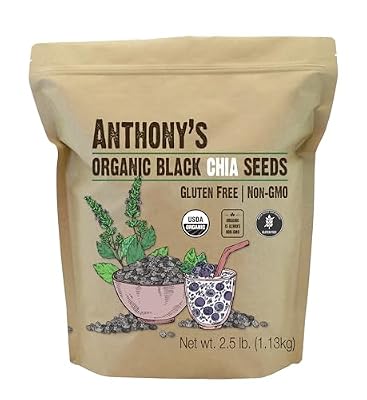
Anthony’s sells the largest bag in this guide: 2.5 pounds of whole black chia seeds in a resealable bag. The listing names USDA Organic certification, batch testing for gluten-free verification, vegan friendly, and keto friendly, with the seeds sourced from Latin America and packed in California. The bag is the bulk-value pick for households that use chia daily.
The seeds are raw and whole, with a neutral flavor that works in smoothies, oatmeal, baking, and chia pudding. The brand notes that the seeds absorb liquid to form a gel, which makes them useful as an egg substitute and as a thickener for soups, jams, and smoothies. The zip-lock style bag keeps the seeds fresh between uses, though the bag is heavy once opened, so a jar or canister helps for daily scooping.
One practical note: the listing carries a California Proposition 65 warning about trace lead, cadmium, and arsenic, which is common on dried seeds and grains sold in California.
Specs: Whole black chia seeds; USDA Organic; batch tested gluten-free; vegan; keto friendly; 2.5 lb resealable bag; ASIN: B00MEUUBZI
5. Yupik Raw Black Chia Seeds, 2.2 lb

Yupik offers a raw, non-organic black chia in a 2.2-pound bag, the pick for cooks who want plain seeds without paying for organic certification. The listing describes the seeds as whole, raw, gluten-free, kosher, and vegan, with a neutral flavor and a quick gel. The bag is resealable, and the seeds are sized for smoothies, chia pudding, oatmeal, and baking.
Raw chia means the seeds are not roasted or flavored, so they keep the mild, nutty character that works in both sweet and savory dishes. The 2.2-pound size sits between the 2-pound bags and the 2.5-pound Anthony’s bag, making it a good middle ground for a household that uses chia most days.
Yupik also sells an organic version of the same seed in the same size, so check the listing title before ordering if organic certification matters to you.
Specs: Whole raw black chia seeds; gluten-free; kosher; vegan; neutral flavor; quick gel; 2.2 lb resealable bag; ASIN: B07TVNV72P
At a Glance
| Pick | Seed | Size | Organic | Best for |
|---|---|---|---|---|
| Viva Naturals | Whole black | 2 lb | Yes | First bag, pudding |
| BetterBody Foods | Whole black | 2 lb | Yes | Daily smoothies, jar storage |
| Navitas Organics | Whole black | 16 oz | Yes | Small households, traceability |
| Anthony’s | Whole black | 2.5 lb | Yes | Bulk value |
| Yupik | Whole raw black | 2.2 lb | No | Plain bulk bag |
How to Use Chia Seeds
Chia pudding
Combine one part chia seeds with four parts milk or a milk alternative, add sweetener and flavorings such as vanilla or cocoa, stir well, and refrigerate for at least 20 minutes or overnight. Stir once after the first 10 minutes to break up clumps, since dry seeds can stick together before they gel.
Smoothies and oatmeal
Add one to two tablespoons of whole chia to a smoothie before blending, or stir it into hot oatmeal after cooking. In a smoothie, the seeds thicken the drink slightly and add fiber without changing the flavor. In oatmeal, they add texture and help the bowl stay satisfying through the morning.
Chia egg for baking
Mix one tablespoon of chia seeds with three tablespoons of water, let the mixture sit for 10 to 15 minutes until it forms a thick gel, and use it in place of one egg in muffins, pancakes, and quick breads. The gel binds batters and adds moisture, though it will not whip or leaven the way an egg does, so it suits dense bakes best.
Dry uses
Sprinkle whole chia over yogurt, salads, and avocado toast for a light crunch. Dry seeds need liquid nearby to soften, so pair them with moist foods rather than eating them dry on their own.
Storing Chia Seeds
Store chia in a cool, dry cupboard away from heat and humidity, in the original resealable bag or a jar with a tight lid. Whole seeds keep for many months at room temperature, and the fridge extends that further in warm kitchens. Ground chia goes stale faster than whole seeds, so grind only what you plan to use within a few weeks. If the seeds smell musty or taste bitter, replace the bag.
FAQ
How much chia should I eat in a day?
A common serving is one to two tablespoons, or about 15 to 30 grams, mixed into food or drink. That amount adds fiber, protein, and omega-3 fats without overwhelming a meal. Soak the seeds or pair them with liquid, since dry seeds absorb water as they pass through the body.
Do chia seeds need to be soaked before eating?
Soaking is not required, but it helps. Soaked seeds gel, which makes them easier to digest and lets them thicken puddings, smoothies, and oatmeal. Dry seeds sprinkled over moist food soften on their own, while seeds eaten dry should be followed with water.
What is the difference between black and white chia seeds?
Black chia is the common dark seed, while white chia is a pale seed from a different flower color of the same plant family. Nutrition is close, with black chia slightly higher in fiber and white chia slightly higher in protein and omega-3 fats. White chia blends into pale dishes, while black chia shows as dark specks.
Can chia seeds replace eggs in baking?
Yes, for binding and moisture. Mix one tablespoon of chia with three tablespoons of water, rest the mixture for 10 to 15 minutes until it gels, and use it in place of one egg. The swap works best in muffins, pancakes, and quick breads, where density is welcome and leavening comes from baking powder or soda.
Final Thoughts
The best chia seeds for most kitchens are the ones that match how often you cook with them. Viva Naturals is the strongest first buy, with the fullest certification list and a 2-pound bag that suits daily use. BetterBody Foods is the best everyday jar for smoothie makers who want easy scooping. Navitas Organics fits small households and cooks who value traceability, Anthony’s is the bulk-value pick for heavy users, and Yupik is the plain, affordable bag for cooks who skip organic certification.


Write Your Review
No reviews yet. Be the first to share your experience!