
Finding the right espresso cup set can make daily coffee preparation more enjoyable while improving how your drinks are presented and handled. From traditional porcelain demitasse cups to modern double-wall glass, the best options balance capacity, thermal comfort, durability, and style for your home coffee routine.
Quick Verdict: The Best Espresso Cups for Different Needs
Choosing espresso cups becomes easier when you identify how you prepare and serve coffee. Traditional porcelain suits short espresso servings, larger stoneware designs can accommodate small milk additions, and double-wall glass offers an attractive way to display crema. The best purchase should match your routine rather than simply your kitchen decor.
| Product | Best for | Material | Key advantage |
|---|---|---|---|
| Loveramics Egg 80 ml | Overall | Porcelain | Traditional café proportions |
| Fable Espresso Cups | Everyday use | Stoneware | Stackable four-piece set |
| De’Longhi Double Wall Espresso Glasses | Glass presentation | Glass | Insulated transparent design |
| Loveramics Bond 80 ml | Classic styling | Porcelain | Cup-and-saucer presentation |
| Bacimi Espresso Cups | Entertaining | Ceramic | Six-piece set |
| Loveramics Deco 60 ml | Compact servings | Porcelain | Distinctive stacked design |
The Loveramics Egg is a versatile starting point for people who primarily drink espresso, while Fable is attractive for households that value compact storage. For a more decorative experience, De’Longhi glassware allows the coffee’s color and crema to remain visible without requiring a conventional porcelain cup.
The 6 Best Espresso Cup Sets for Home Coffee Lovers
Not every espresso cup serves the same purpose. Differences in capacity, interior shape, wall thickness, and handle design can make one product more suitable for straight espresso and another better for small milk-based drinks. These six choices address different home-coffee preferences without assuming one material is universally superior.
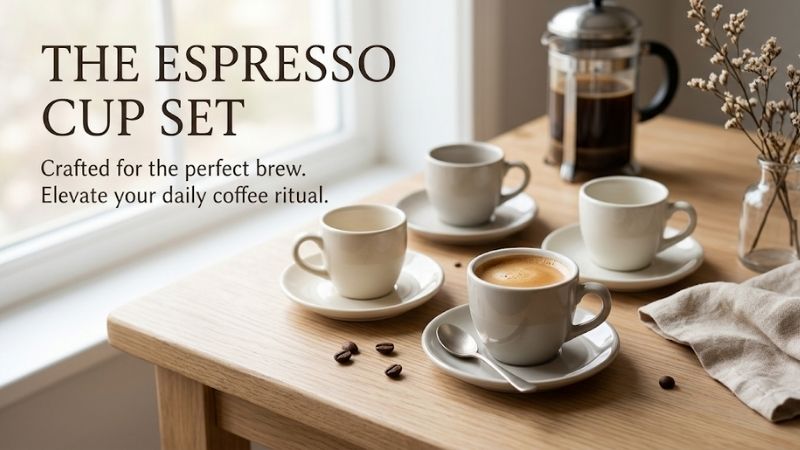
Loveramics Egg Espresso Cup and Saucer – Best Overall
The Loveramics Egg Espresso Cup and Saucer combines professional café styling with practical porcelain construction for everyday home brewing. Its 80 ml capacity is appropriate for most traditional espresso servings, while the rounded interior, substantial walls, and matching saucer provide a refined serving experience.
Key specifications
-
Capacity: 80 ml
-
Material: high-fired porcelain
-
Matching saucer
-
Multiple color options
-
Dishwasher- and microwave-safe according to the manufacturer
Design and construction
The Egg collection is made from porcelain fired at high temperatures, creating a durable glazed finish. Its thick walls give the cup substantial thermal mass, while the rounded interior provides an attractive resting shape for espresso.
One practical consideration is preheating. A cold, thick ceramic cup can initially draw heat from a small espresso shot. Rinsing the cup with hot water before brewing helps reduce that temperature difference.
Capacity and usability
An 80 ml cup offers enough space for a standard espresso serving and some small variations in shot volume. It also suits a traditional macchiato with a limited amount of milk foam.
However, it is not intended for a full cappuccino or latte. Buyers who prepare larger beverages should choose a corresponding cup size rather than overfilling a demitasse.
Advantages: Durable porcelain, attractive saucer, extensive colors, appropriate espresso capacity.
Limitations: Small for milk drinks, requires saucer storage, ceramic may chip.
Best buying scenario: A home espresso station where drink presentation matters as much as daily convenience.
Fable Espresso Cups – Best for Everyday Use
Fable Espresso Cups offer a modern stoneware alternative for coffee drinkers who want a coordinated set without collecting individual saucers. Their compact size, stackable design, and four-piece configuration work well in kitchens where storage space is limited and espresso is prepared regularly for more than one person.
Key specifications
-
Set of four
-
Capacity: 2.5 oz per cup
-
Stoneware construction
-
Stackable design
-
Manufacturer-listed dishwasher and microwave compatibility
Practical daily use
The most useful feature is stackability. Small coffee accessories can quickly occupy a large amount of cabinet space when every cup has a separate saucer. Fable’s configuration helps keep the coffee area organized.
Stoneware also offers a substantial feel in the hand. Its glazed surface is suitable for everyday beverage serving, although ceramic products should still be protected from strong impacts.
Drink compatibility
At 2.5 oz, these cups are intended for espresso rather than large coffee servings. They can accommodate small drinks without creating the oversized appearance of serving espresso in a conventional mug.
Buyers who often prepare cortados or cappuccinos should consider larger matching vessels.
Advantages: Four-piece set, stackable construction, clean appearance, practical maintenance.
Limitations: No saucers, small capacity, heavier feel than thin glass.
Best buying scenario: A household seeking coordinated everyday espresso cups with minimal storage requirements.
De’Longhi Double Wall Espresso Glasses – Best Glass Option
De’Longhi Double Wall Espresso Glasses are particularly appealing to home baristas who enjoy watching espresso settle beneath its crema. Their transparent construction creates a modern presentation, while the air space between the walls provides partial insulation and helps make the exterior more comfortable to handle than ordinary single-wall glass.
Design advantages
Double-wall construction separates the hot liquid from the outer surface through an insulating space. The result can reduce direct heat transfer and make a handleless glass more pleasant to hold.
This construction also creates a floating appearance, especially noticeable with espresso and layered coffee drinks.
Material considerations
Glass is attractive but less forgiving than durable ceramic when dropped or struck against hard objects. Its care requirements also depend on the exact model.
The different De’Longhi espresso glass versions may have different capacities, so check the specific package before purchase.
Who should choose it?
The design is ideal for people who value the visual appearance of coffee. It also works well for guests because the drink itself becomes part of the presentation.
It is less suitable for households where drinkware frequently experiences rough handling.
Advantages: Transparent presentation, insulated walls, modern appearance.
Limitations: Breakable construction, model-dependent capacity, requires careful washing.
Best buying scenario: A home coffee station where espresso appearance is an important part of the experience.
Loveramics Bond Espresso Cup and Saucer – Best Classic Design
The Loveramics Bond Espresso Cup and Saucer provides a traditional porcelain serving experience with a more restrained silhouette than the Egg collection. Its 80 ml capacity, defined handle, and matching saucer suit coffee lovers who appreciate a familiar café arrangement without choosing an oversized cup for a small espresso shot.
Design and handling
Bond uses a comparatively straight-sided exterior profile that gives it a structured appearance. Its handle allows the cup to be lifted without gripping the hot porcelain body directly.
The accompanying saucer is useful for serving a small spoon or accompaniment.
Thermal behavior
As with other thick porcelain cups, preheating can improve the serving experience. Small quantities of coffee lose heat quickly when poured into cold ceramic.
A short rinse with hot water is generally preferable to complicated heating methods.
Practical limitations
An 80 ml cup remains specialized for espresso and small variations. Buyers seeking one cup for every coffee drink may find the capacity restrictive.
The saucer also creates additional storage and washing requirements.
Advantages: Familiar handle, matching saucer, porcelain durability, suitable espresso proportions.
Limitations: Limited capacity, additional storage, breakable ceramic.
Best buying scenario: A classic home espresso service with a clean, understated appearance.
Bacimi Ceramic Espresso Cups – Best for Serving Guests
Bacimi Ceramic Espresso Cups are designed for households that want several coordinated demitasse cups without purchasing each piece separately. A six-cup configuration is convenient for gatherings, while the approximately 90 ml capacity offers enough room for traditional espresso servings and modest variations in beverage volume.
Serving capacity
The primary advantage is quantity. Six matching cups make it easier to prepare espresso for guests while maintaining a consistent table presentation.
A 90 ml capacity can also accommodate some double espresso servings, although exact drink volume depends on the recipe.
Everyday durability
The ceramic construction is practical for ordinary coffee service. However, users should verify the specific variant’s care instructions rather than assuming every decorative version has identical heat and dishwasher compatibility.
A six-piece set also needs more storage than a pair of cups.
Who benefits most?
This option is particularly relevant to families and people who entertain frequently. The uniform appearance creates a coordinated setting without requiring premium individual café cups.
Advantages: Six matching cups, useful capacity, convenient entertaining.
Limitations: More storage, variant-dependent care requirements, not suited to large milk drinks.
Best buying scenario: Serving several espresso drinks at once in a coordinated home setting.
Loveramics Deco Espresso Cup and Saucer – Best Compact Design
Loveramics Deco Espresso Cups appeal to coffee enthusiasts who prefer a small, distinctive vessel for traditional short espresso servings. Their 60 ml capacity, porcelain construction, and sculptural details make them more specialized than larger cups, while the matching saucer supports a carefully presented coffee ritual.
Compact capacity
A 60 ml cup is appropriate for small espresso preparations. It avoids unnecessary empty space and creates a balanced presentation for short drinks.
However, it offers limited flexibility when preparing larger double shots or drinks with milk.
Capacity should therefore be checked against the user’s usual brewing recipe.
Visual design
The Deco collection emphasizes distinctive form and decorative finish. This can make it attractive as part of a coordinated kitchen or coffee bar.
Its compact design also appeals to users who prefer traditional proportions over oversized drinkware.
Storage and care
The porcelain construction provides a familiar serving material, but care is still required to prevent chips and damage.
Stacking should follow the manufacturer’s intended arrangement.
Advantages: Compact espresso dimensions, distinctive design, porcelain construction, matching saucer.
Limitations: Very limited capacity, specialized application, requires careful handling.
Best buying scenario: Straight espresso drinkers seeking an attractive small-format serving set.
Buying Guide: How to Choose an Espresso Cup Set
The right espresso cup should reflect what you actually drink, how often you entertain, and how much cabinet space you have. A premium porcelain cup may be ideal for a daily straight espresso, while a stackable stoneware set may be more practical for a busy household with several coffee drinkers.
Choose the Right Capacity for Your Espresso Drinks
Espresso cups commonly hold around 60–90 ml, but the ideal capacity depends on the volume you prepare. A small cup works well for ristretto or single espresso, while a larger demitasse provides more room for a double shot or limited milk foam without creating an unnecessarily oversized serving vessel.
What to evaluate
Choose based on the liquid volume you normally brew rather than the nominal drink name alone. Espresso recipes vary, especially when comparing single and double baskets.
A cup should provide some space above the liquid to help prevent spills during handling.
Understand Porcelain, Stoneware, and Glass Differences
Porcelain, stoneware, and double-wall glass offer different handling experiences even when they have similar capacities. Porcelain provides classic café styling, stoneware often feels substantial and contemporary, and transparent double-wall glass emphasizes presentation while introducing additional fragility.
Material trade-offs
Ceramic cups can retain heat effectively when prewarmed, but they may initially absorb considerable heat from a small beverage.
Glass can provide a more contemporary appearance, particularly for espresso with visible crema. Its durability depends on construction and handling.
No material automatically makes the coffee taste better.
Consider Cup Shape and Drinking Rim Comfort
Cup geometry influences how espresso is presented, lifted, and sipped. A rounded interior may be aesthetically appealing, while a straight-sided cup offers a different handling experience. The thickness and shape of the rim also matter because espresso is usually consumed in small, concentrated sips.
Practical assessment
Consider whether the cup feels secure when lifted and whether its rim suits your preferred drinking style.
Handles should provide enough room for comfortable movement without forcing fingers against the hot ceramic body.
A beautiful shape is less valuable if the cup is awkward to use daily.
Check Dishwasher Safety and Storage Requirements
Care requirements can determine whether an espresso cup remains enjoyable to own. Dishwasher-safe stoneware may simplify everyday cleaning, while delicate glass or decorative finishes may require additional attention. Saucers, stacking designs, and set quantity also influence the amount of cabinet space needed.
Before purchasing
Verify the exact manufacturer’s care instructions and the number of pieces included.
A product described as a set may contain cups only or a cup-and-saucer combination. Do not assume the quantity without checking.
Frequently Asked Questions
What Size Espresso Cup Is Best for Home Brewing?
Most home espresso drinkers can start with a cup holding approximately 60–90 ml. This range accommodates many traditional servings without forcing a small drink into an oversized vessel. However, the right choice ultimately depends on whether you prepare a single espresso, double shot, ristretto, or macchiato.
A larger 90 ml cup offers slightly more flexibility, while 60 ml is appropriate for short drinks.
Are Double-Wall Espresso Glasses Better Than Porcelain Cups?
Double-wall glasses and porcelain cups solve different problems. Glass emphasizes transparency and reduces some heat transfer to the exterior, while porcelain provides a traditional café experience and substantial construction. Neither option is universally superior because serving temperature, handling preference, and durability matter.
Choose transparent glass for presentation or porcelain for familiar espresso service.
Conclusion
Loveramics Egg is a strong overall espresso cup set for traditional home brewing, while Fable offers convenient stackable stoneware for everyday use. De’Longhi glassware suits those who value visual presentation, and Bacimi provides coordinated cups for guests. Choose the capacity and material that fit your coffee routine.






Write Your Review
No reviews yet. Be the first to share your experience!