
An espresso grinder should give you enough control to adjust extraction without making every shot a frustrating guessing game. We compare six grinders for beginners, enthusiasts, and busy home baristas, focusing on fine adjustment, dose consistency, burr design, retention, and whether a single-dose or hopper-based workflow best suits your espresso machine.
Quick Verdict: Which Espresso Grinder Is Best?
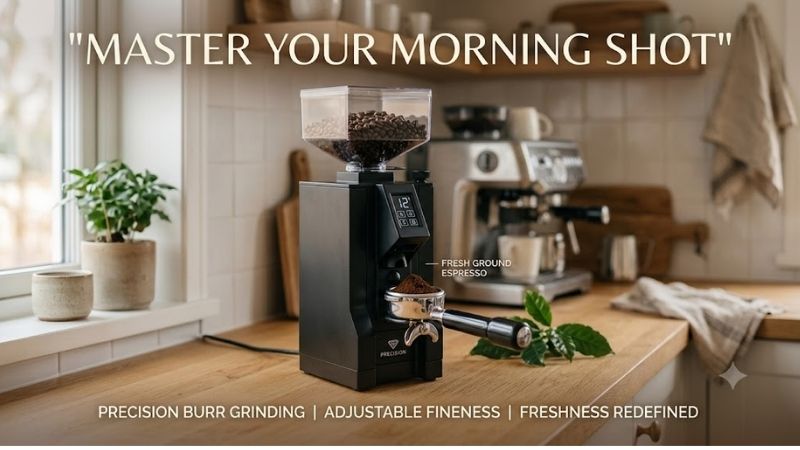
Best Overall: Eureka Mignon Specialità. Its 55mm flat burrs, stepless micrometric adjustment, and programmable timed dosing suit home baristas who regularly prepare espresso using the same beans.
However, buyers who change beans frequently may prefer the DF64 Gen 2 or Niche Zero, while the Baratza Encore ESP offers a more accessible path into espresso grinding.
| Grinder | Best For | Burr System | Dosing Approach | Main Trade-Off |
|---|---|---|---|---|
| Eureka Mignon Specialità | Best overall daily espresso | 55mm flat steel | Programmable timed dosing | Less convenient for major grind changes |
| DF64 Gen 2 | Single dosing and customization | 64mm flat steel | Weighed single doses | Requires deliberate dose preparation |
| Baratza Sette 270 | Frequent espresso adjustments | 40mm conical steel | Timed dosing with portafilter holder | Audible operation |
| Niche Zero | Switching between beans | 63mm conical steel | Single dosing | Premium price and limited hopper convenience |
| Baratza Encore ESP | Beginners and mixed brewing | 40mm conical steel | Manual or single-dose workflow | Less specialized than premium espresso grinders |
| Fellow Opus | Compact multipurpose use | 40mm conical burrs | Single-dose-oriented | Adjustment system takes practice |
How We Selected These Espresso Grinders
Espresso preparation is unusually sensitive to grind size. Coffee grounds form a compact bed inside the portafilter basket, and pressurized water passes through that bed during extraction.
Small changes in grind size can significantly affect resistance, flow, beverage weight, and extraction time.
For that reason, an espresso grinder should be evaluated differently from an ordinary grinder intended primarily for French press or drip coffee.
We considered the adjustment mechanism, burr design, dosing method, retention, cleaning, and suitability for home espresso machines. We also compared workflow differences because a grinder that performs well in a single-dose setup may be inconvenient for someone preparing several milk drinks each morning.
Our recommendations are based on published specifications and intended use cases, not independent particle-size testing, extraction measurements, sound testing, or durability experiments.
Detailed Espresso Grinder Reviews
1. Eureka Mignon Specialità — Best Overall
Best For: Home baristas who regularly prepare traditional espresso and prefer a hopper-based grinding routine.
Why We Picked It
The Eureka Mignon Specialità provides a compelling combination of precise grind adjustment, programmable dosing, and a relatively compact countertop format.
Its stepless micrometric system allows gradual changes in burr spacing. This is particularly useful when making small adjustments to espresso extraction.
Key Specifications
- Burrs: 55mm flat hardened steel
- Adjustment: Stepless micrometric
- Dosing: Programmable timed grinding
- Interface: Touch display
- Bean hopper: Approximately 300g on common configurations
- Primary purpose: Espresso
Features and Benefits
The flat burrs grind coffee according to a consistent mechanical arrangement.
The stepless adjustment system allows users to move between fine settings without being limited to fixed click positions.
Programmable grinding duration simplifies repeatable daily routines.
Performance and Practical Use
The Specialità is particularly convenient when a household uses one espresso blend for several days.
Once the grind setting and dose duration are established, the user can repeat a familiar process.
However, timed grinding does not guarantee a perfectly identical dose by weight. Coffee density, bean feed, and other conditions can affect the amount delivered.
For improved consistency, weigh the grounds periodically and adjust the timer when necessary.
The micrometric adjustment also has a practical disadvantage: moving from a fine espresso setting to a coarse French press setting and then returning may be inconvenient.
What Makes It Different
Its strongest advantage is dedicated espresso preparation with gradual adjustment and convenient timed dosing.
Pros
- Precise stepless adjustment.
- 55mm flat burrs.
- Programmable dosing.
- Compact espresso-oriented design.
Cons
- Less convenient when switching frequently between brewing methods.
- Timed dosing is not direct weight measurement.
- Requires regular burr and chute cleaning.
Buy If: You make espresso daily using a relatively consistent selection of beans.
Skip If: You frequently alternate between espresso and coarse filter brewing.
2. DF64 Gen 2 — Best for Single-Dose Espresso
Best For: Home baristas who weigh each dose, change coffee beans regularly, or want flexibility in burr selection.
Why We Picked It
The DF64 Gen 2 emphasizes single-dose grinding through a 64mm flat-burr platform.
Rather than keeping a large quantity of beans in a hopper, users measure the amount needed for each shot.
Key Specifications
- Burrs: 64mm flat steel
- Adjustment: Stepless
- Dosing: Single dose
- Retention management: Bellows system
- Static management: Model-specific plasma or ionization system
- Burr alternatives: Compatible options vary by configuration
Features and Benefits
Single dosing gives users direct control over the quantity of beans entering the grinder.
This is useful when comparing different coffees because the hopper does not need to be emptied every time.
The bellows can help remove grounds remaining in the grinding path.
Performance and Practical Use
The DF64 Gen 2 suits someone who changes from a light-roasted single origin to a traditional espresso blend several times a week.
The user weighs the beans, grinds them, and checks the output.
However, low retention should not be confused with zero retention. Some grounds may remain inside the machine, and bellows technique can influence output.
The DF64 platform also has different regional and seller configurations. Confirm the actual burr set, power requirements, and included accessories.
What Makes It Different
It prioritizes single-dose flexibility and a large flat-burr ecosystem rather than timed hopper grinding.
Pros
- 64mm flat burr system.
- Stepless adjustment.
- Single-dose workflow.
- Potential for compatible burr upgrades.
Cons
- Requires weighing beans before each dose.
- Seller configurations vary.
- More involved than pressing a programmed grind button.
Buy If: You enjoy changing beans and experimenting with espresso recipes.
Skip If: You prefer a full hopper and rapid repetitive dosing.
3. Baratza Sette 270 — Best for Espresso Adjustment Flexibility
Best For: Home baristas who want distinct coarse and fine adjustment controls.
Why We Picked It
The Sette 270 combines 30 macro settings with a micro-adjustment ring. The arrangement provides a practical method for approaching a grind range and refining it.
Key Specifications
- Burrs: 40mm conical steel
- Macro adjustments: 30
- Micro adjustment: Nine indicated positions with continuous adjustment
- Dosing: Timed, programmable
- Portafilter holder: Adjustable
- Grinding path: Direct-output-oriented
Features and Benefits
The macro ring provides broad grind changes.
The micro ring allows finer tuning once the general espresso setting is established.
Three programmable timed presets can support different coffee doses.
Performance and Practical Use
The Sette is convenient when a household uses different espresso recipes or baskets.
However, its operating noise may be noticeable in a quiet kitchen.
The direct grinding path is designed to reduce retention, although the exact amount remaining varies with use.
What Makes It Different
Its combined macro/micro adjustment architecture is especially useful for espresso dialing-in.
Pros
- Detailed grind adjustment.
- Timed presets.
- Portafilter-oriented operation.
- Accessible burr maintenance.
Cons
- Noticeable grinding noise.
- Timer is not a scale.
- More mechanical components than very simple grinders.
Buy If: You want deliberate espresso adjustments and programmable dosing.
Skip If: Low noise is the highest priority.
4. Niche Zero — Best for Switching Coffee Beans
Best For: Espresso enthusiasts who regularly use different beans and prefer single dosing.
Why We Picked It
The Niche Zero uses a 63mm conical-burr system in a single-dose-oriented design.
Its large external adjustment collar is useful for moving between recipes.
Key Specifications
- Burrs: 63mm conical steel
- Adjustment: Stepless
- Dosing: Single dose
- Collection: Dedicated dosing cup
- Brewing range: Espresso and other methods
- Hopper: Small measured-dose approach
Features and Benefits
Users can weigh each dose and feed it directly into the grinder.
This avoids storing a large quantity of beans in the hopper.
The adjustment collar makes setting changes accessible.
Performance and Practical Use
A user comparing two espresso roasts can switch between measured doses without emptying a large hopper.
However, differences in retained grounds and the need to return to previous settings still matter.
The Niche Zero is also a premium purchase and may offer less everyday convenience than a timed hopper grinder for households using one blend continuously.
What Makes It Different
Its single-dose workflow and conical burrs distinguish it from flat-burr alternatives such as the DF64.
Pros
- Stepless adjustment.
- Single-dose operation.
- Large conical burrs.
- Useful for bean experimentation.
Cons
- Premium price.
- Requires manual weighing.
- No conventional large-hopper dosing routine.
Buy If: You frequently change coffee varieties.
Skip If: You prefer programmable timed dosing from a full hopper.
5. Baratza Encore ESP — Best for Beginners
Best For: People starting home espresso who also prepare drip or French press coffee.
Why We Picked It
The Encore ESP uses a dual-range adjustment arrangement that provides finer increments in the espresso range and broader settings for filter coffee.
Key Specifications
- Burrs: 40mm conical steel
- Settings: 40
- Espresso-oriented settings: 1–20
- Filter-oriented settings: 21–40
- Hopper: Approximately 300g
- Grounds bin: Included
Features and Benefits
The adjustment system makes it easier to dial in traditional espresso than with many basic filter-oriented grinders.
The broader range also allows users to prepare ordinary brewed coffee.
Performance and Practical Use
The Encore ESP is well suited to someone buying a first semi-automatic espresso machine.
It can also serve as the household’s primary grinder for other coffee methods.
However, frequent switching between very fine and very coarse settings requires attention to retained grounds and calibration.
What Makes It Different
It offers a practical introduction to espresso grinding without being restricted to espresso alone.
Pros
- Espresso-capable grind adjustments.
- Filter-brewing flexibility.
- Serviceable construction.
- Accessible entry into home espresso.
Cons
- Less specialized than premium espresso grinders.
- Manual dose management.
- Switching brew methods adds steps.
Buy If: You need one grinder for espresso and brewed coffee.
Skip If: You want premium single-dose or programmable café-style dosing.
6. Fellow Opus — Best Compact Multipurpose Alternative
Best For: Buyers who want a relatively compact grinder with espresso and brewed-coffee capability.
Why We Picked It
The Fellow Opus combines conical burrs with a broad adjustment range designed for several methods.
Key Specifications
- Burr system: 40mm conical
- Grind range: Espresso through coarse brewing
- Adjustment: External settings with internal fine calibration
- Dosing: Single-dose-oriented
- Collection: Removable grounds cup
Features and Benefits
Its design supports households that use more than one brewing method.
A relatively compact footprint is helpful beside a home espresso machine.
Performance and Practical Use
The Opus is useful for users willing to learn its dual adjustment arrangement.
However, changing grind settings may require more attention than using a single external numbered scale.
What Makes It Different
It emphasizes broad brewing compatibility within a design-focused grinder.
Pros
- Wide grinding range.
- Compact housing.
- Suitable for espresso and filter brewing.
- Single-dose-friendly.
Cons
- Adjustment system has a learning curve.
- Requires thoughtful retention management.
- Less convenient than dedicated hopper dosing.
Buy If: You want a compact grinder for several coffee methods.
Skip If: You need simple, repetitive espresso dosing all morning.
Espresso Grinder Buying Guide
Why Espresso Needs More Precise Grinding
Espresso water passes through a compact puck of ground coffee.
When the grind is too coarse, resistance may be insufficient and the shot can run quickly.
When it is too fine, water flow can become restricted.
However, shot speed is not determined by grind alone. Dose, roast, puck preparation, basket design, and machine behavior also matter.
Stepped vs. Stepless Adjustment
Stepped grinders have defined click positions.
Stepless grinders allow continuous changes.
The important question is whether the adjustments are fine enough for the intended espresso recipe.
A well-designed finely stepped grinder can work effectively.
Flat vs. Conical Burrs
Neither burr geometry is universally superior.
Flat and conical systems produce different mechanical grinding characteristics.
Actual performance depends on cutting geometry, alignment, motor behavior, and grind adjustment.
Single Dosing vs. Hopper Dosing
Single dosing suits users who weigh beans and change coffees frequently.
Hopper dosing is convenient when preparing repeated drinks from the same blend.
Choose the workflow you are likely to maintain.
Timed Dosing vs. Grind-by-Weight
A timer measures how long the motor operates.
Grind-by-weight systems attempt to measure the mass delivered.
A timed grinder can be consistent, but its output may change with coffee characteristics.
Grind Retention
Retained grounds can affect dose consistency and freshness when changing beans.
Bellows and direct-output designs may reduce retention.
Zero-retention marketing claims should be treated cautiously without independent measurements.
Burr Diameter
Larger burrs do not automatically create better espresso.
Burr geometry, adjustment, alignment, and the complete grinder design matter more than diameter alone.
Pair the Grinder With the Espresso Machine
Traditional nonpressurized portafilter baskets generally benefit from fine grind control.
Pressurized baskets can be more forgiving.
Do not assume an ordinary blade grinder is suitable for repeatable traditional espresso.
Noise and Countertop Space
Consider machine height with the hopper installed.
Check portafilter clearance and how grounds are collected.
Grinding noise also matters in shared households, especially early in the morning.
Cleaning and Maintenance
Coffee oils and particles accumulate inside grinders.
Follow the manufacturer’s instructions for burr access and cleaning.
Unplug the machine before permitted maintenance, and avoid introducing water into electrical or non-washable mechanical components.
Common Espresso Grinder Problems
Espresso Runs Too Fast
Try a slightly finer grind while keeping dose and preparation consistent.
Espresso Runs Too Slowly
Consider a coarser grind. Check whether the basket is overloaded or the puck preparation has changed.
Dose Weight Varies
Bean density, retained grounds, and hopper feed may affect output. Weigh the delivered coffee when precision matters.
Grinder Produces Clumps
Clumping can vary with coffee, static, and grind conditions. Appropriate puck distribution may help after grinding.
The Setting Is Difficult to Repeat
Record the grind position and make changes consistently. Stepless systems may require additional care when returning to previous settings.
Frequently Asked Questions
What is the best espresso grinder overall?
The Eureka Mignon Specialità is a strong choice for regular home espresso because of its stepless adjustment and programmed timed dosing.
Can a regular coffee grinder make espresso?
Some can, but traditional espresso requires sufficiently fine and adjustable grinding. Not every burr grinder is suitable.
Are flat burrs better for espresso?
Not universally. Good espresso grinders use both flat and conical burr systems.
Is a single-dose grinder worth it?
It is particularly useful for people who frequently change beans or carefully weigh every dose.
How important is grind retention?
It matters most when switching beans, adjusting recipes, and targeting consistent doses.
Should I buy a grinder before upgrading my espresso machine?
If your current grinder cannot provide suitable fine adjustment, upgrading it may be more useful than replacing an otherwise functional espresso machine.
Do espresso grinders require cleaning?
Yes. Coffee oils and residue accumulate around burrs and grinding paths.
Conclusion
The Eureka Mignon Specialità is our best espresso grinder for consistent daily dosing and precise adjustment. Choose DF64 Gen 2 or Niche Zero for single-dose workflows, Baratza Sette 270 for flexible espresso tuning, or Encore ESP for a beginner-friendly setup. Prioritize grind control, dosing habits, and maintenance over burr size alone.


Write Your Review
No reviews yet. Be the first to share your experience!