
- Top Pick: Air Fryer Cheat Sheet Magnets Booklet – Air Fryer Cookbook for Beginners – Air Fryer Liners – Air Fryers Kitchen Gifts Gadgets 2026 – Air Fryer Accessories Cook Books Kitchen+Gadgets Cooking Guide
- Best Value: Silicone Air Fryer, 7.1-Inch Square Bacon Baking Pans, 4-5QT Reusable Basket Inserts Ninja Fryer Cooker for Microwave Oven Basket Tray Accessories, Non-Stick
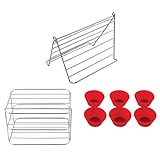
- Premium Choice: Nuwave 8-Piece Breakfast Kit for the 6Qt Brio Air Fryer
Disclosure: As an Amazon Associate we earn from qualifying purchases. We may receive a small commission when you buy through links on this page, at no extra cost to you. We only recommend products we genuinely believe offer value to home cooks.
- Why the Air Fryer Beats the Skillet
- Step-by-Step Method
- How to Prevent Smoking
- Regular vs. Thick-Cut Timing
- Save the Bacon Fat
- Uses for Air Fryer Bacon
- Frequently Asked Questions
- How Air Fryers Cook Bacon Evenly
- Matching Doneness to Your Preference
- Pairing Bacon With Breakfast Favorites
- Beyond Breakfast
- Related Recipes
- Related Articles
- Related Guides
As an Amazon Associate we earn from qualifying purchases at no extra cost to you.


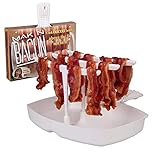



Cooking bacon in an air fryer is cleaner, faster, and more even than the stovetop, with no grease splatter on your cooktop. The hot air crisps both sides at once, and the rendered fat drips below the strips. This guide covers timing for regular and thick-cut bacon, how to prevent smoking, and what to do with all that bacon fat.
🛒 Best Price Today on Amazon
Prime members get fast, free shipping on everything above, plus member-only deals. New members get a 30-day free trial — cancel anytime.
Why the Air Fryer Beats the Skillet
In a skillet, bacon sits in its own grease and cooks unevenly, with curled edges and chewy middles. In the air fryer, hot air surrounds each strip, the fat drains away, and the bacon crisps flat and uniform. Cleanup is easier too, since the mess is contained in the basket rather than splattered across your stove.
Step-by-Step Method
- Lay the strips in a single layer in the basket. A little overlap is fine; the strips shrink as they cook.
- Do not preheat with bacon inside. Start from cold so the fat renders gradually.
- Cook at 350°F (177°C). Regular bacon takes 8-10 minutes; thick-cut takes 10-12 minutes.
- Check at the halfway point and rearrange if needed. Pull the bacon when it reaches your preferred crispness; it firms up as it cools.
- Drain on paper towels for a minute before serving.
How to Prevent Smoking
Bacon grease pooling under the heating element is what causes smoke. To avoid it, pour a tablespoon or two of water into the bottom drawer beneath the basket; it keeps the dripping fat from reaching smoke point. Cooking at a moderate 350°F rather than a high temperature also reduces smoke, and emptying the fat between batches helps for large quantities.
Regular vs. Thick-Cut Timing
Thin and regular bacon crisps fast, so start checking at 8 minutes. Thick-cut bacon needs more time to render its extra fat, usually 10-12 minutes, and benefits from a flip halfway. Whatever the cut, the bacon continues to crisp for a minute or two after you remove it, so pull it just shy of your target.
Save the Bacon Fat
Strain the rendered fat into a jar and refrigerate it. Bacon fat is a flavor powerhouse for frying eggs, roasting potatoes, or starting a pan of greens. A little goes a long way and keeps for weeks in the fridge.
Uses for Air Fryer Bacon
- Crumble over salads, baked potatoes, or soups
- Layer into sandwiches and burgers
- Chop into pasta, mac and cheese, or deviled eggs
- Serve alongside eggs for a classic breakfast
Frequently Asked Questions
What temperature should I cook bacon at?
350°F is the sweet spot. It renders the fat steadily and crisps the bacon without excessive smoking.
Why is my air fryer smoking?
Pooled bacon grease near the heating element is the cause. Add a little water to the bottom drawer and cook at a moderate temperature to stop the smoke.
Do I need to flip the bacon?
Regular bacon usually does not need flipping, but thick-cut crisps more evenly with one flip halfway through.
Can I cook a full batch at once?
Cook in a single layer for the crispiest result. For a crowd, work in batches and keep cooked bacon warm in a low oven.
How do I store leftover cooked bacon?
Refrigerate in an airtight container for up to five days and reheat in the air fryer at 350°F for 2-3 minutes to re-crisp.
Once you cook bacon this way, you may never go back to the skillet. Explore more breakfast techniques in our Kitchen Guides hub and the Small Appliances category, and compare machines in the best air fryers for every kitchen and budget roundup.
How Air Fryers Cook Bacon Evenly
The reason air fryer bacon comes out so uniform lies in how the appliance moves heat. A powerful fan circulates hot air around every surface of the strip at once, so both sides cook simultaneously without the hot and cool spots you get in a skillet sitting on a single burner. The rendered fat drips down and away rather than pooling around the meat, which means the bacon crisps in dry heat instead of frying in its own grease. The result is flat, evenly colored strips with consistent texture from end to end, batch after batch.
Matching Doneness to Your Preference
Bacon doneness is personal, and the air fryer lets you dial it in precisely. For chewy bacon with rendered but not crisp fat, pull the strips a couple of minutes early while they are still pliable. For shatteringly crisp bacon, leave them until they are deep golden-brown, remembering that they firm up further as they cool on a paper towel. Keeping notes on the exact time and temperature that produced your favorite result means you can reproduce it perfectly every time, which is the quiet luxury of cooking bacon this way.
Pairing Bacon With Breakfast Favorites
Crispy air fryer bacon is the anchor of a great breakfast, and it pairs naturally with so many dishes. Serve it alongside fluffy scrambled eggs and toast for a classic plate, crumble it over a stack of pancakes for a sweet-and-salty contrast, or fold it into a breakfast burrito with eggs and cheese. The fact that the air fryer cooks bacon hands-free is a real advantage on a busy morning, since you can scramble eggs or brew coffee while the bacon crisps without any attention. It frees up your stovetop and your focus for the rest of the meal.
Beyond Breakfast
Bacon is far too good to confine to mornings. Crumble it over a baked potato, weave it into a sandwich or burger, or stir it into pasta and creamy soups for a smoky depth. It dresses up salads, deviled eggs, and even roasted vegetables like Brussels sprouts. Because the air fryer lets you cook bacon to an exact crispness, you can tailor it to the dish: shatter-crisp bits for salads and soups, or meatier strips for sandwiches. Keeping a batch of cooked bacon in the refrigerator means a flavor boost is always within reach.




Write Your Review
No reviews yet. Be the first to share your experience!