
A tea kettle should heat water efficiently, pour comfortably, and fit the way you prepare drinks every day. Electric models offer convenience, stovetop kettles provide familiar simplicity, and gooseneck designs improve pouring control. This guide compares seven practical options and explains which features matter for tea, coffee, family kitchens, and smaller spaces.
Best tea kettle options for everyday convenience
A reliable everyday kettle should balance heating performance, manageable capacity, and simple operation. Some buyers need a fast electric model for busy mornings, while others prefer a familiar stovetop design. These options represent different approaches to daily brewing, with particular attention to usability, materials, and maintenance.
Cuisinart CPK-17 PerfecTemp – Best for temperature control
The Cuisinart CPK-17 PerfecTemp is a versatile electric kettle designed for households that prepare several types of tea. Its six preset temperature settings, 1.7-liter capacity, and keep-warm function make it useful for users who want more control than a basic boiling kettle can provide.
The temperature presets are especially helpful for tea drinkers who switch between delicate green tea, white tea, oolong, and black tea.
Instead of repeatedly heating water to boiling and waiting for it to cool, users can select an appropriate preset and begin brewing more consistently.
The kettle also includes a 30-minute keep-warm function, which can be convenient during breakfast or when preparing multiple drinks.
Its cordless serving arrangement allows the kettle to lift from the power base for pouring. This reduces the inconvenience of moving a connected appliance around the counter.
The stainless steel body provides a familiar appearance, although the exterior can become hot during operation.
Its 1.7-liter capacity suits households that prepare several mugs in succession without requiring constant refilling.
However, the kettle occupies more counter space than a compact single-serving model. Users who drink only one small cup daily may not need its capacity or additional controls.
Advantages: Multiple temperature presets, generous capacity, keep-warm function, and convenient cordless pouring.
Limitations: Larger footprint, hot exterior surfaces, and more features than occasional users may require.
Best for: Households that prepare different tea varieties and want repeatable water temperatures.
COSORI Electric Gooseneck Kettle – Best for precise pouring
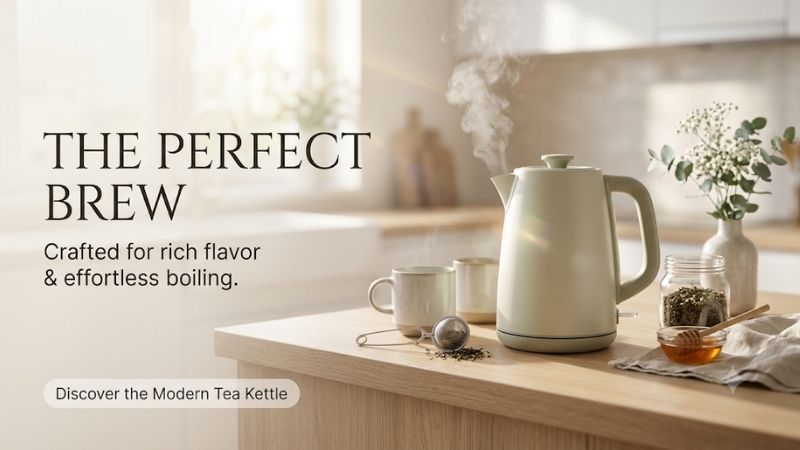
The COSORI Electric Gooseneck Kettle is designed for controlled water delivery, making it appealing to tea enthusiasts and home coffee brewers. Its approximately 0.8-liter capacity, five temperature presets, and narrow spout support careful pouring into smaller brewing vessels.
The gooseneck design gives users greater control over where water lands and how quickly it enters a cup, teapot, or pour-over brewer.
This is particularly useful when preparing coffee with a manual dripper or adding water gradually to a small tea vessel.
The temperature presets also help users avoid heating every tea variety to boiling.
A hold-temperature function adds convenience when preparing several small servings within a short period.
The compact capacity is suitable for individuals and couples, although it may be insufficient for larger families.
Unlike a conventional wide-spout kettle, a gooseneck model is optimized for controlled pouring rather than filling several large mugs as quickly as possible.
Some users may find the narrow spout slower when preparing a large teapot.
Advantages: Precise pouring, temperature presets, compact design, and suitability for both tea and pour-over coffee.
Limitations: Smaller water capacity and slower pouring than conventional kettle designs.
Best for: Home baristas, specialty tea drinkers, and users who value pouring precision.
Hamilton Beach 40880 – Best straightforward electric kettle
The Hamilton Beach 40880 is a practical electric kettle for buyers who primarily need hot water without advanced temperature programming. Its 1.7-liter capacity, automatic shutoff, and boil-dry protection provide a simple approach to daily preparation.
The kettle is particularly suitable for households that regularly prepare black tea, instant coffee, oatmeal, or other foods and beverages requiring hot water.
Because it does not depend on multiple temperature presets, operation is relatively straightforward.
Users fill the kettle within its marked limits, place it on the power base, and activate the heating switch.
Automatic shutoff reduces the need to monitor the kettle continuously once the water reaches boiling.
Boil-dry protection provides an additional safeguard, although users should never intentionally operate the appliance without adequate water.
The large capacity is convenient when preparing several drinks, but it can be unnecessary for someone who typically heats a single cup.
For delicate green tea, users may need to measure or cool the water before brewing because the kettle is primarily designed for boiling.
Advantages: Simple controls, generous capacity, automatic shutoff, and accessible everyday operation.
Limitations: No variable-temperature presets and less control for temperature-sensitive teas.
Best for: Budget-conscious households that mainly need reliable boiling water.
Best stovetop and traditional tea kettle designs
Stovetop kettles remain popular because they do not require a separate countertop power base and often suit traditional kitchen aesthetics. They can be particularly useful for households that prefer preparing hot water on an existing range. The following models offer different combinations of durability, capacity, and pouring comfort.
Le Creuset Enamel on Steel Whistling Kettle – Best premium stovetop option
The Le Creuset Enamel on Steel Whistling Kettle combines traditional stovetop operation with a distinctive enamel finish. Its approximately 1.7-quart capacity and audible whistle make it suitable for buyers who appreciate classic cookware and want a kettle that complements an established kitchen.
The enamel-coated steel body offers a decorative appearance while supporting everyday water heating on compatible stovetops.
A whistle alerts users when the water reaches a vigorous boil, providing a familiar alternative to electronic indicators.
The handle is designed for pouring, but users should follow the manufacturer’s guidance regarding heat exposure and safe handling.
Unlike variable-temperature electric kettles, this model does not provide a direct method for selecting precise brewing temperatures.
Tea drinkers preparing delicate green tea may need to allow the water to cool or use a thermometer.
The kettle is also heavier than some lightweight electric alternatives, especially when filled.
Its premium pricing may be difficult to justify for buyers who simply want inexpensive boiling water.
Advantages: Traditional appearance, audible whistle, enamel finish, and compatibility with suitable stovetops.
Limitations: Premium price, no precise temperature settings, and additional handling considerations.
Best for: Buyers who value traditional stovetop brewing and coordinated kitchen aesthetics.
OXO Brew Classic Tea Kettle – Best for comfortable stovetop handling
The OXO Brew Classic Tea Kettle is a stainless steel stovetop model designed around straightforward filling and pouring. Its approximately 1.7-quart capacity, large lid opening, and movable handle make it a practical choice for users who prefer traditional kettles without elaborate controls.
One useful feature is the handle design, which can move out of the way when filling or cleaning the kettle.
The wide opening makes it easier to reach the interior than designs with narrow filling ports.
Its stainless steel construction is appropriate for routine kitchen use when maintained according to the manufacturer’s instructions.
The kettle includes a whistle to indicate that water has reached boiling.
As with other stovetop models, heating time depends on the burner, water quantity, and starting temperature.
Users should ensure the kettle is positioned securely and avoid exposing the handle to excessive heat.
The OXO design emphasizes practical ergonomics rather than temperature programming.
For tea drinkers who mainly prepare black tea or herbal infusions, this may be entirely sufficient.
Advantages: Accessible filling opening, traditional whistle, stainless steel construction, and practical handle design.
Limitations: No programmable temperature control and dependence on an available stovetop.
Best for: Households seeking a straightforward, comfortable stovetop kettle.
Specialty tea kettle options for different brewing needs
Not every household benefits from a large general-purpose kettle. Some buyers prioritize exact temperature selection, while others need an inexpensive model for occasional use. Specialty options can provide meaningful advantages, but their features should match actual brewing habits rather than simply adding complexity or increasing the purchase price.
Fellow Stagg EKG – Best for precision brewing enthusiasts
The Fellow Stagg EKG is a premium electric gooseneck kettle built for users who want detailed control over water temperature and pouring. Its approximately 0.9-liter capacity, variable-temperature settings, and carefully shaped spout make it particularly appealing to specialty coffee enthusiasts and tea drinkers who prepare small servings.
The kettle allows users to select a target temperature rather than relying only on a handful of preset options.
This can be valuable when experimenting with different green teas, lightly oxidized oolongs, and brewing recipes that specify narrow temperature ranges.
The gooseneck spout provides controlled flow, helping users direct water precisely into small teapots and coffee drippers.
Its compact capacity also means less unnecessary water heating when preparing one or two drinks.
However, the same capacity becomes a limitation when several people need hot water simultaneously.
The premium price reflects its specialized design and control features, which may not benefit casual users who primarily prepare ordinary black tea.
Advantages: Detailed temperature control, precise pouring, compact footprint, and strong suitability for specialty brewing.
Limitations: High purchase price, limited capacity, and slower filling of large vessels.
Best for: Enthusiasts who regularly experiment with brewing temperature and pouring technique.
KitchenAid KEK1222 Electric Kettle – Best compact classic design
The KitchenAid KEK1222 is a compact electric kettle with a traditional rounded appearance and approximately 1.25-liter capacity. It provides a straightforward way to boil water while occupying less space than many larger electric kettles. Its removable lid and simple controls suit everyday use in smaller kitchens.
The kettle’s size makes it a reasonable compromise between single-serving models and large family appliances.
It can prepare several ordinary cups of tea without requiring the counter space associated with more substantial kettles.
The removable lid provides direct access for filling and cleaning, which can be useful when dealing with mineral deposits.
Its design emphasizes uncomplicated boiling rather than multiple brewing presets.
Consequently, users preparing delicate teas will need another method for monitoring or adjusting water temperature.
The exterior may become hot during use, so safe handling remains important.
Buyers should also consider the kettle’s opening and interior access when evaluating how easily it can be descaled.
Advantages: Compact footprint, straightforward operation, removable lid, and classic styling.
Limitations: No variable-temperature control and smaller capacity than full-size family kettles.
Best for: Small kitchens, couples, and users who prefer simple electric boiling.
How to choose the best tea kettle for your kitchen
The best kettle is not necessarily the one with the most features or the highest price. A suitable model should match the household’s serving requirements, preferred beverages, and available kitchen space. Understanding capacity, heating technology, safety features, and maintenance helps buyers distinguish useful improvements from unnecessary extras.
Electric versus stovetop tea kettle performance
Electric and stovetop kettles both heat water effectively, but they differ in convenience, control, and kitchen requirements. Electric models typically include automatic shutoff and may provide temperature settings. Stovetop models use an existing burner and often appeal to buyers who prefer traditional cookware.
An electric kettle can be convenient for daily routines because it does not require an active stovetop burner.
Many models stop heating automatically when the water boils, reducing the need for continuous supervision.
Variable-temperature electric kettles also provide a practical advantage for tea varieties that benefit from water below boiling.
Stovetop kettles may be preferable when countertop outlets are limited or when users want to avoid another electrical appliance.
They can also offer traditional styling that coordinates with other cookware.
However, most stovetop kettles cannot maintain a selected water temperature automatically.
A whistle indicates boiling but does not provide precise temperature control during heating.
Energy efficiency depends on the specific kettle, heating method, water quantity, and operating conditions.
Avoid assuming that one category is always cheaper to operate without considering these factors.
Choose electric for convenience and temperature programming, or stovetop for simplicity and compatibility with an existing cooking setup.
Choose the right kettle capacity for your household
Kettle capacity determines how much water can be prepared in a single heating cycle. An undersized kettle may require repeated refilling, while an oversized model can occupy unnecessary space and encourage users to heat more water than they need. Matching capacity to daily serving habits improves convenience and reduces wasted effort.
For an individual preparing one or two mugs, a kettle around 0.8–1.0 liters may be sufficient.
Couples and small households often find capacities around 1.2–1.5 liters practical.
Larger households may prefer models around 1.7–2.0 liters, particularly when several people prepare drinks at the same time.
However, nominal capacity should not be confused with the amount of water that can be safely heated beyond the marked maximum fill line.
Users should also respect the minimum fill level, especially with electric kettles that require adequate water coverage.
Consider the typical mug size. A large travel mug may hold considerably more water than a traditional teacup.
If the kettle will also supply water for cooking or instant foods, additional capacity may be useful.
For specialty brewing, smaller kettles can offer better handling and more comfortable pouring.
The ideal capacity is the one that supports normal daily demand without making the appliance cumbersome.
Temperature settings and brewing precision
Water temperature plays a major role in tea extraction, but not every household requires advanced temperature programming. Buyers who primarily prepare black tea may be satisfied with a basic boiling kettle. Those who regularly drink delicate green tea, white tea, or specialty oolong may benefit from more precise control.
Many green teas are prepared below boiling, often around 160–185°F, depending on the variety.
Black teas commonly use hotter water, frequently around 200–212°F.
Oolong teas vary widely, so temperature recommendations should reflect the particular tea rather than the category alone.
Preset kettles simplify brewing by providing common temperature selections.
Fully adjustable models offer additional flexibility, although they may cost more.
Temperature accuracy can vary between appliances, and the actual temperature at the brewing vessel may differ from the kettle’s displayed reading.
Heat loss during pouring and contact with a cold mug can affect the final brewing conditions.
For casual drinkers, consistent technique is often more valuable than chasing extremely small temperature differences.
Choose advanced temperature control when it supports a genuine brewing preference rather than simply adding another feature.
Safety, cleaning, and long-term kettle maintenance
A kettle is exposed to repeated heating cycles, mineral-rich water, and regular handling. Good maintenance supports consistent performance and helps prevent avoidable problems. Buyers should understand how to manage scale buildup, protect electrical components, and recognize signs of wear before these issues interfere with everyday brewing.
Automatic shutoff and boil-dry protection
Safety features are particularly important for electric kettles because they operate at high temperatures and may be used during busy mornings. Automatic shutoff and boil-dry protection are common features that can reduce certain risks, but they do not replace proper operation or careful placement.
Automatic shutoff is designed to stop heating when the kettle reaches its intended endpoint, commonly boiling.
Boil-dry protection is intended to interrupt heating if insufficient water is present.
These features are useful, but users should never deliberately run a kettle empty to test its protective systems.
Place electric kettles on a stable, dry surface away from the edge of the counter.
Keep cords away from hot surfaces and prevent water from entering the electrical base.
Avoid overfilling, which can cause boiling water to escape through the spout or lid.
For stovetop kettles, monitor the heating process and follow the manufacturer’s burner compatibility guidance.
Do not leave a kettle heating unattended simply because it has a whistle or other indicator.
Allow hot surfaces to cool before cleaning or storing the appliance.
Removing mineral scale and preserving water quality
Mineral deposits accumulate when water containing dissolved calcium and magnesium is heated repeatedly. Scale buildup is common in areas with hard water and may appear as white residue inside the kettle. Regular descaling helps maintain a clean interior and can reduce interference with heating surfaces.
The frequency of descaling depends on local water hardness and how often the kettle is used.
Inspect the interior periodically rather than relying on a fixed cleaning schedule.
Follow the manufacturer’s recommended descaling procedure and use only suitable cleaning solutions.
Some kettles can be cleaned with a properly diluted food-safe acid solution, but compatibility varies by material and finish.
Never immerse an electric kettle or its power base in water unless the manufacturer explicitly permits a specific cleaning procedure.
After descaling, rinse thoroughly and follow any recommended boil-and-discard cycles.
Avoid abrasive pads that may scratch interior surfaces or damage coatings.
If the kettle includes a removable scale filter, inspect and clean it according to the product instructions.
Clean equipment supports a more pleasant brewing experience and makes it easier to identify unusual changes in water appearance or odor.
Materials, durability, and replacement considerations
Kettles are commonly made from stainless steel, glass, plastic, or combinations of these materials. Each construction style has advantages and trade-offs involving visibility, weight, heat retention, and handling. Long-term value depends on the quality of the entire appliance rather than the exterior material alone.
Stainless steel is widely used because it offers durability and a familiar kitchen appearance.
Glass kettles allow users to observe the water during heating, although the material can break if dropped or exposed to unsuitable impacts.
Plastic components may reduce weight and provide insulation in certain areas, but their heat resistance and suitability should be verified through the manufacturer’s specifications.
A kettle’s handle, lid, spout, and base are just as important as its main body.
Poorly designed lids can complicate filling, while awkward handles make pouring less comfortable.
Inspect electrical cords and connectors periodically for visible damage.
If a kettle develops leaking seams, unreliable shutoff behavior, or damaged electrical components, stop using it and seek appropriate service or replacement.
Do not attempt unsafe repairs to sealed heating elements or electrical systems.
A durable kettle should remain comfortable, predictable, and easy to maintain throughout its service life.
Conclusion
The best tea kettle depends on how much water you heat, which teas you drink, and whether you value precise temperature control. The Cuisinart CPK-17 is a versatile everyday choice, while the COSORI Gooseneck and Fellow Stagg EKG suit more controlled brewing. Hamilton Beach offers straightforward boiling, and Le Creuset or OXO stovetop models appeal to traditional kitchens. Prioritize safe operation, suitable capacity, easy cleaning, and features that genuinely improve your daily routine.
Write Your Review
No reviews yet. Be the first to share your experience!