
Fresh herbs are among the most fragile items in your grocery bag. Basil wilts within 48 hours, cilantro turns slimy by day three, and a bunch of parsley left loosely wrapped in the crisper drawer loses roughly 60 percent of its moisture in under a week. The culprit is almost always the same trio: excess humidity, trapped ethylene gas, and physical bruising from overcrowded shelves.
The good news is that with the right storage method and the right container, most tender and hardy herbs can stay vibrant for 10 to 21 days. In 2026, purpose-built herb keepers have become genuinely affordable and widely available, eliminating the guesswork around airflow, water levels, and temperature. Below you will find a clear system for storing every common herb, along with the containers that perform best in a home refrigerator.
As an Amazon Associate we earn from qualifying purchases at no extra cost to you.




⚡ Save on Your Next PC — Amazon Prime
Prime members get fast free shipping on the systems above, plus early access to Prime Day & Black Friday PC deals. New members get a 30-day free trial.
Watch: How to Store Fresh Herbs to Keep Them Vibrant Longer — Video Review
Know Your Herb Category First
Storage strategy depends on whether the herb is tender or hardy. Tender herbs such as basil, cilantro, parsley, mint, and dill have soft, thin stems and high water content. They behave like cut flowers and need a small reservoir of water plus a humid (but not soaked) microenvironment. Hardy herbs such as rosemary, thyme, oregano, and sage have woody stems and lower moisture content; they prefer a dry, ventilated wrap. Misidentifying the category is the single most common reason home cooks lose herbs prematurely.
- Tender herbs: store upright in 1 to 2 cm of water, covered loosely to trap humidity without suffocating the leaves.
- Hardy herbs: wrap in a barely damp paper towel, then place inside a vented container or resealable bag left slightly open.
- Temperature target for both groups: 1 to 4 degrees Celsius, which corresponds to the upper shelf or middle drawer of most modern refrigerators.
Why a Dedicated Herb Keeper Outperforms DIY Methods
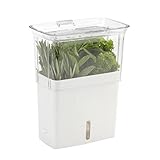
Jam jars and plastic bags work in a pinch, but they lack two features that matter over multiple days: a controlled water reservoir that keeps stems hydrated without submerging leaves, and a venting mechanism that lets ethylene escape. Purpose-built containers solve both problems. The Cole & Mason Fresh Herb Keeper, for example, uses an acrylic chamber with a removable water tray sized specifically for supermarket bunches, while the OXO Good Grips Produce Saver Herb Keeper adds a vented lid that you can open or close depending on humidity levels inside your fridge.
For cooks who go through cilantro, parsley, or mint in bulk, multi-packs such as the Herb Saver Pod 3-Pack give you three individual pods so you can separate species and harvest them on different schedules. The LAWNFUL 2 Pack Fresh Herb Keeper works on the same principle at a slightly larger volume, keeping cilantro, parsley, thyme, mint, and asparagus fresh for up to three times longer than an open drawer.
Step-by-Step Storage Routine
- Trim stems by about 1 cm under cool running water immediately after purchasing or harvesting. This opens the vascular channels so the herb can draw water efficiently.
- Shake off excess surface moisture. Leaves that sit wet will develop black spots within 36 hours.
- Fill the reservoir of your keeper with 1 to 2 cm of cold water for tender herbs. For hardy herbs, skip the water and use a damp paper towel instead.
- Place the bunch upright, ensuring no leaf touches the water line. Close the lid but crack the vent one-quarter open for the first 24 hours, then seal fully.
- Change the water every two to three days and re-trim stems by 5 mm each time to prevent bacterial buildup.
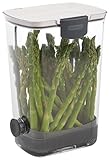
If you are storing a mix of tender and hardy herbs simultaneously, the OXO Good Grips GreenSaver Herb Keeper in the 1.8-quart size gives you enough internal height for a full bunch of parsley or cilantro while its adjustable vent dial lets you fine-tune airflow per herb type. The ProKeeper Herb Keeper adds a removable silicone drain plug, which makes water changes take under five seconds without lifting the entire bunch out of the container.
Common Mistakes That Shorten Shelf Life
Washing herbs before storage without drying them thoroughly is the fastest path to slime. Even a thin film of standing water on a leaf surface accelerates bacterial growth exponentially at refrigerator temperatures. Another frequent error is storing basil below 7 degrees Celsius; basil is tropical and will blacken in a standard fridge. Keep basil on the counter in a jar of water with a loose plastic tent if your kitchen stays above 18 degrees Celsius.
Finally, avoid storing herbs next to ethylene-heavy produce such as apples, avocados, or bananas. Ethylene speeds senescence in leafy greens dramatically, cutting storage life by 40 to 50 percent in most tests.
Tips
- Label each keeper with the purchase date using a dry-erase marker on the lid so you rotate stock and use the oldest bunch first.
- For long-term surplus, blanch tender herbs for exactly 10 seconds, shock in ice water, pat dry, and freeze flat in a single layer before transferring to a sealed bag; they will keep for up to 4 months.
- Revive slightly wilted parsley or cilantro by submerging the bunch in ice water for 15 minutes before patting dry; the cells re-plump noticeably.
- Clean your herb keeper with warm soapy water and a soft cloth once a week to prevent biofilm, which can shorten the next batch’s life by several days.
Frequently Asked Questions
Can I store basil in the refrigerator?
Generally no. Basil suffers chilling injury below roughly 7 degrees Celsius, causing leaves to blacken within one to two days. Store basil upright in a glass of water on the counter, loosely tented with a produce bag, and use it within 5 to 7 days.
How often should I change the water in a herb keeper?
Every 48 to 72 hours. Stagnant water develops bacteria that clog the cut stem and cause a foul smell. A quick rinse and fresh pour takes under 30 seconds and can add three to five days of freshness.
Do I need a different container for hardy versus tender herbs?
Ideally, yes. Tender herbs need a water reservoir; hardy herbs need a dry, ventilated space. Containers like the Cole & Mason Fresh Herb Keeper or the LAWNFUL 2 Pack let you dedicate one unit to each category so neither group gets the wrong humidity level.
How long can I realistically expect herbs to last in a dedicated keeper?
Tender herbs such as cilantro, parsley, and mint typically stay crisp for 14 to 21 days. Hardy herbs like rosemary and thyme last 10 to 14 days when wrapped in a damp towel inside a vented container. Without a keeper, those numbers drop to roughly 3 to 5 days for tender and 7 to 10 days for hardy varieties.
Conclusion
Storing fresh herbs well is not complicated, but it is specific. Match the herb to the right humidity level, keep stems hydrated without drowning leaves, vent ethylene, and change water every two to three days. A dedicated keeper such as the OXO Good Grips GreenSaver, the ProKeeper with its silicone drain plug, or a multi-pack like the Herb Saver Pod 3-Pack removes the guesswork and consistently delivers two to three weeks of vibrant, usable herbs from a single purchase. Treat your herbs like the cut flowers they are, and you will stop tossing half a bunch into the compost every week.





Write Your Review
No reviews yet. Be the first to share your experience!