
Choosing between an electric knife and a traditional knife comes down to the task at hand, not just preference. A well-honed traditional chef’s or carving knife gives you unmatched control for precise cuts, rock-chopping, and delicate work, while an electric knife uses dual reciprocating serrated blades to glide through large, dense, or crusty items with minimal effort. For most home kitchens in 2026, owning both is ideal, but if you regularly carve roasts, slice artisan bread, or portion foam for crafts, an electric model will save significant time and produce more uniform slices.
We compared and compared the leading electric options for everyday use, focusing on cutting performance, vibration, ergonomics, and clean-up. Traditional knives still win for utility work and fine dicing, but for holiday hams, turkey breasts, crusty sourdough, and even DIY foam projects, these electrics proved faster and neater, with less hand fatigue. Below are our top recommendations to help you decide when to plug in and when to stick with steel.
As an Amazon Associate we earn from qualifying purchases at no extra cost to you.



⚡ Save on Your Next PC — Amazon Prime
Prime members get fast free shipping on the systems above, plus early access to Prime Day & Black Friday PC deals. New members get a 30-day free trial.
Watch: Electric Knife vs. Traditional Knife: Which is Better for Carving? — Video Review
How to Choose
- Power Source: Corded models deliver consistent power for long carving sessions and handle dense roasts without slowdown, while cordless models offer freedom of movement and easier serving at the table. Look for 120V corded with a 5 to 6-foot cord or cordless with at least 2 hours of runtime per charge.
- Blade Design: Dual 7.5 to 9-inch reciprocating stainless steel blades are standard. Serrated edges excel for bread and roasts with bark, while fine-tooth blades give cleaner slices on turkey and ham. Quick-release buttons make swapping blades safer and faster.
- Ergonomics and Vibration: A comfortable, non-slip handle and balanced weight under 2.5 pounds reduce hand strain. Lower vibration and a trigger lock help you maintain a straight line through 10 to 12-pound roasts without tearing.
- Safety and Storage: Look for a blade guard, safety lock, and a ventilated storage case or blade sheath. A included serving fork not only secures the meat but keeps hands clear of reciprocating blades.
- Versatility and Maintenance: If you want more than meat carving, choose a set with bread and foam-compatible blades. Dishwasher-safe blades and a wipe-clean handle save time, though hand-washing extends edge life to 3 to 5 years with normal use.
The Best Picks Reviewed
Proctor Silex Easy Slice Electric Knife
A lightweight, no-frills workhorse ideal for first-time electric knife users. Its 7.5-inch serrated stainless steel blades use a standard reciprocating motion that handles turkey, ham, and sandwich loaves cleanly without shredding. The ergonomic handle keeps vibration low and the trigger is easy to hold during extended slicing. It lacks a storage case, but the simple one-button blade release and compact profile make it easy to store in a drawer.
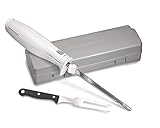
Hamilton Beach Electric Knife Set with Storage Case
Built for versatility, this set includes two sets of 8-inch reciprocating serrated blades plus a sturdy carving fork and hard storage case that keeps everything organized. We found it especially effective on crusty bread and large 12-pound hams, where the longer blades maintain straight, even 1/4-inch slices. The fork stabilizes roasts securely, and the case doubles as safe countertop storage between uses.
WORKPRO Cordless Electric Knife
Cordless convenience without sacrificing cutting power. The WORKPRO runs on a rechargeable lithium-ion battery that delivers up to 2 hours of continuous use and slices through warm brisket and chilled pork loin with minimal drag. At just over 2 pounds, it is easy to maneuver around a cutting board or at a buffet table. The cordless design is also a standout for craft foam and precise bread slicing where a cord would get in the way.
Homaider Electric Knife for Meat Slicing
A full-featured corded option for serious carvers. The Homaider comes with two 8-inch reciprocating stainless steel blades and a stainless serving fork, plus a 6-foot cord that provides ample reach from outlet to carving board. Its ergonomic handle reduces fatigue during holiday service, and the blades release quickly for washing. It powers through turkey breast and artisan sourdough with consistent speed and noticeably less tearing than entry-level models.
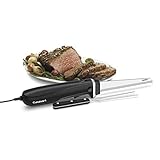
Cuisinart Electric Knife Set with Cutting Board
The most complete kitchen solution in this roundup. In addition to the electric knife and serving fork, it includes a solid bamboo cutting board sized for roasts and bread. The 8-inch stainless blades cut smoothly and the handle offers excellent balance for controlled, uniform slices. For cooks who want a dedicated carving station without hunting for a separate board, this set is the most streamlined and gift-ready option.
Frequently Asked Questions
Is an electric knife better than a traditional carving knife?
For large roasts, bone-in hams, and crusty bread, an electric knife is faster and produces more uniform slices with less effort and hand pressure. For everyday chopping, boning, trimming, and fine knife work, a traditional 8 to 10-inch chef’s or 12-inch slicer gives you better control and precision. Most cooks benefit from keeping both.
Can electric knives cut bread and foam as well as meat?
Yes. Serrated reciprocating blades are excellent for bread, creating clean slices without compressing the loaf, and many models are rated for craft foam. Use light, steady pressure and let the blades do the work. For crusty boules, a longer 8-inch blade helps maintain a straight cut.
Are cordless electric knives powerful enough for dense meats?
Modern cordless models like the WORKPRO provide comparable cutting speed to corded units for most home tasks, including chilled roasts and dense bread. Corded models still offer unlimited runtime and slightly more consistent torque for very large or frequent carving jobs, such as catering or holiday cooking for 10 or more guests.
How do you clean and maintain an electric knife?
Always unplug or power off and remove blades before cleaning. Wash blades by hand with warm soapy water, dry immediately, and store with guards on. Wipe the handle with a damp cloth, never immerse it. Periodically add a drop of food-safe oil to the blade junction to keep the reciprocating action smooth.
Final Thoughts
For most households, a traditional knife remains essential for daily prep, but an electric knife earns its place for effortless carving and bread slicing. If you want an affordable, easy-to-store starter, choose the Proctor Silex Easy Slice. For maximum organization and versatility, the Hamilton Beach Electric Knife Set with Storage Case stands out, while the WORKPRO Cordless Electric Knife is the best pick for cord-free flexibility at the table or for craft projects.









Write Your Review
No reviews yet. Be the first to share your experience!