
A hot water dispenser for travel can make preparing tea, coffee, and other hot beverages more convenient during hotel stays, road trips, and extended visits. However, portable hot-water appliances differ in heating methods, capacity, electrical requirements, and transport safety. This guide explains how to choose a compact model that fits your travel routine without creating avoidable electrical or burn hazards.
- Quick Verdict: What Should Travelers Buy?
- Understanding Portable Hot Water Appliances
- Choosing the Right Capacity
- Electrical Compatibility for International Travel
- Features That Matter for Travel
- Size and Packing Convenience
- Hotel and Accommodation Use
- Travel Beverage Applications
- Cleaning and Maintenance
- Travel Safety Considerations
- Choosing by Travel Style
- Common Buying Mistakes
- Frequently Asked Questions
- Conclusion
Quick Verdict: What Should Travelers Buy?
For most travelers who need to heat drinking water, a compact travel kettle with documented electrical compatibility and automatic shutoff is the most practical category.
A portable hot water dispenser may be appropriate for people who want controlled dispensing or repeated access to hot water, but such systems can be bulkier.
The best choice depends on how much water you use and where the appliance will operate.
| Appliance Type | Main Advantage | Main Trade-Off |
|---|---|---|
| Compact travel kettle | Portable water heating | Requires cooling and emptying before packing |
| Collapsible travel kettle | Reduced packed volume | Material and durability requirements vary |
| Portable hot water dispenser | Convenient dispensing | May require more space and cleaning |
| Insulated hot water bottle | Carries previously heated water | Does not actively heat water |
| Travel water boiler | Compact dedicated heating | Electrical and capacity limitations |
| Battery-powered heating device | Potential outlet independence | Heating capability and battery requirements vary |
If you already have reliable access to an approved hotel kettle, bringing another appliance may be unnecessary.
Understanding Portable Hot Water Appliances
Travel Kettle vs. Hot Water Dispenser
A travel kettle heats water inside a vessel.
A hot water dispenser may heat and dispense water through a dedicated outlet or spout.
Some dispensers maintain a reservoir of heated water.
Others use different heating arrangements.
The product category matters because heating capacity, temperature control, and transport requirements vary.
Do not assume every compact hot water appliance provides instant boiling water.
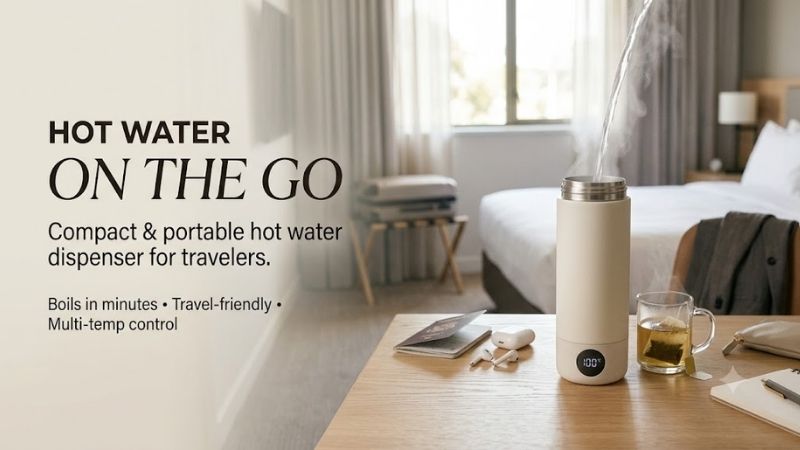
Portable Water Boiler
A compact boiler may be designed specifically for travel or individual servings.
However, the term portable does not mean the appliance can operate without a wall outlet.
Check its electrical rating and intended operating environment.
Insulated Hot Water Containers
An insulated bottle can keep previously heated water warm for a period of time.
It does not create heat.
For travelers who only need warm water later in the day, an insulated container may be simpler and safer than carrying an additional electrical appliance.
Battery-Powered Heating
Heating water requires substantial energy.
Battery-powered appliances may have significant limitations in capacity, temperature, or operating duration.
Do not assume that a device with a rechargeable battery can boil large quantities of water.
Verify the actual heating function and electrical specifications.
Choosing the Right Capacity
Individual Beverage Preparation
For one person preparing tea or coffee, a compact water-heating appliance may be sufficient.
However, the minimum and maximum fill levels must match your normal needs.
A kettle that requires more water than you want to heat may be inconvenient.
Couples and Shared Travel
Two travelers may benefit from additional water capacity.
However, greater capacity increases weight and packed volume.
Consider whether repeated heating is acceptable.
Family Travel
Families may need more hot water for beverages or other approved uses.
However, a large portable dispenser can become inconvenient to transport.
If staying in an accommodation with a kitchen, using its existing appliances may be more practical.
Capacity vs. Packed Weight
Water capacity and appliance weight are different considerations.
Compare empty weight for transportation and filled weight for safe handling.
A lightweight empty appliance can become difficult to pour when filled.
Electrical Compatibility for International Travel
Understanding Voltage
Electrical systems differ between countries.
Many appliances intended for the United States operate on 120V, while numerous international destinations use approximately 220–240V systems.
Check the exact input rating on the appliance.
Do not assume that a product described as international is automatically compatible everywhere.
Dual-Voltage Travel Kettles
Some travel appliances explicitly support more than one input voltage.
However, dual-voltage operation must be documented.
Certain products may require a manual voltage selection procedure.
Follow the instructions before connecting the appliance.
Plug Adapters vs. Voltage Converters
A plug adapter changes the physical connection between the plug and outlet.
It does not ordinarily change electrical voltage.
Using a 120V-only appliance on an incompatible higher-voltage supply can create serious hazards.
Only use compatible electrical equipment.
Power Consumption
Water heaters can draw substantial electrical power.
Check the rated input and the outlet’s suitability.
Do not operate them through overloaded power strips or unauthorized extension cords.
For hotel use, confirm that personal heating appliances are permitted.
Features That Matter for Travel
Automatic Shutoff
Automatic shutoff can reduce the likelihood of unnecessary heating after water reaches the appliance’s programmed condition.
However, its operation varies.
Some models shut off after boiling, while others have additional temperature-control settings.
Check the exact documentation.
Boil-Dry Protection
Boil-dry protection is an important safeguard when a water-heating appliance contains insufficient water.
However, this feature does not justify intentionally operating it empty.
Follow minimum fill requirements.
Leak Resistance
A travel appliance may include a lid that closes securely.
However, a secure lid during normal use does not mean the device is leakproof while packed.
Empty and dry the appliance before transportation as instructed.
Never pack a hot appliance containing boiling water.
Handle and Pouring Design
Choose a handle that provides stable control when the vessel is filled.
Consider steam direction, spout shape, and lid security.
A narrow spout may help with controlled pouring.
However, hot water can still spill if the appliance is overfilled or tilted unexpectedly.
Temperature Settings
Some appliances offer temperature selection for different beverages.
This may be useful for tea or coffee preparation.
However, advertised settings do not guarantee perfect temperature accuracy.
For basic boiling water, simple controls may be sufficient.
Size and Packing Convenience
Exterior Dimensions
Measure packed width, height, and depth.
Some collapsible kettles reduce their height for storage.
However, the base and electrical components may remain rigid.
Check the complete packed dimensions.
Travel Weight
A compact appliance is easier to transport when its weight is manageable.
However, construction quality and safety are more important than choosing the lightest possible product.
Cord Storage
A detachable or integrated cord-storage system may reduce clutter.
Follow manufacturer instructions for packing.
Do not bend or damage electrical connectors.
Carrying Cases
A protective case may help prevent damage.
However, the appliance must be fully cooled and dried before packing.
Avoid storing moisture around electrical connections.
Hotel and Accommodation Use
Check Hotel Rules
Not every hotel permits guests to operate personal water-heating appliances.
Some provide their own kettles or hot water dispensers.
Check the accommodation’s policies.
Do not assume that an electrical appliance is allowed simply because it fits the available outlet.
Safe Countertop Placement
Use a stable, heat-resistant surface with adequate clearance.
Keep the appliance away from beds, curtains, paper, and other combustible materials.
Do not operate a kettle inside luggage or enclosed storage spaces.
Avoid Bathroom Electrical Hazards
Do not place electrical water-heating appliances near sinks, bathtubs, or standing water.
Use only suitable outlets and follow local electrical safety requirements.
Shared Accommodation
Consider noise, hot surfaces, and steam when operating an appliance around other guests.
Keep cords and hot water away from children and walking paths.
Travel Beverage Applications
Preparing Tea
A travel kettle can heat water for tea.
Some models offer temperature settings, but precise selection is not required for every tea preparation.
Choose based on how frequently you use different water temperatures.
Preparing Pour-Over Coffee
Pour-over coffee may benefit from controlled pouring.
However, a conventional travel kettle may have a relatively wide spout.
If pour control matters, a compact gooseneck design may be preferable.
Check capacity and electrical compatibility.
Preparing Instant Coffee
For instant coffee, a simple kettle that safely heats potable water is often sufficient.
A sophisticated dispenser may not provide meaningful additional value.
Preparing Hot Water for Food
Some travelers use hot water for approved instant-food products.
Follow the food manufacturer’s preparation instructions.
Do not assume that hot water from a dispenser is sufficient for cooking raw ingredients or making all foods safe.
Cleaning and Maintenance
Mineral Scale
Repeated heating can leave mineral deposits.
Hard water may increase buildup.
Use the manufacturer’s recommended descaling procedure.
Never mix cleaning chemicals.
Cleaning the Reservoir
Water reservoirs should be accessible for cleaning.
Follow instructions for draining and drying.
Do not allow stagnant water to remain in the appliance during prolonged storage.
Electrical Contacts
Keep electrical connectors dry.
Never immerse a powered base unless explicitly approved.
Inspect the cord for damage before travel.
Cleaning Narrow Dispensing Paths
Some hot water dispensers have internal passages that are harder to inspect than an open kettle.
Choose a model with clear flushing and maintenance instructions.
If the appliance requires special cleaning products or filters, consider their availability during travel.
Travel Safety Considerations
Handling Steam
Steam can cause severe burns.
Open lids carefully and keep hands away from escaping steam.
Do not overfill.
Cooling Before Packing
Allow the appliance to cool completely.
Empty and dry it according to its instructions.
Do not pack a hot kettle inside a bag.
Airline Travel
Airline and security rules may affect whether particular electrical appliances or battery-powered devices can be carried.
Lithium battery requirements are especially important for rechargeable products.
Check the airline’s current requirements for the exact appliance and battery.
Avoiding Improvised Power Connections
Do not use incompatible plugs, damaged adapters, or overloaded outlets.
A travel water heater should be operated only with a suitable power supply.
Choosing by Travel Style
Domestic Hotel Travel
A compact 120V travel kettle may be practical when personal heating appliances are permitted.
However, an existing hotel kettle may eliminate the need to carry one.
International Travel
Electrical compatibility should be the first consideration.
Choose an appliance explicitly rated for the destination’s power system.
Road Trips
A compact kettle can be useful when stopping at accommodations with suitable outlets.
Do not assume ordinary vehicle power sockets can operate it.
Long-Term Stays
A larger kettle or approved dispenser may be more convenient when water is heated several times daily.
However, compare the appliance with equipment already supplied by the accommodation.
Minimalist Travel
An insulated bottle may be the simplest solution when you only need to carry water that was heated elsewhere.
It avoids electrical and cleaning complications.
Common Buying Mistakes
Assuming Every Travel Appliance Is Dual Voltage
Check the exact electrical rating.
Confusing a Plug Adapter With Voltage Conversion
Physical adapters generally do not change voltage.
Buying Too Much Capacity
Large reservoirs increase packed size and filled weight.
Ignoring Hotel Policies
Personal heating appliances may be restricted.
Packing While Hot or Wet
Allow the appliance to cool and dry completely.
Assuming All Portable Dispensers Boil Water
Some appliances heat to lower temperatures or only maintain already-heated water.
Verify the actual function.
Frequently Asked Questions
What Is the Best Type of Hot Water Dispenser for Travel?
For most travelers, a compact travel kettle with appropriate voltage compatibility and safety controls is a practical starting category.
Can I Use a US Travel Kettle in Europe?
Only if the appliance supports the local electrical supply or a properly approved compatible power arrangement is used. A plug adapter alone is insufficient for a voltage mismatch.
Are Travel Kettles Allowed in Hotels?
Rules vary by property. Confirm permission before operating a personal heating appliance.
Do Portable Hot Water Dispensers Boil Water?
Some do, while others heat or maintain water at lower temperatures. Check the exact product specifications.
Can I Take an Electric Kettle on an Airplane?
Transport rules depend on the airline, destination, appliance design, and whether batteries are included. Check applicable airline and security requirements before packing.
Is a Collapsible Travel Kettle Safe?
It can be suitable when properly manufactured and used according to its instructions. Verify material temperature limits, electrical ratings, and care requirements.
Conclusion
The best hot water dispenser for travel should match your beverage needs, packing space, and available electrical supply. A compact travel kettle is often the simplest option for heating water, while a dedicated dispenser may suit longer stays or repeated daily use. Prioritize documented voltage compatibility, automatic safety features, manageable capacity, and hotel permissions rather than purchasing based only on compact size.




Write Your Review
No reviews yet. Be the first to share your experience!