
A pasta maker for meal prep can help you prepare fresh noodles in larger batches and portion them for future meals. However, different machines require different amounts of dough preparation, drying, cleaning, and storage space. The best option depends on the pasta shapes you prefer, how often you cook, and whether you want manual control or greater automation. This guide explains how to select a practical pasta maker for a reliable meal-prep routine.
- Quick Verdict: What Pasta Maker Should You Buy for Meal Prep?
- Understanding Different Pasta Makers
- Roller vs. Extruder: Which Is Better for Meal Prep?
- Choosing the Right Production Capacity
- Pasta Shapes and Attachments
- Dough Preparation Matters as Much as the Machine
- Features Worth Paying For
- Storage and Countertop Requirements
- How to Prepare Fresh Pasta for Meal Prep
- Freezing Fresh Pasta
- Fresh Pasta Food Safety
- Cleaning Manual Pasta Rollers
- Cleaning Automatic Pasta Makers
- Choosing by Household and Meal-Prep Style
- Understanding Cost and Value
- Common Buying Mistakes
- Frequently Asked Questions
- Conclusion
Quick Verdict: What Pasta Maker Should You Buy for Meal Prep?
For most home cooks who want to prepare fresh pasta ahead of time, a sturdy manual pasta roller with a compatible cutting attachment is a versatile and relatively affordable starting point.
It can produce sheets for lasagna and cut noodles such as fettuccine or tagliatelle, depending on the available attachments.
However, it does not mix or knead the dough automatically.
If you prepare substantial quantities regularly, a motorized roller or suitable automatic pasta extruder may reduce physical effort.
| Pasta Maker Type | Best For | Main Trade-Off |
|---|---|---|
| Manual roller | Traditional pasta sheets and cut noodles | Requires dough preparation and hand cranking |
| Motorized roller | Repeated sheet rolling with less manual effort | Requires power and may cost more |
| Automatic pasta extruder | Machine-assisted mixing and shaped pasta | More complex cleaning and model-specific recipes |
| Stand mixer pasta attachment | Households that already own a compatible mixer | Depends on mixer compatibility |
| Hand-crank extruder | Certain shaped pasta recipes | Can require substantial effort |
| Rolling pin and knife | Occasional homemade pasta | Requires more manual technique |
For meal prep, production capacity and cleaning effort are often more important than the number of pasta shapes advertised.
Understanding Different Pasta Makers
Manual Pasta Rollers
A manual pasta roller uses adjustable rollers to flatten prepared dough into sheets.
The user turns a crank while guiding dough through the machine.
Many designs include or support cutting attachments.
Manual rollers are popular because they offer direct control over dough thickness.
However, they require preparation space and some technique.
The process generally includes mixing, kneading, resting, dividing, rolling, and cutting the dough.
For people who enjoy the process, this involvement can be part of the appeal.
For someone who wants the least possible hands-on preparation, it may become inconvenient.
Electric Pasta Rollers
Electric rollers perform the rolling movement using a motor.
This can free both hands for guiding dough.
Motorization may be particularly useful when preparing several batches of pasta sheets.
However, the machine still usually requires dough to be mixed and prepared separately.
The motor does not automatically make every stage of pasta preparation easier.
Consider whether the time saved during rolling justifies the extra cost and electrical requirements.
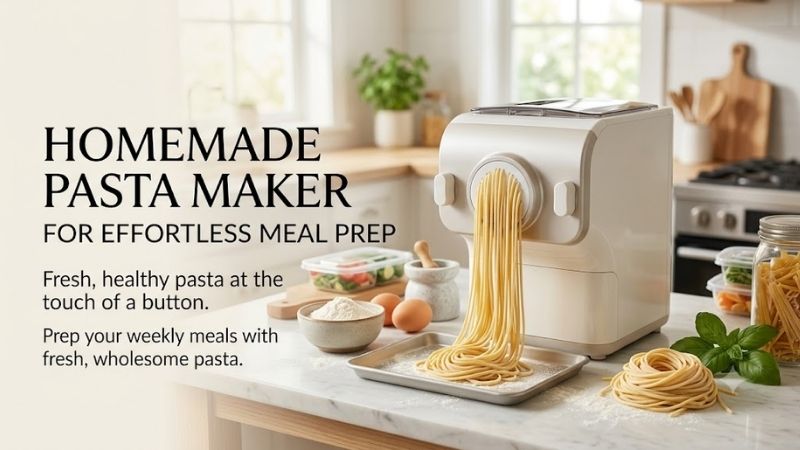
Automatic Pasta Extruders
Automatic pasta makers may combine flour and liquid ingredients inside a mixing chamber before pushing dough through a shaping die.
Depending on the machine, dies can produce several types of pasta.
This design can reduce manual mixing and rolling.
However, an extruder may require a particular dough consistency that differs from traditional hand-rolled pasta.
The final texture and appearance depend on the machine, flour, recipe, and die.
A machine that simplifies preparation may still require substantial cleaning afterward.
Stand Mixer Pasta Attachments
Some stand mixers support roller and cutter attachments.
These can be convenient for households that already own a compatible mixer.
However, attachment interfaces differ between manufacturers and product generations.
Do not assume that a pasta attachment fits every stand mixer.
Check exact compatibility.
A stand mixer attachment may reduce additional motorized appliances, but the combined setup can occupy significant counter space during use.
Roller vs. Extruder: Which Is Better for Meal Prep?
When a Roller Makes More Sense
Choose a roller if you frequently prepare pasta sheets, fettuccine, tagliatelle, or lasagna.
Rolling provides flexibility over sheet thickness and can support several traditional preparations.
It also allows you to adjust dough behavior manually.
However, the process can be time-consuming when preparing large quantities alone.
A roller is especially appealing when you enjoy hands-on cooking and want control over the finished pasta.
When an Extruder Makes More Sense
Choose an extruder if you prefer shaped pasta and want the machine to handle more of the production process.
Certain extruders support shapes that are difficult to produce with a basic roller.
However, pasta dies and internal mixing components may require careful cleaning.
Some designs are sensitive to dough hydration.
Follow exact recipes rather than assuming ordinary hand-rolled pasta dough will extrude correctly.
Which Type Creates Less Cleanup?
There is no universal winner.
A roller may need dry cleaning around rollers and cutters, with limited disassembly.
An extruder may have a removable mixing chamber, screw, and shaping dies.
The roller can require more preparation tools, while an extruder may have more machine components to clean.
Consider total cleanup, including bowls, work surfaces, attachments, and drying racks.
Which Type Is Faster?
Actual preparation time includes more than the machine’s operating cycle.
For a manual roller, dough mixing and resting may be significant parts of the process.
For an extruder, measuring, assembly, extrusion, and die cleaning can take considerable time.
Do not assume that an advertised ten-minute machine cycle means dinner preparation takes ten minutes.
Compare complete workflows.
Choosing the Right Production Capacity
Calculate Weekly Pasta Portions
Start by estimating how many meals you want to prepare.
For example, a household preparing pasta dinners for four people on two occasions needs eight planned portions.
However, portion size depends on whether pasta is the main dish or a side and whether you are calculating fresh or dry pasta.
Fresh pasta contains moisture and does not weigh the same as commercially dried pasta for equivalent servings.
Use a suitable recipe and serving calculation.
Batch Size for One Person
A basic manual roller may be sufficient for one person preparing several portions.
Small batches are easier to manage when kitchen space is limited.
However, frequent small sessions require repeated setup and cleaning.
Consider whether one larger weekly preparation session would be more practical.
Batch Size for Couples
A manual or motorized roller can support a couple’s pasta preparation when the batch size fits the dough recipe.
If both people participate, manual rolling may be straightforward.
If one person handles the entire process, a motorized attachment could reduce workload.
Batch Size for Families
Family meal prep may require larger quantities.
An appliance that handles dough in several smaller portions may be sufficient, but repeated cycles increase time.
Check the rated flour or dough capacity.
Do not exceed the manufacturer’s limits.
A model advertising a large batch may still have restrictions based on flour type or dough hydration.
Why Maximum Capacity Is Not Everything
A pasta machine’s capacity can be expressed as flour weight, finished dough weight, or another measure.
These are not interchangeable.
If one model lists flour capacity and another lists finished dough capacity, compare them carefully.
Also check the minimum batch size.
A large machine may be inconvenient for small quantities.
Pasta Shapes and Attachments
Lasagna Sheets
A roller is well suited to producing sheets for lasagna.
The thickness setting can be adjusted according to the recipe.
However, wide sheets require sufficient counter space for handling.
If you plan to freeze lasagna sheets, consider packaging and separation methods to prevent sticking.
Fettuccine and Tagliatelle
These ribbon-style noodles can be made with suitable cutters.
The finished width depends on the cutting attachment.
A roller with a compatible cutter may be practical for repeated meal-prep batches.
However, noodles need to be separated and handled carefully after cutting.
Spaghetti-Style Pasta
Certain cutters and extruders support spaghetti-style shapes.
However, the results depend on the machine.
Do not assume every pasta roller includes a spaghetti cutter.
Check which attachments are included and which are optional.
Penne and Other Tubular Shapes
Tubular pasta generally requires an appropriate extrusion mechanism.
A basic sheet roller will not produce penne without specialized equipment.
If shaped pasta is central to your meal prep, choose a machine designed for it.
Ravioli and Stuffed Pasta
Pasta rollers can help produce sheets used for ravioli.
However, filling, sealing, and cutting remain additional tasks.
Certain ravioli attachments are available for particular machines.
Do not assume these attachments eliminate all manual work.
Stuffed pasta also requires careful food-safety handling because fillings may contain meat, cheese, eggs, or other perishable ingredients.
Dough Preparation Matters as Much as the Machine
Flour Choice
Pasta recipes may use all-purpose flour, semolina flour, durum wheat flour, or other ingredients.
Different flours affect dough texture and hydration.
A recipe suitable for one machine may not work identically with another.
For example, certain automatic extruders use relatively firm, crumbly dough mixtures rather than a smooth dough ball.
Follow machine-specific instructions.
Egg Pasta vs. Water-Based Pasta
Some homemade pasta recipes use eggs.
Others rely on flour and water.
Egg-based dough and water-based dough can have different textures and handling characteristics.
Neither is automatically appropriate for every attachment or pasta shape.
Use a validated recipe intended for your equipment.
Dough Hydration
The ratio of liquid to flour strongly affects pasta production.
Too much moisture can cause sticking.
Too little can make dough difficult to roll or extrude.
However, the correct amount depends on flour characteristics, egg size, and machine design.
Avoid adding large amounts of extra flour or water without considering the recipe.
Kneading
Kneading develops dough structure.
Some recipes require manual kneading before rolling.
Others rely on machine mixing.
Follow the prescribed method.
Insufficient development can cause tearing, while inappropriate handling may create an overly difficult dough.
Resting
Many traditional pasta dough recipes include a resting period before rolling.
Resting can make dough easier to handle.
However, the safe resting method and duration depend on ingredients.
Egg-containing dough is perishable.
Do not leave it at room temperature for prolonged periods.
Follow a suitable recipe and use refrigeration when appropriate.
Features Worth Paying For
Adjustable Roller Thickness
A roller with several meaningful thickness settings provides flexibility.
Thin sheets may be suitable for delicate noodles, while thicker sheets may be appropriate for other recipes.
However, the numbered settings are not standardized across brands.
A setting marked five on one machine may produce a different sheet thickness from another.
Reliable Table Clamp
Manual rollers commonly use a clamp to attach to a work surface.
A stable attachment reduces shifting during operation.
Check the maximum supported countertop thickness and whether the clamp fits your kitchen.
Some tables have rounded or obstructed edges that prevent secure attachment.
Do not operate a roller that cannot be mounted properly.
Motorized Attachments
A motorized roller can make handling larger sheets easier.
However, it adds electrical components and may increase cost.
Check whether the motor is included or sold separately.
Also verify compatibility with the roller model.
Easy-to-Remove Dies
Extruders often use interchangeable shaping dies.
A machine that allows practical die removal can simplify cleaning and shape changes.
However, some dies trap dough in narrow openings.
Inspect whether the manufacturer provides cleaning tools and approved procedures.
Replaceable Components
Rollers, cutters, mixing paddles, and dies may eventually need replacement.
Check whether genuine compatible parts are available.
An inexpensive machine can become a poor long-term investment if essential parts are unavailable.
Storage and Countertop Requirements
Operating Space vs. Storage Space
A pasta machine may fit inside a small cabinet but require a large working area.
A roller needs room for incoming and outgoing dough sheets.
An extruder needs space for the emerging pasta and collection trays.
Measure both environments.
Pasta Drying Racks
Many fresh pasta recipes use a drying rack or another suitable surface to separate noodles during preparation.
This adds to the equipment footprint.
If you have limited counter space, plan where pasta will rest before freezing or cooking.
Do not leave perishable fresh pasta at room temperature for unsafe periods.
Attachment Storage
Cutters, dies, clamps, brushes, and other accessories can accumulate.
A machine with many shapes may require substantial organization.
Choose accessories based on the pasta you actually prepare.
Machine Weight
Heavy metal rollers can be stable but may be inconvenient to retrieve from overhead cabinets.
Plastic-bodied extruders may be lighter, but construction varies.
Choose an appliance that you can move safely.
Cord Management
Motorized models require appropriate electrical access.
Keep cords away from water and dough preparation surfaces.
Do not use an electrical appliance with a damaged cord or loose connector.
How to Prepare Fresh Pasta for Meal Prep
Step 1: Choose the Pasta Shape and Recipe
Begin with a recipe designed for your machine.
Determine whether the finished pasta will be cooked immediately, refrigerated briefly, or frozen.
This decision affects how you portion and handle the dough.
Step 2: Measure Ingredients
Use consistent measurements.
A kitchen scale can improve repeatability, especially when working with flour.
Follow the machine’s flour and liquid limits.
Do not overfill the mixing chamber.
Step 3: Prepare the Dough
Mix and knead according to the recipe.
For manual rollers, the dough may need to be divided into smaller pieces.
For automatic machines, use the required dough consistency.
Avoid touching moving rollers or extrusion mechanisms.
Step 4: Roll or Extrude
Follow the appliance’s instructions.
Keep hands clear of moving components.
For rollers, pass dough through appropriate thickness settings.
For extruders, allow the machine to process the approved mixture without forcing the mechanism.
Step 5: Separate the Pasta
Use suitable food-contact surfaces or approved drying equipment.
Prevent excessive sticking.
However, do not assume that air-drying fresh egg pasta at room temperature makes it safe for shelf storage.
Home drying methods require specific validated guidance.
Step 6: Portion for Meals
Divide pasta into practical meal portions.
This makes later cooking easier.
Use recipe-based serving amounts rather than assuming all fresh pasta has the same moisture content.
Step 7: Refrigerate or Freeze Promptly
Fresh pasta, particularly egg pasta, is perishable.
Refrigerate at 40°F or below or freeze at 0°F or below.
Do not leave fresh dough or finished noodles on the counter for extended periods.
Step 8: Package Properly
Use suitable food-storage packaging.
Separate portions to reduce sticking.
Label packages with the preparation date.
Avoid tightly compressing delicate noodles.
Step 9: Cook Using Appropriate Instructions
Fresh pasta may cook differently from commercial dried pasta.
Actual timing depends on shape, thickness, and recipe.
Follow an appropriate cooking method and ensure the finished food is properly cooked.
Freezing Fresh Pasta
Why Freezing Is Useful for Meal Prep
Freezing can make advance preparation practical.
You can produce several portions in one session and use them later.
However, the process should be planned so the noodles remain separated and manageable.
A single large frozen block may be difficult to portion.
Freezing Noodle Portions
Certain pasta shapes can be arranged in portions before freezing.
Use a suitable tray or packaging method to reduce sticking.
Avoid prolonged room-temperature holding during preparation.
Once appropriately frozen, transfer to suitable freezer packaging.
Freezing Pasta Sheets
Lasagna sheets can be frozen using appropriate separation materials.
However, their large flat shape may require considerable freezer space.
Measure storage containers before preparing oversized sheets.
Freezing Stuffed Pasta
Stuffed pasta requires additional care because fillings can contain perishable ingredients.
Follow a validated recipe.
Freeze promptly and cook according to suitable food-safety instructions.
Cooking From Frozen
Some fresh pasta recipes permit cooking directly from frozen.
However, the procedure depends on shape, thickness, and filling.
Do not assume that every frozen pasta product should be thawed first.
Follow the recipe’s handling instructions.
Fresh Pasta Food Safety
Raw Flour Is Not Ready to Eat
Flour is a raw agricultural product and can contain harmful microorganisms.
Do not taste raw dough simply because it contains familiar ingredients.
Raw eggs introduce additional concerns.
Cook pasta appropriately before eating.
Egg Handling
Keep eggs refrigerated and prevent cross-contamination.
Wash hands and utensils after handling raw egg dough.
Do not leave prepared dough unrefrigerated for prolonged periods.
Refrigerator Storage
Fresh pasta does not have the same shelf life as commercially dried pasta.
Storage duration depends on ingredients, preparation, packaging, and temperature.
For meal prep beyond short refrigerated storage, freezing is often the more practical approach.
Cooked Pasta Storage
Cooked pasta should be cooled and refrigerated promptly.
General US food-safety guidance recommends using refrigerated leftovers within three to four days.
Freeze portions when longer storage is needed.
Reheating Prepared Pasta
Reheat cooked pasta dishes using an appropriate method.
For leftovers, 165°F is the general recommended reheating temperature.
A pasta maker does not change the storage or reheating requirements of prepared meals.
Cleaning Manual Pasta Rollers
Why Many Rollers Should Not Be Washed Under Running Water
Some traditional manual pasta rollers contain mechanisms that should not be submerged.
Water can enter areas that are difficult to dry and may damage components.
Follow the manufacturer’s instructions.
Do not assume a metal roller is dishwasher safe.
Removing Dried Dough
Some roller manufacturers recommend allowing small amounts of dough residue to dry before removing them with an approved brush or cleaning tool.
However, cleaning methods vary.
Never force tools between moving rollers.
Cutter Maintenance
Cutting attachments may trap flour and dough particles.
Use approved cleaning techniques.
Do not disassemble cutter mechanisms unless instructed.
Preventing Rust and Damage
Store rollers in a dry location.
Avoid water exposure when prohibited.
Inspect moving parts and clamps for damage.
Cleaning Automatic Pasta Makers
Mixing Chamber
Automatic extruders may have removable mixing chambers.
These can collect dough residue.
Follow the manufacturer’s cleaning instructions.
Some components may require handwashing.
Extrusion Dies
Dies can have narrow openings that trap dough.
Cleaning can be one of the most time-consuming parts of automatic pasta making.
Check whether the machine includes suitable cleaning tools.
Do not use sharp objects that could damage the openings.
Motor Housing
Keep electrical components dry.
Never immerse the motor base.
Disconnect the appliance before removing attachments.
Dishwasher Compatibility
Certain removable parts may be dishwasher safe.
Others are not.
Follow the exact instructions.
Drying Before Storage
Allow cleaned components to dry completely.
Moisture trapped in flour residue can create hygiene problems.
Store dies and attachments where they will not be damaged or lost.
Choosing by Household and Meal-Prep Style
One-Person Household
A basic manual roller may be sufficient for occasional batches.
However, if you rarely prepare pasta, a rolling pin and knife may provide better value.
Couples
A manual roller with suitable cutters can support regular meal prep.
If one person handles most preparation, a motorized attachment may reduce physical effort.
Large Families
Greater batch capacity and reduced manual workload become important.
A suitable automatic extruder or motorized roller may be useful.
However, cleanup and storage requirements increase with machine complexity.
Small Apartments
A manual roller may fit compact storage spaces, but it still requires a secure clamping location and adequate dough-handling area.
Frequent Pasta Enthusiasts
For regular use, prioritize reliable construction, useful pasta shapes, convenient maintenance, and available replacement parts.
Understanding Cost and Value
Basic Manual Machines
A manual roller may offer good value when you enjoy hands-on preparation.
However, additional cutters can increase total cost.
Motorized Rollers
Motorization may be worthwhile when you frequently make large amounts of sheet pasta.
The time and effort savings should justify the additional expense.
Automatic Extruders
These can simplify certain tasks but may involve more complex cleaning.
Choose one when you value supported pasta shapes and machine-assisted production.
Consumable and Ingredient Costs
Homemade pasta requires flour, eggs or water, energy, storage materials, and preparation time.
The cost per portion depends on ingredients and equipment use.
Do not assume homemade pasta is always cheaper than dried pasta.
Long-Term Ownership
Check warranty terms and replacement-part availability.
A machine used regularly should remain serviceable.
Common Buying Mistakes
Choosing by the Number of Shapes Alone
Many dies are not useful if you only cook two pasta varieties.
Ignoring Cleaning Time
An automatic machine can save mixing effort while adding die-cleaning work.
Buying Without Measuring Counter Space
Rolling and extrusion require room beyond the machine housing.
Assuming Every Dough Recipe Works
Manual rollers and automatic extruders may require different dough consistencies.
Treating Fresh Pasta as Shelf Stable
Fresh pasta, especially egg pasta, requires appropriate cold storage unless processed using a validated shelf-stable method.
Buying More Capacity Than Needed
Oversized machines may be inconvenient for small weekly batches.
Frequently Asked Questions
What Type of Pasta Maker Is Best for Meal Prep?
A manual roller is versatile for sheets and ribbon noodles. A suitable automatic extruder may be more convenient for frequent production of shaped pasta.
Is an Electric Pasta Maker Worth It?
It may be worthwhile when you prepare large batches regularly and value reduced manual effort. However, cleaning and storage requirements still matter.
Can I Freeze Homemade Fresh Pasta?
Yes, using appropriate safe preparation, portioning, packaging, and freezing methods.
How Long Does Homemade Pasta Last in the Refrigerator?
Storage depends on ingredients and handling. Fresh pasta is perishable, so follow a validated recipe’s short-term storage guidance or freeze it for longer keeping.
Can I Use All-Purpose Flour in a Pasta Maker?
Many recipes use all-purpose flour, but the appropriate flour depends on the machine and pasta style. Follow the manufacturer’s supported recipes.
Do Pasta Makers Need to Be Washed After Every Use?
Food-contact components require proper cleaning, but methods differ. Some manual rollers must be dry-cleaned rather than immersed, while certain removable automatic-machine parts can be washed.
Conclusion
The best pasta maker for meal prep should match your preferred pasta shapes, weekly batch size, available space, and tolerance for cleaning. A manual roller offers control and versatility for sheet pasta, while motorized rollers and extruders can reduce some preparation work. Choose according to your complete cooking workflow, including dough preparation, safe handling, freezing, and storage, rather than relying on advertised speed or the number of attachments.








Write Your Review
No reviews yet. Be the first to share your experience!