
A matcha whisk set for beginners on a budget should make smooth, enjoyable tea possible without expensive ceremonial equipment. A reliable bamboo whisk, suitable bowl, and simple measuring tool are enough to begin. This guide explains which accessories deserve your money, which extras can wait, and how to build an affordable preparation routine that works.
What beginners actually need in an affordable matcha whisk set
Many beginners assume that preparing matcha requires a complete ceremonial collection. In reality, only a few practical items are necessary for learning the basic technique. Understanding the role of each accessory helps buyers avoid unnecessary spending and choose equipment that genuinely improves the consistency of their drinks.
Start with a reliable bamboo whisk instead of decorative tools
The bamboo whisk, or chasen, is the central tool in traditional matcha preparation. Its fine tines disperse powdered tea into warm water and help create a smooth suspension. Beginners should prioritize a whisk with consistent construction and appropriate flexibility rather than choosing one solely because it has an impressive appearance.
A basic bamboo whisk can perform very well when used correctly.
The most important feature is the arrangement of its tines. They should appear evenly distributed, without obvious cracks or severe irregularities.
A comfortable handle is also valuable because traditional whisking involves rapid movement of the wrist.
Some products advertise high tine counts as a sign of superior quality.
Although tine arrangement influences performance, a larger number is not automatically better for every preparation style.
Beginners often benefit more from practicing a consistent motion than from purchasing a premium whisk.
Avoid whisks with rough construction, loose fragments, or visible damage.
An extremely cheap product may need replacement sooner if the bamboo is poorly finished.
However, there is no need to begin with an expensive artisan-made chasen.
A dependable entry-level whisk provides enough performance to learn basic thin matcha preparation.
As technique improves, users can decide whether they want a specialized whisk for thicker matcha or more refined foam.
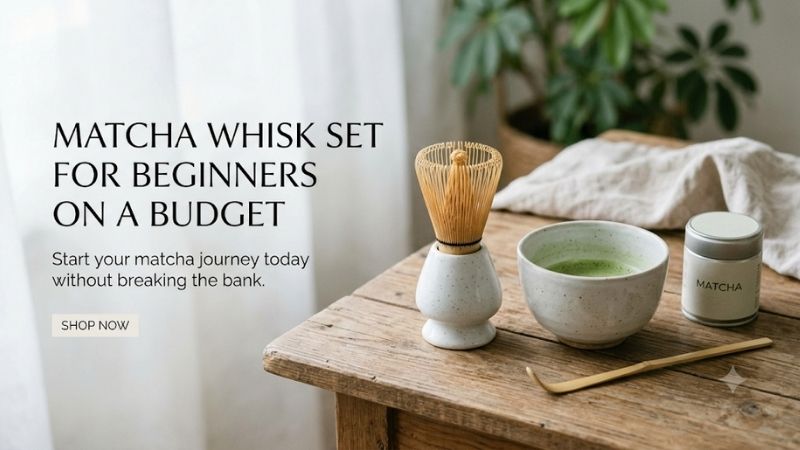
Use an existing wide bowl before buying a traditional chawan
A traditional matcha bowl, known as a chawan, is designed to provide room for whisking and serving powdered tea. However, beginners do not necessarily need to purchase one immediately. An existing ceramic bowl can work well if it has sufficient width, a stable base, and a surface suitable for contact with the whisk.
The bowl should allow the chasen to move rapidly without repeatedly striking the sides.
A narrow mug can make this difficult because the whisk’s tines spread outward during use.
A wide breakfast bowl may provide enough working space for initial practice.
However, an extremely shallow vessel can cause splashing.
Look for a balance between interior width and depth.
The bowl should also remain stable on the counter while whisking.
A heavy ceramic base may provide greater stability than a lightweight container that slides easily.
Avoid bowls with rough or sharply textured interiors that could catch and damage bamboo tines.
If the household already owns suitable teaware, using it can keep the initial cost low.
A dedicated chawan becomes more worthwhile when matcha preparation develops into a regular habit.
At that point, the buyer can choose a bowl based on comfort, appearance, and preferred serving style.
For an absolute beginner, compatibility with the whisk matters more than whether the bowl is marketed specifically for matcha.
Understand why a scoop and sifter can improve consistency
A scoop and sifter are useful accessories, but they serve different purposes. The scoop transfers matcha powder, while the sifter breaks apart clumps before whisking. Beginners should understand these functions before purchasing a large accessory collection, because ordinary kitchen tools can sometimes provide suitable alternatives.
A bamboo scoop, or chashaku, is a traditional utensil for moving matcha powder from its container into the bowl.
It can make preparation feel more deliberate and reduce unnecessary contact with the powder.
However, the amount held by each scoop can vary.
For consistent recipes, a small digital scale is more precise.
A fine-mesh sifter helps disperse dry clumps that can form during storage.
This is particularly useful when matcha powder has been exposed to humidity or compacted inside its container.
Without sifting, small lumps may remain even after vigorous whisking.
A clean kitchen strainer with appropriately fine mesh can sometimes perform the same task.
A dedicated matcha sifter may be more convenient, but it is not always essential.
Beginners should prioritize whichever tools they already own and avoid buying duplicate equipment.
The goal is to measure powder consistently and break up clumps before adding water.
These simple habits often improve texture more than decorative accessories.
How to choose a matcha whisk set for beginners on a budget
Budget matcha sets vary widely in their included components, materials, and intended users. Some contain only a whisk and scoop, while others provide a complete preparation arrangement. The best choice is usually the least expensive configuration that includes everything the beginner genuinely needs for regular use.
Compare two-piece, four-piece, and complete starter kits
The number of accessories in a matcha set can influence convenience, but a larger collection does not automatically represent better value. Buyers should compare the actual contents and consider whether each component will be used. A compact set may be more economical than a complete kit when suitable kitchen equipment is already available.
A two-piece set commonly includes a bamboo whisk and scoop.
This can be an economical choice for someone who already owns a wide bowl and fine strainer.
A four-piece set may add a whisk holder and another accessory, such as a spoon or sifter.
These additional tools can improve convenience, but their value depends on the preparation routine.
A complete set may include a ceramic bowl, whisk, scoop, sifter, holder, and instructions.
For someone starting without any equipment, that arrangement can reduce the need for separate purchases.
However, complete kits may also include decorative components that contribute little to brewing performance.
Examine the product description carefully to understand what is actually included.
Do not assume a photograph showing a bowl means the bowl is part of the basic package.
Some sellers offer multiple configurations under one listing.
Check whether the matcha powder is included or must be purchased separately.
A lower-priced kit is not automatically less expensive if essential components are missing.
Set a realistic budget for matcha preparation tools
Budget planning helps beginners avoid spending heavily before they know how frequently they will drink matcha. The goal is not to purchase the cheapest possible tools, but to allocate money toward components that directly improve preparation. A sensible starter budget should include the whisk, any missing accessories, and the matcha itself.
A modest whisk-and-scoop set can be a practical starting point when a suitable bowl is already available.
Buyers who need a complete setup should allow additional money for a bowl and potentially a whisk holder.
Matcha powder should be considered separately from the equipment budget.
High-quality tools cannot compensate for stale or unpleasant tea.
It may therefore be better to purchase a basic whisk and a fresh, suitable matcha powder than an elaborate accessory set paired with poor-quality tea.
Avoid treating a particular dollar amount as a permanent price standard.
Retail prices change with availability, shipping, promotions, and product configuration.
Compare the total cost at checkout rather than focusing only on the advertised item price.
A complete kit that includes tools already owned may provide little additional value.
For new users, the most economical strategy is usually to buy only the missing essentials and upgrade after establishing a routine.
Choose materials that are durable and easy to clean
Budget accessories should still be safe and suitable for food preparation. Bamboo, ceramic, and stainless steel are common materials in matcha tools, but construction quality varies. Buyers should examine whether the materials are appropriate for repeated use and whether the components can be cleaned without damaging them.
Bamboo is traditionally used for whisks and scoops.
A well-made bamboo whisk should have smooth, flexible tines without obvious splintering.
Ceramic is commonly used for bowls and whisk holders because it provides weight and stability.
However, ceramic components can break if dropped.
Stainless steel is a practical material for sifters and measuring spoons because it is durable and relatively easy to clean.
Some inexpensive kits include decorative plastic pieces.
Buyers should verify that any component contacting hot water or matcha is intended for food use.
Check the manufacturer’s care instructions before placing accessories in a dishwasher.
Bamboo whisks generally require gentle hand rinsing and careful drying.
A simple kit with a few durable components may last longer than a larger collection containing poorly constructed accessories.
Prioritize smooth finishes, stable construction, and accessible cleaning surfaces.
Beginner-friendly matcha whisk set configurations
A useful starter setup should reflect how the buyer intends to drink matcha. Traditional thin matcha, iced lattes, and occasional weekend preparation do not require identical equipment. Understanding these differences makes it easier to avoid paying for accessories that add little value to the preferred routine.
Minimal traditional setup for occasional matcha drinkers
For someone preparing matcha only a few times per week, a minimalist setup can provide everything necessary without occupying much kitchen space. A bamboo whisk, wide bowl, and basic measuring method are enough to practice the fundamental technique. Additional accessories can be introduced gradually.
Begin with a dependable bamboo chasen and a suitable bowl already available at home.
If no appropriate bowl exists, choose an affordable ceramic vessel with a stable base and smooth interior.
A fine-mesh strainer can help break apart powder clumps.
For measuring, a small kitchen scale is useful but not mandatory during early experimentation.
A bamboo scoop provides a traditional alternative.
The most important investment is often the matcha powder itself.
Fresh powder with a flavor profile suited to the intended preparation can make learning more enjoyable.
Use a simple recipe repeatedly before experimenting with different ratios.
For example, begin with approximately 2 grams of matcha and 60–80 milliliters of water.
Whisk thoroughly and adjust gradually.
Avoid buying additional tools until their absence creates an actual inconvenience.
This approach keeps costs manageable while allowing the beginner to develop practical skills.
Affordable complete kits for first-time buyers
Some beginners prefer buying everything together rather than selecting individual accessories. An affordable complete kit can simplify the process, especially when the household lacks suitable bowls or utensils. However, the contents should be evaluated carefully because completeness matters more than the number of items advertised.
A good complete kit should include a functional whisk and a suitable bowl.
A scoop is useful for handling powder, while a sifter can improve consistency.
A whisk holder is valuable for storage but may not be essential for the first few sessions.
Jade Leaf’s Complete Matcha Ceremony Set is an example of a configuration containing these categories of tools.
Other sets may include fewer components at a lower purchase price.
Compare the size and shape of the bowl, not just its appearance.
A bowl that is too narrow or shallow can complicate whisking even when it looks attractive.
Check whether the included whisk is made from bamboo and whether replacement whisks can be purchased later.
The set should also provide clear cleaning instructions.
Beginners should be cautious about products that emphasize elaborate packaging while offering little information about materials or dimensions.
A complete kit is worth buying when it removes practical obstacles and makes regular preparation easier.
Budget electric frothers for iced matcha lattes
Traditional bamboo whisks are effective, but they are not the only way to prepare matcha beverages. Electric frothers can be convenient for users who mainly drink iced lattes or combine matcha with milk. These tools may reduce manual effort, although they create a different preparation experience from traditional whisking.
A small handheld frother can disperse matcha powder into water when used in an appropriately sized container.
It may also be useful for frothing milk.
Some starter kits include an electric frother, measuring scoop, and sifter.
The Jade Leaf Modern Matcha Starter Set is one example.
However, electric frothers may require batteries or charging, depending on the model.
Their rotating heads must be cleaned carefully after use.
The speed of the whisk can also cause splashing in shallow containers.
A tall mixing vessel may therefore be more practical than a traditional matcha bowl.
For people who prefer traditional thin matcha, a bamboo whisk remains the more authentic tool.
For iced latte preparation, a frother may offer adequate convenience.
Choose according to the drinks prepared most often rather than assuming one method is universally superior.
How to prepare good matcha with inexpensive equipment
A beginner does not need expensive equipment to produce a smooth matcha drink. Good results depend on appropriate measurements, water temperature, preparation technique, and basic maintenance. Learning these fundamentals helps users avoid disappointment and makes it easier to decide which accessories are worth upgrading later.
Use the right matcha-to-water ratio and temperature
Matcha preparation begins with balancing powdered tea and water. Too much powder can produce an overpowering drink, while excessive water may dilute the flavor. Temperature also matters because very hot water can emphasize bitterness in some matcha varieties, even when the powder is fresh.
A practical starting point for thin matcha is approximately 2 grams of powder with 60–80 milliliters of water.
This produces a relatively concentrated drink suitable for traditional whisking.
Users who prefer a milder flavor can adjust the ratio gradually.
Water around 160–175°F is commonly recommended, although individual matcha products may suggest different temperatures.
Avoid assuming that boiling water is always appropriate.
Sift the measured powder into a clean bowl before adding water.
Begin with a small portion of water if the powder is particularly clumpy.
Then add the remaining water and whisk until evenly dispersed.
Repeat the same measurements for several sessions before making changes.
Consistency makes it easier to understand how the flavor responds to adjustments.
A digital scale is helpful but not essential if the user establishes a repeatable measuring method.
Learn the correct whisking motion before upgrading tools
Whisking technique often matters more than the price of the chasen. A bamboo whisk is designed to move quickly through the liquid, dispersing powder and incorporating air. Beginners who stir slowly in circles may struggle to create a smooth texture even when using expensive traditional equipment.
Hold the whisk comfortably near the handle.
Keep the movement relaxed rather than gripping tightly.
Move the whisk rapidly back and forth in a small W- or M-shaped pattern.
Avoid pressing the tines firmly against the bottom of the bowl.
The movement should primarily agitate the liquid rather than scrape the ceramic surface.
A wide bowl makes this motion easier.
After several seconds, the powder should become more evenly suspended.
Fine bubbles may begin to appear near the surface.
For thin matcha, continue until the texture looks smooth and the preferred foam develops.
Do not keep whisking indefinitely.
Excessive force can damage the bamboo tines without meaningfully improving the drink.
At the end, lift the whisk gently from the liquid.
Practice with consistent measurements to understand whether changes in texture come from technique, temperature, or powder quantity.
Clean and store bamboo tools without damaging them
Bamboo accessories need careful maintenance because they are made from natural material. A whisk left wet in a closed container may develop odors, while aggressive cleaning can break delicate tines. Simple rinsing and appropriate drying help preserve the equipment and reduce the need for premature replacement.
Rinse the whisk promptly after each use.
Use clean water and gently move the tines through the liquid to remove remaining powder.
Avoid forcing a cleaning brush between the tines.
Do not bend the bamboo aggressively or twist the whisk during washing.
Follow the manufacturer’s instructions regarding detergent use.
Bamboo whisks generally should not be placed in the dishwasher.
After rinsing, allow the whisk to dry in a well-ventilated location.
A correctly sized whisk holder can help preserve its shape during storage.
If a holder is not available, choose a storage arrangement that avoids crushing or deforming the tines.
Ceramic bowls should be cleaned separately according to their material and glaze instructions.
Sifters may require additional attention because fine powder can collect in the mesh.
Never store matcha powder inside a damp bowl or scoop.
Clean, dry accessories help make the next preparation session faster and more pleasant.
Avoid common budget buying mistakes
Budget-conscious beginners can waste money by purchasing kits with unnecessary accessories, poorly made whisks, or incompatible bowls. Understanding these mistakes helps buyers focus on practical performance. A small collection of reliable tools is usually more useful than a large decorative set that complicates storage and cleaning.
Do not choose a whisk solely by tine count.
Construction quality and intended use matter more than an impressive number on the packaging.
Avoid narrow bowls that restrict whisking movement.
Check whether a complete set actually includes the bowl shown in product photographs.
Some listings offer several configurations under one name.
Do not assume matcha powder is included unless the contents explicitly say so.
Consider the ongoing cost of replacement whisks.
Bamboo tools are consumable over time, particularly when used daily.
Avoid paying extra for decorative packaging unless the set is intended as a gift.
Most importantly, do not spend the entire budget on accessories while neglecting the quality of the matcha powder.
A dependable basic whisk and fresh tea can produce excellent results when used with good technique.
Conclusion
The best matcha whisk set for beginners on a budget includes a dependable bamboo whisk and only the accessories needed for regular preparation. Start with a whisk, suitable bowl, and basic measuring method, adding a sifter or holder when useful. A complete kit can be worthwhile for someone starting from zero, while a minimalist set is more economical for buyers with existing kitchen tools. Prioritize fresh matcha, correct temperature, and consistent whisking over expensive decorative equipment.









Write Your Review
No reviews yet. Be the first to share your experience!