
An espresso machine for apartments should deliver enjoyable coffee without overwhelming a limited kitchen. But a compact exterior does not guarantee a convenient setup. Grinder noise, steam clearance, water access, cleaning, and countertop storage also matter. This guide explains how to choose a practical espresso machine that fits your space, budget, and daily coffee routine.
- Quick Verdict: What Espresso Machine Is Best for an Apartment?
- Understanding Espresso Machine Types
- Measuring Your Apartment Coffee Station
- Understanding Espresso Pressure
- Heating Systems and Temperature Control
- Noise in an Apartment
- Milk Drinks in Small Kitchens
- Water Tanks, Drip Trays, and Everyday Maintenance
- Budgeting for the Complete Setup
- Choosing by Apartment Lifestyle
- Apartment Safety and Installation
- Common Buying Mistakes
- Frequently Asked Questions
- Conclusion
Quick Verdict: What Espresso Machine Is Best for an Apartment?
For most apartment residents who want to learn espresso preparation, a compact semi-automatic machine with a manageable water tank, accessible drip tray, and dependable temperature control is a strong starting point. It provides meaningful control over coffee preparation without requiring the space of a large commercial-style setup.
However, it is not the easiest choice for everyone.
A capsule-based machine may be more practical for someone who values minimal preparation and cleanup. A bean-to-cup automatic machine may suit a household that drinks several coffees daily and prefers convenient operation. A manual espresso maker can save electrical counter space but generally requires additional equipment and physical effort.
| Espresso Machine Type | Best Apartment Use | Main Consideration |
|---|---|---|
| Compact semi-automatic | Learning espresso and controlling extraction | Requires grinder, accessories, and practice |
| Automatic bean-to-cup | Convenient daily coffee from whole beans | Larger internal mechanisms and maintenance |
| Capsule machine | Quick drinks and limited mess | Ongoing capsule cost and compatibility |
| Manual lever or handheld espresso maker | Minimalist or occasional espresso preparation | Requires manual operation and often separate water heating |
| Espresso machine with integrated grinder | Keeping major functions in one housing | May be wider and harder to service independently |
The best apartment machine is not necessarily the smallest one. It is the option that fits your complete coffee-making workflow while remaining comfortable to use, clean, and maintain.
Understanding Espresso Machine Types
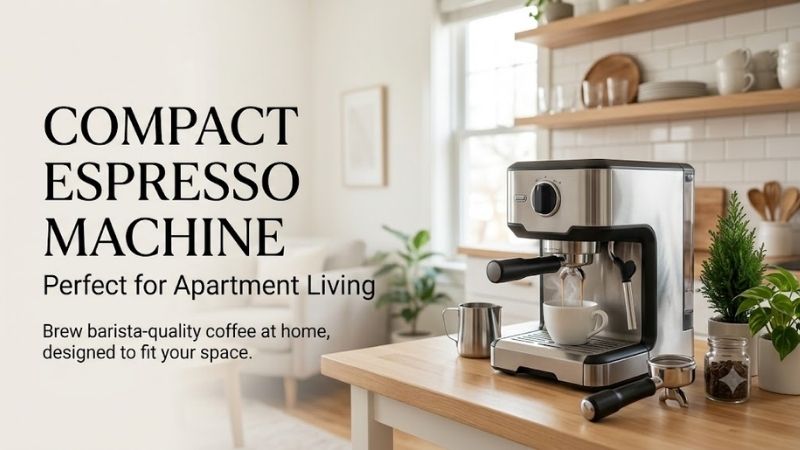
Compact Semi-Automatic Espresso Machines
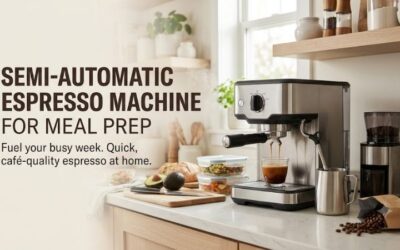
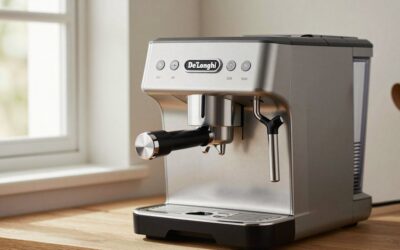
A semi-automatic machine typically provides the pressure and heated water needed for espresso extraction while leaving preparation decisions to the user.
You generally grind coffee, measure the dose, prepare the coffee puck, attach the portafilter, and start extraction. Depending on the machine, you may also choose when to stop the shot or use a programmed beverage volume.
This category appeals to people who enjoy learning how grind size, coffee quantity, and extraction affect flavor.
However, a semi-automatic machine is rarely a complete coffee setup by itself. A suitable espresso grinder, tamper, scale, and other small accessories may require additional counter space.
For apartment buyers, it is important to evaluate the entire arrangement rather than the machine alone.
Fully Automatic Espresso Machines
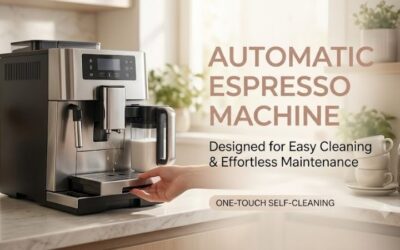
Automatic bean-to-cup machines integrate more of the coffee preparation process.
Many grind whole beans, dose coffee, brew the drink, and collect spent grounds with relatively little user involvement.
Some also prepare milk beverages automatically.
These functions can simplify morning routines, particularly for households where several people use the machine.
However, convenience comes with additional components. Internal brewing assemblies, milk pathways, grinders, drip trays, and grounds containers require maintenance.
A narrow-looking automatic machine may also need substantial overhead or side access for refilling beans and water.
Capsule Espresso Machines
Capsule machines offer compact operation and standardized coffee portions.
They can be convenient when grinding and tamping are impractical.
However, not every capsule coffee maker produces espresso in the same way as a traditional espresso machine. Some systems prepare larger coffee beverages using different brewing mechanisms.
Capsule compatibility is also system-specific.
Before buying, consider the beverages offered by the system, recurring capsule costs, and local availability.
Manual Espresso Makers
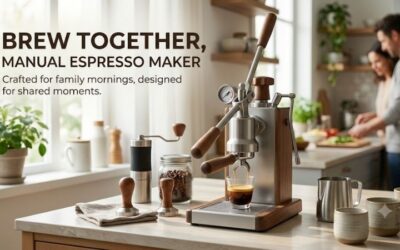
Manual espresso makers use a lever, hand-operated piston, or other mechanism to generate brewing pressure.
Some require no electricity for extraction, although water must still be heated separately.
These devices can be attractive for minimalist kitchens.
However, manual operation may demand careful technique and additional accessories.
A small manual brewer may occupy little space while requiring a kettle, grinder, scale, and stable preparation surface.
Do not assume that a manually operated device automatically produces better espresso or takes less time.
Measuring Your Apartment Coffee Station
Measure Width, Depth, and Height
Start by measuring the available countertop.
Record the usable width, depth, and height beneath cabinets or shelves.
Compare those measurements with the complete appliance dimensions, including projecting handles, drip trays, portafilters, and control panels.
A machine that fits on paper may still be uncomfortable to operate.
For example, a portafilter handle can extend beyond the front of the machine while being locked into the group head. A cup may also need sufficient clearance under the outlet.
Think about the appliance in its normal operating position, not just its dimensions when switched off.
Account for Water Tank Access
Some espresso machines have removable water tanks at the rear. Others use side-mounted or top-access tanks.
A rear tank may be inconvenient when the machine sits beneath a low cabinet.
If you must pull the entire appliance forward each time you refill it, a compact setup can become frustrating.
Check whether the reservoir can be removed or filled without moving the machine.
For daily use, easy water access may be more valuable than a slightly narrower housing.
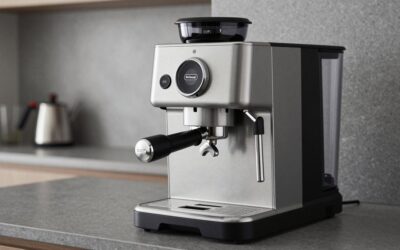
Leave Room for the Grinder
A semi-automatic espresso machine requires appropriately ground coffee.
For repeatable espresso preparation, a capable burr grinder is usually a valuable companion.
However, grinders occupy space, produce noise, and require access to the bean hopper and grounds outlet.
Measure the grinder separately.
Consider whether you can comfortably grind coffee, transfer it to the portafilter, distribute the grounds, and tamp without moving appliances around.
A compact espresso machine paired with a large grinder may require more counter space than an integrated alternative.
Plan for Milk Preparation
If you regularly prepare lattes or cappuccinos, the milk preparation area matters.
A steam wand needs enough side clearance to position and move a milk pitcher safely.
You also need space to set the hot pitcher down after steaming.
Do not position the wand where escaping steam could damage cabinets or nearby electrical equipment.
Follow the manufacturer’s operating-clearance instructions rather than assuming every compact machine can be used directly beneath shelving.
Understanding Espresso Pressure
Why Brewing Pressure Matters
Traditional pump-driven espresso commonly uses pressure around 9 bars at the coffee bed during extraction, although modern techniques and equipment vary.
Pressure helps water move through finely ground, compacted coffee.
However, espresso quality depends on more than pressure.
Grind size, dose, coffee freshness, puck preparation, water temperature, and extraction yield all influence the result.
A machine’s advertised maximum pressure is not the same as the pressure delivered during actual brewing.
Do You Need a 15-Bar or 20-Bar Pump?
Some domestic machines advertise high maximum pump-pressure figures.
These numbers can sound impressive, but they do not independently establish superior espresso quality.
A pump capable of producing a high maximum pressure may operate at a lower regulated pressure during brewing.
What matters more is whether the machine delivers suitable, controlled extraction conditions.
Do not choose a machine simply because its packaging displays the highest bar rating.
Pressurized vs. Nonpressurized Filter Baskets
Some beginner-oriented machines include pressurized or dual-wall baskets.
These can make it easier to create resistance during extraction when using a broader range of coffee grinds.
However, they generally provide less direct control over extraction than conventional nonpressurized baskets.
Nonpressurized baskets reward suitable grinding and puck preparation but can be less forgiving.
For apartment beginners using pre-ground coffee, a supported pressurized basket may simplify the first steps.
For enthusiasts who plan to invest in a dedicated espresso grinder, nonpressurized baskets offer greater control.
Why Grind Quality Matters More Than Marketing Pressure
Espresso requires a grind that creates appropriate resistance to water flow.
If coffee is too coarse, water may pass through too quickly.
If it is too fine, extraction may slow excessively or become uneven.
A high-quality espresso grinder with sufficiently precise adjustment can make a larger practical difference than a minor change in advertised pump pressure.
Include grinder quality in your budget from the beginning.
Heating Systems and Temperature Control
Thermoblock and Thermocoil Systems
Many compact espresso machines use thermoblock or thermocoil-style heating systems.
Water moves through a heated pathway rather than relying exclusively on a large traditional boiler.
These designs can support relatively compact construction.
However, warm-up time and temperature stability vary by model.
A machine advertising rapid heat-up may still require additional warming of the portafilter or brewing components.
Do not assume that the ready light alone guarantees the complete brewing system has reached a stable operating temperature.
Single-Boiler Machines
A single-boiler espresso machine uses one boiler for brewing and, where supported, steam production.
Because espresso brewing and milk steaming require different operating conditions, the machine may need time to transition between them.
This can be acceptable for one or two drinks.
For households preparing several milk beverages in succession, waiting between functions may become inconvenient.
Heat-Exchanger and Dual-Boiler Machines
Heat-exchanger and dual-boiler systems are often found in more substantial espresso machines.
They can offer greater flexibility for brewing and steaming.
However, these machines may be larger, heavier, and more expensive.
For a small apartment preparing one morning latte, their extra capacity may not justify the footprint.
Evaluate your actual workflow before paying for advanced heating architecture.
PID Temperature Control
Some espresso machines use proportional-integral-derivative control to regulate heating.
This can support more consistent temperature management.
However, the presence of a PID controller alone does not prove that water temperature is perfectly stable at the coffee puck.
Sensor placement, group-head construction, and warm-up behavior still matter.
Look for reliable extraction-temperature testing when choosing between specific models.
Noise in an Apartment
Grinder Noise
The grinder may be the loudest component of your coffee routine.
Grinding beans can produce a sharp mechanical sound, especially early in the morning.
Noise depends on grinder construction, burr design, motor operation, and surrounding surfaces.
If you share an apartment or live near neighbors, consider credible sound measurements rather than relying on descriptions such as quiet operation.
A grinder with a short operating cycle may be more practical than one that runs for longer, but volume and duration both matter.
Pump Vibration
Pump-driven espresso machines produce vibration during extraction.
This can transfer through a lightweight countertop or cabinet.
A stable surface and proper placement can reduce unnecessary rattling.
However, do not obstruct ventilation or place the machine on improvised materials that violate installation instructions.
Steam and Automatic Cleaning Sounds
Steam wands can produce noticeable sound while heating milk.
Automatic machines may also run rinsing cycles when starting or shutting down.
These activities can occur outside the main brewing period.
If you are comparing machines for a shared apartment, consider the entire operating routine.
Choosing for Early-Morning Use
Someone making coffee at 5:30 a.m. may value a short, predictable process.
A capsule system or a carefully selected automatic machine could reduce preparation tasks.
However, some automatic grinders and rinse cycles are not especially quiet.
Choose based on actual performance rather than assuming greater automation means less noise.
Milk Drinks in Small Kitchens
Manual Steam Wands
A steam wand can produce heated, textured milk.
It provides flexibility for lattes and cappuccinos but requires practice.
After each use, the wand should be cleaned and purged according to the manufacturer’s instructions.
Milk residue can obstruct the steam tip and create hygiene problems.
A compact machine with a cramped steam-wand position may be inconvenient even if the machine itself is narrow.
Automatic Milk Systems
Some espresso machines use milk containers or tube-based frothing systems.
These can simplify drink preparation.
However, milk-contact components need careful cleaning.
An automatic cappuccino program does not remove the need to manage perishable milk safely.
Check how the system is disassembled, rinsed, and stored.
Separate Milk Frothers
A separate milk frother can provide additional flexibility.
However, it consumes more counter space and creates another item to clean.
If you rarely prepare milk beverages, a basic espresso machine without an elaborate milk system may be sufficient.
Which Milk Setup Makes Sense?
For occasional cappuccinos, a compact machine with a steam wand may offer good versatility.
For several automatic milk beverages each day, an integrated system can be convenient.
If space is extremely limited, prioritize the drinks you actually make rather than buying every available milk accessory.
Water Tanks, Drip Trays, and Everyday Maintenance
Water Tank Capacity
A larger reservoir reduces refill frequency.
However, it also increases appliance size and can be harder to remove beneath cabinets.
For a small household, easy access matters more than maximum capacity.
Do not leave water sitting in the reservoir indefinitely.
Follow the machine’s guidance on refreshing water and cleaning the tank.
Drip Tray Size
Espresso machines can release water during brewing, flushing, steam purging, and automatic rinsing.
A very small drip tray may require frequent emptying.
Check whether it is easy to remove without spilling.
This is particularly important when the machine sits close to the edge of a narrow counter.
Cleaning Coffee Oils
Coffee oils and grounds can accumulate in the portafilter, filter basket, and brewing pathways.
Regular cleaning helps preserve flavor and maintain proper operation.
However, cleaning procedures vary.
Some machines support backflushing with an approved cleaning disc. Others have different mechanisms.
Never attempt a cleaning procedure not supported by the manufacturer.
Descaling
Minerals in water can accumulate inside heating and water-delivery systems.
Descaling addresses mineral deposits, while other cleaning procedures remove coffee oils and residue.
These are different maintenance tasks.
Follow the specific machine’s descaling instructions and approved products.
Do not assume that vinegar is appropriate for every espresso machine.
Budgeting for the Complete Setup
Entry-Level Espresso Machines
Lower-priced semi-automatic machines can be appealing for beginners.
However, an inexpensive machine paired with an unsuitable grinder may produce inconsistent espresso.
Consider the full cost.
If you do not own an espresso-capable grinder, a capsule machine or another brewing method may offer a simpler entry point.
Midrange Semi-Automatic Machines
A midrange machine may add useful controls, improved temperature management, or a more capable steam wand.
However, compare actual functionality rather than paying for a brand name or decorative pressure gauge.
Fully Automatic Machines
Automatic machines can combine grinding and brewing, but they commonly cost more initially.
Their ownership costs may include cleaning supplies, filters, service, and replacement components.
They may be worthwhile for households where convenience is a daily priority.
Capsule Machines
Capsule machines can have a lower initial equipment cost, but recurring coffee costs may be higher than brewing from whole beans, depending on the system and consumption.
Compare cost per drink rather than only the machine price.
Also consider capsule availability and disposal.
Accessories
A semi-automatic setup may require a grinder, tamper, scale, milk pitcher, cleaning brush, and other components.
Not every accessory is essential from the beginning.
Prioritize a capable grinder and accurate coffee dosing before buying decorative preparation tools.
Choosing by Apartment Lifestyle
Studio Apartment With Very Little Counter Space
A compact capsule machine or small semi-automatic model may be suitable.
However, include grinder and accessory space in the decision.
If the countertop is already crowded, a separate coffee station may not be realistic.
Apartment Shared With Roommates
Consider noise, cleaning responsibility, and the number of drinks prepared daily.
A simple system with predictable operation may be easier to share.
Avoid purchasing a machine whose maintenance requirements no one wants to manage.
One-Person Household
A compact semi-automatic machine can be rewarding when you enjoy preparing espresso.
For convenience-focused drinkers, a capsule machine may be more appropriate.
A large dual-boiler setup is usually unnecessary for one or two drinks a day.
Couples Who Drink Milk-Based Coffee
A machine with a capable steam wand or automatic milk system can be useful.
Pay attention to the sequence of brewing and steaming, especially if both people prepare drinks together.
Frequent Entertaining
If you regularly prepare several drinks for guests, recovery time and workflow become more important.
A compact machine may still be sufficient, but producing drinks one after another can take time.
Decide whether occasional hosting justifies purchasing a larger machine.
Apartment Safety and Installation
Electrical Requirements
Espresso machines contain heating systems that may draw substantial power.
Use an appropriate grounded outlet and follow manufacturer instructions.
Avoid placing the machine where water spills can reach plugs or power strips.
Steam Clearance
Steam can damage nearby cabinets and create burn risks.
Keep the appliance in a suitable operating area with the required clearance.
Do not operate a steam wand directly against a cabinet or wall.
Stable Countertop Placement
Place the machine on a level surface capable of supporting its weight.
A filled water tank and heavy components can increase operating weight.
Avoid unstable shelves or narrow carts.
Children and Pets
Keep hot water, steam, portafilters, and electrical cords out of reach.
Do not leave a heating machine unattended where it could be pulled down.
Common Buying Mistakes
Choosing the Narrowest Machine Without Measuring the Workflow
A machine may fit while its portafilter, water tank, and grinder do not.
Buying Based on Maximum Pump Pressure
Advertised maximum pressure is not a reliable measure of espresso quality.
Ignoring Grinder Cost
A suitable grinder can be essential for consistent semi-automatic espresso preparation.
Assuming Automatic Means Maintenance-Free
Automatic machines still need cleaning, descaling, and sometimes milk-system sanitation.
Overbuying for Occasional Guests
Large heating systems may be unnecessary for daily one-person use.
Choosing a Machine Without Checking Water Access
An inaccessible tank can make a compact machine frustrating.
Frequently Asked Questions
What Type of Espresso Machine Is Best for a Small Apartment?
A compact semi-automatic machine is a strong choice for people who want control over espresso. Capsule and bean-to-cup machines may suit convenience-focused households.
Do I Need a Separate Grinder?
For a semi-automatic machine using fresh whole beans, a suitable espresso grinder is generally important. Machines with integrated grinders and capsule systems have different requirements.
Are Espresso Machines Too Loud for Apartments?
Not necessarily, but grinders, pumps, steam systems, and automatic rinse cycles can produce noticeable sound. Actual noise varies by model.
Is a 20-Bar Espresso Machine Better Than a 15-Bar Machine?
Not automatically. Maximum advertised pump pressure does not establish brewing quality. Temperature stability, extraction control, and grind quality matter more.
Can I Put an Espresso Machine Under Kitchen Cabinets?
Only when the machine’s operating clearances and water-access requirements are met. Steam and heat must not damage nearby surfaces.
Are Compact Espresso Machines Hard to Clean?
Cleaning difficulty depends on the brewing design, steam system, drip tray, and access to removable components. A compact housing does not necessarily simplify maintenance.
Conclusion
The best espresso machine for apartments balances coffee quality, complete setup dimensions, noise, cleaning, and everyday convenience. Compact semi-automatic machines suit people who want to develop espresso skills, while capsule and fully automatic options can simplify preparation. Before buying, measure the entire coffee station, confirm grinder and water access, and choose a machine whose maintenance requirements fit your routine.




Write Your Review
No reviews yet. Be the first to share your experience!