
A hot water dispenser makes it easier to prepare tea, coffee, oatmeal, and other drinks or foods that need hot water throughout the day. Unlike an ordinary electric kettle, many countertop dispensers maintain a selected water temperature between uses. This guide compares six models by capacity, temperature controls, insulation, dispensing features, and suitability for different households.
Quick Verdict: Which Hot Water Dispenser Should You Buy?
The Zojirushi Micom Water Boiler & Warmer CD-WCC40 is our best overall recommendation for households that want reliable access to hot water with several selectable temperature settings.
Its four-liter capacity, microcomputer temperature control, electric dispensing system, and safety features make it a practical option for regular tea and coffee preparation.
Other models may be more appropriate for specific needs.
-
Best Overall: Zojirushi CD-WCC40 — Four-liter capacity with four keep-warm temperatures.
-
Best for Energy-Conscious Households: Zojirushi VE Hybrid CV-DCC40 — Vacuum insulation helps retain heat.
-
Best for Coffee Preparation: Zojirushi Panorama Window CD-LFC30 — Three-liter capacity with a slower café dispensing mode.
-
Best for Larger Families: Zojirushi Micom CD-NAC50 — Five-liter capacity for frequent hot-water use.
-
Best for Premium Insulation: Zojirushi VE Hybrid CV-JAC40 — Hybrid heating and insulated temperature maintenance.
-
Best for Simple Everyday Dispensing: Tiger Micom Water Boiler & Warmer PDU-A40U — Four-liter hot-water system with multiple temperature settings.
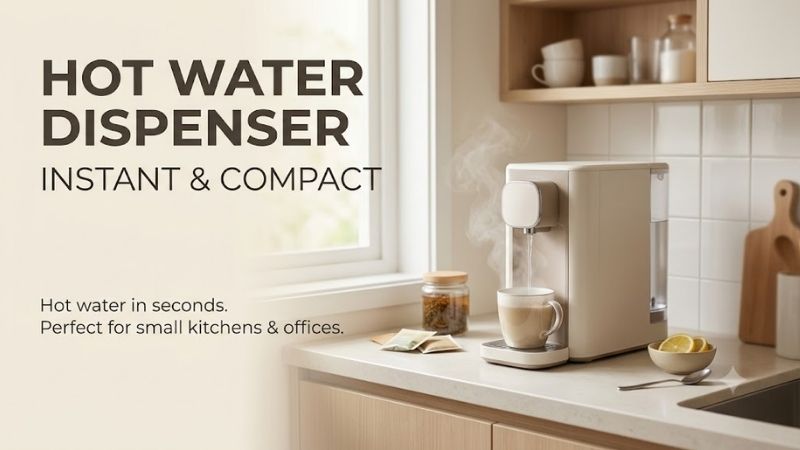
Quick Verdict: Which Hot Water Dispenser Should You Buy?
Quick Comparison Table
| Product | Best For | Key Specifications | Main Advantage | Trade-Off |
|---|---|---|---|---|
| Zojirushi CD-WCC40 | Overall household use | 4L; 700W; four temperature settings | Practical capacity and temperature flexibility | Requires countertop space |
| Zojirushi CV-DCC40 | Energy-conscious use | 4L; 840W; vacuum insulation | Retains heat with less active heating | Premium product positioning |
| Zojirushi CD-LFC30 | Tea and coffee | 3L; 800W; café dispensing | Controlled dispensing for smaller servings | Less capacity than 4L and 5L models |
| Zojirushi CD-NAC50 | Larger households | 5L; 800W; four temperatures | Large reservoir | More water to heat and manage |
| Zojirushi CV-JAC40 | Insulated hot-water storage | 4L; VE hybrid technology | Combines electrical and vacuum insulation | More advanced controls |
| Tiger PDU-A40U | Everyday hot-water dispensing | 4L; Micom temperature control | Useful alternative to Zojirushi | Fewer distinguishing features for some users |
How We Selected These Hot Water Dispensers
We evaluated manufacturer-published water capacity, electrical ratings, temperature settings, dispensing arrangements, insulation technology, and relevant safety features.
This roundup focuses on countertop water boilers and warmers intended to provide hot water on demand.
It does not cover full-size floor-standing water coolers or under-sink instant-hot-water systems, which involve substantially different installation and purchasing requirements.
Water Capacity
A three-liter dispenser may be sufficient for a couple or small household.
Four-liter models offer more capacity for repeated tea and coffee preparation.
Five-liter models are appropriate for families or offices where many servings are prepared throughout the day.
However, larger capacity also means more water to heat, more weight when filled, and additional countertop requirements.
Temperature Control
Different beverages benefit from different water temperatures.
Green tea, black tea, coffee, and instant beverages do not necessarily require identical brewing conditions.
We therefore prioritized models with multiple temperature settings instead of treating boiling water as the only useful output.
Dispensing Mechanism
Electric dispensing buttons, slower pour modes, and water-level indicators can improve convenience.
These features are especially relevant when filling smaller cups or preparing coffee.
A controlled dispensing mode may reduce the risk of overfilling, but hot water always presents a burn hazard.
Heat Retention
Some water boilers rely primarily on active electrical heating to maintain the selected temperature.
Hybrid models combine electrical heating with vacuum insulation.
Vacuum insulation can reduce heat loss, although actual household energy consumption depends on ambient temperature, water quantity, usage frequency, and operating settings.
Safety and Maintenance
We considered manufacturer-described dry-boil protection, temperature indicators, dispensing controls, and cleaning arrangements.
A dispenser should be easy to refill and maintain without requiring unsafe handling of hot water or electrical components.
Detailed Hot Water Dispenser Reviews
1. Zojirushi Micom Water Boiler & Warmer CD-WCC40 — Best Overall
Best For: Households that regularly prepare tea, coffee, instant beverages, and foods requiring hot water.
Why We Picked It: The CD-WCC40 combines a practical four-liter capacity with four selectable keep-warm temperatures and a straightforward electric dispensing system.
Key Specifications
| Specification | Details |
|---|---|
| Model | CD-WCC40 |
| Capacity | 4 liters / 135 ounces |
| Electrical Rating | 120V / 700W |
| Temperature Settings | 160°F, 175°F, 195°F, 208°F |
| Dimensions | 8.25 × 11.25 × 13.5 inches |
| Temperature Control | Microcomputer |
| Dispensing | Electric |
| Water-Level Gauge | Yes |
| Safety | Automatic shutoff protection |
| Interior | Nonstick-coated stainless steel |
Features & Benefits
The CD-WCC40 provides four keep-warm temperature settings.
This allows users to select a temperature appropriate for their intended beverage rather than repeatedly heating water in a kettle.
Its electric dispensing system releases water through a front spout.
The water-level window helps users monitor remaining capacity.
A swivel base makes it easier to position the appliance for serving.
Performance & Practical Use
The four-liter reservoir is appropriate for households preparing several cups of tea or coffee throughout the day.
For example, someone drinking green tea may select a lower keep-warm temperature, while another household member may prefer hotter water for black tea.
However, the preset temperatures are not a substitute for following the beverage manufacturer’s recommended brewing conditions.
The appliance maintains hot water but does not filter contaminants unless a specific filtration system is separately provided.
What Makes It Different
The CD-WCC40 provides a balanced combination of capacity, temperature selection, and dispensing convenience without requiring hybrid vacuum-insulation technology.
Pros
-
Four selectable temperature settings.
-
Four-liter capacity suits frequent household use.
-
Electric dispensing and visible water-level gauge.
Cons
-
Requires permanent countertop space for maximum convenience.
-
Maintaining hot water consumes electricity.
Buy If: You prepare several hot beverages daily and want hot water available without repeatedly using a kettle.
Skip If: You only heat one cup of water occasionally.
2. Zojirushi VE Hybrid CV-DCC40 — Best for Energy-Conscious Households
Best For: Households that want a hot-water dispenser with vacuum insulation to help reduce heat loss.
Why We Picked It: The CV-DCC40 combines electrical temperature maintenance with vacuum insulation.
This provides a different approach to keeping water hot compared with conventional electrically heated dispensers.
Key Specifications
| Specification | Details |
|---|---|
| Model | CV-DCC40 |
| Capacity | 4 liters / 135 ounces |
| Power | 840W |
| Voltage | 120V |
| Temperature Settings | 160°F, 175°F, 195°F, 208°F |
| Dimensions | 8.75 × 11.125 × 13.875 inches |
| Insulation | Vacuum-electric hybrid |
| Quick Temp | Supported |
| Timer | 6–10 hours |
| Dispensing | Electric |
Features & Benefits
The vacuum-insulated wall helps reduce heat transfer between the hot water and surrounding environment.
Its Quick Temp function allows the appliance to reach selected keep-warm temperatures without necessarily boiling the water first.
The machine also provides a vacuum-insulated non-electric keep-warm mode.
This can reduce reliance on active heating while the water gradually cools.
A removable magnetic power cord adds convenience when filling or moving the appliance after it is safe to handle.
Performance & Practical Use
The CV-DCC40 is especially relevant to households that want hot water available throughout the day.
Vacuum insulation can help retain temperature between dispensing sessions.
However, insulation does not guarantee that water remains at a selected temperature indefinitely without electricity.
Actual heat retention depends on how much water remains, room temperature, and usage patterns.
What Makes It Different
Its vacuum-electric hybrid system is the defining feature.
Pros
-
Vacuum insulation reduces heat loss.
-
Four adjustable keep-warm temperatures.
-
Quick Temp and energy-saving timer functions.
Cons
-
Premium product positioning.
-
More operating modes than occasional users may need.
Buy If: You frequently maintain a reservoir of hot water and value insulation.
Skip If: You only need boiling water a few times per week.
3. Zojirushi Panorama Window CD-LFC30 — Best for Coffee Preparation
Best For: Coffee and tea drinkers who want a smaller reservoir and more controlled dispensing.
Why We Picked It: The CD-LFC30 combines a three-liter reservoir with Zojirushi’s café drip dispensing mode.
Key Specifications
| Specification | Details |
|---|---|
| Model | CD-LFC30 |
| Capacity | 3 liters / 101 ounces |
| Power | 800W |
| Voltage | 120V |
| Temperature Settings | 160°F, 175°F, 195°F, 208°F |
| Dimensions | 9.125 × 11.875 × 10 inches |
| Dispensing | Electric |
| Café Drip Mode | Yes |
| Water-Level Indicator | Panorama Window |
| Timer | 6–10 hours |
Features & Benefits
The café drip mode dispenses water more slowly than standard dispensing.
This is useful when adding water to a small coffee brewer or cup.
Its wide water-level display allows users to check the remaining reservoir without removing the lid.
The three-liter size is also appropriate for kitchens that do not require a larger water reservoir.
Performance & Practical Use
The CD-LFC30 is useful for preparing tea and certain manual coffee beverages.
The slower dispensing mode can provide more control than a standard high-flow spout.
However, it is not equivalent to a dedicated gooseneck kettle.
A gooseneck kettle may offer more directional control for precision pour-over techniques.
Water temperature should still be selected according to the coffee or tea recipe.
What Makes It Different
The café dispensing mode and three-liter format make it appealing to beverage-focused households.
Pros
-
Slower café dispensing mode.
-
Compact three-liter capacity.
-
Four temperature settings.
Cons
-
Less capacity than larger dispensers.
-
Not a direct replacement for every precision pour-over kettle.
Buy If: You regularly prepare smaller cups of coffee and tea and value controlled dispensing.
Skip If: You need five liters of water available for a large family.
4. Zojirushi Micom CD-NAC50 — Best for Larger Households
Best For: Larger families and shared kitchens requiring a substantial hot-water reservoir.
Why We Picked It: The CD-NAC50 offers a five-liter capacity with temperature selection and convenience features designed for repeated daily use.
Key Specifications
| Specification | Details |
|---|---|
| Model | CD-NAC50 |
| Capacity | 5 liters / 169 ounces |
| Power | 800W |
| Temperature Settings | 160°F, 175°F, 195°F, 208°F |
| Dimensions | 9.125 × 12.5 × 13.5 inches |
| Temperature Control | Microcomputer |
| Quick Temp | Supported |
| Safety | Dry-boil protection |
| Timer | 6–10 hours |
Features & Benefits
The five-liter capacity provides more water than the three- and four-liter models in this comparison.
This reduces the frequency of refilling when several people use the dispenser.
The Quick Temp function offers an alternative to fully boiling water before maintaining certain selected temperatures.
Its electronic dispensing and temperature display provide convenient daily access.
Performance & Practical Use
A five-liter dispenser can serve a family that prepares tea, coffee, oatmeal, or other hot-water-based foods throughout the day.
However, users should not automatically fill the reservoir to maximum capacity when only a small amount of water is needed.
Heating unnecessary water may increase energy use and preparation time.
The larger reservoir also makes the appliance heavier when filled.
What Makes It Different
Capacity is its defining advantage.
Pros
-
Large five-liter reservoir.
-
Four keep-warm settings.
-
Quick Temp and dry-boil protection.
Cons
-
Larger physical footprint.
-
More water to heat and handle.
Buy If: Several household members regularly need hot water.
Skip If: You live alone and only prepare one or two cups per day.
5. Zojirushi VE Hybrid CV-JAC40 — Best for Premium Insulation
Best For: Households that want a modern vacuum-insulated water boiler with flexible temperature maintenance.
Why We Picked It: The CV-JAC40 belongs to Zojirushi’s VE Hybrid water boiler lineup.
It combines electronic heating control with vacuum insulation designed to reduce heat loss.
Key Specifications
| Specification | Details |
|---|---|
| Model | CV-JAC40 |
| Capacity | 4 liters |
| Insulation | Vacuum-electric hybrid |
| Temperature Maintenance | Multiple selectable settings |
| Quick Temp | Supported |
| Dispensing | Electric |
| Control | Microcomputer |
| Intended Use | Hot-water boiling and warming |
Features & Benefits
The hybrid design combines active electrical heating with insulation.
This helps the appliance maintain hot water between dispensing sessions.
Its electronic controls allow users to select appropriate operating modes.
The electric dispensing system provides convenient access without lifting and pouring the entire reservoir.
Performance & Practical Use
The CV-JAC40 is suitable for households that expect frequent use throughout the day.
For example, it may be convenient for a family preparing multiple hot beverages at different times.
The main advantage is the insulation-oriented design.
However, a premium hybrid boiler is not necessarily the most economical choice for a household that only boils water occasionally.
What Makes It Different
Its VE Hybrid construction and advanced temperature maintenance distinguish it from simpler electric water boilers.
Pros
-
Vacuum-insulated design.
-
Convenient electric dispensing.
-
Multiple temperature maintenance options.
Cons
-
Premium positioning.
-
Greater complexity than a basic electric kettle.
Buy If: You want a vacuum-insulated hot-water system for regular use.
Skip If: You rarely need to maintain hot water for extended periods.
6. Tiger Micom Water Boiler & Warmer PDU-A40U — Best Alternative for Everyday Dispensing
Best For: Households seeking a four-liter electric water boiler with selectable temperatures.
Why We Picked It: The Tiger PDU-A40U provides an alternative to Zojirushi’s countertop hot-water systems.
Its Micom control arrangement is intended to maintain selected temperatures for everyday beverage preparation.
Key Specifications
| Specification | Details |
|---|---|
| Model | PDU-A40U |
| Brand | Tiger |
| Capacity | 4 liters |
| Control System | Micom |
| Dispensing | Electric |
| Temperature Selection | Multiple settings |
| Primary Function | Water boiling and warming |
Features & Benefits
The Tiger water boiler maintains hot water for repeated use.
Its electric dispensing system reduces the need to lift and pour a full reservoir.
Selectable temperatures offer flexibility for different beverages and suitable hot-water preparations.
Performance & Practical Use
The four-liter capacity makes it useful for families that consume several hot drinks daily.
It offers a practical alternative when buyers prefer Tiger’s interface or appliance design.
However, there is no independently established performance advantage over the Zojirushi models in this comparison.
Actual suitability depends on the specific controls, capacity, and available service support.
What Makes It Different
The PDU-A40U provides a comparable household hot-water format from another established appliance manufacturer.
Pros
-
Four-liter water capacity.
-
Electric dispensing.
-
Multiple temperature settings.
Cons
-
Less differentiated than vacuum-insulated models.
-
Buyers should confirm exact model availability and compatible replacement parts.
Buy If: You want a four-liter water boiler and prefer Tiger’s appliance design.
Skip If: Vacuum insulation or café-specific dispensing is more important.
Hot Water Dispenser Buying Guide
Hot Water Dispenser vs. Electric Kettle
An electric kettle heats a quantity of water, usually requiring users to lift or pour from the kettle.
A countertop hot water dispenser typically heats a reservoir and maintains a selected temperature for repeated dispensing.
| Feature | Hot Water Dispenser | Electric Kettle |
|---|---|---|
| Repeated hot-water access | Convenient | Requires repeated heating |
| Temperature maintenance | Common | Model-dependent |
| Water capacity | Often 3–5 liters | Usually smaller |
| Countertop space | Generally larger | Usually smaller |
| Manual pouring | Often unnecessary | Usually required |
| Best Use | Frequent daily beverages | Occasional water heating |
A dispenser is useful when several cups of hot water are needed throughout the day.
A kettle may be more economical and space-efficient for occasional use.
Choose the Right Water Capacity
A three-liter dispenser is a useful option for singles, couples, and small households.
Four-liter models provide more flexibility for families.
Five-liter models are appropriate for frequent shared use.
However, a larger reservoir increases the amount of water that may be heated unnecessarily.
Choose capacity based on actual use rather than selecting the largest available model automatically.
Understand Temperature Settings
Different beverages require different brewing conditions.
Common keep-warm settings include 160°F, 175°F, 195°F, and 208°F.
Lower temperatures may be useful for certain green teas.
Hotter settings are commonly appropriate for black tea and various coffee preparations.
However, the ideal temperature depends on the beverage and recipe.
Some instant foods require water brought to a full boil for safe preparation.
Do not assume that a 208°F keep-warm setting is identical to boiling water at every location or under every condition.
Vacuum Insulation and Energy Use
Vacuum insulation reduces heat transfer from the reservoir to the surrounding air.
This may reduce the amount of electrical heating required to maintain hot water.
However, energy savings vary with usage.
A household that frequently dispenses and replaces water may experience different energy consumption from one that leaves a full reservoir untouched for several hours.
Actual energy use requires measurement under comparable conditions.
Electric Dispensing
Electric dispensing systems release water through a spout when activated.
This is convenient for preparing beverages without lifting a heavy hot-water container.
Some models include additional dispensing controls or slower-flow settings.
However, hot water can still cause severe burns.
Keep cups stable and avoid placing hands beneath the spout.
Safety Locks and Dry-Boil Protection
Dispensing locks can help reduce accidental water release.
Dry-boil protection is intended to stop heating when unsafe water conditions are detected.
These features are helpful but do not make the appliance completely risk-free.
Keep hot-water dispensers away from children and ensure the unit sits on a stable surface.
Countertop Space
Measure the appliance’s full height, width, and depth.
Consider additional space needed to open the lid for filling.
Check the manufacturer’s clearance requirements for steam and heat.
Avoid placing a hot-water dispenser directly beneath materials that may be damaged by steam.
Water Quality
Water minerals can accumulate inside heated water appliances.
Scale buildup varies depending on local water hardness.
Follow the manufacturer’s cleaning and descaling instructions.
Do not assume that a water boiler removes dissolved minerals, chemicals, or other contaminants.
Boiling can kill many microorganisms but is not a substitute for appropriate treatment of all contaminated water.
Cleaning and Descaling
Regular cleaning helps maintain dispensing performance and heating efficiency.
Use the manufacturer’s approved descaling procedure.
Citric-acid-based cleaning may be recommended for certain models, but concentrations and procedures vary.
Never use harsh chemicals or abrasive tools without manufacturer approval.
Do not immerse electrical components in water.
Common Hot Water Dispenser Problems
Water Dispenses Slowly
Possible causes include a dispensing setting, low water level, or mineral buildup.
Check the operating mode and follow the cleaning instructions.
Water Temperature Seems Incorrect
The selected keep-warm temperature may differ from the temperature of freshly dispensed water under some conditions.
Temperature changes may occur during dispensing or after refilling.
Follow the manual’s guidance for temperature stabilization.
Mineral Scale Builds Up
Hard water can leave deposits on heated interior surfaces.
Use an approved descaling process.
Avoid scraping coated surfaces with sharp objects.
Steam Collects Under Cabinets
Hot-water appliances release steam during heating and boiling.
Provide the required ventilation clearance.
Move the appliance to a safer location if steam contacts cabinetry or sensitive materials.
The Appliance Stops Heating
Some models use safety shutoff systems when water is insufficient or operating conditions are abnormal.
Check the manual before restarting.
Never bypass a safety feature.
Frequently Asked Questions
Is a hot water dispenser better than an electric kettle?
A dispenser is more convenient for households that need hot water repeatedly throughout the day. A kettle is often more practical for occasional water heating and smaller kitchens.
Do hot water dispensers use electricity all day?
Many models periodically use electricity to maintain water temperature. Vacuum-insulated models can reduce heat loss, but actual consumption depends on settings and usage.
Can you use a hot water dispenser for coffee?
Yes. Models with appropriate temperature settings and controlled dispensing can be useful for coffee preparation. However, precision pour-over brewing may benefit from a dedicated gooseneck kettle.
Can you put milk in a hot water dispenser?
No, unless the specific appliance is explicitly designed for milk. Water boilers are generally intended for water only. Milk can burn, spoil, clog dispensing components, and create cleaning or safety problems.
How often should you descale a hot water dispenser?
Cleaning frequency depends on water hardness and usage. Follow the manufacturer’s recommendations and inspect the reservoir for mineral buildup.
Are hot water dispensers safe around children?
Hot water can cause serious burns. Use available dispensing locks, supervise children, and position the appliance where its controls and spout cannot be accessed unintentionally.
Conclusion
The Zojirushi CD-WCC40 is the best overall hot water dispenser in this comparison for households seeking practical capacity and multiple keep-warm temperatures. Choose the CV-DCC40 or CV-JAC40 for vacuum-insulated operation, the CD-LFC30 for controlled café dispensing, the CD-NAC50 for larger households, or the Tiger PDU-A40U as an alternative four-liter system. The best choice depends on how frequently you need hot water, how much you use, and whether temperature maintenance justifies a dedicated countertop appliance.




Write Your Review
No reviews yet. Be the first to share your experience!