
A pull out cabinet organizer for beginners makes deep kitchen storage easier to reach without removing everything in front. Choosing the right system requires more than checking cabinet width. This guide explains organizer styles, accurate measurements, installation requirements, weight limits, and practical ways to organize everyday kitchen supplies.
- Quick Answer: What Should Beginners Buy?
- What Is a Pull Out Cabinet Organizer?
- Types of Pull Out Cabinet Organizers for Beginners
- How to Measure Your Cabinet Correctly
- Materials and Features Worth Paying For
- How to Install a Pull-Out Cabinet Organizer
- Organizing Your Cabinet for Everyday Use
- Common Beginner Mistakes to Avoid
- Frequently Asked Questions
- Conclusion
Quick Answer: What Should Beginners Buy?
For most first-time buyers, a simple single-tier sliding basket or pull-out shelf is a sensible starting point. It offers a clear improvement over fixed shelving without requiring a complex storage system. The best option depends on cabinet construction, available clearance, the weight of stored items, and whether permanent installation is allowed.
Recommended organizer types:
- Best for beginners: A single-tier metal sliding basket with supplied mounting hardware.
- Best for heavy cookware: A sturdy full-extension pull-out shelf with an appropriate published load rating.
- Best for under-sink cabinets: A narrow organizer designed to work around plumbing.
- Best for renters: A freestanding sliding organizer that does not require drilling.
- Best for tall cabinets: A two-tier pull-out organizer with suitable vertical clearance.
- Best for large cabinets: Independently sliding shelves that make separate storage levels accessible.
The simplest design that solves your main problem is usually the best purchase. A beginner does not need the most expensive soft-close mechanism or a complicated multi-level frame to experience better organization. Start with one frequently used cabinet and confirm that the chosen organizer fits its internal dimensions.
What Is a Pull Out Cabinet Organizer?
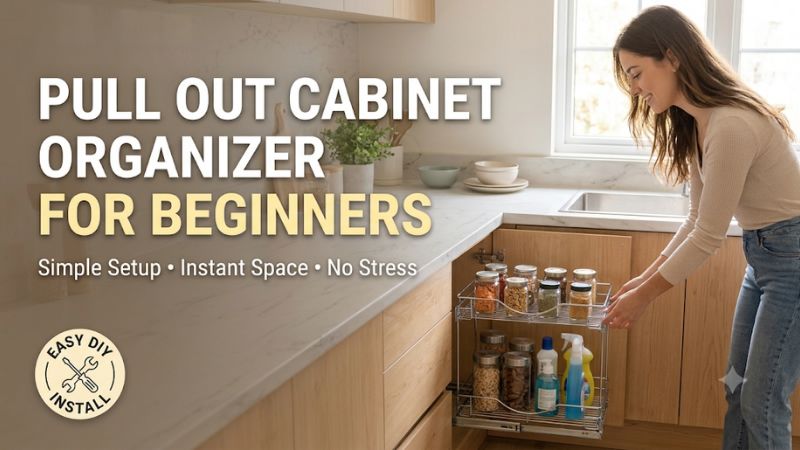
A pull-out cabinet organizer is a storage accessory that moves items toward the front of a cabinet using slides, rails, or a movable tray. Instead of reaching behind bottles, pans, or cleaning supplies, users pull the storage platform forward and select what they need. These organizers are commonly installed in lower kitchen cabinets, pantry compartments, and suitable under-sink spaces.
How a Pull-Out Organizer Works
Most permanently installed systems use a stationary rail assembly attached to the cabinet floor, walls, or another approved structural surface. A sliding basket or shelf travels along these rails, bringing stored items toward the cabinet opening. The quality of the sliding mechanism, its mounting strength, and the cabinet structure determine how reliably the system functions.
Main components:
- Sliding rails: Guide the basket or shelf during movement.
- Storage platform: Holds bottles, cookware, food packages, or kitchen equipment.
- Mounting brackets: Connect the mechanism to the cabinet.
- Stops: Help prevent unintended overextension.
- Handle or front rail: Provides a convenient place to pull the organizer.
- Soft-close mechanism: Available on selected models to slow the closing movement.
Not every product includes all these components. Some freestanding organizers use simple sliding tracks without cabinet-mounted hardware. Others have full-extension ball-bearing slides, door-mounted frames, or independently movable levels.
A reliable organizer should travel smoothly without scraping the cabinet opening or shifting its mounting hardware. The stored weight must also remain within the manufacturer’s limits.
Why Pull-Out Storage Is Useful in Everyday Kitchens
Traditional lower cabinets often have deep shelves that make rear items difficult to see and retrieve. This problem becomes especially noticeable when heavy pots sit in front of smaller cookware or when cleaning bottles are arranged in several rows. Pull-out organizers reduce the need to bend, reach deeply, or unload the cabinet before finding an item.
Practical benefits:
- Easier access to items near the back.
- Improved visibility of stored products.
- More predictable organization.
- Less unnecessary lifting and rearranging.
- Better separation of cooking tools and household supplies.
- More convenient inventory checks.
These benefits depend on the design and installation. A pull-out organizer does not automatically increase the physical volume of a cabinet. Rails, baskets, and mounting components occupy space, so the total usable capacity may actually decrease.
The improvement comes from making the remaining storage more accessible.
A well-designed pull-out system can therefore be worthwhile even when it holds slightly fewer objects than a traditional fixed shelf.
Types of Pull Out Cabinet Organizers for Beginners
Before shopping, identify what you intend to store and how the cabinet is constructed. Pull-out organizers vary considerably in their mounting systems, number of levels, material, and intended use. Understanding these differences helps beginners avoid purchasing a product that looks attractive but requires complicated installation or provides insufficient clearance.
Single-Tier Sliding Basket Organizers
Single-tier organizers use one basket or shelf attached to a sliding mechanism. Their uncomplicated construction makes them an accessible introduction to cabinet organization. They are commonly used for cooking oils, food containers, canned goods, and small cookware, depending on the product’s dimensions and rated capacity.
Key features:
- One storage level.
- Sliding rail system.
- Metal, polymer, or other suitable construction.
- Basket walls or raised shelf edges.
- Floor-mounted or freestanding configurations.
Pros:
- Generally simpler to understand and install.
- Easy to see the complete storage area.
- Flexible for different container heights.
- Suitable for many lower cabinets.
Cons:
- Uses only one storage level.
- Tall items can still become crowded.
- Some models require permanent drilling.
Buy if: You want to improve one cabinet without redesigning the entire kitchen.
Skip if: You need several independently accessible storage levels or have a cabinet with substantial unused vertical space.
For a first purchase, this format provides an excellent way to learn about rail clearance, screw placement, and load distribution.
Two-Tier Pull-Out Cabinet Organizers
Two-tier organizers provide upper and lower storage platforms within one frame. They can be useful for bottles, food packages, cleaning supplies, and smaller containers that would otherwise be stacked. Some designs allow each level to slide independently, while others move together as one assembly.
Key features:
- Two storage levels.
- Vertical support structure.
- Sliding tracks or rails.
- Fixed or adjustable shelf spacing, depending on the model.
Pros:
- Makes use of available vertical cabinet space.
- Helps separate different categories.
- Can reduce stacking.
- Useful for smaller items.
Cons:
- Requires greater internal height.
- Upper shelves may restrict tall bottles.
- Moving assemblies can be more complicated to install.
Buy if: Your cabinet has enough height for both levels and their contents.
Skip if: You mainly store stockpots, tall appliances, or other bulky items.
Beginners should check the usable clearance between levels rather than relying on the organizer’s overall height alone.
An upper basket may fit inside the cabinet while leaving too little room to remove a tall bottle from the lower level.
Pull-Out Shelves for Pots and Pans
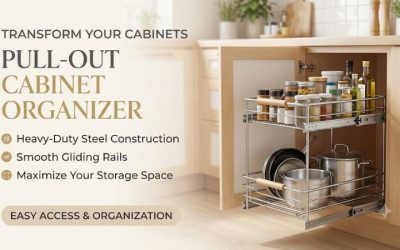
Heavy-duty sliding shelves are intended for cookware that would be awkward to lift from deep fixed shelves. A broad platform makes it easier to bring pots, pans, lids, and cooking accessories into view. These organizers often differ from lightweight baskets in their slide construction, mounting requirements, and published weight limits.
Key features to compare:
- Manufacturer-rated load capacity.
- Full-extension or partial-extension slides.
- Shelf construction.
- Side rails or protective edges.
- Mounting method.
- Cabinet-floor strength requirements.
Pros:
- Better access to heavy cookware.
- Less reaching into deep cabinets.
- Can accommodate mixed cookware sizes.
- Helps keep frequently used pots together.
Cons:
- Heavy loads require secure installation.
- Some shelves occupy considerable vertical space.
- Installation may be unsuitable for weak or damaged cabinets.
Buy if: You regularly use heavy pots and have a cabinet capable of supporting the system.
Skip if: You need only lightweight pantry organization.
A manufacturer-rated load capacity must apply to the exact product configuration. Do not assume a slide rating alone establishes how much weight the completed shelf installation can safely hold.
Under-Sink Pull-Out Organizers
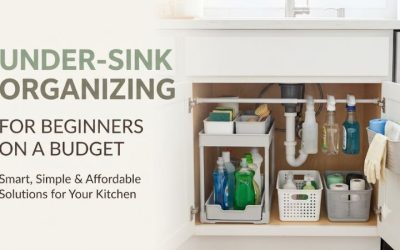
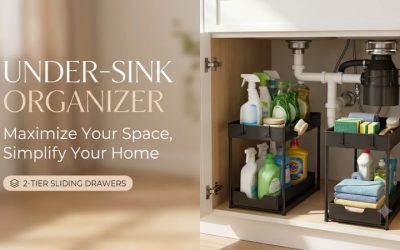
Under-sink organizers are designed for storage around plumbing, drain assemblies, and other obstacles. Their purpose is to make cleaning supplies and household accessories accessible without interfering with pipes or necessary maintenance. Some have narrow baskets, while others use adjustable shelving or a U-shaped configuration that leaves space for plumbing.
Best for storing:
- Closed cleaning-product bottles.
- Sponges in appropriate dry holders.
- Spare household supplies.
- Small cleaning accessories.
- Dishwasher-related products, where safely stored.
Advantages:
- Improves access around plumbing.
- Can create separate storage zones.
- Reduces the need to search behind bottles.
- Makes it easier to notice leaks.
Limitations:
- Pipes restrict organizer dimensions.
- Plumbing connections need clearance.
- Cabinet floors may be damaged by previous leaks.
- Cleaning chemicals require safe storage.
Never install a sliding organizer where movement could contact or strain supply lines or drain connections.
Households with children should also consider appropriate cabinet locks and the storage instructions on cleaning products. An organizer makes chemicals easier to reach, which is not always desirable.
How to Measure Your Cabinet Correctly
Accurate measurement is the most important step when buying a pull-out organizer. Many returns occur because buyers measure the cabinet’s outside width instead of the clear opening through which the basket must travel. Doors, hinges, face frames, and plumbing can reduce usable clearance even when the cabinet interior appears spacious.
Measure the Cabinet Opening Width
Open the cabinet door completely and measure the narrowest unobstructed opening through which the organizer will move. This is often smaller than the internal width because the face frame, hinges, or door edges occupy space. A basket that fits inside the cabinet may still be unable to slide through the entrance.
Measurement checklist:
- Measure the clear opening, not the outside cabinet width.
- Account for face-frame edges.
- Identify hinges that extend into the travel path.
- Check whether the door opens sufficiently.
- Compare measurements with the product’s minimum opening requirement.
For example, a cabinet with an exterior width of 18 inches does not necessarily have an 18-inch clear opening. The difference depends on construction.
Some products are marketed for cabinets of a particular nominal width but require a more specific opening size.
Always prioritize the manufacturer’s minimum opening specification over general cabinet-size marketing.
Check Cabinet Depth and Vertical Clearance
Cabinet depth determines whether the organizer’s frame and sliding mechanism fit front to back. Height determines whether the storage platform can move while holding your intended items. Both measurements should account for fixed shelves, structural braces, pipes, and any hardware protruding into the storage area.
Important measurements:
- Interior depth from the back wall to the inside of the closed door.
- Clear height above the mounting surface.
- Space beneath fixed shelves.
- Height of the tallest stored item.
- Clearance for lifting an item out of the extended basket.
- Travel space required by the slides.
A two-tier organizer with a listed overall height of 16 inches may still be unsuitable for a cabinet with 18 inches of clear height if the upper basket leaves insufficient room for bottles below it.
Likewise, a basket that fits exactly between the cabinet front and back may not leave enough room for mounting components.
The correct measurement must accommodate the entire operating system.
Account for Cabinet Doors and Hinges
Cabinet doors are frequently overlooked during organizer selection. A door may open to slightly more than 90 degrees but still project into the space needed for a wide sliding basket. Concealed hinges and face-frame hardware can also interfere with the rails, basket sides, or handle during movement.
Before buying, open the door fully and imagine the basket traveling straight out of the cabinet.
Check whether it would contact the hinge or door edge. If necessary, use a cardboard template matching the organizer’s outside dimensions.
Move the template through the entrance to check clearance.
Common obstacles:
- Exposed hinges.
- Thick face frames.
- Door-mounted accessories.
- Internal dividers.
- Cabinet center posts.
- Adjacent drawers or appliances.
A correctly sized organizer should move without requiring force or unusual door positioning.
Materials and Features Worth Paying For
Materials affect appearance, cleaning, weight, and long-term maintenance, but they do not establish quality by themselves. A well-constructed polymer tray may suit lightweight pantry products better than a metal basket, while heavy cookware may justify a stronger frame and slide assembly. Beginners should evaluate the intended load and construction rather than assuming the heaviest-looking option is always best.
Metal Wire Versus Solid-Bottom Shelves
Metal wire baskets are commonly used because they provide visibility and allow crumbs or small debris to fall through. Solid-bottom shelves provide continuous support for narrow containers, small packets, and items that could tip between wires. Both designs can be useful, but the right one depends on what you intend to store.
Metal wire baskets
- Provide visibility around the contents.
- Often suit bottles and larger containers.
- May allow small objects to tip or fall through.
- Can be more difficult to clean between wires.
Solid-bottom shelves
- Support irregular items more consistently.
- Can contain small spills and loose packets.
- Offer a flat surface for cookware.
- May require wiping after leaks or spills.
Some wire organizers can accommodate a compatible removable liner, but liners must not interfere with movement or exceed manufacturer recommendations.
For a beginner storing mixed kitchen supplies, a stable solid-bottom tray may require less rearranging.
For tall cleaning bottles or large pantry containers, a wire basket may be entirely adequate.
Full-Extension Slides and Soft-Close Systems
Full-extension slides are designed to bring more of the shelf out of the cabinet than partial-extension mechanisms. This can improve access to rear items, particularly in deep lower cabinets. Soft-close systems slow the final closing movement and may reduce abrupt impacts, but these features are not necessary for every storage application.
Features to consider:
- Full-extension slides: Improve access to items near the rear.
- Soft-close: Can make closing more controlled.
- Ball-bearing slides: Common in many sliding storage systems.
- Stops: Help control travel.
- Independent shelves: Allow access to one level without moving the other.
A smooth slide mechanism is valuable only when its load rating and mounting requirements suit the cabinet.
Soft-close should not be confused with automatic closing from any position, and different products have different activation points.
If the budget is limited, prioritize fit, strength, and reliable travel before decorative features.
How to Install a Pull-Out Cabinet Organizer
Installation difficulty depends on the organizer’s configuration. A freestanding sliding unit may require little more than assembly and placement, while a permanently mounted system can require drilling pilot holes and attaching rails to the cabinet floor. Beginners should follow the exact product instructions rather than using generic screw spacing or assuming every cabinet has suitable mounting surfaces.
Prepare the Cabinet Before Installation
Start by removing all items from the cabinet and inspecting its condition. Look for loose floor panels, water damage, cracks, warped surfaces, or old hardware that could interfere with mounting. A sliding unit transfers forces to the cabinet when extended, so the mounting area must be structurally suitable for the intended installation.
Preparation steps:
- Empty the cabinet completely.
- Clean and dry the mounting surface.
- Inspect the cabinet floor and panels.
- Remove only accessories that can safely be detached.
- Recheck the clear opening and internal dimensions.
- Gather the manufacturer’s required tools and hardware.
Do not attach a heavy pull-out to weak particleboard, damaged cabinetry, or an unsupported shelf without confirming suitability.
If structural repair is needed, correct the problem before adding a moving storage system.
Follow a Beginner-Friendly Installation Process
The safest installation process follows the exact sequence supplied with the organizer. Many floor-mounted products require positioning the rail frame, marking mounting holes, drilling appropriately sized pilot holes if instructed, and fastening the assembly securely. The moving basket is then attached or inserted according to the product’s design.
General installation sequence:
- Read the complete manufacturer’s instructions.
- Position the organizer inside the empty cabinet.
- Check the front clearance with the door open.
- Mark mounting locations using the supplied template if available.
- Drill pilot holes only where required and permitted.
- Secure the frame with approved hardware.
- Install the moving shelf or basket.
- Test travel before adding contents.
- Load gradually and check stability.
Never substitute longer screws without checking the thickness of the mounting panel. A screw that penetrates the cabinet floor could damage another surface or create a hazard.
Likewise, avoid tightening components so aggressively that the slides become misaligned.
If drilling, alignment, or cabinet construction is unfamiliar, professional installation may be preferable for heavy systems.
Test the Organizer Before Fully Loading It
After installation, cycle the organizer several times while empty. It should move without binding, scraping, or shifting. Check that the door opens freely, the basket clears the face frame, and any soft-close mechanism operates according to its instructions. Only then should you begin loading items.
Start with a few lightweight objects distributed evenly across the platform.
Observe whether the assembly tilts, flexes, or pulls against its mounting points.
Final checks:
- Basket moves through its intended travel.
- Stops engage correctly.
- Mounting hardware remains secure.
- Cabinet door clears the organizer.
- Stored items do not strike shelves above.
- Total load stays within the published rating.
A pull-out organizer should never be used as a step, seat, or support for a person.
Keep children from climbing on an extended shelf, even when it is designed to hold heavy cookware.
Organizing Your Cabinet for Everyday Use
Installing the organizer is only the first half of the project. A pull-out basket can become as cluttered as a fixed cabinet if objects are packed without regard to weight, frequency, and retrieval space. The most useful system places frequently used items near the front or in easily visible positions while preventing smaller containers from becoming buried behind heavy objects.
Group Items by Function and Frequency
Organize items according to how you use them rather than trying to maximize every available inch. Cooking oils and condiments can occupy one zone, baking supplies another, and pots a separate heavy-duty shelf. Avoid mixing household chemicals with food containers, and keep items that require special storage conditions in an appropriate location.
Suggested zones:
- Everyday cooking ingredients.
- Small cookware.
- Food-storage containers.
- Baking supplies.
- Cleaning accessories in a separate approved cabinet.
Place frequently used items where they can be removed without shifting multiple other objects.
Use a small removable bin for loose packets when the shelf design permits.
For tall bottles, leave enough space above the container to lift it out safely.
Organization should reduce daily handling, not increase the number of steps required to find one item.
Distribute Weight Safely
A pull-out shelf extends the load away from its original support position. This creates forces on the slides, frame, and cabinet structure that make secure installation especially important. Placing excessive weight at the front of an extended shelf can increase stress on the mechanism.
Keep heavy items low and distribute them according to the manufacturer’s recommendations.
Avoid stacking cookware in unstable piles.
Weight-management rules:
- Follow the organizer’s exact rated capacity.
- Account for the combined weight of all contents.
- Keep heavy items within the supported shelf area.
- Do not lean on an extended basket.
- Avoid sudden pulling or slamming.
- Recheck hardware if movement becomes uneven.
A product advertised with a strong slide rating may still have a lower overall installed load capacity.
Use the complete organizer’s rating and installation instructions rather than relying on one component specification.
Common Beginner Mistakes to Avoid
Most disappointing organizer purchases can be traced to a small group of preventable errors. Buyers may order based on nominal cabinet size, underestimate hinge interference, overload lightweight baskets, or choose a complicated system before understanding how they want to organize the space. These mistakes can reduce convenience and, in some cases, damage cabinetry or create a falling-object hazard.
Buying Without Checking the Clear Opening
A common mistake is purchasing an organizer advertised for an 18-inch cabinet without checking whether the actual clear opening matches the product’s minimum requirement. Face frames and hinges can make the usable opening significantly smaller than the cabinet’s nominal width.
The organizer may fit inside the storage compartment but fail to slide through the doorway.
Measure the narrowest point in the travel path and compare it with the manufacturer’s requirements.
When measurements are close to the limit, verify any additional clearance needed for doors, brackets, and installation.
Do not assume that force or a different mounting angle will solve a genuine size mismatch.
Choosing Too Many Shelves
Multiple levels look efficient, but additional tiers are not always useful. A two-tier organizer may divide a tall cabinet into spaces that are too short for the bottles or appliances you actually own. The result is a crowded system that technically fits but cannot hold the intended items comfortably.
Before purchasing, arrange the planned contents on a table and estimate their required height.
Allow clearance for lifting bottles and cookware rather than counting only the height of the objects themselves.
If the cabinet mainly holds tall items, one generous sliding shelf may be more practical than two shallow levels.
Capacity should follow your inventory, not the number of tiers shown in product photographs.
Ignoring Cleaning and Long-Term Maintenance
Sliding organizers collect crumbs, powder, oil residue, and occasional spills just like ordinary shelves. Rail mechanisms also need to remain free from obstructing debris. A design that is difficult to empty or clean may become frustrating after several months.
Select materials and shelf shapes appropriate for the products being stored.
Follow the manufacturer’s cleaning instructions and avoid soaking or lubricating slide mechanisms unless instructed.
Simple maintenance habits:
- Wipe spills promptly.
- Check basket corners for debris.
- Inspect mounting screws periodically.
- Avoid forcing a jammed slide.
- Rebalance overloaded shelves.
- Keep plumbing access clear in under-sink installations.
If the mechanism becomes noisy or difficult to move, inspect it before continuing to use it with a heavy load.
Frequently Asked Questions
Beginners often need reassurance about cabinet compatibility, installation complexity, and whether a sliding organizer is worth the space it occupies. The answers depend on the product’s mounting system and the cabinet’s physical condition, but a few principles apply broadly: measure carefully, choose a suitable load rating, follow installation instructions, and prioritize safe access over maximum storage density.
Are Pull-Out Cabinet Organizers Easy to Install?
Some are straightforward, while others require careful drilling and alignment. Freestanding organizers usually involve the least permanent work. Floor-mounted sliding baskets can be manageable for someone comfortable with basic tools, but heavy-duty shelves and complicated corner systems may require professional assistance. Always assess cabinet strength and follow the exact manufacturer’s instructions rather than relying on generic installation steps.
Can I Install One Without Drilling?
Yes, certain freestanding sliding organizers do not require permanent cabinet mounting. However, they may have different stability and weight limitations from securely installed shelves. Check the product’s intended use and avoid placing heavy cookware on a lightweight freestanding unit unless explicitly supported. In rental kitchens, non-drilling options are often worth considering, provided they fit and remain stable during normal use.
Are Pull-Out Organizers Worth It for Small Kitchens?
They can be worthwhile when deep cabinets make everyday items difficult to reach. The main benefit is accessibility rather than automatically increasing storage capacity. Rails and frames occupy some interior space, but a well-chosen organizer may make the remaining area considerably easier to use. Measure carefully and prioritize the cabinet that creates the most daily frustration before upgrading the entire kitchen.
Can Pull-Out Organizers Hold Heavy Pots and Pans?
Some organizers are specifically designed for cookware and have suitable load ratings. Others are intended only for lighter bottles or pantry items. Check the exact product’s published capacity, mounting requirements, and cabinet structure before loading heavy objects. A strong-looking metal basket is not automatically a heavy-duty cookware shelf, and an improperly installed mechanism may fail even when the product itself is well constructed.
What Is the Best Material for a Pull-Out Cabinet Organizer?
There is no universally best material. Metal wire baskets can provide visibility and ventilation, while solid polymer or wooden shelves offer continuous support for smaller objects. The ideal material depends on moisture exposure, expected weight, cleaning requirements, and construction quality. Evaluate the complete system, including slides and mounting hardware, rather than selecting solely on the appearance of the storage surface.
Conclusion
A pull out cabinet organizer for beginners should make one troublesome cabinet easier to use without introducing unnecessary installation complexity. Start with a single-tier sliding basket or shelf, measure the actual opening, check the cabinet structure, and match the organizer’s load rating to the intended contents. Choose two-tier or specialized under-sink designs only when they solve a clear problem. With careful installation, sensible loading, and occasional cleaning, even a simple pull-out system can make everyday kitchen storage more convenient.



Write Your Review
No reviews yet. Be the first to share your experience!