
A lazy Susan cabinet organizer for apartments helps make compact kitchen cabinets easier to use without requiring major renovations. The right turntable can bring spices, sauces, and pantry supplies into view while keeping storage flexible. This guide covers measurements, rental-friendly designs, space-saving layouts, and practical buying decisions.
- Quick Answer: Start With a Compact Freestanding Turntable
- Why Lazy Susan Organizers Work Well in Apartments
- Measure Your Apartment Cabinets Before Shopping
- Types of Lazy Susan Organizers for Small Apartments
- Choose Storage Categories That Make Sense for Apartment Life
- Rental-Friendly Features Worth Prioritizing
- Budget Considerations for Apartment Kitchens
- How to Set Up a Lazy Susan in a Small Kitchen
- Common Mistakes Apartment Renters Should Avoid
- Frequently Asked Questions
- Conclusion
Quick Answer: Start With a Compact Freestanding Turntable
For most apartment kitchens, a small freestanding Lazy Susan is a sensible first choice because it does not require permanent cabinet modifications. A single-tier model works well for everyday condiments, while a two-tier design can improve organization when the cabinet has sufficient height. The best option is the one that rotates comfortably within the available space.
Recommended configurations:
- For narrow cabinets: Consider a compact single-tier turntable.
- For pantry bottles: Choose an open rotating tray with an appropriate retaining edge.
- For small snack packets: Use a turntable with removable compartments.
- For cabinets with extra height: Consider an adjustable two-tier design.
- For irregular rectangular shelves: Evaluate specialized moving rectangular organizers.
- For renters: Favor freestanding products that do not require drilling or adhesives.
A larger turntable does not always provide better storage. It may fit the cabinet interior but become difficult to rotate or unload because the door opening is too narrow.
Measure first, then choose a product that matches both the cabinet and your actual inventory.
Why Lazy Susan Organizers Work Well in Apartments
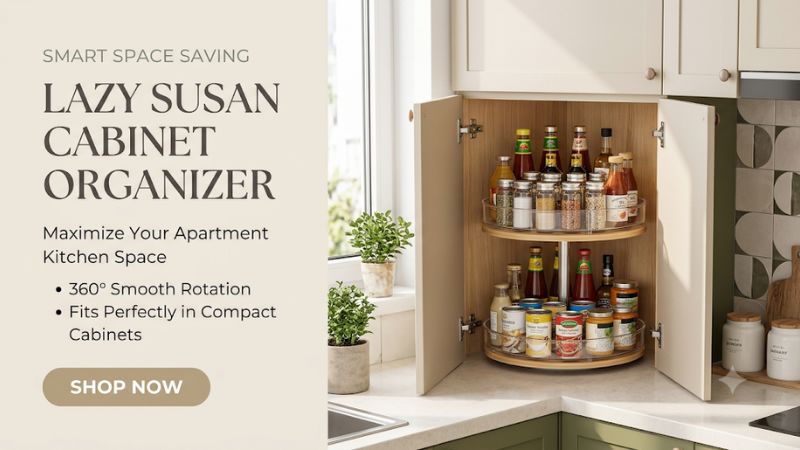
Apartment kitchens frequently have limited cabinet space, narrow shelves, and storage arrangements that cannot be permanently modified. A rotating organizer offers a practical way to access objects near the back without installing sliding hardware. This can be particularly valuable for frequently used seasonings, sauces, and small pantry items that would otherwise become hidden behind larger containers.
Better Access Without Permanent Renovations
A freestanding Lazy Susan sits on an existing cabinet shelf and rotates independently of the cabinet. This makes it useful for renters who want a more convenient storage arrangement without drilling holes or changing the cabinetry. The organizer can also be removed during cleaning or taken to another apartment when moving.
Practical benefits:
- No permanent installation for freestanding models.
- Easier access to rear items.
- Flexible placement within suitable cabinets.
- Simple removal for cleaning.
- Portability during a move.
- Useful organization for mixed pantry containers.
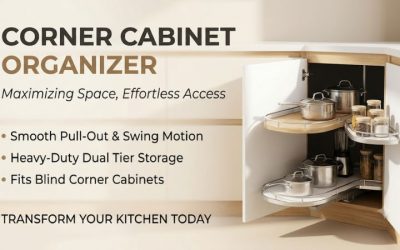
Not every turntable is equally portable, and large built-in corner systems may require permanent installation.
For apartments, a small independent tray is generally easier to adapt to changing cabinet layouts.
Choose a model with a stable base and enough clearance to rotate without rubbing against the cabinet walls.
Making Deep Cabinets More Convenient
Deep cabinets can hide smaller bottles and packages behind taller products, creating unnecessary searching during meal preparation. A rotating tray changes this arrangement by bringing rear items into view. Instead of removing the front row, the user turns the organizer until the desired container becomes accessible.
This can be helpful when storing cooking oils, sauces, spices, small jars, and similar products.
However, rotation does not automatically improve every cabinet.
A very narrow cabinet may not have sufficient clearance for a useful circular tray, while a shallow cabinet may already allow easy access without one.
A Lazy Susan is especially useful when:
- The cabinet is deeper than the objects stored.
- Several containers are used frequently.
- Items become hidden behind others.
- The shelf has enough width for rotation.
- The cabinet opening allows comfortable retrieval.
The improvement comes from faster access rather than a guaranteed increase in storage volume.
Keeping Kitchen Counters Less Cluttered
Small apartment countertops often need to support food preparation, appliances, and everyday utensils. Moving frequently used condiments into a well-organized cabinet can free some working space without making the ingredients difficult to reach.
A turntable helps keep those items accessible while they remain stored behind a cabinet door.
For example, a small collection of cooking oils and sauces can be grouped together on one rotating tray instead of spread across the counter.
This makes cleaning the preparation area easier and reduces visual clutter.
However, not every kitchen item belongs on a Lazy Susan.
Oversized appliances, very heavy cookware, and tall unstable containers may require more suitable storage.
Use the turntable for objects that benefit from rotation rather than forcing every countertop item onto it.
Measure Your Apartment Cabinets Before Shopping
Accurate measurements are especially important in compact kitchens because a difference of one or two inches can determine whether a turntable is useful. Cabinet interiors may be wider than their openings, and hinges or face frames can interfere with access. The organizer needs enough space to rotate and enough clearance for the user to remove items comfortably.
Measure Width, Depth, and the Actual Opening
Measure the usable width and depth of the shelf where the organizer will sit. Then measure the cabinet opening with the door fully open. This second measurement is important because a turntable can fit inside the cabinet while remaining awkward to access through a narrow door.
Measurement checklist:
- Interior cabinet width.
- Usable shelf depth.
- Clear door opening width.
- Vertical clearance.
- Hinge protrusions.
- Distance from nearby dividers.
- Space needed to remove bottles.
Compare these measurements with the exact organizer dimensions.
For example, an eleven-inch circular tray needs sufficient clearance for its diameter and surrounding movement.
Do not assume that a cabinet advertised as twelve inches wide has twelve inches of usable internal storage.
Consider the Height of Stored Containers
A single-tier Lazy Susan can accommodate containers of different heights as long as the cabinet provides sufficient vertical clearance. Two-tier organizers create additional levels but restrict the height available below the upper shelf. This can become a problem when an apartment pantry contains tall oil bottles, sauce containers, or unusual packaging.
Before choosing a two-tier design, identify the tallest items you intend to store.
Measure the container including its cap and allow room for your fingers to lift it out.
Useful checks:
- Maximum height of stored bottles.
- Space between tiers.
- Overall organizer height.
- Shelf position inside the cabinet.
- Clearance beneath the cabinet frame.
An adjustable two-tier model may offer more flexibility than a fixed-height system, but it still must fit the actual cabinet.
Test the Rotation and Retrieval Path
A product may fit according to its measurements yet become inconvenient once loaded. Bottles can project beyond the tray, handles may contact the cabinet walls, and the user may be unable to reach the rear section comfortably. Testing the rotation path before purchasing helps prevent these problems.
Create a cardboard circle matching the intended organizer diameter and place it inside the empty cabinet.
Position a few representative bottles around the circle to check spacing.
Observe whether the cabinet door creates an obstruction when you try to remove an item.
For rectangular moving organizers, follow the manufacturer’s specific clearance requirements rather than assuming a circular test accurately represents the mechanism.
If the selected design needs more movement space than the cabinet provides, choose a smaller organizer or a different storage format.
Types of Lazy Susan Organizers for Small Apartments
Apartment storage needs vary according to cabinet size, household size, and the types of products being stored. Some renters need one compact tray for sauces, while others benefit from divided bins or adjustable vertical storage. Understanding the advantages and limitations of each format makes it easier to choose a system that remains practical after the initial setup.
Compact Single-Tier Turntables
Single-tier turntables provide a simple rotating surface for bottles, jars, and everyday pantry products. They are generally straightforward to place inside a cabinet and can be moved when the kitchen layout changes. Products such as the OXO Good Grips 11-Inch Turntable illustrate this type of design, with features intended to help containers remain positioned during normal use.
Best For: Everyday sauces, condiments, and small pantry collections.
Key Features:
- One rotating storage platform.
- Freestanding construction.
- Raised edge on selected designs.
- Non-slip base features on some products.
- No permanent cabinet installation.
Pros:
- Simple to use.
- Easy to relocate.
- Flexible for different container heights.
- Requires little setup.
Cons:
- Limited vertical organization.
- Circular shape may waste some shelf space.
- Requires clearance for full rotation.
Buy If: You want a straightforward storage improvement without additional assembly.
Skip If: You have a large collection of small loose packages or need more than one level.
A compact turntable is often the easiest starting point for renters because it provides an immediate improvement without a long-term commitment.
Two-Tier Lazy Susan Organizers
Two-tier turntables provide upper and lower rotating storage areas, making them useful when a cabinet has unused vertical space. Some models, including YouCopia’s adjustable two-tier designs, allow different clearance settings between shelves. This can help accommodate small jars, seasonings, and pantry accessories while maintaining relatively compact horizontal dimensions.
Best For: Tall cabinets containing small or medium-height items.
Key Features:
- Two storage levels.
- Rotating base.
- Fixed or adjustable spacing.
- Central support structure.
- Freestanding installation on many designs.
Pros:
- Better use of vertical space.
- Clear separation between categories.
- Can reduce stacking.
- Useful for small jars.
Cons:
- Tall items may not fit.
- Upper shelf can obstruct access.
- More surfaces require cleaning.
Buy If: Your cabinet has enough height and your stored containers are relatively short.
Skip If: You mainly use large oil bottles or tall pantry packages.
The key is balancing extra storage positions against ease of retrieval.
Two crowded levels are not necessarily better than one accessible tray.
Lazy Susans With Removable Bins
Divided turntables use individual compartments to hold loose packages and small items. Products such as the YouCopia Crazy Susan With 3 Bins combine rotation with removable containers, allowing users to lift an entire category out of the cabinet. This can be particularly useful for tea bags, snack packets, baking decorations, and small pantry accessories.
Best For: Small items that become disorganized on an open tray.
Key Features:
- Multiple separate compartments.
- Rotating base.
- Removable bins.
- Handles on selected designs.
- Clear containers for visibility.
Pros:
- Good category separation.
- Easier handling of loose packages.
- Removable sections simplify retrieval.
- Flexible use in other rooms.
Cons:
- Fixed compartment sizes.
- Less suitable for large bottles.
- Additional pieces require cleaning.
Buy If: You need to organize packets, pouches, or mixed small items.
Skip If: Your main purpose is storing tall condiments.
A removable-bin organizer may be more useful than a traditional flat turntable when the contents are irregular and frequently accessed in groups.
Rectangular Moving Turntables
Rectangular moving turntables are an alternative to traditional circular trays. Some products, such as YouCopia’s MagicTrack Rectangle Turntable, use a movement mechanism designed to bring items forward while making use of a rectangular storage area. This can be relevant in apartment cabinets where a round tray leaves awkward unused corners.
Best For: Rectangular shelves with a suitable movement path.
Key Features:
- Rectangular storage platform.
- Specialized moving mechanism.
- Freestanding configuration.
- Intended access to rear items.
- Different footprint from conventional round turntables.
Pros:
- Alternative use of rectangular shelf space.
- May suit certain cabinet layouts better.
- Can organize mixed-size items.
- No traditional round footprint required.
Cons:
- Movement clearance requires careful measurement.
- More complicated than simple rotation.
- Not suitable for every narrow cabinet.
Buy If: A round tray wastes useful space in your cabinet and the rectangular design’s path fits.
Skip If: You want the simplest possible organizer or your cabinet opening is restrictive.
Do not assume that rectangular automatically means larger usable capacity.
Compare the exact product dimensions and the entire movement path.
Choose Storage Categories That Make Sense for Apartment Life
An apartment cabinet may need to accommodate groceries, snacks, cooking supplies, and occasionally household items. A Lazy Susan should make those categories easier to manage rather than create a crowded display. Organizing by use frequency and container type helps preserve quick access while reducing the number of duplicate products forgotten at the back.
Store Frequently Used Sauces and Condiments Together
Sauces, oils, and condiments are common Lazy Susan contents because they often come in bottles that hide one another on fixed shelves. A rotating tray allows the user to turn the group and locate the desired product more quickly. Keep taller containers positioned securely and avoid crowding the tray with products that protrude beyond the edges.
Suggested category:
- Cooking oils.
- Vinegars.
- Shelf-stable sauces.
- Condiments requiring no refrigeration.
- Frequently used seasoning bottles.
Always follow the storage instructions on individual food products.
Some sauces require refrigeration after opening and should not remain in a room-temperature cabinet simply because the organizer has available space.
Keep the most frequently used products easy to identify and check for leaks periodically.
Organize Snacks and Small Pantry Packages
Snack packets, tea bags, and small food packages can easily become mixed together inside deep cabinets. A divided Lazy Susan provides defined compartments that help keep items grouped and visible. Removable bins can also make it convenient to carry one category to the counter without moving the entire organizer.
Useful groupings:
- Tea bags and drink packets.
- Small snack packages.
- Baking decorations.
- Individually packaged seasonings.
- Small pantry accessories.
Avoid overfilling compartments until packets become difficult to remove.
Check expiration or best-by information according to the product’s intended meaning, and keep older stock visible.
A simple category system is more effective than a complicated arrangement that requires frequent reorganizing.
Use a Dedicated Area for Spices
Spices are well suited to compact turntables because their containers are often small and used repeatedly. However, storage conditions matter. Dried herbs and spices should generally be kept tightly closed in a cool, dry area away from heat, strong light, and moisture.
Practical spice-storage tips:
- Keep jars tightly closed.
- Position labels outward.
- Store away from stove heat.
- Avoid direct sunlight.
- Keep refill packages sealed.
- Use containers appropriate for the amount consumed.
A Lazy Susan can make an apartment spice cabinet easier to use, but it does not automatically preserve freshness.
Do not shake spice containers directly over steaming cookware, because moisture can enter the jar and cause clumping.
A cool cabinet with reliable closures is preferable to a convenient but hot storage location.
Rental-Friendly Features Worth Prioritizing
Renters often need storage products that can be removed without leaving holes, marks, or damaged cabinet surfaces. A freestanding Lazy Susan is usually better suited to this requirement than a permanently mounted corner system. However, a no-drill design still needs to be stable, appropriately sized, and gentle on the cabinet finish.
Choose Freestanding Designs When Possible
A freestanding organizer can be placed on a shelf without permanent modifications. This reduces installation time and allows the product to move with the renter. It also makes cleaning simpler because the tray can usually be removed from the cabinet without dismantling hardware.
Advantages for renters:
- No mounting holes.
- Easy relocation.
- Flexible use in different cabinets.
- Quick installation.
- Potential reuse in another room.
Features to inspect:
- Stable base.
- Non-slip feet.
- Appropriate retaining edges.
- Smooth rotation.
- Easy-to-clean materials.
A freestanding organizer should not scrape cabinet finishes during movement.
Check that the base remains positioned on the shelf while the rotating platform turns.
If the cabinet surface is uneven or damaged, correct the underlying issue where possible rather than relying on additional weight to stabilize the tray.
Consider Moving and Future Kitchens
Apartment layouts can change considerably between moves. A turntable that fits one cabinet may not fit the next, so portability and moderate dimensions are valuable. Compact single-tier products are often easier to reuse than specialized organizers designed around one exact opening.
When choosing a product, consider whether it could also serve on a pantry shelf, countertop, or suitable bathroom cabinet in the future.
A removable divided organizer may be especially flexible because its bins can hold different categories in different rooms.
However, avoid mixing food storage and cleaning chemicals in the same containers without appropriate cleaning and suitability checks.
A product that remains useful in several locations may offer better long-term value than one that maximizes capacity in a single unusual cabinet.
Budget Considerations for Apartment Kitchens
A Lazy Susan organizer can be an affordable storage improvement, but the cheapest product is not necessarily the best value if it does not rotate properly or fit the cabinet. Likewise, a premium multi-tier design may be unnecessary when a small group of sauces is the only problem. Evaluate total practical usefulness rather than relying on decorative appearance or product complexity.
Decide What Features You Actually Need
Start with the storage problem and select features that directly address it. If bottles are hidden behind one another, a basic rotating tray may be enough. If loose packets become mixed together, removable compartments may be worth considering. If the cabinet has substantial unused height, an adjustable two-tier organizer might provide a meaningful benefit.
Feature priorities:
- Basic access: Smooth rotation.
- Bottle stability: Appropriate retaining edge and non-slip features.
- Small-item organization: Removable bins.
- Vertical space: Adjustable second tier.
- Irregular shelf shape: Specialized movement design.
- Rental flexibility: No permanent installation.
Avoid paying more for features you will rarely use.
A simple product that solves the main access problem is often the strongest starting point.
Avoid Buying More Organizers Than Necessary
It is easy to purchase several matching turntables before measuring where they will actually fit. This can create new clutter and unnecessary expense. Begin with one cabinet, identify whether the organizer improves daily use, and expand only when another storage area has a similar problem.
For example, one tray may be sufficient for spices and condiments.
A second organizer may be useful for snacks only if the cabinet has enough space and the separate category meaningfully improves access.
Do not assume that every shelf requires a rotating tray.
Some shallow shelves work better with simple bins or direct placement because all items are already visible.
How to Set Up a Lazy Susan in a Small Kitchen
A successful setup begins with an empty cabinet and a realistic inventory. The goal is not to create a visually perfect arrangement immediately but to make the cabinet easier to use during normal meals. Test the organizer while empty, add items gradually, and confirm that rotation remains smooth after the shelf is loaded.
Follow a Simple Five-Step Setup
Begin by removing everything from the cabinet and wiping the shelf clean. Measure the usable area again, especially if old containers were hiding an obstruction. Place the Lazy Susan in its intended position and rotate it through a full cycle before adding anything.
Setup steps:
- Empty and clean the cabinet. Remove crumbs and moisture.
- Measure the usable area. Confirm width, depth, and height.
- Position the turntable. Check stability and free movement.
- Group related products. Keep similar items together.
- Load and test gradually. Rotate the organizer with normal contents.
Leave enough clearance so that bottles do not contact the cabinet walls.
Test the arrangement from your normal standing position.
If you must remove several objects to reach one frequently used item, reduce the load or change the layout.
Maintain the Organizer With Minimal Effort
Lazy Susans collect the same crumbs, spills, and residue as ordinary cabinet shelves. A little regular cleaning prevents small messes from becoming difficult to remove. Removable trays and bins can simplify maintenance, but different materials have different cleaning requirements.
Maintenance checklist:
- Wipe spills promptly.
- Remove crumbs from the rotating surface.
- Clean removable bins according to instructions.
- Keep the base free from obstructing debris.
- Check for loose or damaged components.
- Avoid overloading the tray.
- Return containers to consistent positions.
If rotation becomes unusually stiff or noisy, unload and inspect the organizer.
Do not add lubricant unless the manufacturer recommends it.
A reliable system should remain easy to use without excessive force.
Common Mistakes Apartment Renters Should Avoid
The most frequent problems come from choosing an organizer that is too large, placing it in an unsuitable cabinet, or trying to store more than it can comfortably handle. A Lazy Susan is intended to improve access, not make every square inch of storage completely full. Avoiding these mistakes can be more valuable than purchasing additional accessories.
Buying a Turntable That Barely Fits
A turntable may fit into the cabinet when empty but become difficult to rotate after bottles are added. Tall containers can contact the sides, and large caps may catch on nearby shelves.
Always allow clearance around the moving platform.
A smaller organizer can outperform a larger one when it rotates freely and leaves room to retrieve products.
Check the cabinet opening as well as the internal shelf dimensions.
If the door prevents comfortable access, reconsider the placement or choose another storage design.
Mixing Unrelated Items Together
Combining cooking ingredients with cleaning chemicals or other unsuitable supplies can create confusion and potential contamination concerns. Keep food-related products separate from household cleaning products and follow their respective storage instructions.
Use clearly defined categories for each tray.
Avoid overcrowding a single organizer with snacks, spices, utensils, and unrelated products.
If the collection becomes too varied, divide it into smaller storage groups.
A straightforward system makes daily retrieval faster and reduces the chance of forgetting what is already available.
Ignoring Stability and Weight Distribution
A rotating tray should not wobble excessively or shift across the cabinet shelf during use. Uneven loading can create resistance, particularly when several heavy bottles are concentrated on one side.
Distribute contents appropriately and avoid stacking unstable containers.
Do not use the turntable as a support for leaning or lifting yourself.
For households with children, keep fragile or hazardous objects out of easy unsupervised reach.
A storage accessory should make the kitchen safer and easier to navigate, not introduce unnecessary hazards.
Frequently Asked Questions
Apartment renters often want storage solutions that are compact, inexpensive, portable, and easy to maintain. Lazy Susan organizers can meet those needs when selected carefully, but cabinet dimensions and product designs vary. The following questions address common concerns about sizes, renter-friendly installation, storage efficiency, and practical everyday maintenance.
What Size Lazy Susan Is Best for a Small Apartment?
The best size is the largest practical organizer that rotates freely and allows comfortable access within the actual cabinet. Many compact kitchens can accommodate smaller single-tier turntables, but there is no universal diameter. Measure the interior width, depth, vertical clearance, and door opening. Leave room for bottles and fingers rather than choosing a tray that fits with no margin.
Can I Use a Lazy Susan Without Drilling?
Yes. Many freestanding turntables are designed to sit directly on an existing cabinet shelf without screws or adhesives. These are particularly convenient for renters. However, built-in corner cabinet systems may require permanent hardware installation. Check the specific product configuration before purchasing and avoid modifying rental cabinetry without permission.
Are Two-Tier Lazy Susans Worth It in Apartments?
They can be worthwhile when the cabinet has sufficient vertical height and the stored items fit between levels. Two-tier organizers help separate smaller jars and pantry products without stacking them directly on top of one another. They are less suitable for tall bottles or cabinets with low clearance. Evaluate the height of both the organizer and the intended contents before deciding.
Can a Lazy Susan Help Organize a Small Pantry?
Yes. A rotating tray can improve access to sauces, jars, spices, and other pantry products that would otherwise become hidden at the back. Divided versions may be especially useful for packets and snacks. However, a turntable does not necessarily increase overall storage capacity, and some rectangular shelves may work better with bins. Choose based on visibility and retrieval convenience.
How Do I Keep Items From Falling Off My Lazy Susan?
Use a tray with appropriate retaining edges, avoid overloading, and distribute containers so they remain stable during rotation. Non-skid surfaces can help reduce sliding but cannot guarantee that every tall or top-heavy bottle stays upright. Rotate gently and keep products within the tray boundaries. If items repeatedly tip, use smaller containers, reduce the load, or choose a different organizer.
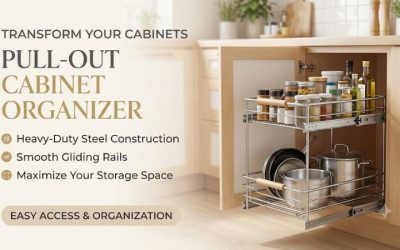
Is a Lazy Susan Better Than a Pull-Out Cabinet Organizer?
A Lazy Susan is often simpler for renters because freestanding models require no permanent installation. Pull-out cabinet organizers may provide better access to certain deep or narrow storage spaces, but many require mounting hardware. The better option depends on the cabinet shape, intended contents, and permission to modify the space. Choose the system that improves daily retrieval with the least unnecessary complication.
Conclusion
A lazy Susan cabinet organizer for apartments can make small kitchen storage easier to manage without permanent renovations. Start with a compact freestanding turntable, measure the cabinet carefully, and match the design to the items you use most often. Single-tier trays suit bottles and sauces, divided organizers help with packets, and adjustable two-tier systems make use of available height. Prioritize stable rotation, simple cleaning, and portability so the organizer remains useful when your storage needs or apartment layout change.


Write Your Review
No reviews yet. Be the first to share your experience!