
Choosing airtight food storage containers for busy mornings can make breakfast preparation faster and less stressful. The right containers keep frequently used ingredients organized, simplify portioning, and reduce time spent searching through pantry shelves. This guide explains which sizes, materials, and lid designs work best for everyday breakfast routines.
- Quick answer: What containers make mornings easier?
- Why food storage matters during busy mornings
- Choosing the right container for each breakfast ingredient
- Choosing materials for an efficient morning routine
- How to organize containers for fast morning access
- Food safety for breakfast meal preparation
- Practical breakfast storage setups
- Common mistakes that make mornings harder
- Frequently Asked Questions
- Conclusion
Quick answer: What containers make mornings easier?
The most useful storage containers for busy mornings are easy to open, simple to refill, clearly labeled, and matched to the foods your household eats regularly. A collection of two to five appropriately sized containers can often improve breakfast preparation more effectively than an extensive storage set with numerous rarely used pieces.
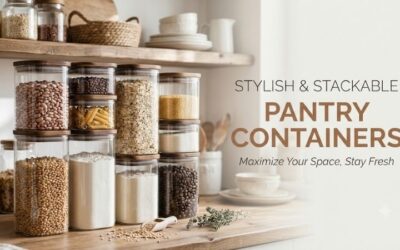
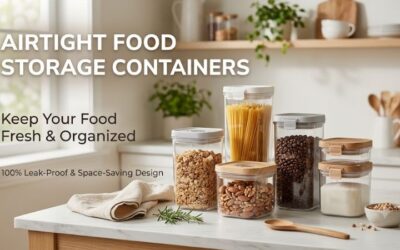
For cereal, a tall container with a pouring spout can simplify serving and reduce the need to open a large cardboard box.
For oatmeal, a medium airtight container with a wide opening makes it convenient to measure dry oats.
Coffee beans or ground coffee benefit from suitable storage that limits unnecessary exposure to air, moisture, heat, and light.
Small containers are useful for nuts, dried fruit, and other shelf-stable breakfast toppings.
Prepared foods such as overnight oats, yogurt, and cut fruit require refrigeration rather than ordinary pantry storage.
The best approach is to separate your breakfast ingredients into two categories: shelf-stable foods and perishable prepared foods.
Store dry ingredients in appropriate airtight pantry containers and use refrigerator-safe containers for foods requiring temperature control.
This arrangement creates a predictable morning routine without compromising food safety.
Why food storage matters during busy mornings
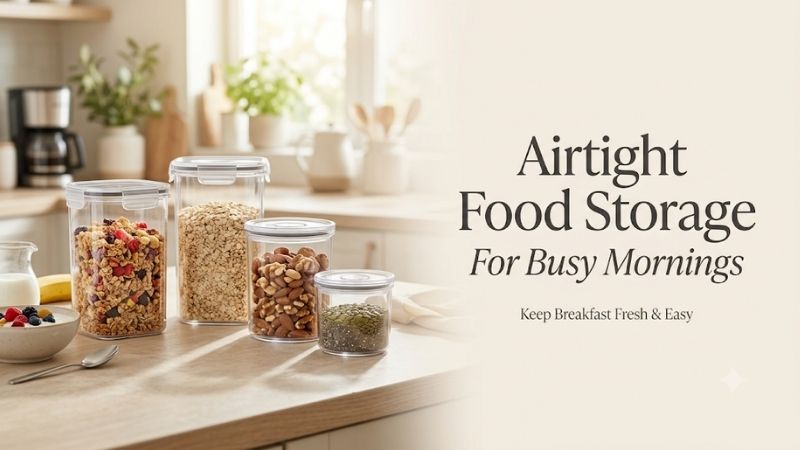
Morning routines often involve several tasks occurring within a short period. Breakfast preparation competes with getting dressed, preparing lunches, helping children, and leaving for work. A practical storage system reduces avoidable decisions by keeping frequently used ingredients visible, accessible, and ready for preparation without unnecessary repackaging or searching.
Reducing preparation time through better organization
Organized storage can make breakfast preparation more straightforward because commonly used ingredients remain in predictable locations.
Instead of searching for cereal boxes, measuring oats from loosely closed bags, or finding a missing container lid, you can reach for ingredients stored in designated areas.
For example, cereal, oatmeal, and dried fruit can be grouped on the same pantry shelf.
Coffee supplies can be stored near the coffee maker without placing ingredients against a hot appliance.
The benefit comes from reducing unnecessary movement and decisions.
A well-organized pantry also makes it easier to identify when supplies are running low.
Transparent containers are particularly useful for checking remaining quantities.
However, convenience depends on the system being easy to maintain.
If every container requires complicated cleaning or frequent rearrangement, the storage arrangement may create more work than it saves.
Choose simple solutions that fit your normal household habits.
Making breakfast portions easier to manage
Portioning ingredients in advance can reduce the number of measuring tasks required during busy mornings.
Dry oatmeal, for example, can be measured into suitable containers before the week begins.
Shelf-stable additions such as nuts or dried fruit can be stored separately.
When breakfast time arrives, the ingredients are already organized and ready for preparation.
This method is particularly useful for people who prepare similar breakfasts several days a week.
However, prepared foods containing milk, yogurt, eggs, or cut fruit have different storage requirements.
These foods must be kept under appropriate refrigeration conditions.
Do not leave perishable overnight-oat mixtures at room temperature simply because they are inside airtight containers.
Airtight seals help with containment and quality but do not replace refrigeration.
An effective breakfast system combines convenient portioning with correct food storage.
Helping households with different breakfast preferences
Family members may prefer different morning meals.
One person might eat oatmeal, another cereal, and someone else toast with fruit.
Keeping the ingredients organized by meal type can simplify preparation without requiring everyone to eat the same breakfast.
A medium cereal container, a smaller oat container, and a separate jar for shelf-stable toppings may serve multiple preferences.
For households with children, containers should also be easy for the intended user to handle.
A large glass jar filled with cereal may be too heavy or fragile for a young child.
Lightweight plastic containers with manageable lids may be more appropriate.
Frequently used foods should be stored within safe reach.
Avoid placing heavy containers on high shelves where they could fall.
The best system supports independent preparation when appropriate while maintaining safe handling.
Choosing the right container for each breakfast ingredient
Different breakfast ingredients require different storage arrangements. Cereal needs convenient pouring, oatmeal benefits from measuring access, and coffee requires attention to air exposure and storage conditions. Prepared breakfasts may need refrigerator-safe containers rather than large pantry canisters. Matching the container to the food helps reduce waste and improve everyday convenience.
Cereal containers with convenient pouring spouts
A cereal container should be easy to lift, pour from, and close after serving.
Tall rectangular designs can make efficient use of pantry shelves, while transparent walls allow users to see how much cereal remains.
A pouring spout is particularly useful when cereal is eaten every morning.
It eliminates the need to remove a full lid and can make controlled serving easier.
However, the spout must close securely.
A poorly fitted opening may allow moisture or pests to enter.
Consider the weight of the container when full.
Large cereal canisters may be awkward for children or people with limited hand strength.
A smaller refillable container may be more practical than a very large one.
If the household regularly purchases family-size cereal boxes, compare the package volume with the container capacity before buying.
Wide-mouth containers for oatmeal
Oatmeal is a common choice for quick breakfasts because it can be prepared in several ways.
Dry rolled oats and steel-cut oats are best stored according to their package instructions, usually in suitable dry conditions until preparation.
A wide-mouth airtight container makes scooping and measuring convenient.
The opening should accommodate a measuring cup without requiring the user to tilt or shake the entire container.
Transparent sides can help indicate when the supply needs replenishment.
If the family eats oatmeal regularly, select a capacity that accommodates the normal purchase size.
Avoid choosing an excessively large container that is difficult to lift or clean.
For overnight oats, prepare the mixture in separate refrigerator-safe food containers.
Milk, yogurt, and similar perishable ingredients must be refrigerated promptly.
Keeping dry-oat storage separate from prepared-oat storage creates a clearer and safer kitchen routine.
Containers for coffee and tea
Coffee and tea require storage conditions that help preserve desirable flavors and aromas.
For coffee, unnecessary exposure to oxygen, moisture, heat, and light can affect quality over time.
An appropriate airtight container can reduce exposure between uses.
However, a transparent container placed in direct sunlight may not be ideal for prolonged coffee storage.
Consider positioning it inside a cabinet or selecting an opaque design.
Ground coffee has more exposed surface area than whole beans, so purchasing quantities suited to actual consumption can be helpful.
Tea storage also benefits from protection against strong odors and moisture.
Avoid placing tea containers near heavily scented cleaning products or cooking ingredients.
A small airtight container near the beverage preparation area may be more convenient than a large canister stored across the kitchen.
Choose a capacity that matches how quickly the household consumes the product.
Small containers for nuts and dried fruit
Nuts, seeds, and dried fruit can make breakfast more convenient when stored in manageable quantities.
Small containers are useful for organizing toppings that would otherwise remain in partially closed bags.
A clear container makes it easy to identify ingredients and monitor supplies.
However, not every topping has the same storage requirements.
Nuts contain oils that can deteriorate over time, and some products benefit from refrigerated or frozen storage.
Follow the package instructions.
Dried fruit should be protected from excess moisture and stored according to the manufacturer’s recommendations.
If preparing portions for children, consider age-appropriate foods and choking risks.
Whole nuts may be unsuitable for young children.
Containers should also be labeled when ingredients contain common food allergens.
A well-organized topping system can simplify breakfast while helping household members identify ingredients.
Refrigerator-safe containers for prepared breakfasts
Prepared breakfasts often require a different type of container from dry pantry ingredients.
Overnight oats, yogurt mixtures, cut fruit, cooked eggs, and other perishable foods should be stored under appropriate refrigeration conditions.
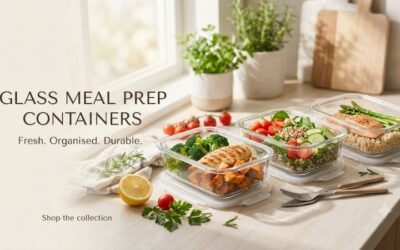
Small glass or food-grade plastic containers with secure lids can be useful for individual portions.
Choose vessels that are easy to open, clean, and transport.
If breakfast is taken to work or school, consider whether the container is leak-resistant and compatible with an insulated lunch bag.
Do not assume that an airtight seal keeps perishable food safe without refrigeration.
A packed breakfast may need ice packs or another suitable cold-storage method.
Prepared food should be refrigerated promptly rather than left on the counter for extended periods.
Convenience must remain consistent with safe temperature control.
Choosing materials for an efficient morning routine
Material influences weight, cleaning, durability, and whether the container is suitable for pantry storage or prepared food. Plastic, glass, and stainless steel each have advantages, but no single material is ideal for every breakfast task. The most effective choice depends on the food, intended user, and whether the container needs to be carried outside the home.
Plastic for lightweight everyday handling
Plastic food containers are often convenient for breakfast ingredients because they are relatively lightweight and less vulnerable to shattering when dropped.
This can make them practical for cereal, dry oatmeal, and other foods stored on pantry shelves.
Transparent plastic also helps users monitor food quantities without opening the container.
However, different plastic materials have different temperature limits.
A dry-food container should not automatically be used for hot oatmeal or microwave reheating.
Check whether the specific product is approved for the intended application.
Some plastics may develop scratches or retain odors after prolonged use.
Choose appropriately designed food-contact products and follow their cleaning instructions.
For households with children, manageable size and secure lids are especially important.
A lightweight container with a simple closure can be more practical than a heavy glass canister.
Glass for prepared breakfasts and refrigerator storage
Glass containers are useful for overnight oats, yogurt parfaits, cut fruit, and other prepared breakfasts.
Their nonporous surfaces generally resist persistent odors and staining.
Transparent walls make it easy to identify the contents.
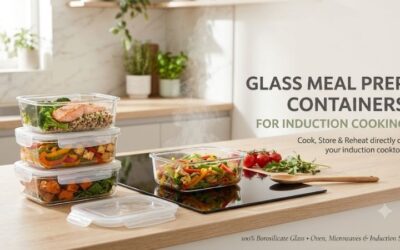
Some glass food-storage containers can also be used for microwave reheating or oven cooking, depending on the exact model.
However, their lids may have different temperature restrictions.
Do not assume a plastic storage lid is oven-safe because the glass base is approved for oven use.
Glass is also heavier than plastic and can break through impact or unsuitable temperature changes.
For people transporting breakfast, consider whether the added weight is acceptable.
A compact, secure glass container may be convenient for an office breakfast.
For young children or demanding travel conditions, another material may be more appropriate.
Stainless steel for portable cold meals
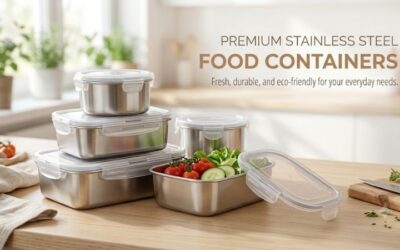
Stainless steel containers offer a durable alternative for packing certain prepared breakfasts.
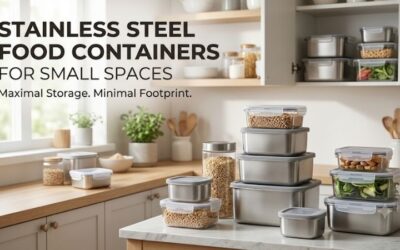
They are useful for foods such as fruit, sandwiches, dry snacks, and cold meals.
Many stainless steel food-storage products are relatively lightweight compared with glass.
They also resist staining and do not depend on a fragile glass body.
However, stainless steel containers are not automatically leakproof.
Some traditional metal lunch boxes have simple fitted lids without gasket seals.
These designs are more appropriate for dry foods than liquid oatmeal or yogurt.
Most ordinary stainless steel food containers should not be placed inside microwave ovens.
Use a separate microwave-approved vessel for reheating unless the specific appliance and container are explicitly designed for a special compatible application.
For portable breakfasts, choose a container based on closure reliability and food consistency.
How to organize containers for fast morning access
An efficient breakfast storage system should reduce unnecessary movement between the pantry, refrigerator, and preparation area. Grouping related ingredients and selecting appropriate container sizes can make daily routines more predictable. The system should remain simple enough for household members to use without repeatedly rearranging shelves or searching for matching lids.
Create a dedicated breakfast zone
A breakfast zone brings frequently used dry ingredients into one accessible location.
Depending on available space, it might include cereal, oatmeal, coffee, tea, and shelf-stable toppings.
Place these items on a shelf near the normal preparation area when practical.
The arrangement should avoid exposure to unnecessary heat, moisture, or direct sunlight.
For example, placing coffee containers directly against a hot toaster or stovetop is not advisable.
A breakfast zone also benefits from a small number of matching containers with clear labels.
However, the system does not need to be visually identical.
Functionality is more important than appearance.
Keep frequently used items near the front and occasional ingredients behind them.
This reduces searching and makes it easier to recognize when supplies require replenishment.
Use container sizes that match daily consumption
A large container is not always the most convenient option for a busy morning.
A heavy cereal container can be awkward to lift, particularly from a high shelf.
Smaller containers may be easier to handle but require more frequent refilling.
Choose a balance between capacity and convenience.
For example, a household eating cereal daily may appreciate a medium-size dispensing container that can be refilled from a larger original package.
Someone using only small quantities of coffee may prefer a compact container rather than an oversized canister.
The goal is to minimize unnecessary handling while maintaining practical ingredient quantities.
Consider both the weight of the food and the container itself.
A storage system should make daily tasks easier for the people who actually use it.
Prepare dry ingredients in advance
Some breakfast ingredients can be portioned ahead of time without requiring refrigeration.
Dry oatmeal, certain shelf-stable granola mixtures, and suitable packaged snacks can be organized into individual containers.
This can simplify weekday breakfast preparation.
However, dry mixtures should be prepared using clean, dry utensils and stored according to ingredient instructions.
Avoid adding perishable ingredients such as milk, yogurt, or cut fresh fruit until the mixture can be refrigerated appropriately.
Preportioned foods should also be labeled when necessary.
For households with allergies, ingredient identification is particularly important.
Preparing several dry portions at once may reduce morning measuring tasks, but the system should remain flexible.
If breakfast preferences change frequently, a large collection of preportioned meals may be unnecessary.
Keep matching lids organized
A food-storage system loses much of its convenience when matching lids are difficult to locate.
Choose containers with compatible lid designs whenever practical.
A coordinated collection may reduce the number of different lid shapes in a kitchen.
However, even products from one manufacturer may have several lid sizes.
Consider using a dedicated drawer divider or vertical lid organizer.
Place lids near the corresponding containers.
Avoid stacking heavy objects on delicate sealing mechanisms.
Before using a container, inspect the lid and gasket for food residue or damage.
A properly organized lid system can make preparation and cleaning more efficient.
For busy mornings, this small improvement often matters as much as the container’s advertised storage capacity.
Food safety for breakfast meal preparation
Airtight containers support convenient storage, but food safety depends on temperature, preparation methods, and storage time. Dry pantry ingredients generally have different requirements from cooked eggs, milk, yogurt, or cut fruit. Morning meal preparation should therefore separate shelf-stable foods from perishable items and maintain appropriate cold storage throughout transport.
Refrigerate perishable breakfasts promptly
Prepared foods containing perishable ingredients should be refrigerated promptly.
Examples include overnight oats made with milk, yogurt parfaits, cooked egg dishes, and cut fruit requiring refrigeration.
Airtight containers help prevent spills and limit exposure to other refrigerator contents.
However, they do not prevent bacterial growth when food is kept at unsafe temperatures.
For typical household food-safety guidance, refrigerators should operate at 40°F or below.
Perishable foods should generally be refrigerated within two hours of preparation, or within one hour when exposed to temperatures above 90°F.
Use shallow containers when cooling hot prepared foods.
Avoid leaving large quantities of food at room temperature until they have completely cooled.
Safe storage should be part of the preparation routine rather than an afterthought.
Understand refrigerator storage limits
Prepared breakfast foods should not be stored indefinitely simply because their containers seal tightly.
Storage life varies according to ingredients and preparation methods.
Many properly refrigerated cooked leftovers are generally recommended for use within three to four days.
However, this guideline does not mean every breakfast mixture has an identical safe storage period.
Some foods have shorter recommended limits.
Follow ingredient-specific food-safety guidance and product instructions.
Label prepared meals with their preparation date.
Organize the refrigerator so older food is used appropriately.
If a meal has been stored beyond its recommended period or handled incorrectly, discard it.
An airtight container can support organization but cannot make unsafe food safe again.
Transport breakfasts at appropriate temperatures
Taking breakfast to work or school can introduce additional food-safety considerations.
Perishable meals need suitable temperature control during transport.
An insulated lunch bag with appropriate cold packs can help maintain chilled conditions.
The amount of cooling needed depends on ambient temperature, travel duration, and the food being transported.
Do not rely on the container’s airtight seal to keep food cold.
For hot meals, use equipment specifically designed and approved for maintaining safe hot-holding temperatures.
A conventional food container does not necessarily provide meaningful insulation.
When reheating cooked leftovers, follow appropriate food-safety guidance, including reheating to 165°F where required.
Use only containers approved for the selected heating appliance.
Stainless steel, plastic, and glass differ in their heating compatibility.
Practical breakfast storage setups
Different households benefit from different combinations of pantry and refrigerator containers. A person preparing breakfast alone may need only a few small vessels, while a family with several breakfast preferences may require a more extensive arrangement. The objective is to create a repeatable workflow that saves time without creating excessive cleaning or food waste.
Setup for a single person with limited kitchen space
A compact breakfast system might include one container for oatmeal, another for cereal, and a smaller vessel for coffee or shelf-stable toppings.
One or two refrigerator-safe containers can support prepared meals.
This configuration is often sufficient for someone who alternates between cereal, overnight oats, and simple breakfasts.
Choose containers that fit into existing cabinets rather than purchasing a large matching set.
Rectangular shapes may make efficient use of narrow shelves.
A wide-mouth container can serve several dry ingredients at different times, provided it is cleaned appropriately between uses.
For prepared breakfast, select containers that are comfortable to transport.
The goal is to keep the system manageable rather than creating a large collection that requires frequent sorting.
Setup for a family with children
Families often benefit from separate containers for frequently used cereals and breakfast toppings.
Lightweight vessels with manageable lids can be convenient when children help prepare their own meals.
However, adults should assess whether a container is suitable for a child’s age and abilities.
Heavy glass jars and tall containers should not be positioned where they could fall.
Choose storage locations that are accessible without unsafe climbing or reaching.
Label ingredients clearly, especially when household members have food allergies.
For school breakfasts and snacks, use appropriate portable containers and temperature control.
Dry snacks may be packed differently from yogurt or other perishable foods.
A family system should prioritize safe handling and easy identification rather than visual uniformity alone.
Setup for preparing several breakfasts ahead
A person who prepares breakfast for several days may use a combination of bulk dry-food containers and individual refrigerator-safe meal-prep vessels.
Dry ingredients remain in the pantry until needed.
Prepared breakfasts are stored in the refrigerator according to their ingredients and safe storage periods.
For example, a medium container can hold oatmeal, while smaller glass containers can hold appropriately refrigerated prepared portions.
This arrangement reduces repeated measuring without requiring every ingredient to be mixed in advance.
Choose individual portions that match realistic consumption.
Avoid preparing more perishable food than can be eaten within safe storage limits.
When planning several days ahead, freezing suitable meals may be preferable to extended refrigeration.
Common mistakes that make mornings harder
Breakfast storage becomes less useful when containers are oversized, difficult to operate, or poorly matched to the food. Some households buy elaborate organization systems without considering daily access, cleaning requirements, or proper refrigeration. Avoiding these problems helps create a simple routine that remains useful after the initial pantry makeover.
Buying too many containers at once
A large storage set may look attractive, but unused containers can occupy valuable shelf space.
Start by identifying the ingredients used most frequently.
Purchase appropriate storage for those foods first.
Evaluate how the arrangement works during normal weekday mornings.
If additional containers would solve a specific problem, expand gradually.
This approach reduces unnecessary spending and makes it easier to select useful capacities.
It also prevents the kitchen from becoming crowded with matching containers that rarely serve a practical purpose.
Choosing lids that are inconvenient to operate
A secure seal is important, but everyday convenience also matters.
A lid that is difficult to remove can slow breakfast preparation.
Some people prefer push-button closures, while others find locking clips easier to understand.
Pour-spout designs may be useful for cereal but inconvenient for flour.
Consider how frequently the container is opened and who will use it.
A system should be easy to operate without compromising the reliability of the closure.
Leaving prepared breakfasts on the counter
Prepared meals containing perishable ingredients should not be left at room temperature for extended periods.
An airtight lid does not provide refrigeration.
Overnight oats containing milk or yogurt should be stored appropriately in the refrigerator.
Transported meals may need cold packs.
Follow safe storage time and temperature guidance.
Convenient meal preparation should never depend on unsafe food handling.
Frequently Asked Questions
Busy mornings create practical questions about preparing ingredients ahead, selecting container sizes, and managing food storage safely. The following answers explain which foods are appropriate for pantry containers, when refrigeration is required, and how to choose a manageable storage system for different household routines.
What size airtight container is best for breakfast cereal?
The appropriate size depends on how much cereal your household normally purchases and consumes.
A tall container around 3 to 4 quarts may be useful for many cereal types, but bulky flakes and family-size packages can require more space.
Check the cereal’s package volume before buying.
Choose a container that is comfortable to lift and has a convenient pouring mechanism.
Can overnight oats be stored in airtight containers?
Yes. Overnight oats can be prepared in appropriate refrigerator-safe containers with secure lids.
When the mixture contains milk, yogurt, or other perishable ingredients, refrigerate it promptly.
Choose individual portions that can be consumed within recommended storage periods.
Do not leave prepared overnight oats at room temperature overnight.
Are glass containers better for meal-prepped breakfasts?
Glass containers are useful for many prepared breakfasts because their nonporous surfaces resist odors and staining.
They may also be compatible with microwave reheating when the manufacturer permits it.
However, glass is heavier and can break.
Plastic or stainless steel may be more convenient for certain portable meals.
Choose based on food type, cleaning needs, transportation, and heating requirements.
How do I organize breakfast ingredients in a small pantry?
Group frequently used ingredients together and place them within comfortable reach.
Use containers that fit the shelf rather than buying the largest available sizes.
Label similar-looking foods.
Keep lids organized and store perishable prepared foods separately in the refrigerator.
A small number of useful containers is often more convenient than an extensive decorative collection.
Can airtight containers keep breakfast fresh all week?
An airtight seal can help protect certain shelf-stable foods from moisture and air exposure.
However, it does not guarantee a particular storage life.
Prepared perishable breakfasts have separate refrigeration requirements and may not remain safe for an entire week.
Follow ingredient-specific guidance and appropriate food-storage periods.
Do not assume that a sealed container prevents spoilage.
Conclusion
Choosing airtight food storage containers for busy mornings starts with identifying the foods your household prepares most often. Use convenient pouring containers for cereal, wide-mouth vessels for dry oatmeal, and smaller containers for coffee or shelf-stable toppings. Keep prepared breakfasts in suitable refrigerator-safe containers and follow proper food-safety practices. A simple, organized collection with reliable lids and appropriate capacities can make daily breakfast preparation easier without requiring an expensive kitchen makeover.

Write Your Review
No reviews yet. Be the first to share your experience!