
Choosing stackable pantry containers for entertaining can make hosting easier by keeping snacks, baking ingredients, and party supplies organized before guests arrive. The right containers help manage bulk ingredients, reduce countertop clutter, and simplify refilling serving bowls. This guide explains how to select sizes, materials, and storage arrangements for gatherings of different sizes.
What makes pantry containers useful for entertaining?
Entertaining creates different storage requirements from ordinary family cooking. A host may need extra quantities of crackers, pretzels, nuts, cookies, cereal, baking supplies, and other dry ingredients while keeping the kitchen accessible for meal preparation. Stackable containers can help organize these supplies before, during, and after an event.
The best approach separates pantry storage from food presentation.
Containers used to store ingredients do not necessarily need to be the same vessels used to serve them to guests.
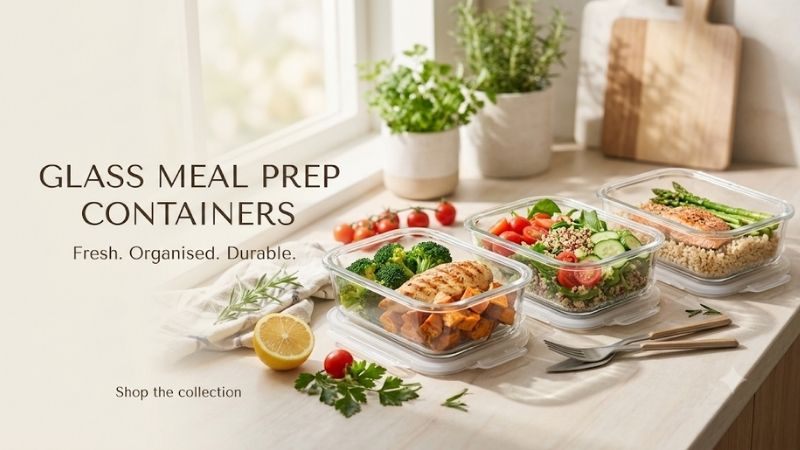
Organized preparation reduces hosting stress
A coordinated pantry storage system helps hosts prepare ingredients before an event without crowding the countertops with partially opened grocery packages. Containers can hold dry ingredients, support advance portioning, and make it easier to identify supplies that need to be replenished.
For example, someone preparing desserts for a birthday gathering may need flour, sugar, chocolate chips, nuts, and decorative toppings.
Keeping these ingredients in labeled containers can make preparation more efficient.
Instead of searching through bags and boxes, the host can locate each ingredient in its assigned area.
The same principle applies to savory snacks.
Pretzels, crackers, popcorn, and other shelf-stable foods can be organized according to the planned menu.
However, the containers should remain appropriately sized.
Transferring a tiny package into an oversized canister may waste storage space.
A good system makes ingredients accessible without requiring unnecessary handling.
Stacking helps manage temporary increases in supplies
Hosting often involves purchasing more food than a household normally keeps in its pantry. This temporary increase can make already crowded shelves difficult to use unless the storage layout can accommodate additional containers.
Stackable containers make use of vertical shelf space.
A coordinated collection can allow multiple dry ingredients to occupy the footprint of one larger container.
This is particularly helpful when storing extra baking supplies or packaged snacks in preparation for a party.
However, stacking must remain stable.
Heavy containers should sit beneath lighter ones.
Lids should be suitable for supporting the intended arrangement.
Do not assume that every container with a flat-looking lid is designed to carry substantial weight.
Plan for accessibility as well.
If an ingredient will be used repeatedly during preparation, keep it near the top or front.
Less frequently used supplies can occupy higher shelves.
Clear containers simplify inventory checks
Transparent pantry containers make it easier to check remaining ingredient quantities without opening every lid. This can be useful before an event because hosts often need to confirm whether they have enough food for guests while avoiding unnecessary duplicate purchases.
Clear containers work particularly well for visually distinctive snacks.
Pretzels, popcorn, crackers, and cereal can be identified quickly.
However, similar-looking baking ingredients should still be labeled.
Flour, powdered sugar, cornstarch, and certain powdered mixes are easy to confuse.
Include ingredient names and relevant allergen information.
If a product has been transferred from its original packaging, retain important preparation and storage instructions.
Clear visibility improves organization, but labels remain essential for safe and accurate food identification.
How to choose stackable pantry containers for entertaining
A practical entertaining collection needs a mixture of capacities rather than several identical containers. Large vessels should accommodate bulk dry foods, medium containers should support frequently served snacks, and smaller containers should hold toppings or ingredients used in modest quantities. The arrangement must also suit the host’s pantry dimensions and normal household storage needs.
Choose large containers for bulk dry ingredients
Large-capacity pantry containers are useful when preparing food for several guests because they can hold substantial quantities of grains, baking ingredients, crackers, and snacks. The right volume depends on the actual product purchased and whether the contents need room for convenient scooping or pouring.
A container around 4–6 quarts can be useful for certain bulk dry ingredients.
However, a container with this capacity will not necessarily hold a full commercial bag of every product.
Bulk density differs considerably between flour, sugar, popcorn, cereal, and pretzels.
Flour and sugar are relatively dense.
Puffed cereal and irregularly shaped snacks occupy more volume relative to their weight.
Before buying, compare the container’s internal volume with the food packages you normally purchase for gatherings.
Leave enough room to remove ingredients comfortably.
For flour and sugar, wide openings help accommodate scoops.
For snacks, a large container should not be so deep that guests or hosts must reach awkwardly inside.
If a container will be used exclusively for preparation and storage, a secure lid may matter more than its presentation.
Use medium containers for snack organization
Medium containers are often the most versatile choice for entertaining because they can hold moderate portions of crackers, pretzels, nuts, and other dry snacks without occupying excessive pantry space. They are also easier to move and refill than oversized canisters.
A collection of medium rectangular containers can create a useful party preparation zone.
For example, a host planning a movie night might separate popcorn kernels, pretzels, snack mixes, and cookies.
These ingredients can be prepared or served as needed.
Medium sizes also help prevent unnecessary exposure of an entire bulk purchase to the surrounding air during repeated opening.
For hosting events, consider how the contents will be dispensed.
Wide-mouth containers are convenient for scooping.
Pour-spout containers may be more useful for certain small snacks or cereals.
Avoid selecting a container with an opening too narrow for the product.
Large crackers can break when forced through small openings.
Add small containers for toppings and ingredients
Small pantry containers are useful for ingredients consumed in limited quantities, including chocolate chips, sprinkles, nuts, dried fruit, seeds, and decorative baking toppings. A coordinated set can keep these supplies separate while making them easy to locate during dessert preparation.
Small containers should have openings appropriate for measuring spoons or small scoops.
For occasional-use ingredients, an airtight lid can help reduce exposure to air and moisture.
However, pantry containers do not eliminate the need to follow ingredient-specific storage requirements.
Some nuts and seeds may retain quality better under refrigeration or freezing.
Certain prepared toppings may also require special storage after opening.
Check the original packaging.
Avoid transferring allergenic ingredients into unlabeled containers.
A coordinated collection of small containers can create an attractive organization system, but its principal purpose should remain accurate identification and convenient access.
Choose the right lid for frequent refilling
A host may open and close pantry containers more frequently than usual while preparing appetizers, desserts, and serving bowls. Lid convenience therefore becomes important, especially when several ingredients must be accessed repeatedly.
Push-button lids can provide quick access.
Snap-on lids may be simple to operate.
Clip-lock designs provide a more deliberate closure.
The appropriate mechanism depends on how the containers will be handled.
For a frequently used snack container, a simple closure may be convenient.
For a large container that remains in storage until needed, a secure locking system may be preferable.
Consider whether the lid can be operated while the container remains on the shelf.
Some containers require removal from a stack before the lid can be opened.
If that becomes inconvenient during party preparation, organize the frequently used containers in a single layer.
Avoid leaving lids off for long periods when the contents need protection from humidity, dust, or insects.
Choose transparent plastic or glass according to use
Transparent plastic and glass containers can both organize dry pantry ingredients, but they differ in weight, durability, appearance, and handling requirements. The best material depends on whether the containers will remain on pantry shelves or be placed near guests during an event.
Plastic containers are generally lighter and less likely to shatter if dropped.
This makes them practical for crowded preparation areas.
Glass containers can provide an attractive presentation and resist many odors and stains.
However, glass adds weight and introduces breakage risks.
For a large gathering, lightweight plastic storage containers may be easier to carry from pantry to countertop.
For a small formal dinner, glass canisters may complement the serving arrangement.
Avoid treating decorative glass jars as automatically suitable for all foods.
Confirm food-contact suitability and lid performance.
For households with children, consider placing heavy glass containers away from table edges.
Check the stackable footprint before buying
A container can be advertised as stackable while still being poorly suited to a particular pantry. Tall containers may exceed shelf clearance, and large rectangular footprints may prevent other ingredients from fitting alongside them.
Measure shelf width, depth, and height.
Consider the full external dimensions with lids attached.
If several containers will be stacked, calculate the combined height.
Do not forget the space required to lift a container from the stack.
For entertaining, access is particularly important because preparation may involve retrieving many ingredients in a short period.
Organize frequently used containers at comfortable heights.
Place heavy bulk supplies on lower shelves.
Use shallow trays or bins for small containers if they tend to become scattered.
A successful arrangement should be easy to maintain after the event, not just visually impressive before guests arrive.
Avoid paying for unnecessary matching pieces
Large container bundles can appear economical because the average cost per piece is low. However, a set that includes many unused capacities may create more clutter than it removes.
List the foods you regularly store.
Then identify the additional ingredients purchased for entertaining.
Compare those needs with the actual container assortment.
A household that hosts occasionally may need only two or three extra containers.
Someone who frequently prepares large gatherings may benefit from a larger coordinated collection.
Do not assume that matching every container is essential.
A practical combination of existing storage boxes and a few new stackable canisters may be sufficient.
Storage setups for different entertaining styles
The ideal container arrangement changes according to the type of gathering. A family game night may require only several snack containers, while a holiday dinner can involve extensive baking supplies and advance food preparation. Choosing a flexible system allows the same containers to serve ordinary household needs between events.
Casual movie nights and game nights
Casual gatherings often revolve around snacks rather than elaborate meal preparation. A small selection of medium containers can organize pretzels, popcorn, crackers, and other shelf-stable foods while keeping extra supplies ready for refilling bowls.
Use one or two large containers for bulk ingredients.
Add medium containers for snacks that need to remain separate.
Small containers can hold dry toppings or seasonings.
Keep the pantry containers separate from the serving bowls when practical.
This prevents guests from repeatedly reaching into bulk storage.
Provide serving utensils to reduce direct hand contact.
If snacks remain exposed during the gathering, avoid returning potentially contaminated leftovers to the original storage container.
The goal is to keep unused supplies protected while providing convenient guest portions.
Holiday baking and dessert preparation
Holiday baking can require numerous dry ingredients, including flour, sugars, chocolate chips, nuts, cocoa powder, and decorative toppings. Stackable containers can make these ingredients easier to identify and measure while reducing clutter from multiple open packages.
Organize ingredients by recipe function.
Keep frequently used baking staples in larger containers.
Store smaller quantities of toppings separately.
Use clear labels, especially for powders that look similar.
Retain allergen information from original packaging.
For ingredients such as brown sugar, select a storage method appropriate for maintaining the desired texture.
Do not assume every airtight container prevents all texture changes.
After baking, clean and dry any containers that have been contaminated by utensils or food residue.
A well-organized baking shelf can remain useful throughout the year.
Birthday parties and family celebrations
Birthday parties may involve a mixture of snack foods, dessert toppings, baking supplies, and prepared serving components. A flexible container system should help organize these items while making it easy to identify foods suitable for guests with different dietary needs.
Group ingredients according to the party menu.
Separate foods containing common allergens such as peanuts, tree nuts, wheat, or milk when relevant.
Label containers accurately.
Use dedicated serving utensils for different foods.
Do not rely on a container’s appearance to indicate whether the contents are allergen-free.
For children, choose stable containers that are not easily tipped over.
Avoid placing large heavy jars near table edges.
If the event includes perishable foods, use appropriate refrigeration or temperature control.
Dry storage containers should not be treated as substitutes for refrigerated serving equipment.
Buffet-style entertaining
Buffets require both efficient food preparation and convenient replenishment of serving dishes. Pantry containers can support the preparation stage by holding dry ingredients, but they should not automatically be used as direct serving vessels for every food.
Prepare measured quantities before the event.
Keep unused dry ingredients covered.
Refill serving bowls using clean utensils.
Avoid repeatedly pouring unused food from a guest-accessible serving bowl back into the bulk storage container.
For foods requiring refrigeration or hot holding, follow appropriate food safety practices.
A container that is airtight at room temperature does not make perishable food safe to leave unrefrigerated.
For entertaining, the storage system should work alongside suitable serving dishes and temperature-controlled equipment.
Food safety and freshness considerations
Pantry organization can help maintain ingredient quality, but container design does not replace safe food handling. Dry shelf-stable ingredients, refrigerated foods, and prepared dishes require different storage practices. Hosts should distinguish between ordinary pantry containers and equipment designed for safe transportation, refrigeration, or serving.
Store dry foods under appropriate conditions
Shelf-stable dry foods generally benefit from cool, dry storage away from excessive heat and moisture. Airtight containers can help limit exposure to ambient humidity, but they cannot make food safe after contamination or restore products that have already deteriorated.
Transfer only clean, dry ingredients.
Avoid placing wet utensils into dry-food containers.
Close lids promptly after use.
Inspect ingredients for insects, mold, unusual odors, or other signs of deterioration.
Follow original package instructions.
Certain products may require refrigeration after opening.
Do not assume that all products sold on ordinary grocery shelves remain suitable for indefinite room-temperature storage once opened.
Prevent allergen cross-contact
Entertaining often involves guests with different food allergies or dietary restrictions. A coordinated container collection can help keep ingredients organized, but it does not eliminate the risk of cross-contact during food preparation or serving.
Label foods containing common allergens.
Use clean utensils.
Do not move the same scoop between allergenic and non-allergenic ingredients without appropriate cleaning.
Wash containers thoroughly before changing their contents.
A container previously used for nuts may require careful cleaning before being used for another ingredient.
For guests with serious allergies, discuss food requirements directly and avoid making unsupported guarantees.
Organization helps, but accurate ingredient handling is essential.
Separate pantry storage from leftovers
Airtight pantry containers are designed primarily for dry foods and may not be appropriate for storing cooked meals or refrigerated leftovers. Prepared foods have different requirements for temperature control, cleaning, and leak resistance.
Use containers intended for refrigerated food storage.
Refrigerate perishable foods promptly.
Maintain a refrigerator temperature of 40°F or below.
Follow applicable guidance for cooling large quantities of cooked food.
Do not place hot perishable foods in a crowded pantry simply because they are in sealed containers.
After entertaining, dispose of food that has been held under unsafe conditions rather than assuming an airtight lid will preserve it.
Keeping the pantry organized after a gathering
One of the main advantages of stackable pantry containers is that they can remain useful after an event ends. However, the system should be adapted to normal household needs rather than preserving a party-specific arrangement that occupies valuable storage space.
Consolidate compatible ingredients carefully
After entertaining, a household may have several partially filled containers holding similar foods. Consolidating compatible ingredients can free storage space, but different batches should not automatically be mixed without considering freshness, allergens, and storage history.
Check remaining quantities.
Verify that the ingredients are identical.
Consider expiration and opening dates.
Avoid combining food that has been exposed to guests with protected bulk supplies.
Clean and dry empty containers before nesting them.
If a product has been open for an extended period, assess it according to appropriate food safety and quality guidance.
Store extra containers without wasting space
Additional pantry containers purchased for occasional entertaining can become clutter when they are not used regularly. Choose collections that nest when empty or can be repurposed for normal household ingredients.
Keep compatible lids together.
Avoid stacking containers in unstable arrangements.
Store unused containers in a clean, dry cabinet.
Check that lids and silicone seals are dry before closing them.
If a container repeatedly remains unused, reconsider whether it belongs in the active kitchen collection.
A flexible storage system should support both ordinary meals and special occasions.
Frequently asked questions
Entertaining-oriented pantry storage raises questions about bulk quantities, freshness, serving safety, and choosing between specialized containers and general-purpose storage boxes. These answers focus on practical purchases that remain useful beyond a single gathering.
What size pantry containers are best for parties?
A combination of large, medium, and small containers generally offers the most flexibility. Larger canisters can hold bulk snacks or baking supplies, while medium containers suit crackers, pretzels, and other frequently served items.
Small containers are useful for toppings and modest ingredient quantities.
Choose exact capacities based on package volume and available shelf space.
Are airtight containers necessary for party snacks?
Airtight containers are useful for dry snacks that may become stale when exposed to air and moisture. However, the contents still need appropriate storage conditions and should be consumed within suitable timeframes.
For snacks served immediately, a clean serving bowl may be more convenient.
Keep unused supplies protected in their storage containers.
Can pantry containers be used directly on a buffet table?
Some containers may be suitable for presenting dry snacks, provided they are clean, food-safe, stable, and easy for guests to access. Others are designed primarily for storage and may be inconvenient for serving.
Use appropriate utensils.
Avoid returning guest-exposed food to protected bulk supplies.
Do not use pantry containers for perishable foods without appropriate temperature control.
Are glass pantry containers better for entertaining?
Glass containers can create an attractive presentation and resist many odors and stains, but they are heavier and can break. Plastic containers are often easier to transport and less likely to shatter.
Choose based on serving location, guest needs, and handling requirements.
Neither material is automatically superior for every event.
Should I buy a large matching set for entertaining?
A large matching set can be useful for frequent hosts, but occasional entertainers may be better served by purchasing a few compatible containers that fit their existing pantry.
Prioritize practical capacities and reliable lids.
Avoid buying unnecessary pieces solely for visual consistency.
Conclusion
The best stackable pantry containers for entertaining make preparation more organized while keeping dry ingredients accessible before and after guests arrive. Choose larger containers for bulk supplies, medium sizes for snacks, and smaller vessels for toppings or baking ingredients. Prioritize secure lids, clear labels, stable stacking, and dimensions suited to your pantry. Keep dry-food storage separate from perishable-food handling, and select a flexible system that remains useful during everyday cooking rather than only for special events.
Write Your Review
No reviews yet. Be the first to share your experience!