
Quick answer: Our top pick in 2026 is the Half-Gallon (64 oz) Glass Mason Jars — our #1 rated choice. See the full ranked comparison, alternatives and buying advice below.
The Short Answer
Yes, you do need airtight canisters for baking pantry storage if you keep flour, sugar, or brown sugar in your home for more than a few weeks. The single determining condition comes down to moisture and pest exposure: if your kitchen experiences ambient humidity changes or if you store baking staples in permeable paper sacks, airtight containers are essential to prevent spoiled ingredients, rock-hard brown sugar, and pantry moth infestations. If you are a casual baker who buys tiny two-pound bags and uses them up within a week, you can manage without them, but for the average household, proper sealable storage is non-negotiable.
What You Actually Get
When you invest in dedicated baking storage canisters, you are buying a sealed ecosystem for dry ingredients. Standard store-bought paper packaging for flour and sugar is porous, prone to tearing, and completely unsealed at the folded top edges. Airtight canisters solve this through specific physical mechanisms and food-safe materials.
As an Amazon Associate we earn from qualifying purchases at no extra cost to you.

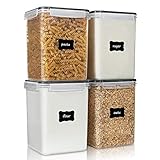
Most modern canister sets rely on high-grade, BPA-free polypropylene plastic or heavy borosilicate glass. The critical feature is the sealing mechanism—typically a flexible silicone gasket embedded into the rim of the lid, secured by double- or quadruple-hinged side locking latches. This creates an impermeable barrier against air exchange, liquid, and microscopic moisture vapor.
Size efficiency is a key technical consideration for bakers. A standard five-pound (2.26 kg) bag of all-purpose flour occupies roughly 4.2 to 4.5 liters of volumetric space because flour is aerated during manufacturing. To comfortably pour a full five-pound bag without overflowing or sifting over the rim, you need a container with at least a 4.4-liter to 5.2-liter capacity (measuring approximately 7.5 x 6.0 x 11.0 inches). Specialty sets designed for bakers often combine these large-capacity tubs with smaller 1.6-liter or 2.0-liter containers for baking powder, baking soda, chocolate chips, and yeast.
In 2026, standard market pricing for quality airtight canister systems ranges between $25.00 and $45.00 depending on piece count. For example, a targeted 4-piece set of 5.2-liter containers designed specifically for bulk flour and sugar costs around $28.99, while a comprehensive 10-piece multi-size system engineered for complete pantry overhauls runs closer to $38.99. These systems frequently include modular, stackable flat-top lids, liquid-chalk labels, and calibrated measuring cups to streamline prep work.
Pros
- Complete Moisture Control: Sugar and brown sugar are highly hygroscopic, meaning they pull moisture directly from the air. Airtight silicone seals keep brown sugar moist and pliable while keeping white granulated sugar dry and free of hard, crystallized clumps.
- Definite Pest Barrier: Pantry pests like Indian meal moths, grain weevils, and ants can easily chew through thin paper bags and cardboard. Rigid plastic and glass canisters with rubber gaskets stop infestations before they start.
- Extended Shelf-Life for Whole Grains: Whole wheat, almond, and oat flours contain natural oils that oxidize and go rancid quickly when exposed to fresh air oxygen. Hermetically sealing these specialty flours slows down oxidation significantly.
- Clear Inventory Visibility: Transparent clear plastic or glass sides allow you to instantly audit your baking inventory at a glance, preventing mid-recipe realizations that you are out of powdered sugar or cake flour.
- Modular Pantry Organization: Standardized square and rectangular shapes maximize vertical cabinet depth (standard 12-inch shelves), eliminating the clutter of half-open, floppy paper sacks held together with binder clips.
Cons
- Upfront Cabinet Footprint: Large 5.2-liter containers carry fixed dimensions. If your pantry shelves have less than 11.5 inches of vertical clearance, tall flour canisters will not fit upright.
- Gasket Maintenance: The silicone rubber rings inside the lids require periodic removal and manual hand-washing. Flour dust and fine sugar crystals can build up inside the gasket groove, compromising the airtight seal over time if neglected.
- Initial Capital Outlay: Outfitting an entire baking pantry requires spending $30 to $50 upfront on container sets rather than relying on the free paper packaging your ingredients come in.
- Potential Surface Scratching: Clear plastic containers, while shatterproof, can develop micro-scratches over time from abrasive cleaning sponges or coarse ingredient scraping.
Who Should Buy It
You should purchase airtight canisters if you store five-pound or larger bags of flour and sugar, live in a region with high seasonal humidity, or have previously dealt with pantry pests. They are a must-have for home bakers who buy specialty flours (such as bread flour, rye, or almond meal) in bulk and need them to stay fresh across several months. Anyone looking to eliminate pantry clutter and optimize standard cabinet space will also see an immediate improvement in organization and cleanliness.
Who Should Skip It
You can skip dedicated airtight canisters if you bake rarely and only purchase small, single-use bags of flour that stay in your kitchen for less than two weeks. Minimalist renters with extremely limited vertical shelf height (under 10 inches) or those who prefer to store all raw flours directly inside their freezer (which naturally deters pests and stops oxidation without needing plastic canisters) can easily bypass buying a full canister system.
Cheaper Alternatives
If you need functional airtight storage without buying dedicated kitchen container sets, several low-cost alternatives deliver strong performance at a fraction of the price:
| Option | Cost Range | Trade-off |
|---|---|---|
| Half-Gallon (64 oz) Glass Mason Jars | $12.00 – $16.00 (Pack of 6) | Round shape wastes cabinet corner space; narrow mouth makes scooping with 1-cup measuring tools difficult; heavy and breakable. |
| Heavy-Duty Gallon Zipper Freezer Bags | $5.00 – $8.00 (Box of 30) | Lacks structural stability; prone to tipping over; zip seals can fail if flour dust gets caught in the plastic tracks. |
| Commercial Food Service Deli Tubs (32 oz) | $10.00 – $14.00 (Pack of 12) | Not large enough to hold a full 5 lb flour bag in a single tub; lighter plastic degrades faster under repeated washing. |
| Original Paper Sacks with Bag Clips | $0.00 (Uses existing clips) | Provides zero protection against ambient humidity, air exchange, or chewing pantry pests; messy flour dust leaks onto shelves. |
FAQ
How big of a container do I need for a 5 lb bag of flour?
A standard 5 lb bag of all-purpose flour requires a container with a capacity of at least 4.4 liters (approx. 150 fluid ounces), though a 5.2-liter container (approx. 175 fluid ounces) is ideal. The extra room ensures you can empty the full bag completely without settling the powder first or causing mess over the top rim.
Does flour actually stay fresh longer in airtight containers?
Yes. All-purpose flour sealed in an airtight container at room temperature maintains peak baking performance for 10 to 12 months, compared to 6 months in an open paper bag. Whole grain flours, which contain higher natural fat contents, can last up to 6 months in sealed containers versus only 1 to 2 months in opened original packaging.
Can I leave baking ingredients in their original packaging inside the canister?
Yes, this practice is known as “nesting.” Dropping the entire paper bag directly into a clean, airtight canister keeps your container interior clean while still providing full protection from humidity and bugs. Just ensure the container dimensions are wide enough to accommodate the square paper bag shape.
Are plastic airtight canisters safe for dry food storage?
As long as the plastic is explicitly labeled food-grade and BPA-free (typically made from high-density polyethylene or polypropylene), it is completely safe for long-term dry ingredient storage. These plastics do not leach chemicals into dry goods like flour, sugar, or oats.
Ready to decide? Our #1 pick for 2026 is the Half-Gallon (64 oz) Glass Mason Jars.
Live price & availability on Amazon.

Write Your Review
No reviews yet. Be the first to share your experience!