
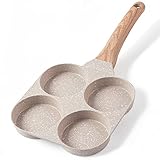
- Top Pick: HUPECHAM 4-Cup Egg Pan Nonstick, and Granite Egg Frying Pan, Versatile Breakfast Skillet for Eggs, Pancakes, Plett, Crepes, Compatible with Gas Stove and Induction Cooktop
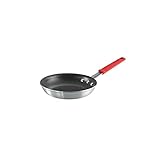
- Best Value: CAROTE Nonstick Frying Pan, 8 Inch Classic Granite Skillet
- Premium Choice: HUPECHAM Egg Pan With Lid 4-Cup Nonstick, and Healthy Granite Egg Frying Pan, Versatile Breakfast Skillet for Eggs, Pancakes, Plett, Crepes, Compatible with Gas Stove and Induction Cooktop
Eggs are the ultimate test of a nonstick pan. Nothing exposes a worn coating, a hot spot, or a badly balanced handle faster than a delicate omelet or a runny fried egg that refuses to slide free. The right pan turns breakfast into a ten-second job; the wrong one leaves you scraping cooked-on white off the surface and reaching for extra butter you did not want.
Choosing well means looking past the marketing and weighing four things: coating type, pan size and shape, heat behavior, and long-term durability. This guide breaks each down and points to specific pans, from the budget-friendly CAROTE Nonstick Frying Pan to the professional-grade All-Clad D3 Pro Egg Pan, so you can match the tool to how you actually cook.
As an Amazon Associate we earn from qualifying purchases at no extra cost to you.




⚡ Save on Your Next PC — Amazon Prime
Prime members get fast free shipping on the systems above, plus early access to Prime Day & Black Friday PC deals. New members get a 30-day free trial.
Watch: How to Choose the Perfect Nonstick Pan for Eggs — Video Review
Coating: Granite, PTFE, or Ceramic
Most affordable egg pans use a reinforced PTFE (Teflon-family) coating, often marketed as “granite” or “stone” for its speckled look and slightly tougher surface. Pans like the HUPECHAM 4-Cup Egg Pan and the CAROTE 8-Inch Granite Skillet fall here: excellent food release, low price, and easy cleanup, but a finite lifespan of one to three years with daily use. Ceramic coatings are PTFE-free and handle higher heat, though they tend to lose their slickness faster. If you want the longest-lasting nonstick performance, a professional PTFE pan like the All-Clad D3 Pro with a bonded stainless body sits at the premium end.
Size and Shape
For one or two eggs, an 8-inch skillet is the sweet spot; it concentrates heat and gives the egg somewhere to firm up without spreading thin. The Tramontina Professional 8-Inch and Kordisen 8-Inch Omelet Pan are sized exactly for this. If you cook eggs for a family or like uniform fried eggs, a divided four-cup design such as the MyLifeUNIT Egg Frying Pan keeps each egg contained and perfectly round. Sloped, low sides make sliding an omelet onto the plate far easier than tall straight walls.
How the Pan Handles Heat
- Eggs cook best at low to medium heat. A pan with an aluminum core or thick base spreads heat evenly and prevents the rubbery, browned edges you get from hot spots.
- Thin, cheap pans heat fast but unevenly, so one side of the egg sets before the other. A little extra weight usually signals a thicker, more even base.
- Check the maximum rated temperature. Most granite coatings top out around 400°F; exceeding it shortens the coating’s life dramatically.
Durability and Care
Nonstick coatings fail when abused. Use silicone or wooden utensils, never metal, and hand wash even “dishwasher-safe” pans to preserve the surface. Avoid aerosol cooking sprays; their propellants leave a sticky film that ruins nonstick performance over time. A pan with a riveted or welded stay-cool handle, like those on the CAROTE 4-Cup Granite Egg Pan, will outlast one with a glued or wobbly grip. Expect to replace a budget granite pan every couple of years and a premium bonded pan far less often.
Tips
- Preheat the pan for 30 to 60 seconds on medium before adding fat; a cold pan makes eggs stick even on a good coating.
- Add a small pat of butter or a teaspoon of oil even in a nonstick pan for flavor and an extra release margin.
- Let the pan cool before washing; plunging a hot pan into cold water warps the base and degrades the coating.
- Store with a paper towel or pan protector between stacked pans to prevent scratches.
Frequently Asked Questions
What size pan is best just for eggs?
An 8-inch skillet suits one or two eggs and single-serving omelets. Step up to a four-cup divided pan if you regularly cook multiple fried eggs at once and want them uniform.
Is granite coating better than regular nonstick?
Granite is a reinforced PTFE coating that resists scratches a bit better and looks nicer, but it is still nonstick at heart and has a similar lifespan. The real durability difference comes from the base thickness and build quality.
How long should a nonstick egg pan last?
A budget granite pan typically performs well for one to three years of daily use. Premium bonded pans like the All-Clad D3 Pro can last far longer if you avoid metal utensils and high heat.
Can I use metal utensils on these pans?
Avoid them. Metal spatulas scratch the coating and create spots where eggs start to stick. Silicone, nylon, or wood utensils protect the surface and extend the pan’s life.
Conclusion
The perfect egg pan comes down to matching coating and size to your routine. A budget granite skillet like the CAROTE or HUPECHAM handles daily breakfasts beautifully at a low price, while an All-Clad D3 Pro rewards cooks who want one pan to last for years. Whatever you choose, cook on low heat, skip the metal utensils, and hand wash, and your eggs will slide free every morning.

Write Your Review
No reviews yet. Be the first to share your experience!