
An electric tea kettle can simplify daily brewing, but the best choice depends on more than how quickly it boils water. Temperature settings, pouring control, capacity, and cleaning access all affect the experience. This guide compares seven practical models for tea drinkers, home baristas, and busy households, helping you identify the features worth paying for.
Best electric tea kettle models for everyday tea brewing
Everyday kettles should make hot water preparation predictable without creating unnecessary work. The most versatile models provide comfortable handles, enough capacity for regular servings, and controls that match different beverages. These options are especially suitable for households preparing several kinds of tea throughout the week.
Cuisinart CPK-17 PerfecTemp – Best overall for tea drinkers
The Cuisinart CPK-17 PerfecTemp is a strong choice for households that regularly prepare green, white, oolong, black, and herbal teas. Its 1.7-liter stainless steel design combines multiple temperature presets with a practical keep-warm function, making it more flexible than basic kettles that only bring water to a boil.
The primary advantage is its six preset temperatures. Each setting corresponds to a common brewing category, allowing users to choose a temperature without manually checking hot water with a thermometer.
This matters because delicate green tea may taste harsh when prepared with water that is too hot, while many black teas benefit from higher temperatures. The ability to repeat the same setting helps make daily brewing more consistent.
The kettle operates with 1,500 watts and includes a 30-minute keep-warm function. This is convenient when preparing breakfast beverages for several family members who do not always drink at the same time.
Its cordless serving arrangement and 360-degree swivel connector make lifting and replacing the kettle straightforward. A visible water-level window also helps prevent unnecessary heating.
However, the stainless steel exterior can become hot. Users should rely on the designated handle and avoid touching the metal body during operation.
At 1.7 liters, it has enough capacity for several ordinary cups but occupies more counter space than smaller gooseneck models.
Its controls also introduce more complexity than a basic one-button kettle, although most users should become familiar with them quickly.
Advantages: Six temperature presets, generous capacity, keep-warm function, removable scale filter, and automatic shutoff.
Limitations: Larger footprint, hot exterior surfaces, and no continuously adjustable temperature dial.
Best for: Tea enthusiasts who prepare several varieties and want dependable everyday temperature control.
Breville Smart Kettle Luxe – Best premium family option
The Breville Smart Kettle Luxe targets buyers who want a premium electric kettle with comfortable handling and convenient temperature programming. Its 1.7-liter capacity, five temperature settings, and soft-opening lid make it particularly suitable for households that regularly prepare different beverages.
One of the strongest features is its soft-opening lid. Opening a kettle immediately after boiling can release a concentrated burst of steam, especially when the lid moves abruptly.
Breville’s controlled lid mechanism is intended to make this process gentler. This is a meaningful design consideration for households where the kettle is used repeatedly throughout the day.
The temperature presets cover common tea categories and French press coffee, providing a straightforward alternative to continuously adjustable controls.
A 20-minute keep-warm function allows users to prepare a second drink without immediately starting another complete heating cycle.
The kettle also includes visible water windows on both sides. This makes checking the fill level convenient for users approaching from different angles.
Its stainless steel construction and refined styling may appeal to buyers who want kitchen appliances with a coordinated appearance.
However, the premium price is difficult to justify if the household mainly boils water for basic black tea.
The kettle also weighs more than many minimalist alternatives, which becomes noticeable when the container is full.
Buyers should consider whether the lid design, temperature presets, and appearance justify the additional expense.
Advantages: Soft-opening lid, five presets, 20-minute keep-warm function, large capacity, and comfortable controls.
Limitations: Premium pricing, relatively substantial weight, and no fine-grained temperature adjustments.
Best for: Families seeking a polished, convenient electric kettle for several beverage preferences.
Hamilton Beach 40880 – Best for straightforward boiling
The Hamilton Beach 40880 offers a simple electric boiling solution for buyers who do not need specialized temperature controls. Its approximately 1.7-liter capacity, removable serving kettle, and basic heating operation make it suitable for busy kitchens where convenience matters more than advanced programming.
This model focuses on one primary task: heating water to boiling temperature.
That simplicity can be valuable for households preparing black tea, instant coffee, oatmeal, and other hot beverages or foods that require boiling water.
Instead of selecting from multiple temperature presets, users operate a straightforward heating switch.
The kettle includes automatic shutoff and boil-dry protection, although these features do not replace safe use or adequate filling.
A larger capacity reduces the need to heat several separate batches during breakfast.
The removable kettle can be carried from its electrical base to the serving area, making it easier to fill multiple mugs.
However, users who regularly prepare delicate teas may find the lack of temperature control inconvenient.
Green tea, for example, often benefits from water below boiling. Without adjustable settings, the user must allow the water to cool or measure it separately.
The kettle is also less suitable for highly controlled pour-over coffee brewing because it uses a conventional pouring spout rather than a narrow gooseneck.
For buyers who simply need reliable boiling without a complicated interface, those limitations may not matter.
Advantages: Straightforward controls, useful capacity, automatic shutoff, and practical everyday operation.
Limitations: No temperature presets, limited precision for specialty brewing, and fewer advanced features.
Best for: Budget-conscious households that mainly need boiling water for everyday drinks.
Best electric tea kettle choices for controlled pouring
Specialty brewing often requires more control than an ordinary kettle provides. Gooseneck spouts allow users to direct water carefully into small teapots, matcha bowls, and coffee drippers. Temperature adjustment can also improve consistency, particularly when preparing teas that respond poorly to water that is too hot.
COSORI Electric Gooseneck Kettle – Best value for precise pouring
The COSORI Electric Gooseneck Kettle combines controlled water delivery with five preset temperature settings. Its approximately 0.8-liter capacity makes it better suited to individual brewing sessions than large family batches, but it offers useful functionality for people preparing tea and pour-over coffee.
The narrow gooseneck spout allows water to flow gradually into the brewing vessel.
This helps when using a small teapot or pouring water over coffee grounds, where controlling the direction and rate of flow can improve consistency.
The temperature presets are designed for common beverage categories, including white tea, green tea, oolong, and coffee.
For example, the green tea setting provides a more convenient starting point than boiling water and estimating the cooling period.
The hold-temperature function can help when preparing several short tea infusions in succession.
This is particularly useful for oolong drinkers who brew the same leaves repeatedly.
However, the limited capacity means the kettle may need refilling when several people want large drinks.
The narrow spout also delivers water more slowly than a conventional kettle, which can be frustrating when filling a large pitcher.
Another consideration is temperature accuracy. A preset indicates the intended target, but actual results may vary with the appliance and conditions.
Users who require tightly controlled brewing should verify their preferred temperature occasionally with a suitable thermometer.
Advantages: Gooseneck pouring, five temperature presets, hold-temperature function, and compact capacity.
Limitations: Small volume, slower pouring, and less temperature flexibility than fully adjustable models.
Best for: Home baristas and tea enthusiasts seeking precision without premium pricing.
Fellow Stagg EKG Pro – Best for advanced home baristas
The Fellow Stagg EKG Pro is designed for users who want detailed control over brewing water and appreciate a refined countertop appliance. Its approximately 0.9-liter capacity, precision gooseneck spout, and adjustable temperature system make it especially suitable for carefully prepared tea and specialty coffee.
The main benefit is the ability to select a target temperature rather than relying on a small number of fixed presets.
This flexibility becomes useful when experimenting with delicate teas or brewing recipes that call for specific temperatures.
The spout is designed to deliver a slow, controlled stream of water. That characteristic is valuable for pour-over coffee and small brewing vessels where an uncontrolled pour can be inconvenient.
The kettle’s interface also provides functionality beyond simple boiling, including options aimed at repeatable brewing routines.
However, buyers should distinguish between meaningful features and unnecessary complexity.
Someone preparing a single cup of black tea every morning may gain little practical benefit from advanced programming.
The smaller capacity can also be limiting when preparing beverages for several people.
Its controlled flow is excellent for precision brewing but less convenient when quickly filling large mugs or pitchers.
The premium price should therefore be evaluated against frequency of use.
For dedicated coffee and tea enthusiasts, precise temperature selection and pouring control can justify the investment.
For occasional users, a simpler adjustable-temperature kettle may offer better value.
Advantages: Precise temperature adjustment, excellent pouring control, premium design, and advanced brewing features.
Limitations: High price, limited capacity, and slower pouring for large servings.
Best for: Enthusiasts who regularly experiment with specialty tea and pour-over coffee.
KitchenAid KEK1222 – Best compact kettle for small kitchens
The KitchenAid KEK1222 is a compact electric kettle with an approximately 1.25-liter capacity and a traditional rounded shape. It offers a middle ground between small gooseneck models and larger household kettles, making it useful for couples, apartments, and kitchens with limited counter space.
Its principal advantage is straightforward operation combined with a relatively modest footprint.
Users who prepare one or two mugs do not necessarily need a large 1.7-liter kettle occupying the counter throughout the day.
The KitchenAid design offers enough capacity for several ordinary servings while remaining manageable when filled.
Its removable lid makes filling and interior inspection convenient, which is useful when cleaning mineral deposits.
The kettle uses basic boiling controls rather than specialized temperature programming.
This makes the appliance suitable for users who value simplicity but less appropriate for tea enthusiasts who regularly prepare delicate green teas.
Because the kettle heats water rather than brewing tea directly, users can pair it with a separate infuser or teapot.
Its classic appearance may also appeal to people who want a small appliance that coordinates with other kitchen equipment.
However, visual styling should not outweigh practical considerations such as handle comfort, weight, and spout behavior.
Buyers should confirm the kettle’s dimensions before selecting it for a particularly narrow shelf or crowded counter.
The exterior can become hot during operation, requiring normal precautions around children and pets.
Advantages: Compact design, useful everyday capacity, straightforward operation, and removable lid.
Limitations: No temperature presets, conventional pouring control, and smaller capacity than family-sized models.
Best for: Apartments and small households that prioritize compact equipment and simple boiling.
Best electric tea kettle with additional brewing convenience
Some users want more than hot water. A kettle with an integrated tea basket can support convenient leaf brewing, while larger glass models make water levels easy to see. These designs can simplify certain routines, but they also introduce cleaning requirements and trade-offs that deserve consideration before buying.
Chefman 1.8-Liter Electric Kettle with Tea Infuser – Best for multipurpose brewing
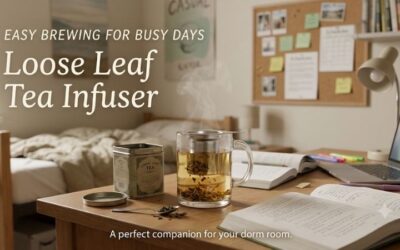
The Chefman 1.8-Liter Electric Kettle with Tea Infuser combines a glass electric kettle with a removable infuser in select configurations. This makes it appealing to people who want one appliance for heating water and preparing loose-leaf tea, rather than keeping a separate kettle and teapot on the counter.
The integrated infuser provides a designated place for loose tea leaves when preparing a batch.
This can be convenient for households that frequently serve the same tea to several people.
The glass body allows users to observe the liquid and monitor visible changes during brewing.
However, the ability to brew directly inside the kettle does not automatically make the process more precise.
Tea extraction still depends on leaf quantity, water temperature, and steeping duration.
Leaving the infuser inside after brewing may allow the tea to continue extracting, producing excessive bitterness in some varieties.
For this reason, users should remove the basket at the appropriate time.
Cleaning is another important consideration. The kettle may accumulate both mineral deposits from water heating and tea residue from direct brewing.
If the household frequently switches between herbal tea, green tea, and plain hot water, the interior should be rinsed carefully to prevent lingering flavors.
The 1.8-liter capacity makes the appliance useful for larger servings, although buyers should verify the usable volume when the infuser is installed.
Advantages: Integrated infuser, generous capacity, visible glass body, and convenient batch preparation.
Limitations: Additional cleaning, risk of oversteeping, and more components than a simple water kettle.
Best for: Households that regularly prepare loose-leaf tea in larger batches.
Compare kettle capacity with actual serving requirements
Capacity is one of the most important specifications when selecting an electric kettle. Smaller models provide easier handling and may suit precise single-cup brewing, while larger designs reduce the need for repeated heating. Buyers should calculate their typical water requirements rather than automatically selecting the largest available appliance.
A 0.8-liter kettle holds approximately 27 fluid ounces at its rated capacity.
That is suitable for one large mug or several smaller tea servings, depending on the brewing method.
A 1.7-liter kettle holds approximately 57 fluid ounces, which is more practical for multiple users.
However, the maximum capacity is a limit, not a recommendation to fill the kettle completely every time.
Heating only the water needed can reduce unnecessary energy use.
Minimum fill requirements also matter. Some kettles require a certain amount of water to protect the heating system.
Buyers should check both minimum and maximum markings before purchasing.
A family preparing several large mugs may prefer a full-size conventional kettle.
An individual brewing small portions of oolong or pour-over coffee may find a compact gooseneck model easier to handle.
Capacity should support the actual routine rather than simply appearing impressive on a specification sheet.
Understand temperature control and brewing accuracy
Temperature control is useful because different teas respond differently to heat. Nevertheless, preset labels do not guarantee that every tea in a category requires the same temperature. Buyers should understand the distinction between fixed settings, fully adjustable controls, and the temperature that actually reaches the brewing vessel.
Green tea may be prepared around 160–185°F, depending on its variety and the desired flavor profile.
Many black teas perform well with hotter water, commonly around 200–212°F.
Oolong and white teas cover wide ranges of processing styles, so their ideal temperatures vary considerably.
A kettle with presets provides convenient starting points.
A fully adjustable model offers additional control when following more specific brewing instructions.
However, temperature displayed at the kettle may differ slightly from the water temperature inside the mug.
Heat loss during pouring and contact with a cold brewing vessel can influence the final result.
A simple thermometer can help users evaluate these differences.
Rather than chasing extremely precise numbers immediately, beginners should focus on consistency.
Using the same tea quantity, temperature setting, and steeping duration makes it easier to identify what produces the preferred flavor.
Evaluate spout design and pouring comfort
A kettle’s spout affects more than appearance. It determines how quickly water leaves the container and how easily users can direct the stream. Conventional spouts are convenient for filling large mugs, while gooseneck designs support slower, more controlled pouring into smaller vessels and specialty brewing equipment.
Gooseneck kettles are particularly popular among pour-over coffee enthusiasts because controlled flow is central to the preparation process.
They can also be convenient when filling small teapots or matcha bowls.
However, precision comes with a trade-off.
A narrow spout is not always ideal when several people are waiting for large quantities of hot water.
Conventional electric kettles generally pour more quickly and may be more comfortable for everyday family use.
Handle balance is equally important.
A heavy kettle with an awkward handle can strain the wrist when filled to maximum capacity.
Buyers should evaluate how the handle supports a natural pouring motion.
A secure lid reduces the possibility of unexpected movement during tilting.
The best kettle combines comfortable handling with a pouring style appropriate for the beverages prepared most often.
How to maintain an electric tea kettle for long-term use
Regular maintenance affects both convenience and appliance longevity. Mineral scale, damaged components, and careless storage can interfere with normal operation. Fortunately, most electric kettles require only straightforward cleaning and inspection when users follow the manufacturer’s instructions and establish sensible habits.
Remove mineral scale before heavy deposits accumulate
Mineral scale forms when water containing dissolved minerals is heated repeatedly. The resulting deposits often appear as pale residue inside the kettle. Although buildup is common, allowing thick layers to accumulate can complicate cleaning and interfere with the normal performance of heating surfaces.
The rate of scale formation depends on local water hardness and how frequently the kettle is used.
Households with hard water may need to inspect their kettles more often.
Follow the manufacturer’s descaling recommendations rather than assuming every cleaning solution is suitable.
Some stainless steel kettles tolerate diluted food-safe acidic solutions, but compatibility with particular finishes and components should be confirmed.
Never immerse an electric power base in water.
After descaling, rinse thoroughly and follow any recommended heating and disposal cycles.
Avoid using abrasive pads that could damage interior surfaces.
A removable scale filter should also be cleaned periodically.
Keeping the interior clean helps maintain a predictable routine and makes unusual residue easier to notice.
Protect electrical components and safety mechanisms
Electric kettles combine high temperatures with electrical power, making safe placement and operation essential. Automatic shutoff and boil-dry protection can reduce certain hazards, but neither feature eliminates the need for careful filling, secure handling, and regular inspection of cords and connectors.
Place the kettle on a level, dry surface away from counter edges.
Keep the electrical base clear of standing water and avoid positioning the cord near hot burners.
Do not exceed the maximum fill line, as expanding and boiling water may escape through the lid or spout.
Likewise, do not operate the kettle below its stated minimum water level.
The exterior should be handled according to the manufacturer’s instructions.
Some models have insulated surfaces, while others expose hot metal or glass.
Inspect the power cord and contact points for visible damage.
If the appliance fails to shut off correctly, leaks, or develops unusual electrical odors, stop using it.
Do not attempt improvised repairs to sealed electrical components.
Decide when premium features justify the cost
A more expensive kettle is not automatically better for every buyer. Premium models often provide precise temperature control, refined pouring, and additional programming, but these advantages matter only when they improve the user’s actual preparation routine. Evaluating frequency of use helps distinguish practical investments from unnecessary upgrades.
Someone who drinks black tea once daily may be satisfied with a basic automatic kettle.
A person preparing multiple green tea varieties may benefit substantially from temperature presets.
Home baristas using manual coffee drippers are more likely to appreciate a gooseneck spout.
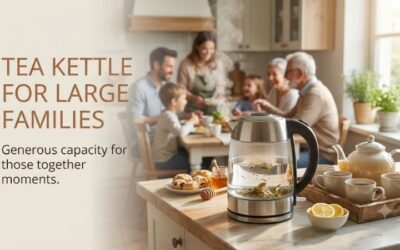
A large family may value capacity more than extremely precise pouring.
Consider the cost of replacement parts, warranty coverage, and cleaning requirements as part of the purchase decision.
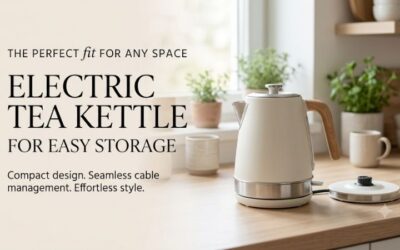
Also account for storage. A compact kettle that fits comfortably in the kitchen may provide more everyday value than an oversized premium model.
Prioritize features that remove genuine inconveniences.
A good kettle should make hot water preparation simpler, safer, and more consistent without demanding unnecessary attention.
Conclusion
The best electric tea kettle depends on capacity, temperature control, and how the water will be used. Cuisinart’s CPK-17 offers excellent everyday versatility, while Breville provides a premium family-oriented option. COSORI and Fellow suit controlled specialty brewing, and Hamilton Beach or KitchenAid appeal to buyers seeking simplicity. Choose a kettle that matches your serving habits, pours comfortably, and remains easy to maintain.


Write Your Review
No reviews yet. Be the first to share your experience!