
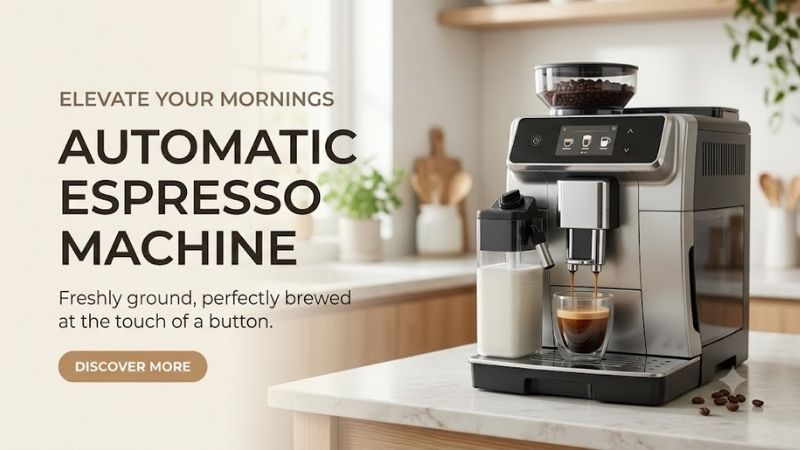
An automatic espresso machine simplifies the process of preparing coffee from whole beans. Instead of manually grinding, weighing, tamping, and extracting every shot, a bean-to-cup machine handles much of the work internally. For busy households, that convenience can be valuable. Different family members can select their preferred beverages without learning a traditional espresso workflow.
However, automatic machines vary in important ways. Some focus on straightforward espresso and cappuccino preparation. Others offer extensive drink menus, personalized profiles, milk systems, and digital interfaces. This roundup examines six fully automatic espresso machines, prioritizing the daily user experience, milk-drink convenience, cleaning demands, and the practical differences between models.
Quick Verdict
Best Overall: Philips 5500 Series LatteGo. It provides a useful variety of programmed drinks with an integrated grinder and a detachable milk system.
- Best Overall for Family Variety: Philips 5500 Series LatteGo — Multiple drink programs and convenient milk preparation.
- Best for Personalized Drinks: De’Longhi Dinamica Plus — Customizable beverage settings and automatic milk.
- Best Premium Everyday Espresso: JURA E8 — Integrated bean grinding and advanced automatic brewing.
- Best for One-Touch Cappuccinos: Gaggia Anima Prestige — Automatic milk carafe and accessible controls.
- Best for Simpler Bean-to-Cup Use: De’Longhi Magnifica Evo with LatteCrema — Straightforward automatic coffee preparation.
- Best for Household Profiles: KitchenAid KF7 — Customizable drink preferences for multiple users.
Quick Comparison Table
| Model | Grinder | Milk System | Main Strength | Trade-Off |
|---|---|---|---|---|
| Philips 5500 LatteGo | Integrated | LatteGo | Broad drink selection | Internal cleaning routines |
| De’Longhi Dinamica Plus | Integrated | LatteCrema | Personalized beverages | More settings and maintenance |
| JURA E8 | Integrated | Automatic milk system | Premium bean-to-cup workflow | Higher ownership cost |
| Gaggia Anima Prestige | Integrated | Milk carafe | Convenient cappuccinos | Carafe cleaning |
| De’Longhi Magnifica Evo | Integrated | LatteCrema | Accessible controls | Less customization than premium models |
| KitchenAid KF7 | Integrated | Automatic milk system | Household drink profiles | Larger investment and footprint |
How We Selected These Machines
We compared published features, beverage programs, integrated grinders, milk handling, user profiles, water systems, and maintenance requirements.
A fully automatic espresso machine is designed to manage coffee preparation inside the appliance. That convenience makes it different from a semi-automatic machine, where users prepare a portafilter manually.
Our selection does not rely on claims that a particular model objectively produces the best-tasting espresso. Coffee quality depends on beans, water, settings, maintenance, and personal preference.
The main purchasing question is whether each machine’s automation is useful enough to justify its size, complexity, and cost.
Detailed Product Reviews
1. Philips 5500 Series LatteGo — Best Overall for Family Variety
Best For: Families who want multiple coffee beverages without manual portafilter preparation.
Why We Picked It: The Philips 5500 combines whole-bean grinding, programmed beverages, and the LatteGo milk system.
Key Specifications
- Type: Fully automatic espresso machine
- Grinder: Integrated ceramic grinder
- Beverage selection: Multiple programmed drinks
- Milk system: LatteGo
- Controls: Digital interface
- Coffee preparation: Automatic brewing unit
- User customization: Drink preferences and selected settings
Features & Benefits
The integrated grinder processes coffee beans automatically.
Users choose a beverage, and the machine manages the appropriate preparation sequence.
The LatteGo milk system attaches to the machine for milk-based beverages and can be removed for cleaning.
This helps reduce the amount of manual work involved in making cappuccinos and lattes.
Performance & Practical Use
The 5500 Series is most useful when several household members want different drinks.
One person may prefer espresso, while another drinks a longer coffee or a milk-based beverage.
However, automatic convenience does not eliminate maintenance.
The grounds container, drip tray, water system, brewing unit, and milk components require model-specific cleaning.
What Makes It Different: A broad beverage menu with a detachable milk system.
Pros
- Integrated grinder.
- Convenient milk-drink preparation.
- Multiple beverage choices.
Cons
- Less direct extraction control than semi-automatic machines.
- Routine cleaning still required.
Buy If: You want convenient bean-to-cup coffee for a household with varied preferences.
Skip If: You enjoy manual espresso extraction.
2. De’Longhi Dinamica Plus — Best for Personalized Drinks
Best For: Households that frequently adjust coffee strength, beverage size, and milk-drink preferences.
Why We Picked It: The Dinamica Plus combines automated espresso preparation with a user-friendly customization system.
Key Specifications
- Type: Fully automatic
- Grinder: Integrated burr grinder
- Milk system: LatteCrema
- Controls: Digital touchscreen in common configurations
- Beverage options: Espresso, coffee, and milk drinks
- User preferences: Customizable
- Cleaning: Automated rinse functions and removable components
Features & Benefits
The integrated grinder handles whole beans.
The LatteCrema system automatically prepares milk foam for supported beverages.
Users can adjust certain drink characteristics through the control interface.
Performance & Practical Use
The Dinamica Plus suits people who want more personalization than a basic automatic espresso machine provides.
However, the exact drink count and profile functions can differ among product generations.
Buyers should confirm the features associated with their specific model.
What Makes It Different: Customization is central to its automatic coffee workflow.
Pros
- Integrated grinding.
- Automatic milk drinks.
- Drink personalization.
Cons
- More controls to learn.
- Milk-system cleaning remains important.
Buy If: Different household members prefer customized coffee drinks.
Skip If: You only want a simple daily espresso button.
3. JURA E8 — Best Premium Everyday Espresso
Best For: Coffee drinkers who want a premium fully automatic system with advanced brewing functions.
Why We Picked It: The JURA E8 combines automatic grinding, brewing, drink selection, and milk preparation.
Key Specifications
- Type: Fully automatic
- Grinder: Integrated
- Brewing: Automatic extraction
- Milk system: Integrated automatic functionality
- Controls: Digital
- Cleaning: Guided maintenance routines
- Beverage selection: Multiple programmed coffee specialties
Features & Benefits
The machine handles grinding and brewing without manual portafilter work.
Its interface provides access to multiple coffee specialties.
Guided cleaning programs help users follow maintenance routines.
Performance & Practical Use
The E8 is suitable for households that drink coffee frequently and appreciate automated operation.
However, a premium machine still requires water management, cleaning supplies, and adherence to manufacturer maintenance.
Users should consider available service support and replacement consumables before purchasing.
What Makes It Different: A premium integrated coffee system emphasizing automated consistency and daily usability.
Pros
- Integrated coffee preparation.
- Broad beverage functionality.
- Guided maintenance.
Cons
- Premium ownership cost.
- Less user control over puck preparation.
Buy If: You value premium bean-to-cup convenience and are comfortable with regular maintenance.
Skip If: You want hands-on espresso experimentation.
4. Gaggia Anima Prestige — Best for One-Touch Cappuccinos
Best For: Households that primarily want cappuccinos and other milk beverages with little manual work.
Why We Picked It: The Anima Prestige combines an automatic grinder and brewing system with an integrated milk carafe.
Key Specifications
- Type: Fully automatic
- Grinder: Integrated ceramic burr grinder
- Milk system: Automatic carafe
- Beverage preparation: Programmed
- Coffee strength: Adjustable
- Brewing unit: Removable
- Water tank: Removable
Features & Benefits
The milk carafe allows preparation of compatible cappuccino-style drinks.
The machine manages grinding and espresso brewing internally.
Adjustable settings provide flexibility without requiring traditional portafilter skills.
Performance & Practical Use
The Anima Prestige is useful for people who prefer a repeatable coffee routine.
However, milk carafes require consistent cleaning to prevent residue buildup.
The machine is less appropriate for someone who wants to control puck distribution, tamping pressure, or manual extraction profiles.
What Makes It Different: A straightforward automatic milk-carafe workflow.
Pros
- One-touch milk beverages.
- Integrated grinder.
- Removable brew unit.
Cons
- Milk-carafe maintenance.
- Limited manual extraction control.
Buy If: Cappuccinos are your primary daily beverage.
Skip If: You prefer manual steam-wand operation.
5. De’Longhi Magnifica Evo with LatteCrema — Best Simpler Bean-to-Cup Workflow
Best For: Households that want automatic coffee and milk drinks without an extensive premium interface.
Why We Picked It: The Magnifica Evo combines an integrated grinder, automated extraction, and LatteCrema milk functionality.
Key Specifications
- Type: Fully automatic
- Grinder: Integrated
- Milk preparation: LatteCrema
- Beverage controls: Direct selections
- Strength: Adjustable
- Water supply: Removable tank
- Grounds: Internal collection container
Features & Benefits
The machine grinds beans and prepares coffee automatically.
The LatteCrema system supports compatible milk beverages.
Direct beverage controls help reduce the steps needed for everyday operation.
Performance & Practical Use
The Magnifica Evo is well suited to households that repeatedly prepare a small number of favorite drinks.
It offers convenient automation without requiring users to operate a traditional espresso machine.
However, it still needs regular cleaning, descaling where appropriate, and milk-system care.
What Makes It Different: A simpler automated interface than many feature-heavy machines.
Pros
- Automatic milk preparation.
- Integrated grinder.
- Accessible controls.
Cons
- Less customization than advanced models.
- Internal brewing components require maintenance.
Buy If: You want convenient daily bean-to-cup beverages.
Skip If: You want extensive drink profiles and advanced adjustments.
6. KitchenAid KF7 — Best for Household Profiles
Best For: Families with multiple coffee drinkers who want to save preferred beverage settings.
Why We Picked It: The KitchenAid KF7 combines automatic coffee preparation with drink personalization features.
Key Specifications
- Type: Fully automatic espresso machine
- Grinder: Integrated
- Milk system: Automatic
- Controls: Digital touchscreen
- Beverage customization: Supported
- User profiles: Available
- Coffee preparation: Bean-to-cup
Features & Benefits
The KF7 allows users to select and personalize supported coffee beverages.
Saved preferences can reduce repeated adjustments in households where different people prefer different strengths or beverage sizes.
The automatic milk system adds convenience for compatible milk drinks.
Performance & Practical Use
The KF7 is useful for households that value individualized coffee routines.
However, user profiles should be viewed as a convenience feature, not as proof of superior extraction.
Actual results still depend on beans, grind settings, water, and maintenance.
What Makes It Different: Household personalization is a central part of the product experience.
Pros
- Multiple drink preferences.
- Integrated grinding and brewing.
- Automatic milk functionality.
Cons
- Larger financial investment.
- More settings and components to maintain.
Buy If: Several people regularly use the same machine.
Skip If: You only drink one basic coffee beverage.
Automatic Espresso Machine Buying Guide
What Fully Automatic Means
A fully automatic bean-to-cup machine typically grinds whole beans, prepares the coffee dose, extracts the beverage, and deposits used grounds internally.
Many models also provide automatic milk preparation.
However, the term automatic is used inconsistently in product descriptions. Confirm the actual workflow before purchasing.
Integrated Grinder Quality
The grinder is central to automatic espresso.
Users should consider grind-adjustment options, compatible beans, and cleaning access.
Some oily or flavored beans can cause problems in particular grinders.
Follow manufacturer guidance.
Milk-System Design
Milk systems may use detachable containers, hoses, or integrated frothing assemblies.
Compare not only the beverage options but also how milk-contact components are cleaned.
A convenient cappuccino program becomes less attractive if maintenance is repeatedly ignored.
Beverage Programs
Machines may offer espresso, coffee, cappuccino, latte macchiato, americano, and other presets.
More options are useful only if they match your drink preferences.
Check whether recipes are customizable or fixed.
User Profiles
Profiles are useful for shared households.
They may store beverage preferences, reducing daily adjustments.
However, not every machine supports the same settings or number of profiles.
Removable Brewing Units
Some automatic machines include removable brewing groups that users can rinse or clean.
Other systems rely more heavily on automated cleaning programs and service procedures.
Follow the exact manufacturer’s instructions.
Water and Descaling
Minerals in water can affect heating and flow.
Use appropriate water and filters where recommended.
Cleaning tablets, filters, and descaling products can create recurring costs.
Countertop Space
Fully automatic machines need room for the bean hopper, water tank, drip tray, milk container, and service access.
Measure the full working area, not just exterior width.
Common Buying Mistakes
Confusing Automatic and Fully Automatic
A semi-automatic espresso machine with programmable shot buttons is not necessarily a bean-to-cup system.
Ignoring Milk Cleanup
Automatic milk preparation requires appropriate cleaning.
Paying for Unused Programs
A long beverage menu adds little value if you only drink espresso.
Overlooking Consumables
Check cleaning supplies, filters, and replacement-part availability.
Frequently Asked Questions
Are automatic espresso machines worth buying?
They can be worthwhile for households that regularly drink espresso and milk-based coffee but prefer convenience over hands-on extraction.
Do automatic machines use whole coffee beans?
Most bean-to-cup machines include grinders for whole beans. Some models also support an appropriate ground-coffee bypass.
Can an automatic espresso machine make cappuccinos?
Many can, although the milk system varies by model.
Are automatic espresso machines difficult to clean?
They require regular maintenance, but many provide guided cleaning programs and removable components.
Can you use flavored beans?
Some manufacturers discourage oily or flavored beans because they can affect the grinder or brewing system. Check the manual.
Is a fully automatic machine better than a semi-automatic?
It depends on whether you prioritize preparation convenience or manual control.
Conclusion
The Philips 5500 Series LatteGo is our best overall automatic espresso machine for households wanting convenient drink variety and detachable milk preparation.
The De’Longhi Dinamica Plus is attractive for beverage customization, while the JURA E8 emphasizes premium automatic operation.
For straightforward cappuccinos, consider the Gaggia Anima Prestige. The Magnifica Evo offers a simpler automated workflow, and the KitchenAid KF7 suits households interested in saved drink preferences.
The right fully automatic machine should match the drinks you actually prepare, the maintenance you are willing to perform, and the space available in your kitchen.
Write Your Review
No reviews yet. Be the first to share your experience!