
A casserole dish and a baking dish look alike on the shelf, and many cooks use the names as if they mean the same thing. They do not. A casserole dish is deep, and it comes with a lid that traps steam and heat. A baking dish is open, and it lets heat reach the surface of the food so the top can brown and crisp. Pick the wrong one and a saucy bake can dry out, or a crisp gratin can turn soft and pale.
This guide compares the two shapes side by side, then shows five pieces of bakeware, two lidded casserole dishes and three open baking dishes, so you can match the dish to the meal you cook most.
What Is a Casserole Dish?
A casserole dish is a deep, lidded vessel built for slow, moist cooking. The lid is the defining feature. It holds steam inside, keeps sauces from reducing too fast, and lets flavors blend while the dish cooks through. Casserole dishes are usually round or oval, with straight or gently sloped sides, and they go from oven to table without a transfer to a serving bowl.
Casserole dishes suit foods that cook in liquid: braised chicken, beef stew, baked pasta with plenty of sauce, scalloped potatoes, and layered vegetable bakes. The depth keeps the sauce in the dish, and the lid keeps the top layer from drying out during a long bake. Most casserole dishes are made from ceramic, stoneware, or glass, which heat gently and hold warmth at the table.
The lid also helps after cooking. Cover the dish and leftovers stay protected in the fridge, and you can reheat the same dish the next day without moving the food. If you cook one-pot meals often, a lidded casserole dish earns its place fast.
1. CorningWare French White 2.5-Quart Oval Casserole with Glass Lid

The CorningWare French White 2.5-quart oval casserole is a classic lidded dish for everyday one-pot cooking. The oval shape fits chicken pieces, fish fillets, and layered vegetable bakes with room to spare, while the glass lid lets you watch the food cook without lifting the cover and letting steam escape.
The stoneware body resists chipping and cracking, and the white finish suits a table setting as well as it suits the oven. At 2.5 quarts, it is sized for family meals and small gatherings, and the glass lid doubles as a serving cover at the table.
Specs
- Capacity: 2.5 quarts
- Shape: Oval
- Material: French White stoneware with glass lid
- Lid: Glass, lets you monitor food while it cooks
- Care: Microwave, dishwasher, oven, and freezer safe
2. CorningWare French White 4-Quart Covered Casserole

The CorningWare French White 4-quart covered casserole is the larger pick for big-batch cooking. The oblong body holds whole roasts, large pasta bakes, and generous vegetable casseroles, and the glass cover keeps moisture in during long oven sessions. Fluted sides and a bright white finish make it presentable enough to serve from directly.
At 4 quarts, this dish covers holiday cooking and meal prep alike. The glass-ceramic body moves from oven to microwave to fridge to freezer, and the maker backs it with a 10-year warranty against breakage from hot or cold temperatures.
Specs
- Capacity: 4 quarts
- Shape: Oblong, 14.75 inches long and 6.5 inches high with lid
- Material: Glass-ceramic with glass cover
- Lid: Glass cover, fluted sides for an easy grip
- Care: Microwave, oven, broiler, refrigerator, freezer, and dishwasher safe
What Is a Baking Dish?
A baking dish is an open vessel built for browning. With no lid in the way, heat reaches the surface of the food directly, so cheese bubbles, crumbs turn golden, and the edges of a gratin crisp. Baking dishes are usually rectangular or square, with lower sides than a casserole dish, which helps hot air circulate across the top.
Baking dishes suit foods that need a crisp or browned finish: gratins, roasted vegetables, sheet-style bakes, brownies, and fruit crisps. They also work for lasagna, though a deep baking dish handles saucy layers better than a shallow one. Glass baking dishes are popular because you can see the sides and bottom browning, while ceramic dishes hold heat well and look good at the table.
Because baking dishes have no lid, they do not trap steam. That is the whole point. Moisture escapes, sauces thicken, and the top sets into a crust. If you love a golden top on your bakes, an open baking dish is the tool for the job.
3. Anchor Hocking Glass Square Baking Dish, 8 Inch

The Anchor Hocking glass square baking dish is a simple, honest open dish for small bakes. The 8-inch square holds brownies, small gratins, and side dishes for two or three people, and the tempered glass lets you check browning along the sides and bottom without guessing.
Glass heats evenly and does not absorb odors or flavors, so the dish moves easily between sweet and savory bakes. It is a good first baking dish for a small kitchen, and it pairs well with larger dishes when you cook for a crowd.
Specs
- Capacity: 1 quart
- Shape: Square, 8 inches
- Material: Tempered glass
- Lid: None, open dish for browning
- Care: Oven and dishwasher safe
4. KOOV Ceramic Baking Dish Set, 3-Piece

The KOOV ceramic baking dish set covers three sizes in one buy, with the largest dish measuring 9 by 13 inches. The textured ceramic finish looks good on the table, and the set lets you match the dish to the meal, from a small side bake to a full lasagna for a family dinner.
Ceramic holds heat well, so food stays warm after it leaves the oven, and the rectangular shape stacks neatly in a cabinet. This set suits cooks who bake often and want a dish for every size of meal without buying pieces one at a time.
Specs
- Set: 3 pieces, largest 9 x 13 inches
- Shape: Rectangular
- Material: Ceramic, textured grey finish
- Lid: None, open dishes for browning
- Care: Oven safe, for lasagna, casseroles, and cakes
5. Roeveca 4.5-Quart Ceramic Baking Dish
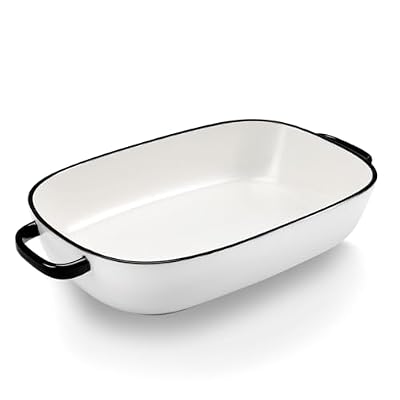
The Roeveca 4.5-quart ceramic baking dish is a deep, open dish for large bakes that still need a browned top. At 14 by 10 inches and just over 3 inches deep, it holds a big lasagna, a large gratin, or a roast with vegetables, and the open top lets cheese and crumbs crisp while the inside stays moist.
The generous size suits family dinners and potlucks, and the ceramic body goes from oven to table without a transfer. It is the open-dish answer to a big casserole, with the browning a lid would prevent.
Specs
- Capacity: 4.5 quarts
- Size: 14 x 10 x 3.11 inches
- Material: Ceramic
- Lid: None, open dish for browning
- Care: Oven, microwave, and refrigerator safe
Casserole Dish vs Baking Dish: Side by Side
| Feature | Casserole Dish | Baking Dish |
|---|---|---|
| Lid | Yes, usually glass or ceramic | No, open top |
| Depth | Deep, built to hold liquid | Shallow to medium, built for browning |
| Best for | Stews, braises, saucy bakes | Gratins, roasts, crisps, brownies |
| Moisture | Trapped inside, food stays moist | Escapes, sauces thicken, tops crisp |
| Serving | Oven to table, lid keeps food warm | Oven to table, shows off the browned top |
| Storage | Lid covers leftovers in the fridge | Needs wrap or a separate container |
Which One Should You Pick?
Choose a casserole dish if most of your baking involves liquid. Saucy pasta bakes, braised meats, scalloped potatoes, and layered vegetable dishes all cook better under a lid, where steam keeps the top layer tender and the sauce stays put. A lidded dish also earns its keep at the table, holding warmth while everyone serves themselves, and it covers leftovers without extra wrap.
Choose a baking dish if most of your baking involves browning. Gratins, roasted vegetables, fruit crisps, and brownies need open heat to set a golden top, and a lid would trap steam and soften the finish. A glass baking dish adds a bonus: you can see the bottom browning, so you know exactly when to pull the dish from the oven.
If you cook both styles, own one of each. A 2.5-quart lidded casserole covers everyday one-pot meals, and a 9 by 13 inch open baking dish covers gratins, roasts, and lasagna. Together they handle nearly every baked meal a home kitchen produces, and neither one replaces the other.
Size matters too. A dish that is too large for the meal leaves the food spread thin, so sauces dry out and edges overcook. A dish that is too small overflows, and sauce bakes onto the oven floor. Match the dish to the amount of food, not to the size of the oven.
Care Tips for Both
Glass and ceramic bakeware both dislike sudden temperature changes, so let a hot dish cool on a trivet before it meets cold water, and never place a cold dish in a fully heated oven. A short rest at room temperature protects the glaze and keeps the dish in service for years.
Wash lids with the same care as the dish. Glass lids chip at the rim when they knock against other pieces in the sink, so wash them by hand when you can, or place them where they cannot slide. Dry ceramic dishes fully before stacking, and slip a cloth between pieces to protect the finish.
Store lids upright or nested beside the dish rather than stacked on top, so the rim does not bear weight. A casserole dish with its lid stored well is ready for the next meal the moment you need it.
FAQ
Can I use a baking dish instead of a casserole dish?
Yes, for many recipes, but the result will differ. Without a lid, sauces reduce faster and the top dries out, so add a little extra liquid or cover the dish with foil for the first half of the bake, then uncover it to brown the top.
Can I use a casserole dish instead of a baking dish?
Yes, if you leave the lid off. An open casserole dish works like a deep baking dish, though the higher sides slow browning a little. For gratins and crisps, choose a wider dish so more surface meets the heat.
Which material is best, glass or ceramic?
Glass lets you see browning and heats evenly, while ceramic holds heat longer and looks elegant at the table. Both work well for casseroles and baking dishes, so pick the material that matches how you serve and store food.
What size should I buy first?
A 2.5-quart casserole dish and a 9 by 13 inch baking dish cover most home cooking. The casserole handles one-pot meals for a family, and the baking dish handles gratins, roasts, and lasagna for the same crowd.
The Bottom Line
A casserole dish and a baking dish are partners, not rivals. The casserole dish, deep and lidded, keeps saucy meals moist through long bakes. The baking dish, open and shallow, gives gratins and roasts the golden top that makes them worth serving. Own one of each, match the dish to the meal, and your bakes will come out the way you planned.
As an Amazon Associate, I earn from qualifying purchases. This disclosure applies to the product links in this article.
Write Your Review
No reviews yet. Be the first to share your experience!