
A quality whetstone sharpening stone provides excellent control over kitchen knife maintenance, allowing cooks to restore and refine cutting edges according to their needs. This roundup compares seven sharpening stones for different experience levels, blade materials, maintenance routines, and household budgets.
Best Whetstone Sharpening Stone Options Compared
Sharpening stones provide a traditional and highly adaptable approach to maintaining kitchen cutlery. Unlike many fixed-angle appliances, stones allow users to select appropriate abrasive surfaces and maintain individual blade geometries through controlled manual technique.
The following products cover general-purpose sharpening, combination grit configurations, premium synthetic stones, and diamond-based alternatives.
| Product | Nominal Grit | Best For |
|---|---|---|
| Shapton Pro 1000 | 1000 | Convenient everyday sharpening |
| Naniwa Professional 1000 | 1000 | Premium edge maintenance |
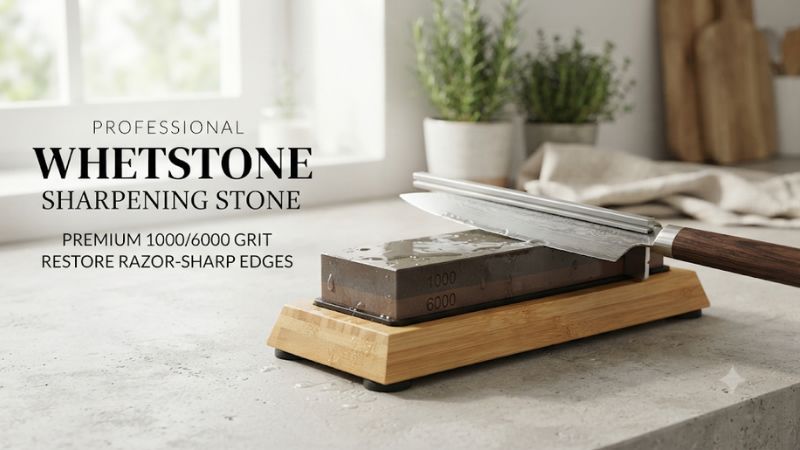
| King KDS Combination | 1000/6000 | Versatile combination sharpening |
| Suehiro CERAX 1010 | 1000 | Traditional waterstone experience |
| King Deluxe | 1000 | Affordable single-grit sharpening |
| Shapton Glass HR | 1000 | Compact premium construction |
| Naniwa Diamond Pro | 1000 | Specialized diamond sharpening |
The recommendations are based on available product specifications and intended applications rather than independent detailed research.
Detailed Whetstone Sharpening Stone Reviews
Shapton Pro 1000 – Best Overall
The Shapton Pro 1000 provides a practical combination of convenient preparation, useful abrasive characteristics, and general-purpose sharpening capability. Its relatively hard synthetic construction makes it attractive to users who want to maintain compatible steel kitchen knives without the lengthy soaking requirements associated with traditional waterstones.
Key Specifications
- Nominal grit: 1000.
- Abrasive type: Synthetic sharpening stone.
- Preparation: Splash-and-go.
- Primary application: General edge restoration.
- Operation: Manual sharpening.
Practical Advantages
The convenient water preparation requirements make this model particularly useful for households that maintain knives periodically. Its medium-grit configuration can address numerous ordinary sharpening requirements without automatically requiring additional finishing stones.
The relatively firm sharpening surface also appeals to users who prefer a stone that resists rapid dishing under suitable operation.
Pros
- Convenient preparation.
- Useful general-purpose grit.
- Established sharpening stone manufacturer.
- Suitable for many compatible steel kitchen knives.
- Practical for regular maintenance.
Cons
- Requires consistent manual angle control.
- Still requires periodic flatness assessment.
- May not provide the highly refined finish some users prefer.
Best For: Home cooks seeking a versatile first waterstone with minimal preparation requirements.
Naniwa Professional 1000 – Best Premium Waterstone
The Naniwa Professional 1000, commonly associated with the Chosera product family, targets users who appreciate premium synthetic sharpening stones and controlled edge maintenance. Its medium-grit configuration provides a useful starting point for restoring compatible kitchen knife edges without automatically progressing through numerous abrasive stages.
Key Specifications
- Nominal grit: 1000.
- Construction: Premium synthetic sharpening stone.
- Preparation: Surface wetting rather than prolonged soaking.
- Application: General steel knife sharpening.
Practical Advantages
This product appeals to sharpening enthusiasts who appreciate the feedback and control available through manual stone maintenance. Its premium positioning may be particularly valuable to users who regularly sharpen high-quality compatible kitchen knives.
Proper storage and drying remain important. Avoid prolonged soaking or accelerated drying unless specifically recommended for the exact product.
Pros
- Premium abrasive construction.
- Useful medium-grit configuration.
- Appropriate for frequent manual maintenance.
- Suitable for users who value sharpening feedback.
Cons
- Higher initial investment.
- Requires manual technique.
- Care requirements should be followed closely.
Best For: Experienced home cooks and enthusiasts who regularly maintain quality kitchen knives.
King KDS 1000/6000 – Best Combination Whetstone
The King KDS combination stone incorporates two nominal grit levels within one product, providing separate sharpening and finishing surfaces. This arrangement is particularly attractive to buyers who want greater abrasive flexibility without purchasing and storing two independent sharpening stones.
Key Specifications
- Nominal grit: 1000 and 6000.
- Construction: Combination waterstone.
- Application: General sharpening and fine refinement.
- Operation: Manual.
Practical Advantages
The 1000-grit side provides a useful sharpening surface for compatible steel blades. The 6000-grit side allows additional refinement when appropriate for the knife and intended cutting applications.
However, not every kitchen knife requires a fine polished finish. Users should select the finishing surface according to actual cutting requirements.
Pros
- Two abrasive levels in one product.
- Convenient storage compared with separate stones.
- Useful for developing sharpening skills.
- Flexible maintenance options.
Cons
- Different surfaces may have different water requirements.
- Requires flatness maintenance.
- Fine finishing is unnecessary for some everyday knives.
Best For: Buyers seeking a versatile combination stone for general sharpening and optional refinement.
Suehiro CERAX 1010 – Best Traditional Waterstone Experience
The Suehiro CERAX 1010 offers a traditional medium-grit waterstone experience for buyers who appreciate manual sharpening feedback. Its construction is particularly relevant to users who want to develop familiarity with water management, abrasive behavior, and controlled blade positioning.
Key Specifications
- Nominal grit: 1000.
- Product family: CERAX.
- Preparation: Waterstone preparation according to manufacturer guidance.
- Application: Medium-grit sharpening.
Practical Advantages
The medium-grit surface provides a practical foundation for ordinary steel knife maintenance. Users interested in traditional sharpening methods may appreciate the interaction between water, abrasive particles, and blade movement.
The main trade-off is additional preparation and cleanup compared with many splash-and-go alternatives.
Pros
- Established Japanese waterstone product line.
- Useful everyday grit.
- Traditional sharpening experience.
- Suitable for developing manual technique.
Cons
- Requires appropriate water preparation.
- Additional drying and cleanup.
- Manual flattening may be necessary over time.
Best For: Home cooks who appreciate traditional waterstone sharpening and do not mind additional preparation.
King Deluxe 1000 – Best Affordable Single-Grit Stone
The King Deluxe 1000 offers a straightforward approach to knife maintenance through a single medium-grit sharpening surface. It is particularly relevant to beginners who want to develop basic manual sharpening skills without purchasing a complicated collection of abrasive products.
Key Specifications
- Nominal grit: 1000.
- Construction: Synthetic waterstone.
- Operation: Manual.
- Application: General-purpose steel knife maintenance.
Practical Advantages
A single medium-grit stone allows beginners to focus on fundamental sharpening consistency rather than repeatedly changing between abrasive surfaces.
Its traditional construction may require more preparation and flattening than some harder premium stones, but this can also provide an opportunity to learn essential stone maintenance practices.
Pros
- Accessible entry into manual sharpening.
- Useful general-purpose grit.
- Established product family.
- Straightforward maintenance configuration.
Cons
- Requires water preparation.
- May need more frequent flattening.
- Does not include a separate fine finishing surface.
Best For: Beginners who want a reliable single-grit waterstone without unnecessary complexity.
Shapton Glass HR 1000 – Best Compact Premium Stone
The Shapton Glass HR 1000 combines a relatively thin abrasive layer with a rigid glass backing. Its distinctive construction appeals to users seeking a premium sharpening surface that remains comparatively compact during storage.
Key Specifications
- Nominal grit: 1000.
- Construction: Synthetic abrasive layer with glass backing.
- Preparation: Splash-and-go.
- Intended application: Compatible steel knife sharpening.
Practical Advantages
The compact profile can make the stone convenient to store alongside other sharpening accessories. Its relatively firm construction supports controlled sharpening when users maintain appropriate technique.
Buyers should understand that the usable abrasive layer differs from the product’s complete thickness. Appropriate flattening and maintenance practices remain important.
Pros
- Compact construction.
- Convenient water preparation.
- Premium abrasive surface.
- Suitable for controlled manual maintenance.
Cons
- Higher investment than basic waterstones.
- Thin abrasive layer.
- Requires careful handling and appropriate support.
Best For: Enthusiasts seeking a compact premium sharpening stone with convenient preparation.
Naniwa Diamond Pro 1000 – Best Diamond-Based Option
The Naniwa Diamond Pro 1000 provides a specialized diamond abrasive alternative to conventional synthetic waterstones. Its construction is particularly interesting to users maintaining compatible steels that benefit from appropriate diamond abrasive characteristics.
Key Specifications
- Nominal grit: 1000.
- Abrasive material: Diamond.
- Product family: Diamond Pro.
- Operation: Manual.
- Dimensions: Approximately 210 × 75 × 16 mm for the listed standard model.
Practical Advantages
Diamond abrasives can provide effective cutting action on compatible blade materials. The specific maintenance requirements and abrasive behavior differ from conventional waterstones, making manufacturer instructions particularly important.
The higher purchase cost is easier to justify when the buyer has a specific sharpening requirement that benefits from diamond construction.
Pros
- Specialized diamond abrasive.
- Premium construction.
- Suitable for compatible demanding steel maintenance.
- Useful sharpening surface dimensions.
Cons
- High initial investment.
- Requires appropriate operating technique.
- Unnecessary for many basic household knife collections.
Best For: Experienced sharpening users who specifically want a diamond-based maintenance surface.
Understanding Whetstone Grit Levels
Sharpening stone grit influences the type of maintenance a particular abrasive surface is intended to perform. Coarser stones generally remove material more aggressively, while finer surfaces provide different degrees of edge refinement.
Grit numbers from different manufacturers should not always be treated as directly equivalent because abrasive composition, particle standards, and bonding characteristics can influence actual performance.
| Nominal Grit Range | Typical Application |
|---|---|
| 200–400 | Substantial restoration |
| 600–800 | Coarser general sharpening |
| 1000–2000 | Everyday edge restoration |
| 3000–5000 | Intermediate refinement |
| 6000 and higher | Fine finishing |
Why a Medium-Grit Stone Is Often the Best Starting Point
Many household kitchen knives can be maintained using an appropriate medium-grit stone. This category provides a useful balance between material removal and edge refinement for ordinary maintenance.
A beginner does not necessarily need five or six stones to achieve effective kitchen cutting performance.
Starting with a compatible medium-grit product allows users to develop consistent technique before deciding whether additional abrasive surfaces are necessary.
When Fine Finishing Stones Are Worth Buying
Fine stones can provide additional edge refinement when appropriate for the blade and cutting application. They may appeal to cooks who maintain specialized knives or prefer a particular cutting finish.
However, a highly polished edge is not automatically more effective for every ingredient. Many everyday kitchen tasks benefit from a functional edge without requiring extensive polishing.
Buy a fine stone when you understand the specific benefit it provides for your existing knives.
How to Choose a Whetstone for Your Kitchen Knife Collection
The best sharpening stone should match blade material, maintenance requirements, available workspace, and your willingness to develop manual sharpening skills.
A suitable product can provide years of useful maintenance when appropriately operated and cared for.
Check the Knife Manufacturer’s Maintenance Recommendations
Before purchasing a stone, determine whether the knives in your collection support conventional manual sharpening. Specialized blade materials, serrations, and single-bevel configurations may require particular approaches.
Consider the blade’s original geometry and steel construction rather than choosing a sharpening surface based solely on advertised grit.
Compare Splash-and-Go and Soaking Stones
Splash-and-go stones typically require surface wetting before operation. Traditional soaking stones may require additional water preparation according to the manufacturer.
The choice affects convenience, storage, drying, and the overall maintenance experience.
Frequent cooks who prioritize minimal setup may prefer splash-and-go construction. Enthusiasts who enjoy traditional sharpening may appreciate suitable soaking stones.
Consider Stone Dimensions
A larger sharpening surface may be more convenient for full-sized chef’s knives, while smaller stones can be easier to store.
Evaluate whether the stone accommodates your blade lengths and intended operating technique. Extremely compact stones may require more careful repositioning when maintaining larger knives.
Account for Stone Flattening
Many sharpening stones gradually develop uneven surfaces during use. Periodic flattening helps maintain an appropriate working surface.
Before purchasing, consider whether compatible flattening equipment is available and whether maintenance fits your household routine.
Frequently Asked Questions
Is a 1000-Grit Whetstone Enough for Kitchen Knives?
An appropriate medium-grit stone can provide sufficient sharpening capability for many everyday steel kitchen knives. Additional grits may be useful for substantial restoration or specialized finishing.
Are Expensive Whetstones Worth Buying?
Premium stones may provide convenient preparation, distinctive abrasive feedback, or improved wear characteristics. Their value depends on maintenance frequency and individual sharpening preferences.
Can Whetstones Sharpen Ceramic Knives?
Genuine ceramic blades require compatible sharpening equipment and manufacturer-approved methods. Ordinary steel knife waterstones should not be assumed suitable.
Do All Waterstones Need Soaking?
No. Preparation requirements vary according to abrasive construction and manufacturer recommendations. Some stones require soaking, while others only require surface wetting.
Conclusion
The best whetstone sharpening stone combines suitable grit, reliable abrasive construction, and practical maintenance. Shapton and Naniwa offer premium convenience, while King and Suehiro provide traditional waterstone options. Choose a stone that matches your blades, experience level, and sharpening routine.










Write Your Review
No reviews yet. Be the first to share your experience!