
A whetstone sharpening stone for induction cooking kitchens helps maintain the knives used for efficient ingredient preparation. Although sharpening stones do not interact with induction technology, selecting the right abrasive, stable working surface, and storage arrangement supports a clean and organized kitchen.
- Understanding Whetstones in Induction Cooking Kitchens
- How to Choose a Whetstone Sharpening Stone for Induction Cooking
- Protecting Your Induction Cooktop During Knife Maintenance
- Choosing the Right Stone for Different Kitchen Knives
- Single-Grit Versus Combination Whetstones
- How to Organize Whetstone Equipment in an Induction Kitchen
- Frequently Asked Questions
- Conclusion
Understanding Whetstones in Induction Cooking Kitchens
Induction cooking uses electromagnetic energy to heat compatible cookware. This technology affects how pots and pans interact with the cooking appliance, but it does not establish special compatibility requirements for kitchen knife sharpening stones.
The relationship between whetstones and induction cooking instead involves kitchen organization, efficient food preparation, and protecting the glass cooking surface from unnecessary damage.
A sharpening stone should be selected according to knife material and maintenance requirements, not whether it contains magnetic or induction-compatible components.
Why Sharp Knives Complement Induction Cooking
Induction appliances can provide responsive temperature control, allowing cooks to adjust heat settings quickly when preparing suitable recipes.
Reliable ingredient preparation becomes particularly useful when several components need to be ready before cooking begins.
Maintained kitchen knives can support:
- Consistent vegetable portions.
- Efficient ingredient preparation.
- Organized meal preparation.
- Reduced unnecessary cutting pressure.
- Predictable cooking sizes.
The whetstone contributes indirectly by helping maintain compatible kitchen knives.
Why Whetstones Do Not Require Induction Compatibility
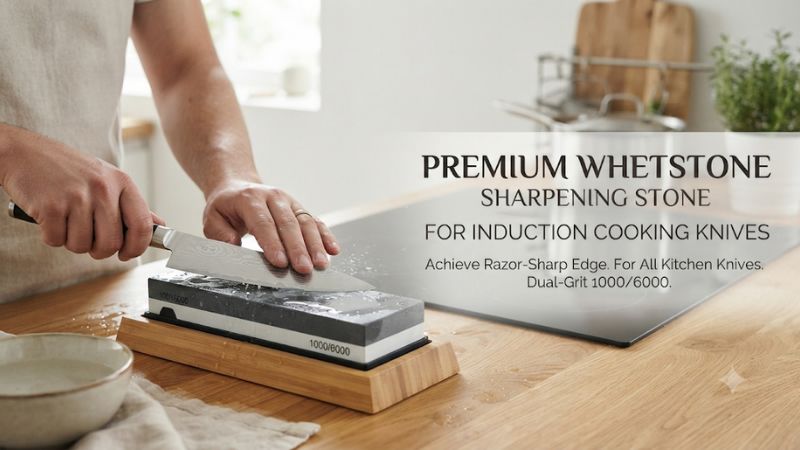
A sharpening stone is a manual abrasive maintenance tool rather than cookware. It does not need to heat through electromagnetic induction or possess a magnetic base.
Buyers should therefore avoid evaluating stones according to induction cookware specifications.
Instead, focus on abrasive material, nominal grit, dimensions, water requirements, and compatibility with existing knives.
Never activate an induction cooktop to heat a sharpening stone or its accessories.
How to Choose a Whetstone Sharpening Stone for Induction Cooking
Modern induction kitchens frequently emphasize clean surfaces, efficient organization, and compact storage. A suitable sharpening stone should complement these characteristics without introducing unnecessary maintenance complications.
Begin by identifying the types of knives used during meal preparation and the available working area outside the cooktop.
Choose an Appropriate General-Purpose Grit
A medium-grit sharpening stone provides a practical starting point for many compatible steel kitchen knives. Its abrasive characteristics can support ordinary edge restoration without requiring a complicated collection of sharpening equipment.
Common maintenance categories include:
| Grit Range | General Purpose |
|---|---|
| 200–400 | Major restoration |
| 600–800 | Coarser sharpening |
| 1000–2000 | Routine edge restoration |
| 3000–5000 | Refinement |
| 6000+ | Specialized fine finishing |
A medium-grit product is often sufficient for households that want to maintain ordinary kitchen cutlery without purchasing numerous abrasive surfaces.
Prioritize Convenient Water Management
Sharpening stones have different preparation requirements depending on their construction. Some traditional waterstones require soaking, while splash-and-go products generally require surface wetting.
For modern kitchens that prioritize minimal clutter and convenient cleanup, splash-and-go construction may provide practical advantages.
Nevertheless, traditional soaking stones remain appropriate when users have suitable preparation space and follow manufacturer instructions.
Never assume every whetstone should be soaked.
Select a Stable Supporting Base
A sharpening stone should remain stable during appropriate operation. A suitable base can help reduce unwanted movement and protect the underlying working surface.
Look for:
- Compatible nonslip holders.
- Appropriate stone support.
- Sufficient working height.
- Stable positioning.
- Water-resistant construction where appropriate.
Avoid using improvised unstable supports or positioning the sharpening equipment on an uneven surface.
Check Stone Dimensions and Storage Requirements
Stone dimensions influence both working convenience and storage. A broad sharpening surface may be useful for maintaining longer chef’s knives, while smaller products can be easier to organize inside compact drawers.
Measure the intended storage area before purchasing.
Also account for holders, flattening tools, protective containers, and other accessories that may accompany the stone.
Protecting Your Induction Cooktop During Knife Maintenance
The glass surface of an induction cooktop should not be treated as a general-purpose sharpening workstation. Abrasive particles, accidental impacts, moisture, and unsupported equipment can create unnecessary risks to the appliance surface.
Use a separate stable countertop or another appropriate working surface for sharpening activities.
Avoid Sharpening Directly on Cooktop Glass
Sharpening stones and abrasive debris can potentially damage delicate glass cooking surfaces. Even when the appliance is switched off, it is generally inappropriate to use the cooktop as a sharpening bench.
Protecting the cooking surface is particularly important because repair or replacement can represent a substantial household expense.
Keep sharpening equipment separate from the appliance and follow the cooktop manufacturer’s care instructions.
Keep Abrasive Residue Away From Cooking Areas
Manual sharpening may produce a mixture of water, abrasive material, and removed blade particles. This residue should remain separate from active food preparation and cookware.
After sharpening:
- Clean the knife appropriately.
- Remove residue from the working surface.
- Clean and maintain the stone according to instructions.
- Dry accessories as required.
- Return equipment to designated storage.
Do not allow abrasive residue to remain near prepared food or on cooking surfaces.
Use an Appropriate Separate Workstation
A suitable sharpening area should provide stability, sufficient clearance, appropriate lighting, and convenient access to necessary cleaning supplies.
For households with limited countertops, another appropriate stable work surface may be preferable to operating near an active cooking appliance.
Keep knife maintenance separate from simultaneous cooking activities, especially when several household members are using the kitchen.
Choosing the Right Stone for Different Kitchen Knives
An induction kitchen can contain the same variety of knives found in other cooking environments. Chef’s knives, santoku blades, utility knives, and specialty cutlery require maintenance according to their individual construction.
The cooking appliance itself does not determine the correct sharpening method.
For Stainless Steel Chef’s Knives
Many ordinary stainless steel chef’s knives can be maintained using an appropriate synthetic medium-grit waterstone.
Check manufacturer recommendations concerning edge geometry and abrasive compatibility before purchasing.
A convenient splash-and-go stone may be particularly attractive to cooks who prioritize efficient preparation and cleanup.
For Japanese Kitchen Knives
Japanese kitchen knives vary considerably in steel composition, hardness, blade geometry, and maintenance requirements. Some are compatible with conventional medium-grit waterstones, while specialized single-bevel blades may require more specific techniques.
Avoid choosing a sharpening stone based exclusively on a knife’s country of origin.
Premium Japanese cutlery may benefit from professional maintenance when the owner is unfamiliar with its construction.
For Carbon Steel Kitchen Knives
Carbon steel knives may respond well to appropriate sharpening stones, but they also require careful moisture management because of their corrosion characteristics.
Clean and dry carbon steel blades according to manufacturer guidance after sharpening.
The induction cooktop has no direct influence on these maintenance requirements.
For Ceramic Kitchen Knives
Genuine ceramic knives require sharpening methods specifically compatible with ceramic construction.
Ordinary synthetic waterstones intended for steel blades should not automatically be used on ceramic cutlery.
Check the knife manufacturer’s recommendations or consider professional ceramic knife sharpening services.
Single-Grit Versus Combination Whetstones
Choosing between a single-grit and combination stone depends on maintenance requirements, available storage, and individual sharpening preferences.
Both configurations can be practical in modern kitchens when appropriately matched to existing cutlery.
| Feature | Single-Grit Stone | Combination Stone |
|---|---|---|
| Abrasive surfaces | One grit | Two or more grits |
| Storage | Straightforward | Multiple grits in one unit |
| Maintenance | One working surface | Multiple surfaces |
| Flexibility | Focused application | Broader grit progression |
| Learning requirements | Generally simpler | Additional grit selection |
When a Single-Grit Stone Is Preferable
A medium-grit single stone can be sufficient for households maintaining compatible everyday kitchen knives.
Its straightforward configuration allows users to focus on consistent maintenance technique without repeatedly changing abrasive surfaces.
This approach is particularly useful for beginners who want to develop basic sharpening skills.
When a Combination Stone Makes Sense
Combination products provide additional abrasive flexibility within one housing. They can be attractive to households that want general sharpening and optional edge refinement without storing several individual stones.
However, different abrasive sides may have different preparation and maintenance requirements.
Review the manufacturer’s instructions before using or soaking a combination stone.
How to Organize Whetstone Equipment in an Induction Kitchen
Modern kitchen organization emphasizes accessible tools, clear working surfaces, and efficient storage. A dedicated sharpening arrangement can help maintain these priorities while keeping abrasive equipment separate from everyday food preparation.
The complete setup may include more than the sharpening stone itself.
Create a Dedicated Sharpening Storage Area
A designated drawer or cabinet compartment allows users to keep the sharpening stone, holder, and maintenance accessories together.
Potential accessories include:
- Compatible stone holders.
- Flattening equipment.
- Appropriate storage cases.
- Cleaning accessories.
- Manufacturer-recommended maintenance tools.
Make sure the stone is appropriately dry before storage.
Choose Storage According to Stone Construction
Some stones have specific drying requirements. Improper storage can affect abrasive construction or contribute to damage.
Avoid prolonged soaking, accelerated heating, or sealed damp storage unless explicitly recommended for the product.
Follow manufacturer guidance rather than applying identical maintenance procedures to every stone.
Frequently Asked Questions
Do Whetstones Need to Be Induction Compatible?
No. Whetstones are manual abrasive tools and do not interact with induction heating technology.
Can I Sharpen Knives on an Induction Cooktop?
Use a separate suitable working surface instead. Sharpening equipment and abrasive residue may damage the cooktop glass.
What Grit Is Best for Everyday Kitchen Knives?
An appropriate medium-grit stone around 1000 grit provides a useful starting point for many compatible steel kitchen knives.
Are Splash-and-Go Stones Better for Modern Kitchens?
They may provide more convenient preparation and cleanup. However, the best choice depends on blade compatibility and individual maintenance preferences.
Conclusion
A whetstone sharpening stone for induction cooking kitchens should match your knives, sharpening experience, and available workspace. Choose an appropriate grit, stable holder, and convenient water preparation method. Keep abrasive equipment away from the cooktop to protect your kitchen and maintain reliable cutting performance.









Write Your Review
No reviews yet. Be the first to share your experience!