
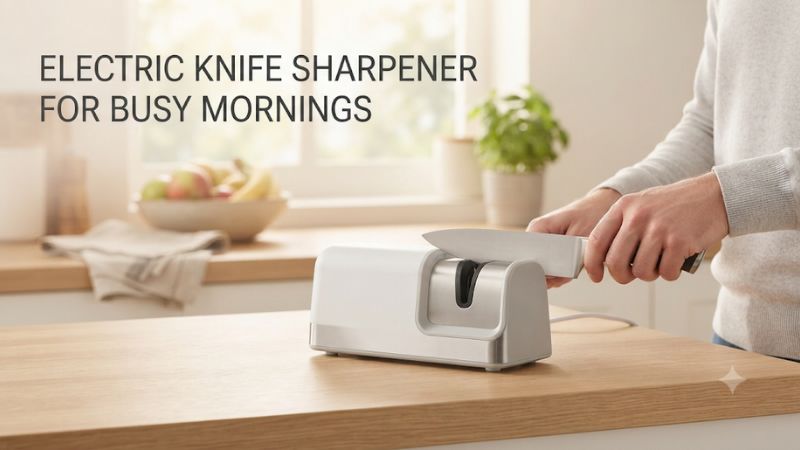
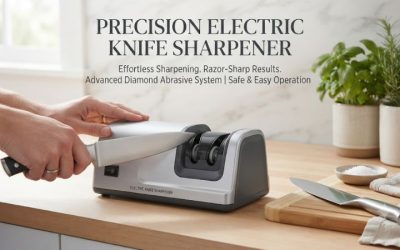
An electric knife sharpener for busy mornings helps simplify kitchen maintenance when preparing breakfast, packing lunches, and organizing family meals. Choosing a reliable appliance with suitable blade guidance, efficient abrasive stages, and convenient storage can keep everyday kitchen knives ready for use.
- Why Electric Knife Sharpeners Are Useful for Busy Households
- How to Choose an Electric Knife Sharpener for Busy Mornings
- Best Electric Sharpening Configurations for Morning Cooking
- Matching Electric Sharpeners to Different Morning Routines
- Electric Versus Manual Sharpening for Busy Mornings
- Frequently Asked Questions
- Conclusion
Why Electric Knife Sharpeners Are Useful for Busy Households
Morning cooking routines often involve completing several food preparation tasks within a limited amount of time. From slicing fruit for breakfast to preparing sandwiches and packing vegetables into lunch containers, reliable kitchen knives can make a noticeable difference in how efficiently these activities are completed.
When a knife becomes dull, ordinary cutting tasks may require additional pressure and repeated movements. Tomatoes can become crushed, fruit slices may turn uneven, and sandwich preparation can take longer than necessary. These problems become particularly inconvenient when several household members need to leave for work or school.
An electric sharpening appliance provides a structured approach to maintaining compatible kitchen knives without requiring the extensive preparation associated with some traditional sharpening methods.
Reducing Interruptions During Breakfast Preparation
A well-maintained kitchen knife allows cooks to move between suitable ingredients without repeatedly adjusting their cutting technique. Instead of compensating for deteriorating edge performance, users can focus on preparing consistent portions and completing breakfast efficiently.
Common morning preparation activities include:
- Slicing apples and pears.
- Preparing tomatoes for sandwiches.
- Cutting breakfast vegetables.
- Portioning suitable breakfast proteins.
- Preparing ingredients for packed lunches.
- Cutting fruit for smoothies.
An electric sharpener can support these activities by helping maintain the knives used throughout the week. Nevertheless, performing sharpening immediately before every breakfast is generally unnecessary.
A more practical strategy is to keep frequently used blades in good condition through occasional scheduled maintenance.
Making Knife Maintenance More Convenient
Traditional sharpening stones can provide excellent edge maintenance, but their operating requirements may not suit every busy household. Some stones require water preparation, stable positioning, manual angle control, cleanup, and drying before storage.
Electric sharpeners offer a different experience through motor-driven abrasive components and integrated blade guides. Compatible knives can be maintained through a structured procedure without requiring advanced freehand sharpening technique.
The primary convenience benefits include:
- Reduced setup requirements.
- Integrated blade positioning guidance.
- Multiple maintenance stages on selected models.
- Straightforward operation.
- Convenient maintenance of several compatible knives.
These features can make regular maintenance easier to incorporate into an already demanding household routine.
How to Choose an Electric Knife Sharpener for Busy Mornings
The most suitable appliance should combine reliable blade compatibility with an operating process that fits your household schedule. Sharpening speed is important, but purchasing a machine exclusively because it advertises rapid results may create unnecessary blade wear or maintenance problems.
Evaluate how the appliance fits into your actual cooking routine, including the knives you use, available countertop space, and maintenance frequency.
Prioritize Appropriate Sharpening Speed
A powered sharpening appliance can reduce some of the manual work associated with restoring a cutting edge. However, actual sharpening time depends on blade condition, abrasive construction, the original sharpening angle, and the manufacturer’s operating procedure.
A lightly worn knife may require less maintenance than a substantially dull blade. Reprofiling an incompatible existing edge can require considerably more work.
When comparing products, consider:
- Whether the machine supports routine maintenance.
- Whether different abrasive stages are available.
- How easily the correct stage can be selected.
- Whether the appliance provides clear operating instructions.
- How much preparation and cleanup are necessary.
Do not rely exclusively on advertised sharpening time. A machine that produces appropriate results with minimal setup may provide better practical value than one that prioritizes aggressive material removal.
Choose the Correct Sharpening Angle
Kitchen knives use different cutting-edge configurations depending on their construction and intended application. Many conventional double-bevel kitchen knives feature approximately 15-degree or 20-degree per-side edge angles, although manufacturers use other geometries as well.
An electric appliance should support the intended geometry of the knives being maintained.
| Knife Type | Common Maintenance Consideration |
|---|---|
| Modern Western chef’s knife | Check manufacturer angle |
| Traditional Western knife | May use a wider edge angle |
| Japanese double-bevel knife | Often requires a narrower angle |
| Single-bevel Japanese knife | Specialized maintenance |
| Ceramic kitchen knife | Ceramic-compatible equipment |
| Serrated bread knife | Manufacturer-approved serration maintenance |
A dual-angle electric sharpener may provide additional flexibility for households containing different compatible knife styles.
Avoid assuming that all knives from a particular country use identical sharpening angles.
Look for Convenient Maintenance Stages
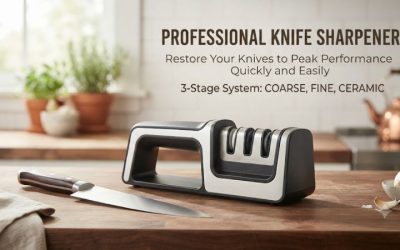
Many electric sharpeners incorporate separate abrasive stages for restoring and refining cutting edges. This arrangement can improve convenience by allowing users to select a maintenance procedure appropriate for the knife’s condition.
A coarse stage is generally intended for substantial edge restoration when recommended. A fine stage may provide lighter maintenance, while finishing stages refine the edge according to the machine’s construction.
For busy households, convenient stage selection can be more useful than simply having numerous advertised functions.
Look for:
- Clearly identified sharpening stages.
- Accessible operating instructions.
- Appropriate maintenance guidance.
- Separate refinement functions where useful.
- Consistent blade positioning.
Using the most aggressive stage during every maintenance session can unnecessarily remove blade material.
Evaluate Integrated Blade Guidance
Blade guides help position compatible knives during powered sharpening. Their design can reduce the difficulty of maintaining a consistent angle compared with completely freehand methods.
This feature is particularly important for households where several people may use the same sharpening appliance.
A useful guide system should accommodate compatible blades without requiring excessive force or awkward positioning.
Before purchasing, investigate whether the machine supports the blade thicknesses, lengths, and profiles found in your existing kitchen collection.
Consider Countertop and Storage Requirements
Morning preparation areas frequently contain several appliances and utensils. A sharpening machine that requires permanent countertop placement may compete with coffee makers, toasters, cutting boards, and food preparation containers.
Measure the intended storage area and identify a stable operating surface before purchasing.
Consider:
- Overall appliance width.
- Housing depth.
- Internal cabinet clearance.
- Power cord arrangement.
- Space required for blade movement.
- Ease of retrieving the appliance.
A compact electric sharpener can provide better convenience when it can be stored near the kitchen preparation area without becoming permanent countertop clutter.
Best Electric Sharpening Configurations for Morning Cooking
Different electric sharpening configurations address different household requirements. Buyers should identify whether their main priority is straightforward maintenance, flexibility across several knife geometries, or premium convenience.
The following comparisons focus on selecting an appropriate equipment category rather than assuming every household needs the same appliance.
Single-Angle Electric Sharpeners
Single-angle machines provide a defined sharpening configuration for compatible kitchen knives. Their relatively straightforward operating structure can be attractive to households that primarily own knives with similar edge geometries.
Advantages include simpler configuration selection and a structured maintenance procedure.
However, purchasing a fixed-angle sharpener can reduce future flexibility if the household later acquires knives requiring a different geometry.
Choose this configuration if your frequently used kitchen knives share an appropriate sharpening angle.
Dual-Angle Electric Sharpeners
Dual-angle appliances can accommodate multiple common sharpening configurations. This flexibility is useful for households that own compatible traditional Western knives alongside thinner modern or Asian-style blades.
The main advantage is the ability to maintain different knives using one appliance.
The principal limitation is that users must identify the appropriate setting before sharpening. Additional configuration options do not automatically determine the correct angle for every blade.
A dual-angle machine is particularly useful for families with mixed kitchen knife collections.
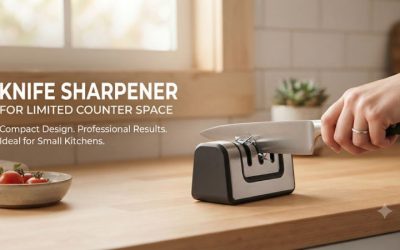
Compact Two-Stage Electric Sharpeners
Compact two-stage systems generally focus on straightforward restoration and refinement. Their manageable operating structure can make them appealing to households that occasionally maintain basic compatible kitchen knives.
These appliances may provide sufficient functionality without the complexity or storage requirements of larger professional systems.
Before purchasing, verify that the product supports your existing knife materials and blade geometry.
Premium Multistage Sharpeners
Premium electric systems may incorporate additional maintenance stages, advanced guidance mechanisms, or specialized finishing functions.
These features can be valuable for frequent cooks who want a comprehensive maintenance appliance. Nevertheless, households with limited sharpening requirements may not benefit substantially from purchasing a more advanced machine.
Evaluate whether the additional functions address a genuine maintenance need rather than selecting the most expensive product by default.
Matching Electric Sharpeners to Different Morning Routines
Households approach morning food preparation differently. Some prepare a quick breakfast for one person, while others assemble several lunches and cook breakfast for an entire family. The ideal sharpening solution should reflect these differences.
Purchasing according to actual preparation requirements helps prevent unnecessary spending and ensures the machine remains useful.
For Single-Person Households
A person living alone may only use one or two kitchen knives during an ordinary morning routine. A utility knife might handle fruit preparation, while a chef’s knife performs larger cutting tasks.
In this situation, a compact electric appliance with straightforward operating requirements may be sufficient.
Recommended priorities include:
- Compatibility with frequently used knives.
- Convenient storage.
- Simple maintenance stages.
- Reliable blade guidance.
- Reasonable ownership costs.
A premium sharpening machine with numerous configurations may provide limited additional value when maintaining only a small number of compatible blades.
For Families With School-Age Children
Families often need to prepare several breakfasts and lunches simultaneously. Reliable cutting performance can make it easier to complete ingredient preparation without unnecessary interruptions.
An electric sharpener capable of maintaining several compatible knives may therefore provide meaningful convenience.
Families should prioritize:
- Consistent maintenance procedures.
- Clearly identified sharpening stages.
- Suitable compatibility across the household collection.
- Secure storage away from children.
- Convenient cleaning requirements.
Sharpening should be performed by an appropriate adult in a clear working area, separate from children and active breakfast preparation.
For Weekly Meal Preparation
Weekly preparation can reduce the amount of cutting required during busy weekday mornings. Ingredients may be prepared in advance and stored appropriately for later use.
Knife maintenance fits naturally into this routine because users can evaluate their cutting tools before beginning a larger preparation session.
A convenient electric sharpening system can support maintenance when the knives actually need attention.
Rather than sharpening every knife each week, evaluate individual edge condition and follow manufacturer guidance.
For Home Cooks Who Prepare Fresh Produce Every Morning
Fresh fruit and vegetable preparation can reveal declining knife performance quickly. A dull blade may struggle with tomato skins or produce inconsistent slices when preparing suitable fruits.
Households that perform these tasks frequently may benefit from a convenient maintenance system that supports their everyday knives.
A compatible electric sharpener with a suitable refinement stage can help maintain cutting efficiency without requiring an unnecessarily aggressive restoration procedure.
Electric Versus Manual Sharpening for Busy Mornings
Electric and manual sharpeners can both provide useful maintenance when correctly matched to kitchen knives. Their differences become particularly relevant when evaluating setup time, working space, technique requirements, and overall convenience.
Neither method is automatically superior for every household.
| Feature | Electric Sharpener | Manual Sharpener |
|---|---|---|
| Power requirement | Electrical outlet | None |
| Setup | Generally straightforward | Depends on design |
| Angle control | Often integrated | Fixed, guided, or freehand |
| Maintenance effort | Motor-assisted | User-operated |
| Storage | Model-dependent | Often compact |
| Noise | Motor noise | Generally quieter |
| Price | Often higher | Broad price range |
When Electric Sharpening Provides Better Convenience
Powered sharpening is especially appealing when several compatible knives require maintenance and the household wants a repeatable operating procedure.
Integrated blade guidance can reduce dependence on freehand angle-control skills, while suitable abrasive stages can provide different maintenance options.
An electric appliance makes the most sense when its convenience encourages appropriate maintenance that would otherwise be postponed.
When Manual Sharpening Remains the Better Choice
Manual sharpening systems may be preferable when the household has very limited storage space, maintains only a few knives, or requires specialized angle control.
Traditional stones and adjustable guided systems can provide flexibility that fixed-angle electric machines may not offer.
Manual equipment can also be more suitable when minimizing motor noise is important.
Buyers should compare the total maintenance experience rather than assuming electric operation is essential simply because their mornings are busy.
Frequently Asked Questions
Should Kitchen Knives Be Sharpened Every Morning?
No. Sharpening frequency should depend on actual blade condition and manufacturer recommendations. Excessive sharpening can unnecessarily remove material and shorten the knife’s useful lifespan.
Can Electric Sharpeners Maintain Expensive Japanese Knives?
Some compatible double-bevel Japanese knives may be suitable for specific electric sharpening systems. Specialized single-bevel blades and unusual edge geometries frequently require different maintenance methods.
Are Electric Sharpeners Suitable for Small Apartments?
Compact electric models can be appropriate when sufficient storage, electrical access, and operating clearance are available. Manual alternatives may be preferable when space is particularly limited.
Can One Electric Sharpener Maintain Every Kitchen Knife?
No. Blade material, sharpening geometry, serrations, thickness, and manufacturer recommendations determine compatibility.
Conclusion
An electric knife sharpener for busy mornings should deliver convenient maintenance without unnecessary blade wear. Prioritize compatible sharpening angles, reliable guidance, simple controls, and compact storage. Keeping kitchen knives properly maintained helps streamline everyday breakfast and lunch preparation.



Write Your Review
No reviews yet. Be the first to share your experience!