
Finding the best ceramic kitchen knife can transform everyday food preparation with precise slicing, lightweight handling, and exceptional edge retention. This guide compares seven ceramic cutlery options, examines their strengths and limitations, and helps you select the right blade for your cooking habits.
- Best Ceramic Kitchen Knife Options at a Glance
- How We Evaluated the Best Ceramic Kitchen Knife Picks
- Detailed Ceramic Kitchen Knife Product Reviews
- Ceramic Knives Versus Stainless Steel Kitchen Knives
- How to Get the Best Performance From Ceramic Cutlery
- Are Ceramic Kitchen Knives Worth the Investment?
- Frequently Asked Questions
- Conclusion
Best Ceramic Kitchen Knife Options at a Glance
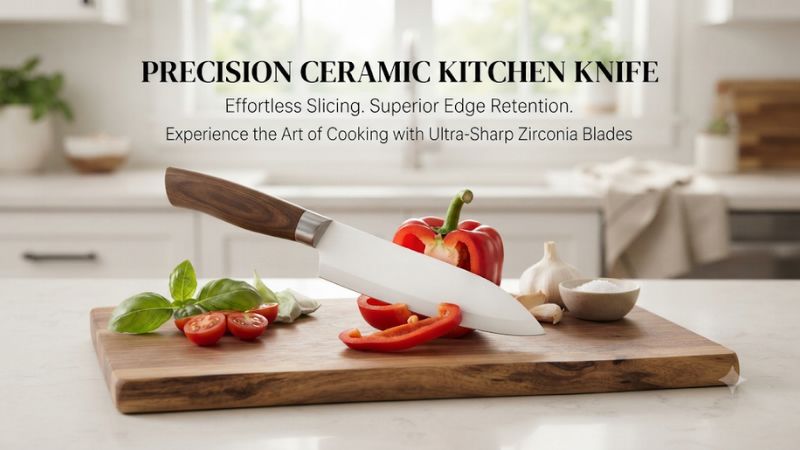
Ceramic kitchen knives occupy an interesting position within modern kitchen cutlery. Unlike traditional steel blades, genuine ceramic knives are typically manufactured from zirconia, a hard material that offers excellent resistance to corrosion and considerable potential for maintaining a sharp cutting edge. Their relatively lightweight construction also makes them attractive to home cooks who regularly prepare fresh produce, boneless proteins, and delicate ingredients.
However, purchasing ceramic cutlery requires more consideration than simply selecting the sharpest available blade. Ceramic knives have distinct limitations involving impact resistance, flexibility, sharpening methods, and compatible cutting applications. A knife that performs exceptionally well when slicing tomatoes may be entirely unsuitable for cutting frozen meat or separating poultry joints.
The following seven selections cover different cooking requirements, from affordable everyday preparation to premium ceramic construction and complete multipiece collections.
| Product | Blade Size | Primary Application | Main Advantage |
|---|---|---|---|
| Kyocera Revolution Santoku | 5.5 inches | Everyday cooking | Balanced versatility |
| Kyocera Revolution Chef’s Santoku | 6 inches | Family meal preparation | Additional cutting capacity |
| Kyocera INNOVATIONblack Santoku | 5.5 inches | Frequent cooking | Premium ceramic construction |
| Kyocera Premier Santoku | 5.5 inches | Premium kitchen cutlery | Refined materials |
| Kyocera INNOVATIONblack Utility | 4.5 inches | Small ingredients | Excellent maneuverability |
| Kyocera Revolution Paring Knife | 3 inches | Detailed preparation | Precision control |
| Kyocera Revolution Four-Piece Set | 3–6 inches | Complete ceramic collection | Multiple blade sizes |
The best overall starting point is a moderately sized santoku knife because it provides sufficient cutting capacity for most everyday ingredients without becoming unnecessarily difficult to maneuver. Buyers with specific preparation requirements may achieve better results by selecting a smaller utility knife or investing in several complementary blade sizes.
How We Evaluated the Best Ceramic Kitchen Knife Picks
Selecting ceramic cutlery requires examining characteristics that are substantially different from those associated with conventional stainless steel kitchen knives. This comparison focuses on manufacturer specifications, practical cutting applications, blade geometry, ownership requirements, and suitability for different household cooking routines rather than relying exclusively on advertised sharpness claims.
The recommendations are based on product research and practical application analysis, not independent laboratory testing or firsthand product trials. Actual cutting performance will depend on the ingredients being prepared, individual technique, maintenance habits, and the condition of each blade.
Blade Material and Edge Retention
The primary reason many home cooks consider ceramic knives is their ability to retain a useful cutting edge during appropriate food preparation. Zirconia ceramic possesses considerable hardness, allowing manufacturers to produce blades that resist certain types of abrasive wear associated with repeated slicing.
Nevertheless, hardness should not be confused with overall toughness. A hard blade may resist gradual wear while remaining vulnerable to sudden impacts or excessive lateral pressure. This distinction explains why ceramic knives can remain impressively sharp during vegetable preparation but suffer damage when accidentally dropped onto a hard floor.
Our evaluation considers whether each knife offers a practical combination of edge retention, intended application, and realistic ownership requirements.
Important factors include:
- Genuine zirconia ceramic blade construction.
- Manufacturer information concerning blade material.
- Appropriate cutting applications.
- Availability of compatible sharpening methods.
- Potential vulnerability to accidental impact.
Blade Geometry and Cutting Capacity
Blade shape determines how comfortably a knife moves through ingredients. A narrow utility knife provides excellent control when preparing smaller foods, while a broader santoku offers more versatility for slicing vegetables and transferring appropriately cut ingredients from a cutting board.
Blade length should also correspond to the available preparation area. A compact kitchen with limited countertop space may benefit more from a five-inch knife than a substantially longer blade that becomes difficult to maneuver around nearby appliances.
Each recommended product is therefore evaluated according to its intended role rather than assuming that a longer blade automatically provides superior performance.
Handle Comfort and Everyday Control
Ceramic knives are generally lighter than similarly sized traditional forged steel knives. This difference can make them particularly appealing to cooks who prefer agile cutting tools, but the relationship between blade weight and handle construction remains important.
An appropriate handle should provide sufficient grip, predictable positioning, and comfortable control during repeated cutting movements. A knife with an uncomfortable handle may become tiring even when its blade weighs considerably less than a traditional chef’s knife.
We considered handle construction, overall practicality, cleaning requirements, and suitability for extended meal preparation.
Long-Term Ownership and Maintenance
The initial purchase price represents only one part of the overall ownership experience. Ceramic knives require appropriate storage, compatible cutting boards, careful cleaning, and specialized sharpening when their edges eventually lose effectiveness.
A product that offers excellent initial cutting performance may provide disappointing long-term value if the owner regularly uses unsuitable cutting surfaces or cannot access an appropriate sharpening service.
The recommendations prioritize realistic ownership expectations alongside blade performance.
Detailed Ceramic Kitchen Knife Product Reviews
The following products serve different culinary purposes rather than competing exclusively on blade length or purchase price. Each review examines where the knife fits within an existing kitchen collection, how its construction affects practical preparation tasks, and which buyers are most likely to benefit from its particular characteristics.
Kyocera Revolution 5.5-Inch Santoku Knife – Best Overall
The Kyocera Revolution 5.5-inch Santoku is a practical introduction to genuine ceramic cutlery because its blade size falls between compact utility knives and larger chef’s knives. This middle-ground construction provides enough cutting capacity for most everyday vegetables while maintaining the lightweight handling that makes ceramic knives appealing.
For households that regularly prepare salads, sandwiches, vegetable stir-fries, and boneless ingredients, this blade profile offers a useful balance of control and productivity. Its moderate length is particularly appropriate for cooks who find traditional eight-inch chef’s knives unnecessarily large for routine preparation.
Key Specifications
- Blade length: 5.5 inches.
- Blade material: Zirconia ceramic.
- Knife style: Santoku.
- Handle construction: Molded synthetic material.
- Recommended use: Controlled slicing and general preparation.
- Maintenance: Ceramic-compatible sharpening methods.
Cutting Performance and Practical Applications
The santoku profile works particularly well when ingredients can be sliced using smooth, controlled movements. Tomatoes, cucumbers, bell peppers, mushrooms, and similar foods are examples of ingredients that allow the blade to demonstrate its strengths without requiring considerable force.
Its relatively short blade also makes it easier to reposition when working through several different ingredients on a medium-sized cutting board. Instead of changing to a smaller knife every time the preparation task changes, many cooks can complete most vegetable preparation using this single blade.
The lightweight construction is another important consideration. A traditional steel knife may rely partly on blade weight to move through ingredients, whereas a ceramic santoku emphasizes controlled movement and edge sharpness. Cooks transitioning from heavier cutlery may need to adjust their technique accordingly.
Advantages
- Versatile dimensions for everyday cooking.
- Lightweight handling during repeated slicing.
- Excellent resistance to blade corrosion.
- Useful cutting geometry for fresh ingredients.
- Suitable for kitchens with moderate preparation space.
Disadvantages
- Cannot perform demanding bone-cutting applications.
- Vulnerable to damage from accidental impacts.
- Requires specialized sharpening arrangements.
- Less suitable for ingredients requiring substantial leverage.
Best For
This knife is particularly appropriate for home cooks purchasing their first genuine ceramic blade. It can complement an existing steel chef’s knife without requiring a complete change to the household’s cutlery collection.
Buy If
- You prepare vegetables and fruit several times each week.
- You prefer lightweight kitchen tools.
- You want one ceramic knife with broad everyday applications.
Skip If
- You frequently prepare frozen or bone-in ingredients.
- You want a knife capable of handling heavy-duty chopping.
- You prefer the substantial weight of forged steel cutlery.
Overall, the Revolution Santoku provides the most approachable combination of practical size, handling characteristics, and everyday usefulness within this selection.
Kyocera Revolution 6-Inch Chef’s Santoku – Best for Family Meals
The Kyocera Revolution 6-inch Chef’s Santoku provides additional cutting length for households that frequently prepare multiple portions. Although the difference between a 5.5-inch and six-inch blade may appear relatively small, the additional space can make certain ingredients easier to portion without requiring as many individual cutting movements.
This model is especially relevant for cooks preparing several vegetables at once, slicing boneless proteins for family meals, or working with larger pieces of fruit. It retains the relatively lightweight characteristics of ceramic construction while offering a slightly more substantial cutting profile.
Key Specifications
- Blade length: Six inches.
- Blade material: Zirconia ceramic.
- Knife style: Chef’s santoku.
- Handle material: Synthetic construction.
- Primary application: General meal preparation.
Everyday Cooking Experience
Family cooking frequently involves transitioning between ingredients of different sizes. A typical dinner may require slicing bell peppers, preparing onions, portioning boneless chicken, and cutting fruit for dessert. A moderately longer ceramic blade can provide greater flexibility across these applications.
The important limitation is that additional blade length does not convert ceramic construction into a heavy-duty cutting tool. Large, hard ingredients should still be handled with appropriate steel knives when they require substantial force or create a risk of twisting the blade.
This model is best understood as a larger precision-slicing tool rather than a direct replacement for every conventional chef’s knife application.
Advantages
- Additional cutting capacity for larger portions.
- Appropriate for numerous routine preparation tasks.
- Lightweight compared with many similarly sized steel knives.
- Suitable for vegetable-centered family meals.
Disadvantages
- Slightly less maneuverable than shorter utility knives.
- Requires appropriate storage protection.
- Unsuitable for heavy chopping or prying.
- Does not replace a dedicated bread knife or steel cleaver.
Best For
Families that prepare fresh ingredients frequently and want a ceramic blade capable of handling somewhat larger portions without moving to an oversized knife.
Buy If
You have sufficient cutting-board space and regularly prepare meals containing multiple vegetables or suitable boneless proteins.
Skip If
Your kitchen has very limited preparation space or most of your cooking involves small ingredients that are more comfortably handled using a compact utility knife.
The six-inch Revolution model makes particular sense when ceramic cutlery will become a regularly used part of family meal preparation rather than an occasional specialty tool.
Kyocera INNOVATIONblack 5.5-Inch Santoku – Best Premium Upgrade
The INNOVATIONblack Santoku targets buyers interested in advanced ceramic construction without sacrificing the convenience of a moderately sized everyday knife. Its black zirconia blade and refined handle configuration distinguish it from more conventional entry-level ceramic designs.
Rather than increasing blade size, this model focuses on upgrading the materials and handling characteristics associated with an established santoku profile. That makes it particularly attractive to cooks who already appreciate ceramic cutlery and want a more premium option for frequent use.
Key Specifications
- Blade length: 5.5 inches.
- Blade material: Z212 zirconia ceramic.
- Blade finish: Black.
- Knife style: Santoku.
- Handle: Ergonomically shaped synthetic construction.
- Intended use: Everyday precision slicing.
Material Quality and Ownership Value
The primary consideration when purchasing a premium ceramic knife is whether its upgraded construction provides meaningful value for your cooking routine. A household that prepares fresh produce several times daily may place greater importance on edge retention and handle comfort than someone who only cooks occasionally.
The INNOVATIONblack blade material represents Kyocera’s upgraded approach to ceramic construction. However, buyers should not interpret premium material positioning as a guarantee that the knife is resistant to all forms of accidental damage.
Ceramic knives remain specialized cutting tools. Proper technique, appropriate cutting surfaces, and protected storage are still essential, regardless of whether the blade comes from an entry-level or premium product line.
The refined appearance is another advantage for buyers who appreciate coordinated kitchen tools. Its black blade creates a distinctive aesthetic while preserving the functional dimensions of a versatile santoku.
Advantages
- Premium ceramic blade construction.
- Practical dimensions for everyday ingredients.
- Attractive black blade finish.
- Suitable for frequent fresh-food preparation.
- Refined handle design.
Disadvantages
- Higher investment than basic ceramic alternatives.
- Requires the same fundamental care precautions.
- Not a substitute for heavy-duty steel cutlery.
- Premium benefits may be unnecessary for infrequent cooks.
Best For
Home cooks who regularly use ceramic knives and want an upgraded model without moving to a substantially larger blade.
Buy If
You prioritize long-term blade performance, comfortable handling, and premium materials in the kitchen.
Skip If
You are unsure whether ceramic knives suit your cooking style or need a versatile first knife at the lowest possible initial cost.
The INNOVATIONblack Santoku is most appealing when its premium construction will support an established cooking routine rather than simply adding another attractive knife to an already crowded collection.
Kyocera Premier 5.5-Inch Santoku – Best Premium Craftsmanship
The Kyocera Premier Santoku appeals to buyers who value distinctive materials and visual craftsmanship alongside practical cutting performance. Its premium ceramic blade construction and wood handle create a more traditional appearance than the molded synthetic handles commonly associated with everyday ceramic knives.
This model occupies a different position from basic utility-focused cutlery. It is particularly appropriate for cooking enthusiasts who appreciate the appearance, tactile characteristics, and ownership experience of carefully selected kitchen tools.
Key Specifications
- Blade length: 5.5 inches.
- Blade material: HIP zirconia ceramic.
- Blade finish: Premium black ceramic.
- Handle material: Wood.
- Knife profile: Santoku.
- Recommended cleaning: Careful handwashing.
Craftsmanship and Everyday Usability
A premium wood handle introduces an ownership consideration that differs from synthetic-handled alternatives. Wood can provide attractive texture and a distinctive feel, but users should pay closer attention to cleaning, drying, and storage conditions.
Leaving a wooden handle exposed to prolonged moisture is generally undesirable. Buyers who routinely place all kitchen utensils in a dishwasher may therefore find synthetic-handled ceramic knives more convenient.
The blade dimensions remain appropriate for common household preparation tasks. Fresh vegetables, suitable fruits, and boneless ingredients can all benefit from a controlled slicing approach. The premium construction should nevertheless be treated with the same caution required by other ceramic blades.
For cooking enthusiasts, the greatest appeal may be the combination of functional geometry and refined presentation. This can make the Premier Santoku particularly attractive as a thoughtful kitchen gift or a carefully chosen addition to an established cutlery collection.
Advantages
- Distinctive premium appearance.
- Refined ceramic blade construction.
- Attractive wooden handle.
- Useful everyday santoku dimensions.
- Suitable for buyers who appreciate kitchen craftsmanship.
Disadvantages
- More demanding handle maintenance.
- Premium purchase cost.
- Less convenient for households that rely heavily on dishwashers.
- Not appropriate for forceful cutting applications.
Best For
Cooking enthusiasts seeking a premium ceramic knife with a distinctive appearance and carefully selected materials.
Buy If
You appreciate high-quality kitchen tools and are comfortable maintaining a wooden handle through careful cleaning and drying.
Skip If
You prioritize low-maintenance construction or frequently leave kitchen utensils soaking in water.
The Premier Santoku makes the most sense as a deliberate premium purchase rather than an essential upgrade for every household.
Kyocera INNOVATIONblack 4.5-Inch Utility Knife – Best for Small Kitchens
The INNOVATIONblack Utility Knife offers a compact alternative to broader chef’s and santoku blades. Its 4.5-inch cutting edge provides enough length for many everyday ingredients while improving maneuverability when working with smaller food portions or limited countertop space.
Utility knives often receive less attention than full-sized chef’s knives, yet they can become some of the most frequently used tools in kitchens where meals are prepared in smaller quantities. This model combines that practical size with Kyocera’s premium ceramic material positioning.
Key Specifications
- Blade length: 4.5 inches.
- Blade material: Z212 zirconia ceramic.
- Blade finish: Black.
- Knife style: Utility.
- Primary use: Small ingredients and controlled slicing.
Where a Compact Utility Knife Excels
A utility knife can be particularly convenient when preparing lunch for one person, cutting sandwich ingredients, portioning small fruits, or making simple side dishes. These applications do not always benefit from a larger chef’s knife.
The shorter blade also makes positioning more predictable when working on compact cutting boards. In apartment kitchens where preparation areas may sit close to small appliances, dishes, or other household items, manageable blade dimensions can provide an important practical advantage.
However, a utility knife does not offer the same cutting capacity or blade height as a larger santoku. Preparing several large vegetables consecutively may therefore require additional movements or a transition to another knife.
The best way to evaluate this model is to consider how often you currently reach for a small preparation knife. If that answer is frequently, upgrading the utility blade may provide more everyday value than purchasing a premium full-sized knife.
Advantages
- Excellent maneuverability.
- Convenient dimensions for compact preparation surfaces.
- Premium ceramic construction.
- Appropriate for quick everyday meals.
- Easy to incorporate into an existing knife collection.
Disadvantages
- Limited capacity for large ingredients.
- Narrower profile than a santoku.
- May require another knife for family-sized preparation.
- Premium construction increases initial investment.
Best For
Apartment residents, smaller households, and cooks who regularly prepare sandwiches, snacks, salads, and light meals.
Buy If
Your cooking routine involves smaller ingredients and you want a ceramic knife that is easy to maneuver.
Skip If
You regularly prepare large family meals and prefer a single broad blade for most cutting tasks.
The INNOVATIONblack Utility Knife is an excellent example of choosing a blade according to actual preparation habits rather than assuming that the largest available knife will always provide the best value.
Kyocera Revolution 3-Inch Paring Knife – Best for Precision Tasks
The Kyocera Revolution Paring Knife prioritizes detailed preparation over cutting capacity. Its compact three-inch blade is particularly useful when a larger knife would feel cumbersome, including certain fruit preparation tasks, trimming soft ingredients, and removing unwanted portions from vegetables.
A paring knife should be considered a complementary tool rather than an all-purpose cooking knife. Its small dimensions make it highly maneuverable, but they also limit its usefulness when preparing larger ingredients or substantial quantities of food.
Key Specifications
- Blade length: Three inches.
- Blade material: Zirconia ceramic.
- Knife style: Paring.
- Handle: Molded synthetic material.
- Primary application: Detailed ingredient preparation.
Precision and Practical Limitations
The short blade allows the user to position the cutting edge carefully around smaller ingredients. This is particularly useful when preparing strawberries, trimming soft vegetables, or removing blemished sections from suitable fruits.
Because ceramic blades are vulnerable to twisting, this paring knife should not be used for prying out hard fruit pits or forcing its tip into resistant ingredients. A conventional steel paring knife may be more appropriate for applications involving tougher materials or unusual cutting angles.
The compact size also makes protected storage relatively straightforward. An appropriate blade guard or dedicated drawer compartment can help keep the cutting edge separated from other utensils.
For households that already own a suitable chef’s knife, a ceramic paring knife represents a relatively focused way to experience the advantages of ceramic construction.
Advantages
- Excellent control for small preparation tasks.
- Lightweight and easy to maneuver.
- Compact storage requirements.
- Useful addition to an existing knife collection.
Disadvantages
- Limited general-purpose versatility.
- Unsuitable for preparing larger ingredients.
- Delicate blade tip requires careful handling.
- Not designed for leverage or prying.
Best For
Home cooks who regularly prepare fruit, garnishes, and smaller ingredients requiring controlled cutting.
Buy If
You already own a versatile chef’s knife and want an additional blade for detailed preparation.
Skip If
You need one knife to handle most household cooking tasks.
The Revolution Paring Knife delivers the greatest value when purchased for its intended role rather than expected to perform tasks more appropriately assigned to larger blades.
Kyocera Revolution Four-Piece Ceramic Knife Set – Best Complete Collection
The Kyocera Revolution Four-Piece Set combines several commonly used ceramic knife sizes into one coordinated collection. It offers greater flexibility than purchasing a single ceramic blade, particularly for households that regularly switch between small ingredients, general preparation, and larger meal portions.
The set is most appealing when buyers genuinely need multiple blade sizes. Purchasing a complete collection simply because it contains more knives may not represent the best value if several blades remain unused.
Included Knives
- Six-inch chef’s santoku.
- 5.5-inch santoku.
- 4.5-inch utility knife.
- Three-inch paring knife.
Practical Advantages of a Coordinated Collection
Owning several blade sizes allows cooks to match the knife to the ingredient instead of adapting every preparation task to the same cutting tool. The larger blades can handle routine vegetable preparation, while the utility and paring knives provide additional control over smaller foods.
A coordinated collection can also help households organize their cooking tools more efficiently. Each knife can have an assigned storage position, reducing the possibility of ceramic blades contacting other utensils.
Nevertheless, buyers should recognize that the six-inch and 5.5-inch knives have partially overlapping applications. A household that only needs one general-purpose ceramic knife may achieve better value by purchasing a smaller collection or selecting individual blades.
Another important consideration is that a complete ceramic set is not necessarily a complete kitchen knife collection. Suitable steel cutlery remains necessary for demanding applications that exceed the capabilities of ceramic construction.
Advantages
- Multiple blade sizes for different ingredients.
- Coordinated appearance.
- Suitable for households incorporating ceramic cutlery into daily cooking.
- Offers dedicated options for both general and detailed preparation.
Disadvantages
- Some functional overlap between larger blades.
- Requires more protected storage space.
- Greater initial investment than a single knife.
- Does not eliminate the need for conventional steel cutlery.
Best For
Households upgrading several preparation knives simultaneously and already familiar with the limitations of ceramic blades.
Buy If
You regularly prepare fresh ingredients and want dedicated knives for general slicing, utility tasks, and detailed food preparation.
Skip If
You are purchasing your first ceramic knife or have limited storage space.
The Revolution Four-Piece Set offers strong practical versatility when each included blade has a clear role within the household’s cooking routine.
Ceramic Knives Versus Stainless Steel Kitchen Knives
Understanding the differences between ceramic and stainless steel cutlery helps buyers determine whether a ceramic knife represents a worthwhile addition to their kitchen. Both materials can produce effective cutting tools, but their physical characteristics influence how they respond to everyday preparation, accidental impacts, sharpening, and long-term maintenance.
| Comparison Factor | Ceramic Knives | Stainless Steel Knives |
|---|---|---|
| Weight | Generally lightweight | Varies considerably |
| Edge retention | Excellent under suitable use | Depends on steel composition |
| Impact resistance | Relatively low | Generally higher |
| Corrosion resistance | Excellent for ceramic blade | Depends on steel grade and maintenance |
| Sharpening | Specialized abrasive methods | Broad range of sharpening options |
| Cutting versatility | Primarily controlled slicing | Broad culinary applications |
| Heavy-duty preparation | Generally unsuitable | Suitable with appropriate blade |
| Flexibility | Low | Depends on blade construction |
Which Material Provides Better Edge Retention?
Ceramic blades are attractive because their hardness allows them to resist certain types of edge wear during routine slicing. This can be particularly beneficial for households preparing substantial amounts of fresh produce on appropriate cutting boards.
However, edge retention depends on more than material hardness. Cutting surfaces, ingredient resistance, blade geometry, and individual technique influence how long a cutting edge remains effective.
A ceramic knife that experiences accidental chipping may require maintenance even if its remaining edge is still sharp. Similarly, a well-maintained steel blade may remain highly effective despite requiring more frequent sharpening.
The most useful comparison is therefore between properly maintained tools performing appropriate applications rather than assuming one material automatically outperforms the other in every situation.
Which Material Offers Greater Durability?
Durability encompasses resistance to several different forms of wear and damage. Ceramic blades perform well against corrosion and certain abrasive wear mechanisms, while conventional steel blades generally provide greater tolerance for impact and bending.
This difference becomes particularly important in busy kitchens where utensils may accidentally contact cookware or hard surfaces. A steel knife may survive an incident that damages a ceramic blade.
For households with several people using the same cutlery, conventional steel knives may be more forgiving. Ceramic knives are better suited to users who understand their intended applications and can maintain appropriate handling habits.
How to Get the Best Performance From Ceramic Cutlery
Ceramic knives can deliver excellent results when users understand the relationship between blade construction and cutting technique. Proper preparation practices help maintain edge condition, improve control, and reduce the likelihood of damage caused by inappropriate ingredients or cutting surfaces.
Choose Suitable Ingredients
Ceramic cutlery is most effective when preparing foods that can be sliced using smooth, controlled movements. Fresh vegetables and fruits often provide excellent applications because they allow the cutting edge to work without requiring substantial leverage.
Recommended ingredients include:
- Tomatoes and cucumbers.
- Bell peppers and mushrooms.
- Apples and pears after removing hard cores when necessary.
- Strawberries and other suitable fruits.
- Boneless chicken portions.
- Fish fillets without hard bones.
- Soft vegetables and salad ingredients.
Avoid using ceramic knives on frozen food, bones, hard fruit pits, and ingredients that require aggressive force. When in doubt, select an appropriate steel knife instead.
Use a Suitable Cutting Board
The cutting surface influences the lifespan of every kitchen knife, but ceramic blades are particularly sensitive to inappropriate contact. Glass, stone, and metal surfaces can create unfavorable conditions for maintaining a delicate ceramic cutting edge.
Wood and suitable plastic cutting boards are generally more appropriate. Choose a board with enough space to accommodate both the ingredient and the intended cutting movement.
A stable board is also essential. Prevent unwanted movement using appropriate nonslip features or other manufacturer-approved methods.
Avoid Twisting and Sideways Pressure
Ceramic knives perform best when the cutting movement follows the intended direction of the blade. Twisting the handle while the edge is lodged inside resistant ingredients can introduce stresses that ceramic construction is not designed to tolerate.
Avoid using the blade to separate frozen portions, pry open containers, crush garlic, or force apart hard ingredients. These applications require tools specifically designed to withstand the associated pressure.
When an ingredient creates unexpected resistance, stop and select a more appropriate knife rather than applying additional force.
Store Ceramic Blades Separately
Proper storage protects both the cutting edge and the people accessing kitchen utensils. Placing an unprotected ceramic knife in a crowded drawer can allow it to strike other utensils whenever the drawer opens or closes.
Practical storage options include:
- Compatible protective blade guards.
- Dedicated knife blocks.
- Individual drawer compartments.
- Manufacturer-provided storage cases.
Make sure the blade is clean and dry before storing it. If the knife develops visible chips or cracks, discontinue use until its condition can be appropriately evaluated.
Are Ceramic Kitchen Knives Worth the Investment?
The value of ceramic cutlery depends largely on how frequently the household performs preparation tasks suited to its construction. For cooks who regularly prepare fresh vegetables, salads, fruit, and boneless ingredients, a ceramic knife may become a frequently used tool that complements conventional steel cutlery.
For other households, ceramic construction may introduce unnecessary maintenance requirements. Someone who frequently prepares large cuts of meat, frozen ingredients, or hard vegetables may benefit more from a durable steel chef’s knife.
Before purchasing, consider how often you would realistically use the ceramic blade during an ordinary week. Also evaluate whether you have suitable cutting boards, protected storage, and access to appropriate sharpening options.
A single versatile ceramic santoku is often a better initial investment than a complete collection. After becoming familiar with its advantages and limitations, you can determine whether additional utility or paring knives would improve your kitchen routine.
Frequently Asked Questions
Do Ceramic Kitchen Knives Stay Sharp Longer Than Steel Knives?
Ceramic blades can maintain a useful cutting edge for extended periods when used appropriately. Their hardness contributes to resistance against certain types of abrasive wear.
However, actual edge retention depends on cutting surfaces, usage patterns, blade construction, and maintenance. Ceramic knives can also suffer edge damage from impacts that many steel blades tolerate more effectively.
Can Ceramic Knives Be Sharpened at Home?
Ceramic knives can be sharpened using equipment and techniques specifically approved for their blade construction. Specialized diamond abrasives are commonly associated with ceramic blade maintenance.
Before attempting home sharpening, consult the knife manufacturer’s recommendations. An incompatible sharpener may damage the blade instead of restoring its edge.
Professional ceramic knife sharpening services can be an appropriate alternative for buyers who prefer not to maintain specialized equipment.
Are Ceramic Knives Good for Cutting Tomatoes?
Ceramic knives are often well suited to slicing tomatoes because a sharp edge can move through the skin with relatively little pressure. Controlled slicing also helps preserve the shape of softer ingredients during preparation.
The condition of the blade remains important. A damaged or noticeably dull ceramic knife may not provide the same cutting experience as one that has been properly maintained.
Can Ceramic Knives Cut Raw Meat?
Ceramic knives can be used to slice suitable boneless raw meat. The ingredient should not be frozen, and users should ensure the blade does not contact bones or other hard materials.
After preparing raw proteins, clean the knife and cutting board appropriately to prevent cross-contamination. Follow standard food safety practices regardless of the blade material.
What Happens if a Ceramic Knife Chips?
A chipped ceramic blade should be removed from food preparation use until its condition can be evaluated. Continuing to use a visibly damaged blade may create additional problems, particularly if fragments become detached during cutting.
Depending on the extent of the damage, a professional service may be able to restore the edge. Significant cracks or structural damage may require replacing the knife.
Can Ceramic Knives Replace an Entire Steel Knife Set?
For most households, replacing every steel knife with ceramic alternatives is not advisable. Ceramic knives are specialized cutting tools that perform particularly well during controlled slicing but have limitations involving impact, leverage, and demanding ingredients.
A mixed collection provides greater flexibility. Consider pairing a ceramic santoku with a steel chef’s knife, serrated bread knife, and other appropriate tools for applications outside the capabilities of ceramic construction.
Conclusion
Choosing the right ceramic kitchen knife depends on your cooking habits, preferred blade size, and maintenance needs. Kyocera Revolution offers excellent everyday versatility, while INNOVATIONblack provides a premium alternative. Prioritize comfortable handling, suitable cutting applications, and proper storage for lasting performance.









Write Your Review
No reviews yet. Be the first to share your experience!