
Choosing a ceramic kitchen knife for home cooking requires understanding how blade materials, cutting geometry, and maintenance influence everyday performance. From preparing fresh vegetables to slicing boneless proteins, this buying guide explains how to select ceramic cutlery that suits your kitchen, budget, and cooking habits.
- Why Ceramic Kitchen Knives Are Worth Considering
- How to Choose a Ceramic Kitchen Knife for Home Cooking
- Choosing Ceramic Knives for Different Home Cooking Styles
- What Can You Cut With a Ceramic Kitchen Knife?
- Ceramic Versus Stainless Steel for Everyday Home Cooking
- How Much Should You Spend on Ceramic Kitchen Cutlery?
- How to Maintain Ceramic Knives for Long-Term Performance
- Common Mistakes When Buying Ceramic Kitchen Knives
- Frequently Asked Questions
- Conclusion
Why Ceramic Kitchen Knives Are Worth Considering
Kitchen knives influence almost every stage of food preparation, from slicing vegetables for breakfast to preparing proteins and garnishes for dinner. Although stainless steel remains the most familiar material for household cutlery, ceramic blades offer a distinctive combination of lightweight construction, cutting precision, and resistance to corrosion that can make them particularly appealing for certain everyday cooking applications.
The main advantage of ceramic cutlery is not that it replaces every conventional knife. Instead, it provides a specialized cutting experience that complements the strengths of traditional steel blades. Understanding this distinction is important because ceramic knives perform exceptionally well in suitable applications but require greater attention when working with resistant ingredients.
For households that frequently prepare fresh produce, sandwiches, salads, fruit platters, and boneless proteins, a ceramic knife can become one of the most frequently used tools in the kitchen.
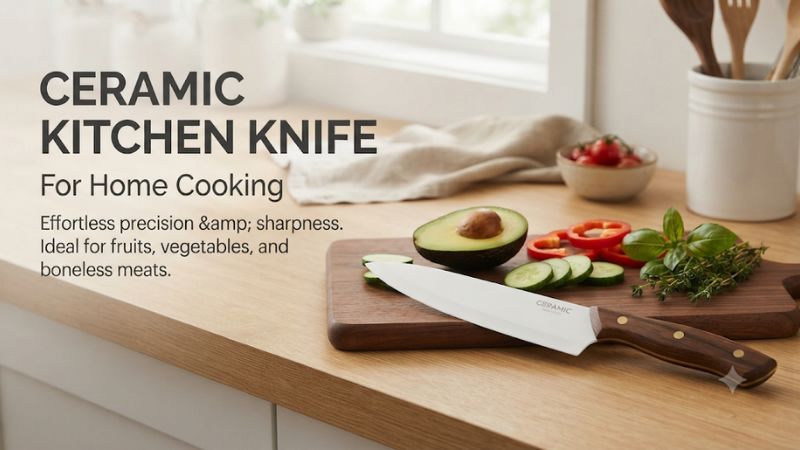
Understanding Genuine Ceramic Blade Construction
Genuine ceramic kitchen knives are commonly manufactured using zirconia, a hard ceramic material that differs substantially from conventional steel. Specialized manufacturing processes transform ceramic material into a blade capable of supporting a fine cutting edge while maintaining relatively low overall weight.
The properties of zirconia influence both the benefits and limitations of ceramic knives. High hardness can help a properly maintained blade resist gradual edge wear, while relatively low flexibility makes ceramic construction less forgiving when subjected to sideways pressure.
Important characteristics of genuine ceramic blades include:
- High material hardness that supports long-term cutting performance.
- Excellent resistance to conventional rust and corrosion.
- Relatively lightweight construction compared with many forged steel knives.
- Limited tolerance for bending, twisting, and sudden impacts.
- Specialized sharpening requirements when edge performance declines.
These characteristics make ceramic knives especially useful for controlled slicing applications. They also explain why buyers should maintain realistic expectations about the tasks their new knife can safely perform.
A ceramic knife should not be evaluated solely according to its initial sharpness. Long-term suitability depends on whether the blade matches the ingredients, preparation techniques, and maintenance practices associated with your household.
Genuine Ceramic Versus Ceramic-Coated Steel
One of the most important distinctions when shopping for kitchen cutlery is the difference between genuine ceramic blades and steel knives finished with ceramic coatings. Although online product descriptions sometimes use similar terminology, these two construction methods produce tools with fundamentally different physical properties and maintenance requirements.
A genuine ceramic knife uses ceramic material as the primary blade structure. A ceramic-coated knife generally uses a conventional steel blade covered with a coating intended to provide particular appearance or surface characteristics.
| Feature | Genuine Ceramic Blade | Ceramic-Coated Steel Blade |
|---|---|---|
| Core material | Zirconia ceramic | Steel |
| Blade flexibility | Relatively low | Depends on steel construction |
| Rust resistance | Ceramic material does not rust | Depends on steel and coating condition |
| Sharpening method | Ceramic-compatible abrasives | Steel-compatible sharpening methods |
| Impact tolerance | Relatively limited | Generally more forgiving |
| Cutting applications | Controlled slicing | Depends on blade design |
| Surface appearance | White, black, or other ceramic finishes | Frequently colored or decorative |
Buyers should carefully examine the blade material section of a product listing rather than relying on photographs or color descriptions. A white blade does not automatically indicate genuine ceramic construction, just as a black blade does not necessarily represent a premium ceramic material.
Choosing the correct material is particularly important because sharpening and care instructions differ between the two knife categories.
Who Benefits Most From Ceramic Kitchen Cutlery?
Ceramic knives provide their greatest value when the household frequently performs preparation tasks suited to their material characteristics. Instead of assuming ceramic construction represents a universal upgrade, consider how often you work with ingredients that can be sliced without substantial resistance.
Ceramic cutlery may be particularly appealing to:
- Home cooks who prepare fresh salads frequently.
- Households that regularly serve fruit.
- People preparing sandwiches and light lunches.
- Vegetarian and plant-forward households.
- Cooks who prefer lightweight preparation tools.
- Individuals who want a dedicated knife for boneless ingredients.
A household that frequently prepares bone-in meat, frozen ingredients, hard squash, or other resistant foods may benefit more from investing in suitable steel knives before purchasing ceramic alternatives.
The ideal approach for most home kitchens involves combining complementary knife materials rather than committing exclusively to one construction method.
How to Choose a Ceramic Kitchen Knife for Home Cooking
Choosing the right knife begins with identifying the preparation tasks you perform most frequently. Blade length, cutting profile, handle construction, and maintenance requirements should work together to provide a comfortable and practical experience. A premium knife with impressive specifications may offer limited value if its dimensions or geometry do not suit your kitchen routine.
Before comparing individual products, establish a clear understanding of the characteristics that matter most for everyday household preparation.
Select a Blade Length That Matches Your Cooking Habits
Blade length influences cutting capacity, maneuverability, storage requirements, and the amount of working space needed during meal preparation. Although longer knives can accommodate larger ingredients, they are not automatically more effective for every household.
A compact blade may provide better control when preparing fruit or sandwich ingredients. A moderately sized santoku may offer greater versatility for households that regularly prepare complete meals.
| Blade Length | Typical Knife Style | Recommended Applications |
|---|---|---|
| 3–3.5 inches | Paring knife | Small fruits and trimming |
| 4–4.5 inches | Utility knife | Sandwiches and light preparation |
| 5–5.5 inches | Santoku | Everyday vegetable preparation |
| 6 inches | Chef’s santoku | Family meals and larger portions |
| 7 inches or longer | Larger chef’s knife | Suitable larger ingredients |
For many home cooks, a five- to six-inch ceramic knife offers a practical balance between cutting capacity and control. This size range can handle numerous everyday ingredients without requiring the working clearance associated with significantly longer blades.
Small households may achieve greater value from a compact utility knife if their meals rarely involve large vegetables or substantial ingredient quantities.
Understand Different Ceramic Knife Profiles
Knife geometry affects how naturally a blade moves through food. Ceramic knives are available in several familiar kitchen profiles, but each shape has particular advantages depending on the preparation application.
A santoku knife generally features a relatively broad blade with a profile suited to controlled slicing. Its geometry can be convenient for preparing vegetables, fruits, and appropriate boneless ingredients.
A utility knife uses a narrower blade that provides excellent maneuverability when working with smaller portions. It is especially useful for light lunches, snacks, and quick food preparation.
A paring knife offers a compact cutting surface for detailed tasks. Its small dimensions can improve control when trimming suitable ingredients, although ceramic paring knives should not be used for prying or cutting around hard pits.
A chef’s knife may offer a longer cutting edge and different curvature. However, ceramic chef’s knives should still be used according to their material limitations rather than treated as heavy-duty steel alternatives.
Choose a santoku if:
- You want one versatile ceramic preparation knife.
- You regularly prepare vegetables.
- Your cutting board accommodates a moderately sized blade.
Choose a utility knife if:
- You frequently prepare small meals.
- Your kitchen has limited working space.
- You prefer compact and maneuverable tools.
Choose a paring knife if:
- You already own a suitable general-purpose knife.
- You frequently prepare fruit.
- You need an additional tool for detailed preparation.
Evaluate Handle Shape and Construction
The handle plays an important role in how comfortably a knife performs during repeated cutting tasks. Ceramic blades are generally lightweight, which means the relationship between blade weight and handle construction can noticeably influence the overall balance of the knife.
A comfortable handle should allow you to maintain control without squeezing excessively tightly. Its shape should also provide predictable positioning when transitioning between ingredients.
Common handle materials include:
- Molded plastic for straightforward everyday maintenance.
- Textured synthetic materials for improved grip characteristics.
- Soft-touch materials for buyers who prefer a cushioned feel.
- Finished wood for distinctive appearance and craftsmanship.
Synthetic handles are often practical for busy households because they generally require less maintenance than wooden alternatives. However, durability and comfort vary according to the quality of individual products.
Wood handles may appeal to cooking enthusiasts who value traditional materials, but they typically require greater attention to moisture exposure and drying.
Handle comfort is ultimately subjective. A design that feels comfortable to someone with large hands may not provide the same experience to a person with smaller hands. If purchasing online, examine handle photographs, dimensions, and descriptions carefully.
Prioritize Balance Rather Than Weight Alone
Many buyers initially select ceramic knives because they want lighter kitchen tools. While low weight can make a blade easier to maneuver, overall balance also affects comfort and cutting control.
A knife that feels excessively handle-heavy may behave differently from a traditional chef’s knife. Conversely, an appropriately balanced lightweight knife may provide predictable control during repeated slicing.
Consider the following when evaluating balance:
- Handle length relative to blade length.
- Overall knife dimensions.
- Blade thickness and geometry.
- Weight distribution between the blade and handle.
- Intended preparation applications.
Cooks accustomed to heavy forged steel knives may need time to adjust to the lighter feel of ceramic cutlery. Instead of relying on blade weight to move through ingredients, ceramic knives generally benefit from smooth and controlled cutting movements.
Avoid selecting a knife solely because it is the lightest product available. A slightly heavier model with better handle geometry may provide a more comfortable experience.
Check Manufacturer Sharpening Support
Although ceramic blades can retain useful cutting performance for extended periods, they are not permanently sharp. Eventually, appropriate sharpening or professional servicing may become necessary.
Before purchasing a ceramic knife, determine whether the manufacturer provides clear maintenance instructions and access to compatible sharpening methods.
Important questions include:
- Does the manufacturer recommend a specific sharpener?
- Is professional ceramic knife sharpening available?
- Can minor edge damage be professionally evaluated?
- Are sharpening services accessible within the United States?
- Does the warranty distinguish manufacturing defects from accidental damage?
These considerations are particularly important when purchasing premium ceramic cutlery. A higher initial investment is easier to justify when the manufacturer offers practical long-term maintenance support.
Avoid assuming that an existing steel knife sharpener can maintain a ceramic blade. Many conventional sharpening systems are not designed for genuine ceramic construction.
Choosing Ceramic Knives for Different Home Cooking Styles
Every household approaches cooking differently. Some people prepare elaborate meals several times each week, while others rely on quick lunches, simple dinners, and occasional meal preparation. Selecting ceramic cutlery according to these routines can improve the likelihood that the knife becomes a frequently used kitchen tool.
The most useful purchase is often a blade that solves an existing preparation problem rather than a premium product selected exclusively because of its specifications.
For Small Apartments and Limited Kitchen Space
Apartment kitchens often have relatively compact preparation surfaces and limited storage capacity. Large knives may require more working clearance than the available countertop can comfortably provide, especially when appliances, dishes, and ingredients occupy the same area.
A four- to 5.5-inch ceramic knife may offer a useful solution for everyday preparation in these environments. Smaller dimensions make it easier to position the blade appropriately on a compact cutting board and store it within a protected drawer compartment.
Recommended priorities include:
- Compact blade dimensions.
- Comfortable handle construction.
- Compatible protective sheath.
- Straightforward cleaning requirements.
- Sufficient versatility for everyday ingredients.
A single ceramic santoku or utility knife may provide better value than a large coordinated collection. Additional knives should be purchased only when they serve distinct preparation requirements.
Apartment residents should also maintain an appropriate steel knife for ingredients that require greater impact resistance or cutting versatility.
For Families Preparing Several Meals Each Day
Families frequently prepare ingredients in larger quantities. A typical evening meal may involve several vegetables, suitable proteins, and fruit for multiple people, making cutting capacity an important consideration.
A moderately sized ceramic santoku can serve as a useful dedicated slicing tool within a broader family kitchen collection. A six-inch blade may offer additional flexibility when working with larger portions, provided the ingredients are appropriate for ceramic construction.
Families should prioritize:
- Blade length suitable for medium-sized ingredients.
- Durable and comfortable handle construction.
- Clear cleaning instructions.
- Protected storage.
- Easy access to appropriate steel alternatives.
A family kitchen may benefit from owning both a general-purpose ceramic knife and a compact ceramic utility knife. However, purchasing several overlapping blade sizes may provide limited additional value.
Households with children should store all kitchen knives securely and prevent unsupervised access. Dedicated storage is especially important when protecting ceramic cutting edges from accidental contact with other utensils.
For Vegetarian and Plant-Forward Cooking
Plant-forward households frequently prepare ingredients that align with the strengths of ceramic cutlery. Tomatoes, cucumbers, peppers, mushrooms, suitable fruits, and numerous salad vegetables can be prepared using smooth slicing movements.
A lightweight ceramic santoku may therefore become a particularly useful everyday tool. Its cutting geometry can help users complete several preparation tasks without repeatedly switching between knives.
Nevertheless, vegetarian cooking also includes ingredients that may be unsuitable for ceramic blades. Large hard squash, tough root vegetables, and foods requiring substantial force are better prepared with appropriate steel cutlery.
A practical mixed collection might include:
- Ceramic santoku for suitable vegetables and fruit.
- Steel chef’s knife for resistant ingredients.
- Serrated bread knife for bread and similar foods.
- Steel paring knife for tasks requiring a more forgiving blade.
This arrangement provides versatility without expecting ceramic construction to perform every kitchen cutting application.
For Weekly Meal Preparation
Meal preparation often involves processing numerous ingredients consecutively before dividing them into storage containers. Repeated slicing can make handle comfort, blade size, and overall maneuverability more important than decorative features.
Ceramic knives can be useful when the meal preparation routine includes substantial quantities of suitable fresh produce and boneless ingredients.
For example, a weekly preparation session may involve slicing cucumbers for lunches, preparing peppers for cooked meals, and portioning fruit for snacks. A ceramic santoku can perform these applications when the user maintains controlled cutting technique.
Meal preparation buyers should consider:
- Whether the knife remains comfortable during extended use.
- How easily ingredients can be prepared on the available cutting board.
- Whether cleaning requirements fit the preparation routine.
- Whether multiple knife materials are available for different foods.
- Where the knife will be stored after use.
The goal is to create an efficient preparation setup rather than relying on one blade regardless of ingredient characteristics.
For Beginners Learning to Cook at Home
Beginners may find ceramic cutlery appealing because of its lightweight construction and straightforward slicing characteristics. However, learning basic knife handling remains essential, regardless of the blade material.
A new cook should understand that ceramic knives are not inherently safer than steel knives. A sharp ceramic blade can cause serious cuts, and its relatively brittle construction introduces additional handling considerations.
For beginners, a moderately sized santoku may provide a practical introduction to ceramic preparation. Avoid purchasing unusually large or specialized blades before developing confidence with ordinary kitchen tasks.
Important beginner considerations include:
- Using a stable cutting board.
- Maintaining controlled cutting movements.
- Keeping the knife clean and dry.
- Avoiding unsuitable ingredients.
- Storing the blade securely.
- Learning when to select a steel alternative.
Purchasing one reliable ceramic knife is generally more practical than buying an extensive collection before understanding individual cooking preferences.
What Can You Cut With a Ceramic Kitchen Knife?
Ingredient compatibility is one of the most important considerations when purchasing ceramic cutlery. Even a well-designed premium ceramic knife can become damaged if used for applications that exceed the physical capabilities of its blade material. Understanding suitable cutting tasks helps buyers determine whether ceramic construction genuinely fits their daily cooking requirements.
The safest general principle is to use ceramic knives for controlled slicing rather than heavy chopping, prying, or forceful separation.
Recommended Foods for Ceramic Blades
Fresh ingredients that offer relatively low cutting resistance are often suitable for ceramic preparation. A properly maintained blade can provide clean slicing performance without requiring substantial downward force.
Examples of appropriate ingredients include:
- Ripe tomatoes.
- Cucumbers.
- Bell peppers.
- Mushrooms.
- Strawberries.
- Suitable apples and pears.
- Soft vegetables.
- Boneless chicken.
- Boneless meat portions.
- Fish fillets without hard bones.
Ingredient condition remains important. A food that is normally suitable for ceramic cutlery may become inappropriate when frozen or when it contains a hard pit, bone, or unusually resistant section.
Always examine the ingredient before selecting the knife.
Foods and Tasks That Require Steel Cutlery
Ceramic blades should not be treated as substitutes for every steel kitchen knife. Their relatively low tolerance for bending and impact makes certain preparation tasks unsuitable, even when the cutting edge is exceptionally sharp.
Avoid using ceramic knives for:
- Cutting frozen meat or vegetables.
- Separating animal bones.
- Cutting through hard fruit pits.
- Preparing resistant squash requiring force.
- Crushing garlic with the side of the blade.
- Opening packaging or containers.
- Prying apart food portions.
- Cutting directly on stone or glass surfaces.
A suitable steel knife provides greater flexibility for many of these tasks, although users should still select a blade specifically designed for the intended application.
When encountering unexpected resistance during ceramic knife use, stop rather than increasing pressure or twisting the handle.
Preparing Raw Proteins With Ceramic Knives
Ceramic knives can be useful for slicing suitable boneless proteins. Their sharp edges may provide controlled portioning when the ingredient does not contain hard bones or frozen sections.
Nevertheless, food safety requirements remain identical to those associated with conventional cutlery. Ceramic construction does not eliminate the possibility of bacterial contamination or reduce the need for appropriate cleaning.
Use separate preparation surfaces for raw proteins and ready-to-eat produce when possible. Clean the knife, cutting board, and surrounding preparation area according to standard food safety practices.
If a protein contains bones, tough joints, or resistant connective structures, select an appropriate steel knife rather than forcing the ceramic blade through the ingredient.
Ceramic Versus Stainless Steel for Everyday Home Cooking
Comparing ceramic and stainless steel knives involves examining several different characteristics rather than identifying one material as universally superior. Both can provide excellent cutting performance when appropriately designed, maintained, and used for suitable kitchen applications.
Ceramic cutlery generally emphasizes lightweight precision and material hardness, while steel cutlery provides broader flexibility across different blade geometries and demanding preparation tasks.
| Buying Consideration | Ceramic Knife | Stainless Steel Knife |
|---|---|---|
| General weight | Often relatively light | Varies by construction |
| Edge retention | Strong under appropriate use | Depends on steel and heat treatment |
| Impact resistance | Relatively limited | Generally higher |
| Corrosion resistance | Ceramic blade does not rust | Depends on material and maintenance |
| Sharpening convenience | Specialized methods | Numerous options |
| Heavy-duty applications | Generally unsuitable | Suitable with appropriate design |
| Everyday vegetable slicing | Excellent potential | Excellent potential |
| Overall versatility | Specialized | Broad |
Which Material Is Easier to Maintain?
Maintenance convenience depends on the type of work involved. Ceramic blades do not rust like conventional steel, reducing one potential maintenance concern. However, their sharpening requirements and vulnerability to accidental impacts introduce other responsibilities.
Stainless steel knives generally support a wider selection of sharpening systems, making routine maintenance more accessible for many households.
A ceramic knife may require less frequent sharpening under suitable conditions, but when sharpening becomes necessary, the process can be less convenient if specialized equipment or professional services are unavailable.
Before deciding which material is easier to maintain, consider your existing kitchen habits and access to appropriate maintenance options.
Which Material Provides Better Long-Term Value?
Long-term value should account for purchase price, frequency of use, maintenance costs, and the likelihood of accidental damage. A premium ceramic knife may provide excellent value for someone who prepares suitable fresh ingredients every day.
The same knife may provide disappointing value in a household where several people routinely use kitchen knives for unsuitable tasks.
Steel knives often provide greater general-purpose flexibility. Ceramic knives become financially attractive when their specialized cutting characteristics address preparation requirements that occur frequently.
A mixed collection can therefore provide better long-term value than purchasing a large collection made entirely from one material.
How Much Should You Spend on Ceramic Kitchen Cutlery?
Ceramic knives are available at different price levels, reflecting differences in construction, blade materials, handles, manufacturing techniques, and manufacturer support. However, higher prices do not automatically guarantee greater practical usefulness for every home cook.
The appropriate budget should correspond to how frequently the knife will be used and whether premium construction offers meaningful advantages for your particular cooking routine.
Entry-Level Ceramic Knives
Entry-level ceramic knives can provide an affordable introduction to genuine ceramic construction. They are appropriate for buyers who want to determine whether lightweight slicing suits their preparation style before making a larger investment.
When evaluating affordable products, prioritize verified blade material, appropriate geometry, comfortable handle construction, and clear maintenance information.
Avoid products that provide vague descriptions of their blade materials. A low purchase price offers limited value if the knife is actually ceramic-coated steel when the buyer expects genuine ceramic construction.
A basic ceramic santoku from an established manufacturer can often provide sufficient functionality for ordinary home cooking.
Midrange Ceramic Kitchen Knives
Midrange products may offer improved handle construction, more refined blade geometry, or stronger manufacturer support. This category can be attractive to households that already understand the limitations of ceramic cutlery and expect to use their new knife regularly.
Rather than focusing solely on material claims, compare practical differences between available products.
Ask whether the higher price provides:
- A more comfortable handle.
- More suitable blade dimensions.
- Better maintenance support.
- Improved construction.
- More convenient storage options.
If the additional features directly address your cooking requirements, a midrange model may provide better ownership value than a basic alternative.
Premium Ceramic Kitchen Knives
Premium ceramic knives may incorporate advanced ceramic manufacturing processes, upgraded blade materials, or distinctive handle construction. They frequently appeal to cooking enthusiasts who value specialized tools and refined kitchen equipment.
However, premium ceramic knives retain the fundamental limitations associated with ceramic construction. Buyers should not interpret a high purchase price as permission to use the blade for frozen food, bones, prying, or aggressive chopping.
Premium products make the most sense when:
- Ceramic cutlery already forms part of your regular cooking routine.
- The upgraded materials address a specific preference.
- You are willing to maintain the knife appropriately.
- Manufacturer support is accessible.
- The purchase fits comfortably within your kitchen budget.
For occasional cooks, a reliable entry-level or midrange blade may offer comparable practical usefulness.
How to Maintain Ceramic Knives for Long-Term Performance
Proper maintenance is essential for preserving the cutting characteristics of ceramic kitchen cutlery. Although ceramic blades resist conventional rust, they are not immune to damage caused by inappropriate surfaces, accidental impacts, or unsuitable sharpening methods.
A consistent maintenance routine can help protect your investment without introducing unnecessary complexity into everyday cooking.
Choose an Appropriate Cutting Board
The cutting board directly influences how the knife interacts with its working surface. Hard surfaces can contribute to premature blade damage, while appropriate wood or plastic boards generally provide more suitable conditions.
Avoid cutting directly on:
- Glass countertops or cutting boards.
- Marble surfaces.
- Granite countertops.
- Ceramic plates.
- Metal trays.
- Stone serving boards.
Choose a cutting board that provides enough working area for the ingredients being prepared. The board should remain stable and should not shift unexpectedly during cutting.
A suitable cutting surface benefits both ceramic and steel cutlery, making it an important investment for any home kitchen.
Clean the Knife Carefully After Use
Handwashing provides a controlled way to clean ceramic knives while reducing the possibility of accidental contact with other kitchen utensils. Use mild dish soap, water, and an appropriate soft cleaning material.
Avoid leaving the knife submerged in a crowded sink where it may become difficult to see or accidentally strike cookware.
After cleaning, dry the knife carefully and return it to its designated storage location. Wooden handles may require additional attention to moisture exposure.
Always follow the specific cleaning instructions supplied by the manufacturer.
Protect the Blade During Storage
Storage should prevent ceramic blades from contacting hard utensils or becoming exposed to unexpected sideways pressure. A dedicated storage arrangement also improves organization and helps users locate the correct knife quickly.
Suitable options may include:
- Individual protective sheaths.
- Compatible knife blocks.
- Dedicated drawer organizers.
- Manufacturer-provided storage cases.
Do not assume every magnetic storage rack supports ceramic blades. Genuine ceramic material is not attracted to ordinary knife magnets in the same way that suitable steel blades are.
Select a storage system specifically compatible with the knife’s construction.
Know When Sharpening Is Necessary
A ceramic knife may gradually require greater cutting pressure as its edge condition changes. When preparation becomes noticeably less effective, evaluate whether appropriate sharpening or professional servicing is necessary.
Potential indicators include difficulty slicing suitable tomato skins, inconsistent cutting performance, or visible changes to the blade edge.
Never test sharpness by moving a finger along the cutting edge. Use appropriate inspection methods and discontinue use if visible chips or cracks develop.
Manufacturer-approved ceramic sharpening equipment or professional services offer more suitable maintenance options than incompatible steel knife sharpeners.
Common Mistakes When Buying Ceramic Kitchen Knives
Many disappointing ceramic knife purchases result from unrealistic expectations rather than inherent product quality. Buyers may expect ceramic construction to provide the same versatility as steel while requiring no specialized maintenance.
Avoiding several common mistakes can improve long-term satisfaction and help you choose a blade that remains useful throughout your cooking routine.
Purchasing an Entire Set Too Early
A coordinated ceramic knife set can appear attractive because it offers several blade sizes in one purchase. However, new buyers may not yet understand which sizes they will use frequently.
Start with one versatile knife unless your cooking routine clearly requires multiple ceramic blades. After becoming familiar with its handling characteristics, you can make a better decision about whether additional knives are necessary.
Selecting a Knife Based Exclusively on Appearance
Blade colors, decorative handles, and premium packaging may influence initial interest, but they do not determine whether the knife matches your preparation requirements.
Check material descriptions, blade dimensions, manufacturer support, and intended applications before prioritizing appearance.
Ignoring the Cost of Long-Term Maintenance
The initial purchase price does not represent the complete cost of owning ceramic cutlery. Compatible sharpening tools, professional services, and protected storage may introduce additional expenses.
Evaluate these potential costs before purchasing a premium model. A knife with accessible maintenance support may provide better value than a less expensive product with unclear servicing options.
Frequently Asked Questions
Ceramic knives generate numerous questions because their material characteristics differ from familiar kitchen cutlery. Understanding these practical concerns can help buyers make more informed decisions and avoid purchasing equipment that does not suit their household.
Is Ceramic Cutlery Suitable for Daily Cooking?
Ceramic knives can be suitable for daily cooking when the household regularly prepares ingredients compatible with ceramic construction. They are particularly useful for controlled slicing and should generally complement conventional steel cutlery.
What Is the Best Ceramic Knife Size for Home Cooks?
A five- to six-inch santoku provides a practical balance between cutting capacity and maneuverability for many households. Smaller utility knives may be preferable for compact kitchens or light meal preparation.
Can Ceramic Knives Cut Onions?
Ceramic knives can be used to slice suitable onions when controlled cutting movements are applied. Avoid excessive twisting, particularly if the blade becomes lodged inside the ingredient.
Do Ceramic Knives Require Special Sharpeners?
Yes. Genuine ceramic blades require sharpening equipment or professional methods appropriate for their material construction. Conventional steel honing rods and ordinary sharpening machines should not be assumed compatible.
Are Expensive Ceramic Knives Always Better?
Not necessarily. Premium models may offer upgraded materials and refined handles, but practical value depends on your cooking frequency, preferred blade dimensions, and maintenance habits.
Should Every Household Own a Ceramic Knife?
Ceramic cutlery is not essential for every household. It is most beneficial for buyers who frequently perform controlled slicing tasks and want a lightweight alternative to conventional steel knives.
Conclusion
A ceramic kitchen knife for home cooking offers excellent precision when matched to suitable ingredients and proper handling techniques. Choose a comfortable blade size, verify genuine ceramic construction, and prioritize maintenance support. Pairing ceramic and steel knives provides the best everyday cooking flexibility.










Write Your Review
No reviews yet. Be the first to share your experience!