
A coffee grinder should produce a suitable grind for the way you brew, whether that means coarse French press coffee, balanced drip brewing, or fine espresso. We compare six electric and manual grinders for different routines, focusing on grind adjustment, dose control, retention, noise considerations, maintenance, and long-term value.
Quick Verdict: The Best Coffee Grinder for Most People
Best Overall: Baratza Encore ESP. Its adjustment system covers both espresso-oriented grinding and coarser filter-coffee preparation, making it a versatile choice for households that use more than one brewing method.
The best choice changes when brewing priorities become more specific. The Fellow Ode Gen 2 is particularly compelling for people who exclusively make filter coffee, while the OXO Brew Conical Burr Grinder focuses on practical everyday operation. For portable brewing, a quality hand grinder such as the 1Zpresso K-Ultra is worth considering.
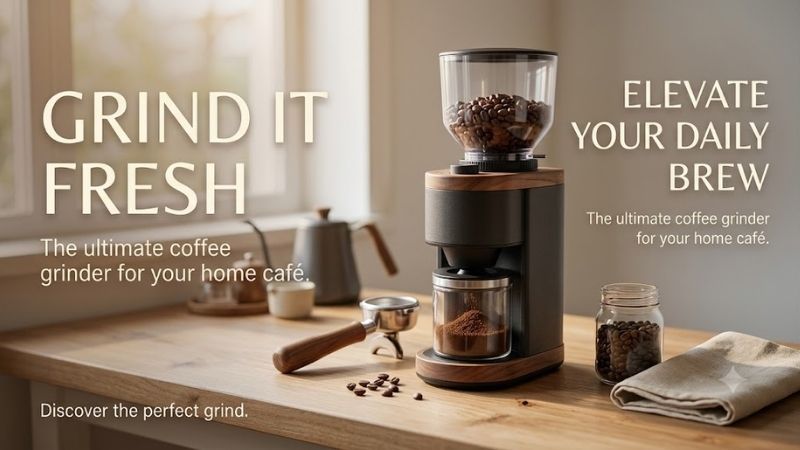
Quick Comparison Table
| Grinder | Best For | Burr or Blade Type | Primary Brewing Range | Main Trade-Off |
|---|---|---|---|---|
| Baratza Encore ESP | Best overall versatility | 40mm conical steel burrs | Espresso through coarse filter brewing | Less specialized than dedicated premium grinders |
| Fellow Ode Brew Grinder Gen 2 | Filter coffee enthusiasts | 64mm flat steel burrs | Pour-over, drip, immersion | Not designed for espresso |
| OXO Brew Conical Burr Grinder | Everyday drip coffee | Conical stainless steel burrs | Drip, pour-over, French press | Limited traditional espresso suitability |
| Fellow Opus Conical Burr Grinder | Compact all-purpose setup | Conical burrs | Espresso through cold brew | Adjustment system requires learning |
| Baratza Virtuoso+ | Programmable filter grinding | Conical steel burrs | Primarily filter methods | Not a dedicated espresso grinder |
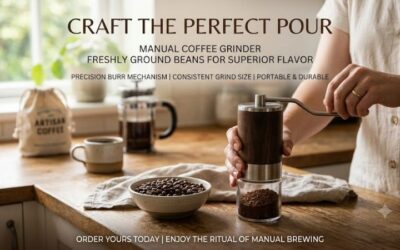
| 1Zpresso K-Ultra | Portable premium grinding | Manual stainless steel conical burr | Multiple methods | Requires hand grinding |
How We Selected These Coffee Grinders
The broad keyword coffee grinder covers more than a single type of machine.
An inexpensive blade grinder, an electric burr grinder, a manual grinder, and an espresso-focused grinder all reduce whole beans into smaller particles. Their consistency, adjustment systems, convenience, and practical applications differ substantially.
We selected six grinders to address real consumer needs rather than simply filling the list with six machines that have similar specifications.
Our main evaluation criteria were grind range, adjustment usability, bean capacity, dosing workflow, retention, cleaning access, and compatibility with common brewing methods.
We also considered whether each machine’s strongest use case was clearly supported by its design.
A grinder advertised as capable of very fine settings is not automatically suitable for repeatable espresso. Traditional espresso generally requires precise adjustments within a narrow range.
Similarly, a premium grinder focused on filter coffee may offer excellent brewing flexibility while remaining unsuitable for espresso.
We have not independently measured particle-size distributions, sound levels, static retention, grinding speed, or durability. Recommendations are based on documented features and practical ownership analysis.
Detailed Reviews of the Best Coffee Grinders
1. Baratza Encore ESP — Best Overall Coffee Grinder
Best For: Households preparing both espresso and filter coffee.
Why We Picked It
The Encore ESP is one of the more practical ways to combine a broad brewing range with a familiar electric grinder format.
It builds on Baratza’s recognizable Encore-style housing while introducing an adjustment arrangement intended to provide finer control in the espresso range.
That matters because ordinary all-purpose grinders may have broad adjustment capability but insufficient precision at the fine end.
Key Specifications
- Model: Encore ESP
- Burrs: 40mm conical steel, M2
- Adjustment: 40 numbered settings
- Espresso-focused range: Settings 1–20
- Filter-focused range: Settings 21–40
- Hopper capacity: Approximately 300 grams
- Grounds-bin capacity: Approximately 120 grams
- Burr access: Quick-release design
- US power: 100–120V
Features and Benefits
The dual-range adjustment system is the Encore ESP’s strongest feature.
The finer portion provides smaller adjustment increments appropriate for dialing in espresso.
The coarser portion allows broader changes for filter coffee.
This means users can prepare espresso in the morning and grind for French press or pour-over later without maintaining two separate grinders.
The removable burr arrangement supports routine maintenance.
Performance and Practical Use
The Encore ESP is suited to someone using a semi-automatic espresso machine alongside a drip brewer.
However, switching repeatedly between extreme settings can introduce some inconvenience. Grounds retained in the mechanism may affect the next dose, and users should follow the manufacturer’s recommended procedures when changing settings.
Its conical burr design provides a practical general-purpose platform, but it is not automatically equivalent to a large commercial espresso grinder.
What Makes It Different
Its grind-adjustment arrangement specifically addresses the conflict between espresso precision and broader all-purpose use.
Pros
- Espresso-capable adjustment range.
- Suitable for multiple brewing methods.
- Accessible burr maintenance.
- Established parts and support ecosystem.
Cons
- More expensive than basic entry-level grinders.
- Switching methods may require purging retained grounds.
- Not as specialized as premium dedicated espresso grinders.
Buy If: You want one electric grinder for espresso and ordinary filter coffee.
Skip If: You only brew pour-over and want a filter-specific flat-burr design.
2. Fellow Ode Brew Grinder Gen 2 — Best for Filter Coffee
Best For: People who primarily prepare pour-over, drip, French press, or cold brew.
Why We Picked It
The Ode Gen 2 is intentionally designed around brewed coffee rather than traditional espresso.
That specialization is an advantage for the right buyer.
It provides 64mm flat burrs and a single-dose-oriented workflow in a compact countertop appliance.
Key Specifications
- Burrs: 64mm flat steel, Gen 2
- Intended methods: Pour-over, drip, immersion, cold brew
- Espresso compatibility: Not recommended by Fellow
- Hopper: Single-dose-oriented
- Adjustment: Stepped
- Additional features: Anti-static technology and improved catch cup
Features and Benefits
Its flat-burr system is designed for filter-coffee grinding.
The single-dose workflow encourages users to measure the beans needed for each brew rather than leave large quantities in a hopper.
This can be appealing to people who regularly switch between coffee varieties.
The Gen 2 anti-static features are intended to reduce the mess associated with dry grounds.
Performance and Practical Use
The Ode Gen 2 makes particular sense alongside a Hario V60, Chemex, automatic drip machine, or French press.
However, it should not be purchased as an espresso grinder merely because it has relatively fine settings.
Fellow explicitly distinguishes its intended brew range from espresso requirements.
What Makes It Different
It focuses on filter-coffee performance instead of claiming to handle every brewing method.
Pros
- Filter-focused flat burrs.
- Single-dose workflow.
- Compact design.
- Suitable for multiple nonespresso methods.
Cons
- Not suitable for traditional espresso.
- Premium price compared with entry-level grinders.
- Small-batch workflow may not suit everyone.
Buy If: You exclusively prepare brewed coffee and want a purpose-built grinder.
Skip If: An espresso machine is part of your current or future setup.
3. OXO Brew Conical Burr Coffee Grinder — Best for Everyday Drip Coffee
Best For: Households seeking straightforward electric grinding for drip, pour-over, and French press.
Why We Picked It
The OXO Brew Conical Burr Grinder prioritizes familiar controls and practical coffee preparation.
It is especially relevant to people upgrading from pre-ground coffee or an inexpensive blade grinder.
Key Specifications
- Burr type: Stainless steel conical
- Main adjustments: 15 numbered settings with additional microsettings
- Grounds collection: Removable container
- Hopper: Large bean capacity
- Grinding controls: Timed operation
- Intended range: General coffee brewing
Features and Benefits
Conical burrs crush and cut beans through a controlled gap.
The adjustable grind setting is more suitable for repeatable filter coffee than an ordinary blade grinder.
Timed operation can simplify making similar batches, although it is not the same as measuring coffee weight.
Performance and Practical Use
The OXO is useful for a household that primarily makes drip coffee every morning.
It can also accommodate coarser brewing methods.
However, users interested in unpressurized traditional espresso should choose a grinder with an adjustment system specifically designed for that purpose.
What Makes It Different
It focuses on accessible everyday coffee grinding rather than advanced specialty controls.
Pros
- Straightforward interface.
- Conical burr construction.
- Broad filter-coffee flexibility.
- Useful for regular household quantities.
Cons
- Not ideal for precision espresso.
- Time-based dosing may vary with coffee type.
- Grounds containers require regular cleaning.
Buy If: You want better fresh-ground coffee for a normal drip brewer.
Skip If: Fine espresso adjustment is your main requirement.
4. Fellow Opus Conical Burr Grinder — Best Compact All-Purpose Alternative
Best For: People who want an espresso-capable grinder with a compact modern housing.
Why We Picked It
The Fellow Opus aims to cover a broad range of coffee preparations while using a conical-burr system.
It offers more espresso-oriented capability than Fellow’s Ode line.
Key Specifications
- Grinding system: Conical burr
- Brewing range: Espresso through cold brew
- Adjustment: External settings and additional internal calibration
- Hopper: Small-batch configuration
- Electrical operation: Automatic
- Grounds collection: Removable catch cup
Features and Benefits
Its broad grind range can accommodate households using several brewing devices.
The compact housing is useful in kitchens where a grinder must fit beside an espresso machine or drip brewer.
Performance and Practical Use
The Opus can be a reasonable option for people learning espresso.
However, its adjustment arrangement includes an additional calibration mechanism that some users may find less intuitive than a single simple dial.
Buyers who routinely switch between espresso and French press should consider how much effort will be required to return to previous settings.
What Makes It Different
It provides broad grinding capability in a design-focused home coffee appliance.
Pros
- Intended for espresso and filter methods.
- Compact.
- Suitable for several brewing styles.
- Single-dose-oriented workflow.
Cons
- Adjustment system has a learning curve.
- Cleaning and retention management still matter.
- More involved than simple drip-only grinders.
Buy If: You want a compact all-purpose burr grinder.
Skip If: You want a simple hopper-based grinder for large daily drip batches.
5. Baratza Virtuoso+ — Best for Programmable Filter Grinding
Best For: People who routinely grind measured batches for drip or pour-over coffee.
Why We Picked It
The Virtuoso+ combines an established burr-grinder design with a digital timer.
It is most useful when the buyer values straightforward repeatability for regular brewed coffee.
Key Specifications
- Burrs: Conical steel
- Grind settings: 40
- Dosing: Digital timed control
- Display: Digital
- Primary methods: Drip, pour-over, French press, and other filter brewing
- Maintenance: Accessible burr assembly
Features and Benefits
The timer provides a convenient way to repeat a familiar grind duration.
This can help households that make similar coffee quantities every day.
However, grind time does not guarantee exact weight.
Bean density, roast, and feed behavior may alter output.
Performance and Practical Use
The Virtuoso+ works particularly well when paired with a regular filter-coffee routine.
It is less compelling for people who prioritize precise espresso adjustment or single-dose workflow.
What Makes It Different
It offers a traditional hopper grinder with improved timed operation.
Pros
- Digital timer.
- Broad filter-coffee range.
- Straightforward daily use.
- Maintenance-friendly design.
Cons
- Timer is not a scale.
- Not a dedicated espresso grinder.
- Hopper storage may be less desirable when frequently changing beans.
Buy If: You prepare similar ground-coffee batches regularly.
Skip If: Espresso dialing-in is your priority.
6. 1Zpresso K-Ultra — Best Premium Manual Option
Best For: Coffee enthusiasts seeking a portable grinder with extensive adjustment capability.
Why We Picked It
The K-Ultra is a high-end manual grinder built for users who want precision and portability without relying on a motorized appliance.
Key Specifications
- Operation: Hand crank
- Burrs: Stainless steel conical
- Adjustment: External numbered dial
- Capacity: Suitable for individual and moderate batches
- Housing: Metal construction
- Portability: Folding-handle design
Features and Benefits
The external adjustment dial makes grind changes accessible.
The hand-operated design works away from electrical outlets.
Its folding handle and compact body are useful for travel or storage.
Performance and Practical Use
The K-Ultra is suitable for coffee drinkers who prepare one or two cups at a time.
Grinding larger quantities by hand requires additional effort.
Very fine espresso grinding may also take more effort than coarse filter grinding.
What Makes It Different
It provides a premium manual alternative to countertop electric grinders.
Pros
- Portable.
- No electrical power.
- External grind adjustment.
- Suitable for multiple brewing methods.
Cons
- Requires physical effort.
- Less convenient for large batches.
- Premium hand-grinder pricing.
Buy If: You value portable precision and enjoy manual coffee preparation.
Skip If: Your household grinds large batches every morning.
Coffee Grinder Buying Guide
Burr vs. Blade Grinding
Burr grinders use two cutting surfaces separated by an adjustable gap.
Blade grinders use a rotating blade to repeatedly strike the beans.
The distinction matters because burr systems typically provide more controlled particle sizes.
Blade grinders can be inexpensive and useful for basic tasks, but the results depend heavily on pulse duration and bean movement.
For someone serious about coffee brewing, a burr grinder is generally a more practical investment.
Match the Grinder to Your Brewing Method
Different brewers require different particle sizes.
French press usually uses coarser grounds than espresso.
Pour-over and drip coffee typically occupy a middle range, while espresso requires fine adjustments.
A grinder described as all-purpose should be examined carefully if espresso is important.
Why Grind Uniformity Matters
Coffee particles extract at different rates.
Very fine particles have more exposed surface area relative to their mass, while larger particles extract more slowly.
An excessively broad particle distribution can make brewing less predictable.
However, no grinder produces particles of perfectly uniform size.
Espresso Adjustment
Espresso requires fine control because small grind changes can alter flow through the coffee puck.
A grinder with a broad range but large adjustment steps may struggle to dial in espresso.
Look for sufficiently fine adjustment in the espresso range.
Conical vs. Flat Burrs
Conical and flat burr systems have different geometries.
Neither produces universally better coffee.
Burr design, manufacturing precision, alignment, motor behavior, and adjustment matter more than the simple label.
Grind Retention
Retention refers to coffee grounds remaining inside the grinder.
Some retention is normal.
For users who change coffees frequently, retained grounds can affect the next dose.
Single-dose grinders are designed to reduce this problem, but zero retention should not be assumed.
Static and Mess
Dry grounds can cling to containers and grinder surfaces.
Static is influenced by coffee, humidity, material, and grinder design.
Some machines incorporate anti-static systems.
Users should follow manufacturer cleaning recommendations rather than introducing water or additives into an electrical grinder without approval.
Hopper vs. Single Dosing
A large hopper is convenient for daily household brewing.
Single dosing involves weighing beans before each grind and is useful when changing coffee frequently.
Neither approach is universally superior.
Timed Dosing vs. Weight Dosing
A timer controls grinding duration, not necessarily coffee mass.
Weight-based dosing attempts to target a mass.
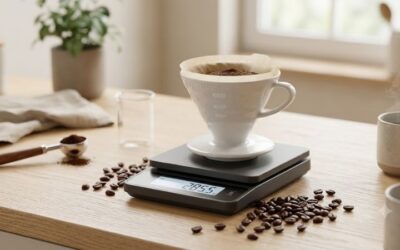
For precise brewing, a separate coffee scale is often useful regardless of the grinder.
Noise
Electric grinders make mechanical noise.
Larger burrs or different motors do not automatically mean quieter operation.
If noise is a priority, look for credible independent sound measurements rather than assuming premium pricing guarantees silence.
Cleaning and Burr Maintenance
Coffee oils and particles accumulate inside a grinder.
Follow the manufacturer’s cleaning instructions and avoid washing non-washable burr components.
Unplug electrical grinders before appropriate maintenance.
Burr Replacement and Repair
Burrs can wear with extended use.
A repairable grinder with accessible replacement parts can offer better long-term value than a sealed disposable appliance.
Frequently Asked Questions
What is the best coffee grinder overall?
The Baratza Encore ESP offers useful versatility for households preparing both espresso and ordinary filter coffee.
Is a burr grinder better than a blade grinder?
For controlled coffee brewing, burr grinders generally offer more repeatable particle-size adjustment.
Can one grinder handle espresso and French press?
Some can, including espresso-capable all-purpose models. Adjustment precision is especially important for espresso.
Is a manual grinder as good as an electric grinder?
A well-designed manual grinder can produce suitable grounds. Electric models provide more convenience for frequent or larger batches.
How often should a coffee grinder be cleaned?
It depends on use, coffee type, and manufacturer guidance. Regular removal of accumulated grounds is important.
Does burr size determine coffee quality?
No. Burr geometry, construction, alignment, and operating conditions also matter.
Should you store coffee beans in the hopper?
It is convenient for some routines, but airtight storage away from heat and light may better support freshness.
Can you use a coffee grinder for spices?
Not unless the manufacturer approves that use. Spices can leave odors, oils, and residue that affect future coffee.
Conclusion
The Baratza Encore ESP is our best coffee grinder for households that prepare both espresso and filter coffee. Choose Fellow Ode Gen 2 for brew-focused grinding, OXO Brew for everyday drip coffee, Fellow Opus for compact versatility, or 1Zpresso K-Ultra for portable hand grinding. Prioritize adjustment range, workflow, and serviceability over marketing claims.
Write Your Review
No reviews yet. Be the first to share your experience!