
An electric hot pot for beginners can make cooking noodles, soups, vegetables, and simple one-pot meals more convenient without requiring a traditional stovetop. However, small electric hot pots vary in cooking capacity, heating controls, materials, and safety features. This guide explains how to choose your first electric hot pot, understand its limitations, and prepare everyday meals confidently.
- Quick Verdict: What Electric Hot Pot Should Beginners Buy?
- What Is an Electric Hot Pot?
- Understanding Different Electric Hot Pot Designs
- Choosing the Right Capacity
- Temperature Controls and Heating Performance
- Materials and Cooking Surfaces
- Important Beginner Safety Features
- Best Foods for Beginner Electric Hot Pot Cooking
- Cooking Communal Hot Pot Safely
- Cleaning and Maintenance
- Choosing for Different Households
- Common Buying Mistakes
- Frequently Asked Questions
- Conclusion
Quick Verdict: What Electric Hot Pot Should Beginners Buy?
For most first-time buyers, a compact electric hot pot with clearly marked heating controls, a removable or easy-to-clean cooking vessel, stable handles, and an appropriate capacity is a practical choice.
A model in the general 1.5- to 2-liter category may be worth comparing for individual meals or modest two-person portions. However, usable capacity depends on the recipe and manufacturer’s maximum fill level.
Choose a larger appliance if you regularly cook soup or communal hot pot for several people.
| Feature | Why It Matters | Priority |
|---|---|---|
| Cooking capacity | Determines meal portions | High |
| Adjustable heat | Supports boiling and gentler cooking | Essential |
| Temperature protection | Helps manage abnormal overheating | Essential |
| Food-contact materials | Affects cleaning and care | High |
| Safe handles | Reduces handling hazards | High |
| Removable cord or pot | May improve cleaning convenience | Useful |
| Lid design | Helps retain heat and manage steam | High |
| Electrical rating | Determines outlet compatibility | Essential |
| Storage footprint | Important for small kitchens | High |
Beginners should prioritize a straightforward appliance with well-documented functions rather than one advertised as capable of every cooking method.
What Is an Electric Hot Pot?
Understanding the Appliance
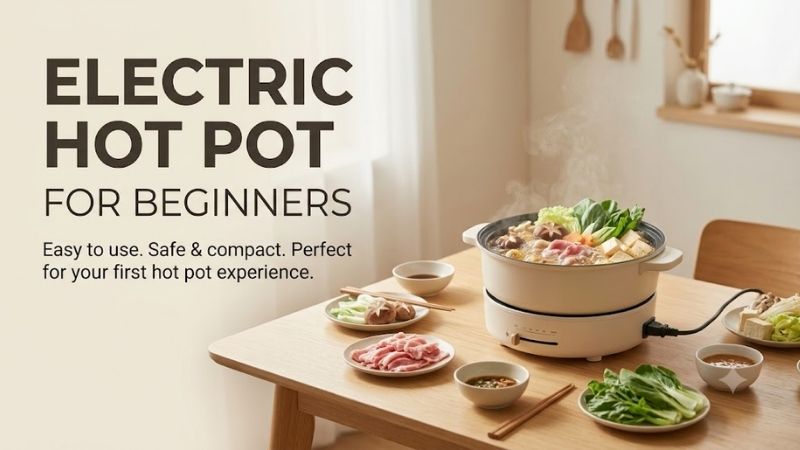
An electric hot pot is a countertop cooking appliance with an integrated electrical heating system and a pot-shaped cooking vessel.
It can heat liquids and cook suitable foods according to its design.
Depending on the model, it may support noodles, soups, boiling, simmering, steaming, or other approved tasks.
Some appliances resemble compact saucepans with handles.
Others are wider communal hot pot machines designed for several people to cook food in broth at the table.
The term electric hot pot can describe both, so determine which type matches your needs before shopping.
Electric Hot Pot vs. Mini Electric Cooking Pot
Many products marketed as mini electric cooking pots perform similar functions to small hot pots.
However, the heating system, capacity, and supported cooking methods differ.
A compact cooking pot may be intended primarily for noodles, soup, and boiling.
Another model may include a sauté function or steaming accessory.
Marketing labels alone do not confirm which foods can be prepared safely.
Consult the exact appliance instructions.
Electric Hot Pot vs. Electric Kettle
An electric kettle is designed primarily to heat water.
An electric hot pot is intended to cook approved foods within the vessel.
Although both heat liquids, they are not interchangeable.
Do not use an ordinary electric kettle to cook noodles, soup, or oily foods unless its manufacturer explicitly permits those applications.
Food residues can interfere with kettle heating mechanisms and cleaning.
Electric Hot Pot vs. Slow Cooker
A slow cooker is designed for extended cooking at controlled heating conditions.
A small electric hot pot generally provides more direct heating for tasks such as boiling or preparing noodles.
However, cooking behavior depends on the model.
A hot pot with a lower heat setting is not automatically suitable for all-day slow cooking.
Only use long cooking cycles when the appliance expressly supports them.
Electric Hot Pot vs. Pressure Cooker
A conventional electric hot pot is not a pressure cooker.
It normally operates without a sealed pressure vessel.
Pressure cooking requires specialized lids, seals, pressure-control systems, and safety mechanisms.
Never modify an electric hot pot to trap steam or increase pressure.
Understanding Different Electric Hot Pot Designs
Compact Single-Pot Models
A compact single-pot design is useful for individual meals and small portions.
Its narrower footprint may suit studio apartments or small home kitchens.
However, small capacity can become restrictive when preparing broth and several ingredients together.
A pot that appears large enough for one serving of noodles may overflow if filled with broth, vegetables, and protein.
Choose capacity based on the complete meal.
Wide Communal Hot Pots
Wide hot pots provide a larger cooking surface and can support shared meals.
They are commonly used for tabletop cooking where ingredients are added to hot broth.
However, a wider vessel requires more table space and a suitable power connection.
It also increases the importance of stable placement, safe cord routing, and protecting guests from hot surfaces.
A communal appliance may be unnecessary for a person who mostly prepares instant noodles alone.
Divided Hot Pot Designs
Some communal hot pots have divided cooking compartments.
These may allow different broths or flavor profiles to be prepared simultaneously.
For example, a household may want one mild broth and one spicy broth.
However, the divider takes up space and may complicate cleaning.
Do not assume the compartments are completely isolated if the design allows liquid transfer or requires specific fill levels.
Electric Pots With Steamers
Certain models include removable steaming baskets or trays.
These may provide additional flexibility for vegetables, buns, or other approved foods.
However, accessory dimensions and safe steaming procedures vary.
Check whether the steamer is included, how it fits, and whether the lid allows proper steam release.
Never use an unapproved accessory that obstructs the appliance’s ventilation or lid.
Choosing the Right Capacity
Individual Meals
A small electric hot pot can be practical for one-person soups, noodles, and simple dishes.
However, the usable volume is less than the brim-to-brim capacity.
Food may bubble or expand during cooking.
Choose enough headroom to prevent overflow.
For people who often prepare a complete meal with broth, noodles, vegetables, and protein, a slightly larger vessel can offer more flexibility than the smallest available model.
Two-Person Meals
A moderately sized electric pot may accommodate some shared meals.
However, portion size depends on the recipe.
Two small bowls of noodles are different from a large hot pot dinner with several ingredients.
Estimate liquid and food quantities together.
Family Hot Pot Meals
A larger wide pot is generally more practical for multiple people.
It provides greater access for adding and removing ingredients.
However, the larger vessel may have a higher electrical rating and require a stronger, more stable serving surface.
Check the total filled weight and electrical requirements.
Understanding Maximum Fill Lines
A maximum fill mark is a safety limit, not a recommended target for every recipe.
Foamy ingredients, noodles, and boiling broth may need additional headroom.
Never exceed the manufacturer’s stated capacity.
A 2-liter vessel should not be assumed suitable for cooking exactly 2 liters of vigorously boiling soup.
Temperature Controls and Heating Performance
Simple Two-Level Controls
Some beginner-friendly hot pots have basic low and high settings.
This can be sufficient for boiling water and preparing straightforward meals.
However, a low setting may still be too hot for delicate simmering on certain appliances.
Evaluate whether the heat settings match your recipes.
Adjustable Temperature Dials
A temperature dial can provide additional flexibility.
It may help with bringing broth to a boil and then reducing heating intensity.
However, the numbers on the dial may represent control positions rather than verified food temperatures.
Do not assume that a marked setting produces identical temperatures in every food.
Digital Controls
Some hot pots include electronic temperature settings, timers, or specialized programs.
These can be convenient but may increase complexity.
For beginners, clear controls often matter more than numerous presets.
Choose a digital model only when its features support cooking tasks you perform regularly.
Boiling Speed
Actual heating time depends on water quantity, starting temperature, electrical power, pot construction, and operating conditions.
A high wattage rating may support greater heating output, but it does not guarantee a particular boiling time.
Be cautious with claims that an appliance prepares every noodle recipe in only a few minutes.
Ingredients, preparation, and food-safety requirements can change the total time substantially.
Low-Heat Performance
A useful hot pot should provide enough control to avoid excessive boiling when a recipe needs gentle heating.
Some inexpensive designs cycle heating aggressively.
This may be acceptable for instant noodles but inconvenient for delicate soups or milk-based dishes.
If you expect to prepare sauces or more elaborate meals, lower-temperature control deserves careful attention.
Materials and Cooking Surfaces
Stainless Steel Cooking Vessels
Stainless steel is common in electric cooking pots.
It can provide durable food-contact construction.
However, food may stick if a recipe requires dry cooking or insufficient liquid.
The exact steel grade, thickness, and cleaning requirements vary.
A stainless steel interior does not automatically mean the appliance can be placed on a conventional stovetop.
Most electric hot pots must be used only with their designed electrical heating system.
Nonstick-Coated Pots
Nonstick surfaces may simplify cooking and cleaning.
They can be useful for certain approved recipes involving eggs or ingredients that might stick.
However, the coating has specific temperature and utensil limitations.
Do not heat a nonstick pot empty beyond manufacturer instructions.
Avoid metal scraping tools where prohibited.
Ceramic-Style Coatings
Some products advertise ceramic coatings.
However, the term does not establish a universal composition, durability, or safety profile.
Check the actual manufacturer documentation.
A coating described as healthy or natural should not automatically be considered superior.
Glass Lids
A transparent lid can help monitor boiling and ingredient movement.
However, glass can become very hot.
Inspect whether the handle provides safe clearance.
Do not subject the lid to sudden temperature changes unless permitted.
Never seal steam outlets or place heavy objects on the lid.
Important Beginner Safety Features
Automatic Overheating Protection
Some electric hot pots include thermal protection.
This may interrupt heating under abnormal conditions.
However, overheating protection is not a substitute for appropriate cooking practices.
Do not intentionally operate an empty pot or leave it unattended.
Boil-Dry Protection
Certain models have boil-dry protection.
This can be useful when water evaporates unexpectedly.
However, not all electric hot pots include the same safeguards.
Always maintain required liquid levels.
Stable Handles
Handles should provide a secure grip and appropriate separation from hot surfaces.
Some incorporate heat-resistant materials.
However, no handle should be assumed completely cool under all conditions.
Follow handling instructions and use suitable heat protection.
Lid and Steam Management
Steam can cause severe burns.
Keep hands and face away from the escaping steam when lifting the lid.
Open the lid in the direction recommended by the manufacturer.
Do not place your face directly above boiling broth.
Electrical Connections
Use an appropriately rated outlet.
Do not use damaged cords or overloaded power strips.
Avoid placing the appliance where spilled broth could reach electrical connections.
Best Foods for Beginner Electric Hot Pot Cooking
Instant Noodles
Instant noodles are a common first use.
However, follow the noodle package and hot pot instructions.
Add only the permitted amount of water.
Some seasoning mixtures can foam or splatter when boiling vigorously.
Monitor the cooking process.
Vegetable Soup
A hot pot can prepare simple vegetable soups when the recipe fits the appliance.
Cut vegetables into suitable pieces and add adequate liquid.
Different vegetables require different cooking times.
Hard root vegetables may need longer heating than leafy greens.
Avoid overcrowding the pot.
Dumplings
Certain electric hot pots can cook dumplings in boiling water or broth.
However, frozen dumplings may contain raw meat.
Follow package cooking instructions and ensure the filling reaches an appropriate safe temperature.
Do not assume that floating automatically means a dumpling is fully cooked.
Small Pasta Portions
A compact electric pot can be convenient for modest pasta quantities.
However, pasta releases starch and may cause foaming.
Use sufficient water and leave adequate headroom.
A very small pot may not be practical for long pasta shapes or larger servings.
Eggs
Some electric hot pots support boiling eggs in water.
However, they are not necessarily suitable for frying eggs or cooking without liquid.
Use only approved methods.
For ordinary egg preparation, follow appropriate doneness guidance.
Rice
A few multifunction electric pots include rice-cooking instructions.
However, a basic hot pot should not automatically be treated as a rice cooker.
Rice preparation may require specific water levels and temperature control.
Use the manufacturer’s approved program and recipe.
Cooking Communal Hot Pot Safely
Preparing the Broth
Select a broth recipe appropriate for the appliance.
Bring it to the temperature required by the recipe before adding ingredients.
Do not overfill.
A large group may add food faster than the appliance can recover heat.
Wait for the broth to return to the appropriate cooking condition.
Handling Raw Meat
Raw meat can introduce harmful microorganisms into the cooking process.
Keep raw meat on separate plates from cooked food.
Use separate utensils for placing raw ingredients into broth and retrieving finished portions.
Do not use chopsticks that handled raw meat to eat cooked food without appropriate cleaning.
Cooking Poultry
Chicken and other poultry require a safe internal temperature of 165°F.
Thin slices may cook quickly, but actual time depends on thickness and broth temperature.
Do not rely on a fixed number of seconds.
Use an appropriate food-safety method.
Cooking Beef and Pork
Safe internal temperatures depend on the type of meat.
Whole cuts of beef and pork generally require 145°F followed by a three-minute rest, while ground meats generally require 160°F.
For communal hot pot, follow appropriate food-safety guidance and use methods that account for ingredient thickness and preparation.
Keeping Broth Safe
Adding cold raw ingredients can lower broth temperature.
Keep the cooking liquid at an appropriate simmer or boil as required by the recipe.
Do not treat a communal hot pot as a passive warming bowl for raw meat.
Leftovers
Refrigerate perishable leftovers promptly.
Do not leave hot pot broth and cooked ingredients at room temperature for extended periods.
Cool large quantities using shallow containers.
Cleaning and Maintenance
Detachable vs. Non-Detachable Pots
Some hot pots have removable cooking vessels.
Others integrate the heating element and bowl into one assembly.
Removable pots may be easier to wash.
However, dishwasher compatibility and immersion rules vary.
Never immerse electrical components unless explicitly permitted.
Cleaning Nonstick Surfaces
Allow the vessel to cool.
Use manufacturer-approved cleaning tools.
Avoid abrasive materials and sharp utensils that can damage coatings.
Removing Starchy Residue
Noodles, pasta, and rice can leave sticky starch residue.
Clean soon after safe cooling rather than allowing food to dry onto surfaces.
Do not force metal scrapers against the pot.
Maintaining Electrical Connections
Keep the connector and heating base dry.
Inspect the cord for wear.
Stop using the appliance if the plug, housing, or controls appear damaged.
Choosing for Different Households
College Students
A compact electric hot pot may be useful in approved student housing.
However, many residence halls restrict cooking appliances in bedrooms.
Check the exact rules before purchasing.
Studio Apartments
Choose a compact model with simple controls and manageable storage.
However, confirm available counter space and ventilation.
Couples
A moderately sized pot may support shared soups or noodles.
Choose capacity based on actual portions rather than maximum vessel volume.
Families
A wide communal hot pot offers greater access and capacity.
However, it requires appropriate electrical power, table stability, and supervision.
Frequent One-Pot Cooking
A multifunction model may be worthwhile when it genuinely supports your usual recipes.
However, a saucepan and existing stove may provide greater versatility if you already have a suitable kitchen.
Common Buying Mistakes
Choosing by Capacity Alone
Usable cooking volume depends on headroom and ingredients.
Assuming Every Hot Pot Can Fry
Some models are designed mainly for liquid-based cooking.
Ignoring Electrical Power
A small appliance can still draw substantial electricity.
Buying a Shared Hot Pot for One Person
A wide communal model may waste storage space.
Overlooking Steam Hazards
Hot pot lids and broth can cause serious burns.
Using a Warming Setting to Cook Raw Food
A low or warm setting may not safely cook raw ingredients.
Frequently Asked Questions
Is an Electric Hot Pot Good for Beginners?
Yes, when used for approved simple recipes and operated according to its instructions. It is especially convenient for noodles and soups.
What Size Electric Hot Pot Is Best for One Person?
A compact model around 1.5 to 2 liters is a useful category to compare, but actual usable capacity and portion needs vary.
Can an Electric Hot Pot Cook Raw Chicken?
Only when the appliance supports the cooking method and the chicken reaches a safe internal temperature of 165°F.
Can I Fry Food in an Electric Hot Pot?
Only if the specific model explicitly supports the intended frying or sautéing method. Do not assume every hot pot is designed for oil-based cooking.
Can I Use an Electric Hot Pot in a Dorm Room?
Only when the institution permits it. Many dormitories restrict electric cooking appliances.
Is an Electric Hot Pot Better Than an Electric Kettle?
They perform different functions. A kettle is designed to heat water, while a suitable electric hot pot can prepare approved foods.
Conclusion
The best electric hot pot for beginners offers manageable capacity, clear heat controls, stable construction, and easy cleaning. A compact model is often sufficient for individual soups and noodles, while a larger wide pot is more suitable for family-style meals. Choose an appliance based on its approved cooking functions, electrical requirements, and safety features rather than relying on broad multifunction claims.


Write Your Review
No reviews yet. Be the first to share your experience!