
A semi automatic espresso machine for meal prep can support an organized coffee routine, especially when several drinks need to be prepared around busy mornings. However, espresso is usually best brewed close to serving time rather than stored in large batches. This guide explains which machine features improve preparation efficiency, what can safely be prepared ahead, and how to build a consistent workflow.
- Quick Verdict: Is a Semi-Automatic Espresso Machine Good for Meal Prep?
- What Meal Prep Means for Espresso
- Understanding Semi-Automatic Espresso Machines
- Shot Consistency and Repeatability
- Grinder Choice for an Organized Coffee Routine
- Heating Systems and Consecutive Drinks
- Milk Preparation for Multiple Drinks
- Water Tank and Drip Tray Capacity
- Designing a Meal-Prep Coffee Workflow
- Espresso for Iced Coffee Meal Prep
- Cleaning and Maintenance for Repeated Use
- Choosing by Household Routine
- Budget and Ownership Costs
- Common Buying Mistakes
- Frequently Asked Questions
- Conclusion
Quick Verdict: Is a Semi-Automatic Espresso Machine Good for Meal Prep?
A semi-automatic espresso machine can fit a meal-prep routine, but its greatest advantage is making fresh espresso preparation more predictable.
It is not primarily a batch coffee brewer.
Rather than preparing a week’s worth of espresso shots, a more practical approach is to organize beans, equipment, cups, and suitable refrigerated ingredients in advance, then extract fresh espresso when needed.
For households preparing several drinks consecutively, prioritize an espresso machine with consistent brewing controls, convenient water access, a manageable workflow between shots, and a steam system suited to your beverage preferences.
| Buying Feature | Meal-Prep Benefit | Priority |
|---|---|---|
| Repeatable shot controls | Supports a consistent morning routine | High |
| Stable brewing temperature | Helps reduce variability between extractions | High |
| Suitable portafilter system | Makes preparation predictable | High |
| Accessible water tank | Reduces interruptions during multiple drinks | High |
| Practical drip tray | Handles flushing and cleaning water | High |
| Capable steam system | Supports consecutive milk beverages | High when needed |
| Grinder compatibility | Improves dosing and extraction consistency | Essential |
| Easy cleaning | Reduces post-preparation work | Essential |
| Serviceable components | Supports long-term ownership | Useful |
If you mainly want a large quantity of coffee prepared in advance, a drip coffee maker or cold-brew system may be more practical than an espresso machine.
What Meal Prep Means for Espresso
Why Espresso Is Different From Batch-Brewed Coffee
Espresso is prepared by forcing heated water through a compacted bed of finely ground coffee.
Its concentrated flavor, crema, temperature, and aroma change after extraction.
A shot that sits for an extended period will not provide the same sensory experience as one served promptly.
This does not mean every coffee beverage containing previously brewed espresso becomes unsafe or unusable.
However, it does mean that storing shots should not be treated as the ideal method for enjoying fresh traditional espresso.
For most home baristas, preparing supporting ingredients in advance is the better solution.
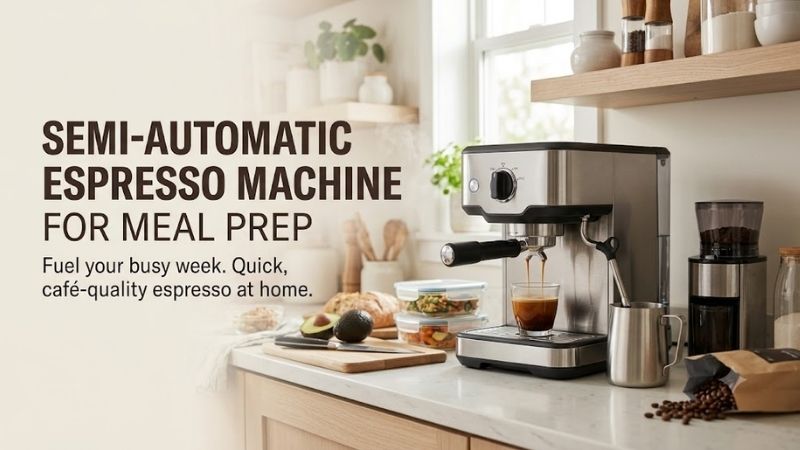
What Can Be Prepared Ahead?
Several parts of an espresso routine can be organized before brewing.
You can measure and portion whole coffee beans, prepare clean cups, organize tools, and keep suitable milk and syrups refrigerated.
For certain iced beverages, ingredients can be prepared and stored separately.
However, pre-ground coffee loses aroma more readily than protected whole beans because grinding increases exposed surface area.
If quality is a priority, grind close to brewing time.
What Should Usually Be Done Fresh?
Grinding, puck preparation, espresso extraction, and milk texturing are generally best performed near serving time.
Fresh extraction allows the drinker to assess the current grind and adjust if necessary.
Milk foam also changes after preparation.
Preparing a large batch of steamed milk for later use is not an appropriate substitute for fresh milk texturing and proper refrigeration.
Is Espresso-Based Batch Meal Prep Ever Practical?
It can be practical for particular beverages, especially when using an appropriately prepared and refrigerated coffee component.
However, the recipe must address food safety, storage, and expected flavor changes.
A beverage containing dairy or other perishables should not be treated as shelf stable.
If your goal is several ready-to-drink bottled coffees, choose a validated recipe and storage procedure.
A semi-automatic machine alone does not provide preservation capability.
Understanding Semi-Automatic Espresso Machines
How a Semi-Automatic Machine Works
A semi-automatic espresso machine supplies heated brewing water and the pressure needed for extraction.
The user typically prepares a portafilter with ground coffee and initiates brewing.
Some machines allow manual control over shot duration.
Others include programmed one-cup or two-cup settings.
The degree of user involvement varies.
The term semi-automatic does not guarantee a particular heating system, grinder configuration, or level of control.
Read the actual operating specifications.
Semi-Automatic vs. Fully Automatic
A fully automatic bean-to-cup machine performs more preparation steps internally.
A semi-automatic machine leaves grinding, dosing, tamping, and puck handling largely under user control.
| Feature | Semi-Automatic Espresso Machine | Fully Automatic Bean-to-Cup |
|---|---|---|
| Coffee preparation | User handles puck preparation | Machine automates more steps |
| Grind adjustment | Separate or integrated grinder | Usually built-in grinder |
| Shot control | Often greater hands-on involvement | Usually recipe-driven |
| Milk preparation | Manual or assisted, model-dependent | Manual or automatic systems |
| Cleanup | Portafilter and surfaces | Internal brewing and grounds systems |
| Meal-prep benefit | Repeatable fresh-shot workflow | Reduced hands-on preparation |
| Main trade-off | Requires skill and preparation | More internal mechanisms to maintain |
A semi-automatic machine is best when you value control and are willing to invest time in technique.
Semi-Automatic vs. Capsule Machines
Capsule systems reduce grinding and tamping tasks.
For someone prioritizing speed over traditional espresso preparation, this can be convenient.
However, capsule systems limit beverage choice to compatible products and can create ongoing packaging costs.
Semi-automatic machines allow broader coffee selection and more control over extraction.
They also create more preparation and cleaning work.
Choose according to what you want to optimize: brewing control or minimal manual steps.
Shot Consistency and Repeatability
Why Consistency Matters for Busy Mornings
A predictable routine makes it easier to prepare coffee around work, school, or breakfast.
If your espresso changes dramatically from one shot to the next, you may spend extra time adjusting the grinder and machine.
Consistent coffee dose, grind preparation, water temperature, and extraction behavior can reduce this variability.
However, no machine guarantees identical results with every bean.
Coffee age, roast characteristics, and grinder behavior also matter.
Programmable Shot Volumes
Some semi-automatic machines support programmed beverage volumes.
These may simplify repeated shots.
However, water volume through the machine is not necessarily equivalent to the weight of espresso collected in the cup.
Coffee puck resistance and flow behavior affect extraction.
For users seeking repeatability, a scale can be a useful companion.
Timed Shot Controls
Timed extraction allows a machine to run for a selected duration.
However, identical brewing time does not guarantee identical beverage weight or flavor.
Grind size and puck preparation still influence the result.
A timer can make the workflow more predictable but should not replace observation.
Brew-by-Weight Systems
Certain espresso machines support beverage weight targets directly or through compatible accessories.
This can simplify repeatability.
However, such systems tend to cost more and may be unnecessary for beginner users.
A separate small scale can provide much of the practical measurement benefit.
Grinder Choice for an Organized Coffee Routine
Why an Espresso-Capable Grinder Matters
A semi-automatic espresso machine requires a suitable grind.
If the grind is too coarse, water may pass through the puck too quickly.
If it is too fine, flow may become excessively restricted.
A grinder with appropriately precise adjustments helps manage extraction.
For many home setups, grinder quality deserves as much attention as the espresso machine itself.
Single-Dosing Whole Beans
Single dosing involves weighing a portion of whole beans for one brewing session.
For example, a home barista might prepare a set of labeled containers holding measured bean portions.
This can reduce morning measuring steps.
However, the amount of coffee per dose depends on the filter basket, beans, and intended beverage.
Do not assume every double-shot basket uses the same dose.
Are Pre-Measured Beans Better Than Pre-Ground Coffee?
For flavor retention, whole beans are generally preferable to leaving coffee pre-ground for extended periods.
However, storage conditions matter.
Use clean, suitable containers and protect beans from unnecessary exposure to heat, moisture, and air.
Pre-measuring whole beans is an organizational convenience, not a guarantee of superior extraction.
Integrated Grinder vs. Separate Grinder
An integrated grinder can reduce the number of major appliance housings.
This may be useful in a small kitchen.
However, the grinder and espresso machine cannot necessarily be upgraded independently.
A separate grinder offers flexibility but requires additional space and cleaning.
For meal prep, choose the arrangement that supports your desired routine without overcomplicating setup.
Heating Systems and Consecutive Drinks
Thermoblock and Thermocoil Machines
Some semi-automatic machines use compact water-heating systems.
These can offer convenient warm-up behavior.
However, a quick ready indicator does not necessarily mean the portafilter and group components have reached stable operating temperatures.
For repeatable espresso, follow the recommended warm-up procedure.
When preparing several drinks, consider how the machine behaves after consecutive extractions.
Single-Boiler Machines
Single-boiler machines may need to switch between espresso brewing and steam production.
This can create waiting time during preparation of multiple milk beverages.
If your meal-prep routine involves one morning latte, the delay may be acceptable.
If several family members need cappuccinos consecutively, the transition can become inconvenient.
Heat-Exchanger and Dual-Boiler Systems
Machines with more advanced heating arrangements can provide additional flexibility for brewing and steaming.
However, they often cost more and require greater space.
Do not pay for simultaneous brewing and steaming capability unless your routine benefits from it regularly.
Temperature Stability
Temperature consistency can affect extraction.
However, a particular heating technology does not guarantee superior performance on its own.
Look for reliable model-specific measurements when available.
For general buying guidance, prioritize a machine with appropriate controls and a reputation for consistent operation over an impressive list of technical terms.
Milk Preparation for Multiple Drinks
Manual Steam Wands
A steam wand can heat and texture milk for lattes, cappuccinos, and other beverages.
For multiple drinks, steam power and recovery behavior matter.
However, milk steaming is a skill.
A more powerful wand may reduce heating time but can also be harder for beginners to control.
Choose a system appropriate for your experience and typical beverage volume.
Steam Pitcher Capacity
A milk pitcher should provide enough space for milk expansion during steaming.
However, a larger pitcher is not always easier for small portions.
Choose an appropriate size for your normal drinks.
Do not fill beyond a level that allows safe aeration and handling.
Preparing Dairy Milk Ahead
Milk can be portioned into appropriate clean containers and refrigerated.
However, it must remain at safe storage temperatures.
Do not pre-steam a large quantity of milk and leave it on the counter.
Milk foams best for traditional espresso beverages when prepared near serving time.
Nondairy Milk Alternatives
Oat, soy, almond, and other milk alternatives differ in protein, fat, and stabilizer composition.
Their frothing behavior varies.
A beverage designed for barista use may produce a different texture from an ordinary plant beverage.
Choose milk according to flavor and performance rather than assuming every alternative works identically.
Milk-System Cleaning
Wipe and purge steam wands after every use as instructed.
If the machine uses an automatic milk container, follow the specific cleaning procedure.
Milk residue should not remain in tubing or attachments.
Convenience-focused buyers should inspect maintenance requirements before purchasing.
Water Tank and Drip Tray Capacity
How Much Water Do Multiple Drinks Require?
Water use includes more than espresso in the cup.
The machine may consume water during flushing, rinsing, steaming, and cleaning.
A small water tank can therefore require frequent refilling.
However, a large tank may be difficult to access or clean.
For meal-prep efficiency, choose a reservoir that supports your typical preparation session without creating unnecessary storage problems.
Tank Access
Top-access and rear-access tanks can be inconvenient beneath cabinets.
Side-access designs may be more comfortable in certain kitchens.
Consider how often you will refill the tank and whether the machine must be moved.
Drip Tray Design
A practical drip tray should be easy to remove and empty.
Some machines discharge water into the tray when pressure is released.
An undersized tray may interrupt a multi-drink session.
Check whether it provides a clear fill indicator.
Water Quality and Scale
Water mineral content affects scale formation.
Machine manufacturers may recommend particular water hardness ranges or filtration systems.
Follow the exact model’s water requirements.
Do not assume that distilled water is appropriate for every espresso machine.
Designing a Meal-Prep Coffee Workflow
Step 1: Decide Which Drinks You Actually Need
Start with your normal beverage routine.
For example, a household may prepare two lattes each weekday and occasional espresso on weekends.
This requires different equipment from a household serving six espresso shots every morning.
Identify the daily number of drinks, milk preferences, and available preparation time.
Step 2: Prepare Whole-Bean Portions
If useful, measure beans into suitable containers ahead of time.
Keep them protected from moisture and excessive heat.
Grind shortly before extraction when possible.
Step 3: Organize the Coffee Station
Keep the grinder, scale, portafilter, tamper, and clean cups accessible.
Avoid stacking accessories where they can fall or become contaminated.
A predictable arrangement can reduce morning searching and unnecessary movements.
Step 4: Prepare Safe Ingredients
Refrigerate dairy milk, plant beverages requiring refrigeration, and other perishable ingredients.
Prepare syrups or toppings according to their recipes and storage instructions.
Do not leave perishable ingredients unrefrigerated overnight.
Step 5: Warm the Espresso Machine
Use the machine’s recommended warm-up procedure.
A rapid heat-up indicator may not account for the thermal condition of every brewing component.
Step 6: Grind and Prepare the Puck
Grind the appropriate quantity of coffee.
Distribute and tamp according to the machine’s basket and preparation requirements.
Consistency is generally more useful than constantly changing technique.
Step 7: Brew Fresh Espresso
Extract the shot using the appropriate target and settings.
For a repeatable routine, record a simple starting recipe if needed.
Adjust only when the result indicates a meaningful problem.
Step 8: Prepare Milk and Assemble the Drink
Steam or froth milk close to serving time.
For iced drinks, use a suitable beverage recipe and safe handling method.
Step 9: Clean the Equipment
Remove used coffee grounds, rinse the filter basket, wipe accessible surfaces, and clean the milk system.
A short immediate cleaning routine can reduce buildup.
Step 10: Reset the Station for the Next Day
Empty the drip tray as needed.
Refresh water according to the manual.
Prepare clean accessories for the next use.
The goal is an organized fresh-brewing routine rather than long-term storage of extracted espresso.
Espresso for Iced Coffee Meal Prep
Can You Brew Espresso Ahead for Iced Drinks?
It is possible to use previously brewed espresso in some iced coffee recipes.
However, flavor and aroma change during storage.
Brewed coffee should be cooled and stored according to an appropriate food-safety procedure, especially when combined with dairy or other perishables.
Do not assume that bottling espresso makes it safe at room temperature.
Why Separate Ingredients Can Work Better
Keeping coffee, milk, and syrups separate until serving can provide more flexibility.
It also helps avoid storing finished mixed beverages that may separate or develop undesirable textures.
However, each ingredient still has its own safe storage requirements.
Espresso Ice Cubes
Some people freeze brewed coffee in ice-cube trays for use in cold beverages.
This can be a convenient way to use coffee in certain recipes.
However, frozen espresso will not retain every characteristic of a fresh shot.
Use clean trays, suitable freezer storage, and appropriate handling.
When Cold Brew Is a Better Choice
If you want several servings of cold coffee ready for the week, cold-brew concentrate may be a more practical category than espresso.
It uses a different brewing method and produces a different flavor profile.
Choose the preparation method that matches the finished beverage you want.
Cleaning and Maintenance for Repeated Use
Portafilter and Filter Basket
Coffee oils and fine particles accumulate on brewing components.
Rinse and clean them according to the manufacturer’s instructions.
Avoid leaving wet grounds packed in the basket overnight.
Group Head
The group head may collect coffee residue.
Some machines support flushing or backflushing.
However, the correct method depends on the machine’s valve and filter basket design.
Only use manufacturer-approved cleaning procedures.
Steam Wand
Milk residue can dry quickly on a steam wand.
Wipe and purge after each use according to the manual.
Never handle the hot tip with bare fingers.
Descaling
Descaling addresses mineral accumulation inside the machine.
It is different from coffee-oil cleaning.
Follow the recommended schedule and approved products.
Grinder Maintenance
Coffee particles and oils can accumulate in the grinder.
Clean the burrs and grounds pathway according to the grinder manufacturer’s instructions.
Do not wash electrical grinder components or burr assemblies in ways the manufacturer prohibits.
Choosing by Household Routine
One Person Making One Espresso Daily
A compact semi-automatic model with straightforward controls may be sufficient.
You may not need a sophisticated steam system.
Couple Making Two Lattes
Consider brew-to-steam transition time and milk pitcher handling.
A machine that prepares espresso consistently and steams enough milk for two drinks can be practical.
Family With Several Coffee Drinkers
A larger reservoir, convenient drip tray, and repeatable brewing controls become more important.
However, family size alone does not justify purchasing commercial equipment.
Weekend Batch Preparation
If you prepare syrups, toppings, and whole-bean portions for several days, a semi-automatic machine can fit an organized routine.
If you want an entire week’s finished coffee bottled, reconsider whether espresso is the best brewing method.
Budget and Ownership Costs
Machine Cost
The purchase price should reflect the functions you regularly use.
A machine with advanced extraction controls may offer little value if you simply want a quick latte.
Grinder Cost
A suitable grinder is often an essential investment for semi-automatic espresso.
Do not devote the entire budget to the machine and leave nothing for coffee preparation equipment.
Coffee and Milk Costs
Drink costs depend on coffee dose, bean price, milk, and added ingredients.
Homemade drinks are not automatically cheaper when expensive equipment and frequent maintenance are considered.
Cleaning Supplies
Cleaning tablets, descaling products, water filters, and replacement seals can create ongoing expenses.
Check recommended products and serviceability.
Time Cost
Preparation and cleanup require time.
A machine that delivers excellent espresso but demands a complicated workflow may not suit a busy morning.
Consider the complete experience.
Common Buying Mistakes
Confusing Meal Prep With Storing a Week of Espresso
Fresh espresso is usually better prepared close to serving time.
Ignoring Brew-to-Steam Delay
Repeated milk drinks may expose limitations in heating systems.
Choosing Based on Shot Buttons Alone
Programmed volume does not guarantee consistent extraction.
Pre-Grinding Too Far Ahead
Ground coffee can lose desirable aroma during storage.
Underestimating Cleanup
A semi-automatic machine requires daily attention.
Buying a Large Machine for an Occasional Batch
Choose capacity based on normal demand.
Frequently Asked Questions
Can I Meal Prep Espresso Shots for the Week?
You can prepare coffee ahead for certain recipes, but stored espresso changes in flavor and aroma. For traditional espresso quality, brewing fresh is preferable. Follow safe storage procedures for any prepared beverages.
Is a Semi-Automatic Espresso Machine Good for Busy Mornings?
It can be when your workflow is organized and you enjoy hands-on preparation. Fully automatic or capsule systems may require less manual effort.
Should I Grind Coffee Beans the Night Before?
Pre-measuring whole beans is generally preferable for flavor preservation. Grinding close to brewing time helps protect aroma.
What Features Matter for Making Several Lattes?
Temperature recovery, steam capability, reservoir access, drip tray capacity, and cleaning convenience are important.
Do I Need a Separate Espresso Grinder?
Usually yes, unless the machine includes a suitable integrated grinder or you use another approved coffee preparation arrangement.
Is Automatic Shot Dosing Worth It?
It can simplify a repeatable workflow, but grind, puck preparation, and coffee characteristics still influence the finished drink.
Conclusion
The best semi automatic espresso machine for meal prep supports a consistent fresh-brewing routine rather than encouraging long-term storage of espresso shots. Prioritize repeatable extraction controls, suitable grinder compatibility, practical milk preparation, accessible water storage, and manageable cleaning. Organizing whole beans and other ingredients ahead of time can streamline mornings while preserving the qualities that make freshly prepared espresso enjoyable.







Write Your Review
No reviews yet. Be the first to share your experience!