
A carbon steel wok rewards good technique with quick temperature changes, spacious sloping sides, and a seasoning layer that improves with careful use. Yet a wok designed for a restaurant burner may perform poorly on a home range. Compare six practical models and learn which base shape, handle, and steel construction fit your cooking habits.
Best carbon steel wok options for home stir-frying
Choosing a wok starts with understanding how its shape interacts with the heat source. Carbon steel offers responsive heating and a naturally seasoned cooking surface, but bottom design, thickness, and handles determine how convenient it feels. These first three models provide different solutions for ordinary home kitchens.
Yosukata 13.5-Inch Blue Carbon Steel Wok – Best overall
The Yosukata 13.5-Inch Pre-Seasoned Blue Carbon Steel Wok is a versatile choice for home cooks who want traditional stir-frying performance without needing a specialized restaurant burner. Its flat bottom, substantial steel construction, and sloping sides make it suitable for quick vegetables, fried rice, noodles, and seared proteins.
The wok uses 15-gauge blue carbon steel, giving it a relatively substantial body while maintaining the temperature responsiveness associated with this material.
Blue carbon steel undergoes a heat-treatment process that changes the surface appearance and provides some initial protection against oxidation. However, it still requires seasoning and careful drying.
The flat bottom is particularly important for modern kitchens. It allows direct contact with gas, conventional electric, glass-ceramic, and compatible induction cooking surfaces.
For example, when preparing beef and broccoli, the cook can brown small batches of beef near the hottest part of the wok and move cooked ingredients higher along the sides before combining everything with sauce.
The pre-seasoned finish reduces some initial preparation, but it does not eliminate the need to build and maintain a protective cooking surface.
Its wooden handle provides a comfortable grip during ordinary stovetop use, although the connecting metal and helper handle can become hot.
The primary limitation is weight. Compared with thinner carbon steel woks, this model may feel less effortless when repeatedly tossing food.
Advantages: Flat-bottom compatibility, substantial steel construction, factory pre-seasoning, and versatile cooking performance.
Limitations: Requires continued seasoning maintenance and may feel heavy during extended one-handed tossing.
Best for: Home cooks seeking a dependable all-around wok for gas, electric, or induction cooking.
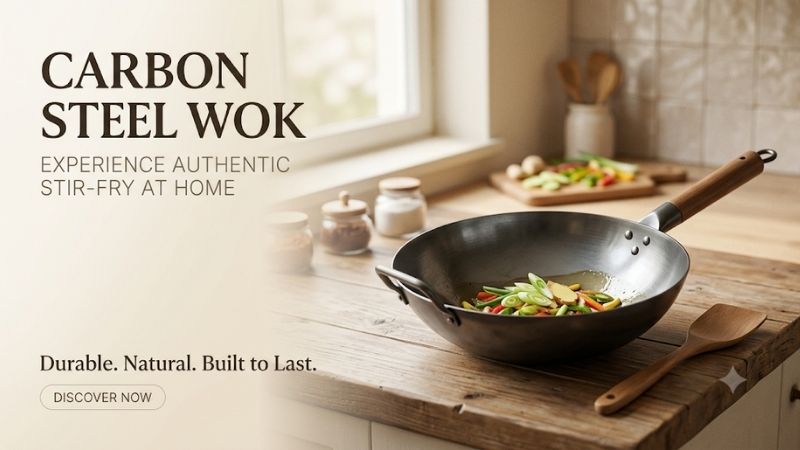
Made In Seasoned Carbon Steel Wok – Best premium option
The Made In Seasoned Carbon Steel Wok combines a modern flat-bottom design with the cooking characteristics of traditional carbon steel. Manufactured in Sweden, its approximately 1.5 mm steel body and long stainless steel handle appeal to cooks who prioritize responsive heating, manageable weight, and precise control over fast stir-frying.
The wok has a nominal 13-inch size, with an overall diameter of approximately 13.5 inches and a flat cooking surface measuring about 5.5 inches.
That relatively compact flat base creates a concentrated hot cooking zone, while the sloped sides provide room for moving ingredients away from direct heat.
This design works well for dishes such as garlic shrimp, chicken stir-fry, and fried rice when ingredients are prepared in manageable portions.
The stainless steel handle is another distinguishing characteristic. Unlike wooden-handled woks, it supports broader oven versatility according to the manufacturer’s specifications.
However, a metal handle can still become hot under demanding cooking conditions, especially when exposed to flames or extended oven heat.
Made In supplies the wok with an initial seasoning layer, but continued cooking and maintenance are necessary to develop reliable food release.
The primary trade-off is price. A well-made budget carbon steel wok can produce excellent results with proper technique, so the premium is best justified by construction, handle design, and personal preference.
Advantages: Responsive steel body, induction compatibility, manageable handling, and durable stainless steel handle.
Limitations: Higher purchase cost, relatively small flat cooking zone, and regular seasoning maintenance.
Best for: Enthusiastic home cooks seeking a premium wok for frequent high-heat cooking.
Joyce Chen Classic Series 14-Inch Wok – Best budget choice
The Joyce Chen Classic Series 14-Inch Carbon Steel Wok is an accessible option for cooks learning traditional wok techniques. Its lightweight body, generous diameter, and wooden handles provide a straightforward cooking experience without premium pricing. Choosing the flat-bottom version makes it particularly useful on ordinary household stovetops.
One attraction of this model is its relatively thin carbon steel construction.
Thin steel heats quickly and responds rapidly when the burner setting changes. This allows the cook to adjust cooking intensity during short stir-fry recipes.
For vegetables such as snow peas, bell peppers, and broccoli, rapid heating helps evaporate surface moisture when the wok is not overcrowded.
The wide bowl provides space for stirring and lifting ingredients, while the flat base sits directly on most conventional burners.
A wooden main handle makes the pan easier to maneuver, and a secondary helper handle provides additional support when moving larger portions.
Some versions of the Classic Series require initial seasoning, while other configurations are sold pre-seasoned. Buyers should check the exact product listing before assuming the surface is ready for immediate cooking.
The relatively lightweight construction also introduces a limitation: thinner metal can be more sensitive to uneven heating and thermal stress.
On powerful burners, gradual preheating and careful temperature adjustment help reduce unnecessary distortion.
Advantages: Affordable pricing, responsive heating, generous bowl size, and straightforward handling.
Limitations: Some versions require initial seasoning, and thinner steel may be more susceptible to warping.
Best for: Budget-conscious cooks purchasing their first traditional wok.
Other carbon steel wok designs worth considering
A flat-bottom wok is convenient for many home kitchens, but it is not the only useful design. Traditional round-bottom models suit specialized gas burners, while larger or accessory-equipped woks can support steaming, simmering, and batch cooking. These alternatives address different cooking styles and equipment requirements.
Craft Wok Traditional Hand-Hammered 14-Inch – Best for gas burners
The Craft Wok Traditional Hand-Hammered 14-Inch Carbon Steel Wok is designed for cooks who want the curved shape associated with commercial Chinese kitchens. Its round bottom, hand-hammered steel body, and long wooden handle support rapid ingredient movement when paired with an appropriate gas burner or secure wok ring.
The wok’s approximately 1.8 mm steel construction provides a balance between structural rigidity and heating response.
Its continuous rounded interior allows ingredients to move through different temperature zones without encountering the flat-to-curved transition found in many household woks.
When using a sufficiently powerful gas flame, the center becomes the primary cooking zone while ingredients can temporarily rest against the upper walls.
This arrangement supports the rapid cooking methods used for dishes such as beef chow fun or stir-fried green beans.
However, the shape presents a significant compatibility limitation.
A round-bottom wok is generally unsuitable for flat electric or induction cooktops because it cannot establish stable contact with the heating surface.
On gas equipment, a suitable wok ring or dedicated burner support may be necessary. Stability should be verified before heating the pan.
The wok also requires initial seasoning and ongoing maintenance.
Advantages: Traditional rounded geometry, substantial carbon steel body, and responsive cooking characteristics.
Limitations: Unsuitable for most flat cooktops, requires appropriate burner support, and needs initial seasoning.
Best for: Experienced cooks using a gas burner designed or configured for round-bottom cookware.
Babish 14-Inch Carbon Steel Flat Bottom Wok – Best spacious option
The Babish 14-Inch Carbon Steel Flat Bottom Wok offers a generous bowl suitable for everyday stir-frying and larger ingredient volumes. Its stable flat base, smooth cooking surface, and practical handle arrangement make it appealing to households that want more room for tossing vegetables and combining components of a meal.
The 14-inch diameter provides substantial upper-bowl space.
That extra room can make stirring easier, particularly when combining noodles, vegetables, and proteins near the end of cooking.
However, the nominal diameter should not be confused with the flat area receiving direct burner heat.
Even a large wok requires ingredients to be cooked in batches when the amount of food exceeds the burner’s ability to maintain adequate temperature.
The Babish model has a pre-seasoned cooking surface, allowing users to begin building the seasoning layer through regular cooking rather than starting with completely bare metal.
Its smooth interior is also convenient for cleaning because food residue has fewer textured areas in which to accumulate.
A main handle and helper handle support movement between burner and serving area.
The helper handle can become hot during cooking, so appropriate protection is necessary.
This model is attractive for cooks who want a conventional carbon steel wok but prioritize space and an accessible cooking experience.
Advantages: Spacious bowl, flat-bottom stability, smooth interior, and pre-seasoned construction.
Limitations: Large overall footprint and potential overcrowding when the bowl is filled excessively.
Best for: Households preparing generous stir-fries and noodle dishes.
Souped Up Recipes 12.5-Inch Carbon Steel Wok – Best starter set
The Souped Up Recipes 12.5-Inch Carbon Steel Wok is a convenient option for cooks who prefer purchasing a wok with useful accessories rather than assembling everything separately. Its flat bottom, manageable diameter, and accessory bundle make it particularly attractive for preparing stir-fries, steamed dishes, and simple one-pan meals.
A 12.5-inch wok occupies less storage space than many larger 14-inch alternatives.
That makes it practical for apartment kitchens or households with limited cabinet clearance.
The flat bottom allows stable contact with common home cooking surfaces when the specific cooktop requirements are met.
A compatible lid is especially useful because it expands the wok’s role beyond quick stir-frying.
For example, vegetables can be briefly sautéed, finished with a small amount of water, and covered to steam.
The included spatula also helps beginners experiment with lifting and moving ingredients along the curved sides.
Depending on the particular package, accessory contents may vary, so buyers should confirm what is included.
The principal limitation is working space. A smaller wok requires more disciplined portion control when cooking for several people.
Its factory-treated surface also needs appropriate cleaning and seasoning maintenance.
Advantages: Compact dimensions, useful accessories, flat-bottom design, and versatility beyond stir-frying.
Limitations: Smaller cooking capacity and accessory configurations that may vary by package.
Best for: Beginners seeking a compact wok with the basic tools needed for everyday cooking.
How to choose a carbon steel wok for your kitchen
Product quality matters, but selecting the correct wok geometry is even more important. A premium round-bottom wok may perform poorly on an electric stove, while an inexpensive flat-bottom design can work effectively with good cooking technique. Evaluate burner compatibility, steel thickness, seasoning requirements, and handle comfort together.
Flat bottom versus round bottom: Which is better?
The choice between flat and round bottoms affects heat transfer, cookware stability, and the techniques available during stir-frying. Traditional rounded woks were developed around direct-flame cooking, while flat-bottom designs allow modern household burners to make more reliable contact with the cooking surface.
A flat-bottom wok is generally the most practical choice for a conventional home kitchen.
It can sit directly on gas grates and suitably sized electric or induction cooking zones.
The flat contact area is particularly important on induction, where compatible magnetic material must be positioned close enough to the heating surface.
Round-bottom woks are more appropriate for dedicated wok burners or compatible gas cooking equipment.
Their shape facilitates smooth ingredient movement, but the benefit diminishes if the pan is unstable or poorly heated.
Avoid assuming that every flat-bottom wok works equally well on induction. Base diameter, flatness, magnetic compatibility, and the cooktop manufacturer’s requirements still matter.
For most beginners, stability and predictable heating should take priority over traditional shape.
What steel thickness and diameter work best?
Steel thickness influences how quickly the wok heats, how responsive it feels when burner settings change, and how resistant it may be to distortion. Diameter affects usable capacity and handling, but larger cookware does not automatically create more effective heating on a limited residential burner.
Many practical carbon steel woks use steel approximately 1.5–1.8 mm thick.
Thinner steel can respond quickly to heat but may be more vulnerable to warping under uneven thermal stress.
Thicker steel provides additional rigidity and thermal mass but increases weight.
A 12- to 14-inch wok is suitable for many households, with the smaller end favoring storage and maneuverability and the larger end offering extra tossing room.
The flat-base diameter deserves separate attention.
A narrow cooking base may concentrate heat effectively, but it limits the amount of food that can brown at one time.
For a modest home burner, cooking two small batches often produces better results than filling a large wok completely.
Choose a wok you can comfortably lift and control rather than focusing only on maximum diameter.
How should carbon steel be seasoned and maintained?
Seasoning forms a protective cooking surface through thin layers of oil heated until they polymerize. This process helps protect carbon steel from rust and can improve food release over time. Factory pre-seasoning provides a starting point, but it does not remove the need for proper cooking and cleaning habits.
For an unseasoned wok, begin by following the manufacturer’s instructions for removing any protective shipping coating.
Wash the wok thoroughly, dry it, and heat it using the recommended method.
Apply an extremely thin film of suitable cooking oil.
Excess oil can produce a sticky, uneven surface rather than a durable seasoning layer.
Heat the coated metal according to the manufacturer’s guidance, using appropriate ventilation.
After cooking, remove food residue with warm water and a suitable brush or sponge.
A small amount of mild dish soap is generally compatible with well-established seasoning.
Dry the wok promptly and thoroughly, then apply a thin protective layer of oil when needed.
Avoid leaving acidic sauces in bare carbon steel for extended periods because they can weaken the seasoning.
With consistent maintenance, the surface usually becomes darker and easier to cook on over time.
Conclusion
The best carbon steel wok depends first on the stove you own and the cooking techniques you want to practice. Yosukata offers a balanced pre-seasoned flat-bottom design, Made In provides a premium alternative, and Joyce Chen delivers accessible value. Craft Wok suits specialized gas cooking, while Babish and Souped Up Recipes offer practical alternatives for larger meals or beginner-friendly setups. For most households, a stable 13- to 14-inch flat-bottom wok with comfortable handles and manageable weight is the most versatile starting point.








Write Your Review
No reviews yet. Be the first to share your experience!