
A copper cookware set can offer responsive temperature control, versatile cooking performance, and an attractive appearance. However, solid copper, copper-clad stainless steel, and copper-core cookware are not interchangeable. This guide compares six identifiable collections and explains how construction, lining, induction compatibility, maintenance, and budget should influence your purchase.
- Quick verdict: Which copper cookware set should you buy?
- Quick comparison table
- How we selected these copper cookware sets
- Detailed copper cookware set recommendations
- Buying guide: How to choose copper cookware
- Copper cookware versus stainless steel cookware
- How to cook successfully with copper cookware
- Cleaning and maintaining copper cookware
- Common buying mistakes
- Frequently Asked Questions
- Conclusion
Quick verdict: Which copper cookware set should you buy?
The best copper cookware depends on whether you want traditional copper construction for precise temperature changes, a multilayer stainless steel collection with copper inside, or a decorative copper exterior with practical everyday maintenance. Each design has different strengths. Buyers should first confirm that the food-contact surface is appropriate for their recipes and that the cookware works on their stove.
For most households using induction, All-Clad Copper Core provides a practical combination of stainless steel cooking surfaces and copper-containing bonded construction. For traditional copper cooking on gas or conventional electric stoves, Mauviel M’Heritage is particularly relevant. Lagostina Martellata offers a hammered copper exterior in a multilayer construction.
Quick comparison table
A copper cookware comparison should distinguish between substantial copper cooking bodies, copper exterior layers, and copper cores within bonded stainless steel. These constructions have different thermal behavior and cleaning requirements. The following six options represent different purchasing approaches rather than suggesting that every copper-colored pan contains a meaningful amount of copper.
| Product | Construction | Induction | Best for | Main trade-off |
|---|---|---|---|---|
| Mauviel M’Heritage M’150 S Collection | Copper body, stainless lining | No, without interface disk | Traditional copper cooking | Exterior maintenance |
| Mauviel M’Heritage M’200 B Collection | 2.0 mm copper, stainless lining | No, without interface disk | Responsive sauce preparation | Premium cost |
| Mauviel M’6S Collection | Six-ply construction with copper | Yes | Premium induction kitchens | Weight and cost |
| All-Clad Copper Core 7-Piece Set | Five-ply stainless, aluminum, copper | Yes | Versatile everyday cooking | Copper layer is internal |
| Lagostina Martellata 10-Piece Set | Tri-ply stainless and copper | Check exact configuration | Hammered copper design | Polishing and model differences |
| Viking 3-Ply Copper Clad 10-Piece Set | Stainless interior, aluminum core, copper exterior | No for traditional configuration | Copper-clad cooking | Stovetop limitations |
How we selected these copper cookware sets
These recommendations focus on recognizable manufacturer collections with copper-containing construction rather than ordinary aluminum cookware finished in a copper color. We considered food-contact lining, thermal design, compatibility, handle materials, pot selection, cleaning, and intended cooking methods. Comparisons are based on documented construction and established heat-transfer principles, not claimed firsthand testing.
Copper has high thermal conductivity, allowing suitable cookware to respond rapidly to changes in burner output. However, the amount, position, and thickness of copper influence how much that property affects actual cooking.
A thin decorative layer cannot be assumed to perform like a thick copper body.
Food-contact surfaces are equally important. Copper cookware frequently uses stainless steel or tin lining because bare copper can react with certain foods.
The ideal collection should therefore provide suitable lining, useful cookware sizes, and a maintenance routine that matches the owner.
Detailed copper cookware set recommendations
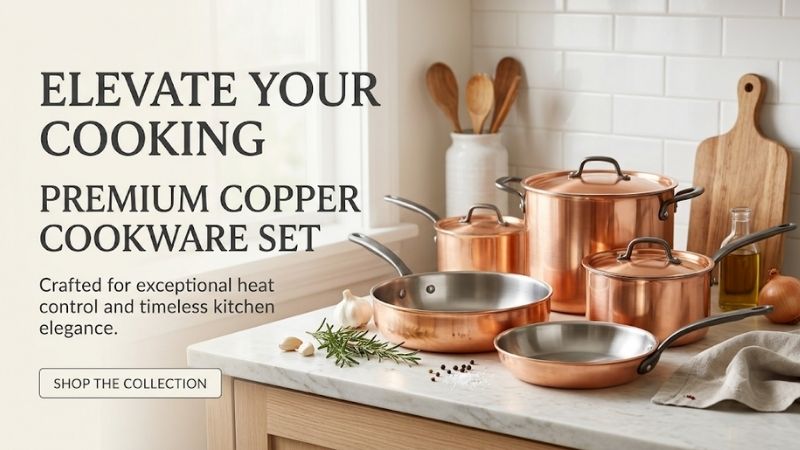
These six collections cover traditional French copper, modern multilayer cookware, and induction-compatible designs. They vary considerably in construction and intended buyer, so no single set should be considered universally superior. Each recommendation considers practical cooking advantages alongside limitations in cleaning, handling, cost, or stove compatibility.
Mauviel M’Heritage M’150 S — Best traditional copper starter collection
The Mauviel M’Heritage M’150 S collection uses approximately 1.5 mm bilaminated construction combining a substantial copper exterior with an 18/10 stainless steel cooking surface. Its stainless steel handles and traditional copper appearance make it suitable for home cooks who want responsive cookware without the routine relining associated with traditional tin-lined copper.
Best for: Home cooks transitioning into traditional copper cookware.
Why we picked it: It offers a recognizable copper-based construction with a durable stainless steel food-contact surface.
Key specifications
-
Collection: M’Heritage M’150 S.
-
Overall metal thickness: approximately 1.5 mm.
-
Construction: Approximately 90% copper and 10% stainless steel.
-
Cooking surface: 18/10 stainless steel.
-
Handles: Stainless steel.
-
Gas, electric, and ceramic cooktop compatibility.
-
Direct induction compatibility: No.
-
Hand washing recommended.
Features and benefits
The copper body responds relatively quickly to burner adjustments. This can be useful when preparing sauces, reducing liquids, or cooking foods that require controlled heating.
The stainless steel lining separates food from the copper and avoids the maintenance requirements of traditional tin.
The M’150 S construction is also relatively light within Mauviel’s traditional copper offerings.
Performance and practical use
For a home cook preparing delicate sauces or sautéed vegetables, the responsiveness of copper can help reduce the delay between adjusting the burner and changing cooking conditions.
However, food can still stick to the stainless steel interior if temperature and cooking fat are poorly managed.
The copper exterior also develops a natural patina unless polished.
What makes it different: Traditional copper construction with a relatively manageable thickness and stainless steel handles.
Pros: Responsive construction, durable food-contact lining, and classic copper appearance.
Cons: Not directly induction-compatible and requires exterior care.
Buy if: You cook on gas or conventional electric heat and want authentic copper cookware.
Skip if: You require effortless maintenance or direct induction compatibility.
Mauviel M’Heritage M’200 B — Best for demanding traditional cooking
The Mauviel M’Heritage M’200 B collection uses thicker approximately 2.0 mm copper construction with stainless steel interiors and brass handles. Its greater copper thickness distinguishes it from the M’150 line, making it particularly relevant to cooks who prioritize substantial traditional copper cookware and responsive temperature control.
Best for: Experienced home cooks preparing sauces, proteins, and delicate dishes.
Why we picked it: The thicker copper body provides a different thermal construction from lighter copper collections.
Key specifications
-
Collection: M’Heritage M’200 B.
-
Copper-based construction approximately 2.0 mm thick.
-
Stainless steel food-contact lining.
-
Brass handles.
-
Traditional non-induction-compatible copper design.
-
Hand washing and exterior maintenance.
Features and benefits
The relatively thick copper structure supports heat distribution throughout the cooking vessel.
Brass handles provide a traditional appearance, although they may become hot during cooking.
The stainless steel interior provides a relatively durable cooking surface compared with traditional tin lining.
Performance and practical use
This collection is well suited to cooks who frequently prepare sauces requiring careful reduction or proteins that benefit from controlled changes in cooking temperature.
However, its additional weight can make handling less convenient than lighter cookware.
It also represents a substantial investment.
The thicker construction should not be interpreted as automatically preferable for every food. Small breakfast portions or basic boiling tasks may not justify the difference.
What makes it different: Heavier traditional copper construction with brass handles.
Pros: Substantial copper body, responsive cooking characteristics, and durable lining.
Cons: Expensive, heavier, and not directly compatible with induction.
Buy if: You value authentic thick copper cookware and use it frequently.
Skip if: Your priority is affordable everyday cooking.
Mauviel M’6S — Best premium copper cookware for induction
The Mauviel M’6S collection combines copper-containing multilayer construction with a magnetic exterior designed for induction cooktops. Unlike conventional copper cookware, which generally cannot activate induction heating directly, this collection uses construction intended to provide both copper’s thermal characteristics and induction compatibility.
Best for: Induction users who specifically want premium copper cookware.
Why we picked it: It addresses the major compatibility limitation of traditional copper.
Key characteristics
-
Collection: Mauviel M’6S.
-
Six-ply construction.
-
Copper-containing layered body.
-
Stainless steel cooking interior.
-
Magnetic induction-compatible exterior.
-
Compatible with multiple common stovetop types.
-
Premium cookware category.
Features and benefits
The magnetic exterior allows the cookware to interact with induction burners.
The internal layered construction incorporates copper while protecting food from direct contact with the copper component.
The stainless steel interior supports cooking methods such as browning, sautéing, and preparing sauces.
Performance and practical use
For an induction household, the M’6S construction avoids relying on an interface disk.
That is useful because an interface disk adds another thermal layer and may reduce some of the responsiveness associated with direct cookware heating.
However, multilayer construction can make the cookware heavier.
Its premium price also demands careful consideration.
What makes it different: Purpose-built induction compatibility in a copper-containing collection.
Pros: Induction compatibility, multilayer construction, and stainless steel interior.
Cons: High cost and substantial construction.
Buy if: You have induction and want premium copper-based cookware.
Skip if: You primarily need inexpensive, lightweight pans.
All-Clad Copper Core 7-Piece Cookware Set — Best everyday copper-core collection
The All-Clad Copper Core 7-Piece Cookware Set uses five-ply bonded construction incorporating stainless steel, aluminum, and a copper core. The food-contact surface is stainless steel rather than exposed copper, making the set suitable for varied everyday recipes while retaining direct compatibility with induction cooktops.
Best for: Home cooks who want copper-containing cookware without a traditional copper cooking surface.
Why we picked it: It combines copper-core construction with familiar stainless steel cookware functionality.
Key specifications
-
Seven-piece collection.
-
Five-ply bonded construction.
-
Stainless steel cooking interior.
-
Copper core between conductive layers.
-
Induction-compatible exterior.
-
Oven and broiler safe up to 600°F.
-
Hand washing recommended.
Features and benefits
The bonded structure distributes heat through the base and sides of the vessels.
The copper layer contributes to thermal behavior while the stainless steel interior supports a broad range of foods.
The cookware can handle searing, simmering, boiling, and sauce preparation.
Performance and practical use
This is an attractive option for households that do not want to maintain a large exposed copper exterior.
The visible copper band provides an aesthetic distinction but is not the same as an entirely copper exterior.
Unlike traditional copper sets, this collection works directly on induction.
However, the stainless steel interior still requires appropriate preheating and cooking fat for delicate foods.
What makes it different: Five-ply bonded stainless steel cookware incorporating a copper core.
Pros: Induction compatibility, versatile cooking surfaces, and substantial oven compatibility.
Cons: Premium cost and some exterior copper detailing to maintain.
Buy if: You want a versatile copper-containing collection for regular home cooking.
Skip if: You specifically want a traditional solid-copper cooking body.
Lagostina Martellata Tri-Ply Copper Cookware Set — Best hammered copper appearance
The Lagostina Martellata Tri-Ply Copper cookware collection combines a hammered copper exterior with an aluminum core and stainless steel cooking interior. Its decorative exterior provides a traditional copper appearance, while the multilayer construction supports everyday kitchen tasks.
Best for: Home cooks who appreciate decorative copper and multipurpose cookware.
Why we picked it: Its hammered design and layered construction distinguish it from fully clad stainless steel sets with copper only inside.
Key characteristics
-
Martellata copper cookware collection.
-
Hammered copper exterior.
-
Aluminum core.
-
Stainless steel cooking interior.
-
Stainless steel lids in common configurations.
-
Traditional gas and electric stove compatibility.
-
Hand washing recommended.
Features and benefits
The hammered exterior provides a distinctive appearance.
The stainless steel interior offers a practical food-contact surface.
The aluminum core contributes to distributing heat.
Performance and practical use
This collection can handle boiling, simmering, and sautéing, making it suitable for general home cooking.
However, buyers should not assume the external copper thickness matches that of traditional thick-copper cookware.
The decorative exterior may require polishing to preserve its original appearance.
Induction compatibility should be verified for the exact product rather than assumed from the presence of stainless steel.
What makes it different: Hammered copper exterior with tri-ply construction.
Pros: Attractive appearance, stainless steel interior, and broad cooking functionality.
Cons: Exterior maintenance and model-specific compatibility limitations.
Buy if: You want copper styling alongside practical layered cookware.
Skip if: You prioritize thick-copper construction or guaranteed induction compatibility.
Viking 3-Ply Copper Clad 10-Piece Set — Best traditional copper-clad alternative
The Viking 3-Ply Copper Clad 10-Piece Cookware Set combines a stainless steel cooking interior with an aluminum core and copper exterior. Its construction provides an alternative to both solid-copper cookware and stainless steel collections with concealed copper layers.
Best for: Buyers seeking a coordinated copper-clad cookware assortment.
Why we picked it: It offers a multilayer construction with visible copper on the exterior.
Key characteristics
-
Ten-piece cookware configuration.
-
Copper exterior.
-
Aluminum core.
-
Stainless steel cooking interior.
-
Multipurpose pots and pans.
-
Hand washing recommended.
-
Direct induction compatibility is not provided by the traditional copper-clad design.
Features and benefits
The layered metal construction supports common cooking techniques.
The stainless steel interior is suitable for general food preparation.
The copper exterior provides traditional visual appeal.
Performance and practical use
The set can serve households preparing vegetables, proteins, sauces, and pasta.
However, the presence of copper on the outside does not establish identical thermal performance to a thick-copper body.
Owners should also be prepared to maintain the appearance of the exterior.
What makes it different: A ten-piece copper-clad cookware arrangement rather than a smaller specialist copper set.
Pros: Coordinated cookware pieces, stainless steel interior, and copper exterior.
Cons: Polishing requirements and limited induction compatibility.
Buy if: You want a copper-clad appearance with everyday cookware functionality.
Skip if: You need a low-maintenance induction collection.
Buying guide: How to choose copper cookware
Choosing copper cookware requires understanding how much copper is present, where it sits within the construction, and what material contacts the food. Buyers must also consider compatibility, handle materials, cleaning, and whether the collection includes useful cookware sizes rather than duplicate specialty pieces.
Understand copper thickness and layering
Copper conducts heat efficiently, but cookware construction determines how that property is delivered to the food.
Traditional copper cookware may use a substantial copper body lined with stainless steel or tin.
Copper-core stainless steel cookware positions copper inside a bonded multilayer structure.
Copper-clad cookware may place copper on the exterior.
These constructions do not necessarily behave identically.
A traditional 2.0 mm copper body should not be equated with a thin decorative copper layer.
For meaningful comparisons, examine the manufacturer’s construction description and available thickness specifications.
Choose an appropriate food-contact lining
Copper is reactive with certain foods, especially acidic ingredients.
Cookware designed for ordinary food preparation generally includes a suitable lining.
Stainless steel lining is attractive because it is durable and relatively easy to maintain.
Tin lining is traditional and can offer different cooking characteristics, but it is softer and sensitive to excessive heat.
Unlined copper cookware should not be used indiscriminately for ordinary recipes.
Some unlined copper vessels are intended for specialized tasks, such as particular confectionery preparations.
Choose cookware designed for the specific foods you plan to cook.
Stainless steel lining versus tin lining
Stainless steel and tin-lined copper differ significantly in maintenance and temperature tolerance.
Stainless steel is durable and suitable for varied cooking techniques.
However, food may adhere without proper heat management.
Tin can provide different release characteristics but is softer and has a relatively low melting point compared with stainless steel.
Traditional tin-lined cookware should not be used for aggressive high-temperature searing.
If the tin becomes substantially worn or damaged, professional relining may be necessary.
For most buyers seeking everyday convenience, stainless-lined copper is easier to recommend.
Check induction compatibility
Traditional copper is not naturally suited to standard induction cooking because induction requires an appropriate magnetic base.
Mauviel M’Heritage cookware generally requires an induction interface disk when used on induction.
Mauviel M’6S and All-Clad Copper Core are designed for direct induction compatibility.
An interface disk may allow certain incompatible cookware to work, but it adds complexity and may reduce efficiency.
Always follow the cooktop and cookware manufacturers’ instructions.
Choose useful cookware pieces
A large copper cookware collection is not automatically necessary.
Consider beginning with a saucepan and skillet.
A saucepan is particularly useful for sauces, syrups, and delicate liquid preparations.
A skillet supports sautéing and other general cooking.
A larger covered pot becomes helpful for soups and pasta.
A sauté pan offers additional capacity for ingredients and sauces.
Avoid paying for specialized copper vessels you are unlikely to use.
Evaluate handle materials
Copper cookware may use brass, cast iron, or stainless steel handles.
These materials differ in appearance and heat behavior.
Brass and cast iron handles can become hot during stovetop cooking.
Stainless steel handles may stay more manageable in certain situations, but they are not guaranteed to remain cool.
All oven-exposed handles should be treated as hot.
Choose a design that allows a secure grip while using suitable protection.
Consider weight and everyday handling
Thick copper cookware can be relatively heavy.
A large sauté pan filled with food and liquid may become difficult to move.
Consider the total weight before purchasing.
Evaluate whether the pan can be lifted safely from the stovetop.
For people who frequently cook large family meals, helper handles can be valuable.
A lighter copper-based construction may be preferable to a heavy traditional pan when convenience matters more than maximum thermal mass.
Compare maintenance requirements
Copper exteriors may darken or develop patina during use.
This does not automatically mean the cookware is damaged.
Some owners appreciate the natural appearance.
Others prefer to polish the copper regularly.
Stainless interiors and copper exteriors may require different cleaning methods.
Avoid assuming every copper set is dishwasher-safe.
Follow the manufacturer’s recommended maintenance routine.
Copper cookware versus stainless steel cookware
Copper and stainless steel serve overlapping cooking functions, but their thermal behavior and maintenance requirements differ. Copper conducts heat efficiently, while stainless steel provides a durable food-contact surface. Modern cookware often combines both materials because each contributes different characteristics.
| Factor | Traditional lined copper | Fully clad stainless steel |
|---|---|---|
| Heat response | Generally fast | Depends on conductive core |
| Cooking surface | Tin or stainless lining | Usually stainless steel |
| Induction | Often requires special construction | Many modern sets are compatible |
| Exterior care | Copper polishing may be needed | Generally simpler |
| Price | Often premium | Wide price range |
| Weight | Depends on copper thickness | Depends on bonded construction |
| High-heat use | Depends on lining | Model-specific |
| Everyday versatility | High with proper lining | High |
For delicate sauces, a traditional copper saucepan may provide a useful degree of responsiveness.
For general household cooking, fully clad stainless steel can be more practical because it usually requires less exterior maintenance and is often induction-compatible.
The right material depends on cooking habits rather than appearance alone.
How to cook successfully with copper cookware
Copper cookware can respond quickly to heat changes, making it useful for certain techniques but potentially unforgiving when excessive burner power is used. Successful cooking requires understanding the lining, choosing suitable heat settings, and monitoring ingredients rather than assuming that premium construction automatically prevents scorching.
Begin with moderate heat
Copper transfers heat efficiently.
A burner setting that seems appropriate for thick stainless steel cookware may be excessive for a responsive copper pan.
Begin at low or moderate heat.
Increase gradually when necessary.
Avoid prolonged empty heating.
Watch food closely when reducing sauces or cooking delicate ingredients.
Prepare sauces with controlled temperature
Copper saucepans are particularly useful for liquid preparations requiring responsive temperature adjustments.
Stir ingredients as necessary.
Monitor changes in texture.
Reduce heat promptly when bubbling becomes excessive.
Remember that sugar-based sauces can become very hot and may cause serious burns.
Use utensils approved for the pan’s lining.
Avoid damaging tin linings
Tin-lined copper cookware requires particular care.
Do not use aggressive high-heat searing techniques in a traditional tin-lined pan.
Avoid metal tools that can scrape the soft lining when the manufacturer prohibits them.
Never assume that tin-lined cookware has the same oven temperature tolerance as stainless-lined copper.
If the lining is badly damaged, discontinue ordinary food preparation until the pan has been professionally evaluated.
Cook acidic foods appropriately
Tomatoes, vinegar, citrus, and other acidic ingredients can react with exposed copper.
Use cookware with a suitable intact lining when preparing these foods.
Do not treat unlined copper as universal cookware.
If a lining becomes damaged enough to expose copper, follow the manufacturer’s instructions regarding further use.
Manage food sticking on stainless linings
Stainless-lined copper does not automatically behave like a nonstick pan.
Use appropriate preheating and cooking fat.
Allow proteins to brown before attempting to move them.
If food sticks, avoid scraping aggressively with unsuitable tools.
Adjust the temperature and cooking method to the recipe.
Cleaning and maintaining copper cookware
Copper cookware can remain functional and attractive for many years when properly maintained, but the cleaning method depends on its exterior finish and lining. Polished copper, brushed copper, stainless steel, and tin surfaces should not all be treated identically.
Clean the interior according to its lining
For stainless steel interiors, use appropriate detergent and cleaning tools.
Allow the pan to cool before washing.
For tin-lined cookware, use gentler methods that protect the softer metal.
Avoid harsh scouring.
Dry the cookware thoroughly.
Do not use cleaning products incompatible with the lining.
Maintain the copper exterior
Copper naturally develops patina through exposure to air and cooking conditions.
If a polished appearance is desired, use a manufacturer-approved copper cleaner.
Avoid cleaners containing bleach when the manufacturer advises against them.
Do not polish in ways that damage adjacent handle materials or finishes.
A naturally darkened exterior is not necessarily a cooking defect.
Avoid thermal shock
Sudden temperature changes can stress cookware.
Do not place a very hot pan directly into cold water.
Allow it to cool sufficiently.
Wash at an appropriate temperature.
Inspect the cookware for warping or other damage if it has been subjected to improper handling.
Store carefully
Dry copper cookware before storage.
Avoid stacking heavy pans directly against delicate linings.
Use suitable separators if necessary.
Store lids where they will not scratch cooking surfaces.
Choose a stable cabinet location that allows heavy cookware to be removed safely.
Common buying mistakes
Copper cookware buyers can be misled by color, decorative finishes, or marketing terms that do not establish actual copper content. A set described as copper may contain very little copper or simply use a copper-colored coating. Understanding construction is essential before making a substantial purchase.
Confusing copper color with copper construction
Some products use the word copper to describe their appearance.
That does not prove the pan contains a substantial copper cooking layer.
Read the manufacturer’s material description.
Look for specific construction details.
Avoid judging thermal performance from color alone.
Ignoring the lining
The copper exterior is only one part of the product.
Food-contact lining determines which ingredients can be prepared safely and how the pan should be maintained.
Check whether the interior is stainless steel, tin, or another verified material.
Do not buy unlined copper for ordinary acidic recipes.
Assuming copper works on induction
Traditional copper generally does not work directly on induction.
Choose an induction-compatible multilayer collection or a manufacturer-approved solution.
Do not assume the presence of stainless steel on the interior establishes magnetic compatibility at the base.
Buying more pieces than necessary
A large premium collection may include specialized pots that remain unused.
Begin with the cooking tasks that benefit most from copper.
A saucepan may provide more value than a full copper stockpot for someone who primarily prepares sauces.
Expand the collection only when actual needs justify it.
Frequently Asked Questions
Copper cookware shoppers often ask whether copper is safe for everyday cooking, how its heat response compares with stainless steel, and whether traditional copper works on induction. These questions help clarify why construction and lining matter more than the appearance of a cookware set.
Is copper cookware safe for cooking?
Copper cookware can be suitable for ordinary cooking when it has an appropriate food-contact lining and is used according to the manufacturer’s instructions. Bare copper is reactive with certain foods and should not be assumed suitable for every recipe.
Inspect linings and follow maintenance guidance.
Is copper cookware better than stainless steel?
Copper can offer faster thermal response, while stainless steel provides durability and easier maintenance in many applications.
Neither is universally better.
The choice depends on recipes, stove compatibility, budget, and cleaning preferences.
Does copper cookware work on induction?
Traditional copper usually requires an interface disk or special magnetic construction. All-Clad Copper Core and Mauviel M’6S are examples of copper-containing cookware designed for direct induction use.
Check the exact collection.
Why is copper cookware expensive?
Copper is a relatively costly material, and traditional copper cookware can involve substantial material thickness and specialized manufacturing.
Premium finishes and brand positioning also influence price.
A high price does not automatically guarantee the best match for every kitchen.
Does copper cookware need polishing?
Polishing is often optional for cooking function but may be desired to maintain a bright exterior appearance.
Follow manufacturer instructions and use suitable cleaning products.
Is stainless-lined copper better than tin-lined copper?
Stainless lining is generally more durable and convenient for varied cooking.
Tin lining offers traditional characteristics but requires particular care and has lower heat tolerance.
Choose based on the intended recipes and willingness to maintain the surface.
Conclusion
The best copper cookware set depends on whether you prioritize traditional copper responsiveness, induction compatibility, appearance, or everyday convenience. Mauviel M’Heritage provides authentic copper construction, while Mauviel M’6S and All-Clad Copper Core offer induction-compatible alternatives. Lagostina Martellata and Viking Copper Clad serve buyers seeking a copper exterior with layered cookware functionality. Before purchasing, verify the actual copper construction, food-contact lining, stove compatibility, handle materials, and cleaning requirements. A smaller collection of useful copper pans is often a better investment than an expensive set containing vessels that rarely leave the cabinet.




Write Your Review
No reviews yet. Be the first to share your experience!