
A nonstick saucepan for travel can simplify meals in an RV, vacation rental, campsite, or temporary kitchen. The right model should be lightweight, compact, easy to clean, and compatible with the cooking equipment available at your destination. This guide explains how to choose travel-friendly cookware without sacrificing safety, durability, or everyday usefulness.
What makes a saucepan practical for travel?
Travel cookware faces different challenges from equipment used in a permanent kitchen. Limited luggage space, unfamiliar burners, shared sinks, and frequent packing can make a conventional saucepan inconvenient. A travel-friendly model should balance cooking capacity, portability, and easy maintenance while remaining suitable for the intended heat source.
Choose lightweight cookware for easier transportation
Weight matters when cookware must be carried between locations or packed alongside clothing, food, and other equipment. A lightweight saucepan can be easier to handle in an RV or compact rental kitchen, but buyers should avoid sacrificing stability and durability simply to reduce a few ounces.
Aluminum is commonly used in travel-friendly saucepans because it is relatively light and conducts heat effectively.
Hard-anodized aluminum offers additional surface durability and is often paired with a nonstick coating.
This construction can provide a useful balance between manageable weight and everyday cooking performance.
However, some aluminum saucepans include thick magnetic bases for induction compatibility.
These additions increase weight and may affect how compactly the pan packs.
A small stainless steel saucepan can also be suitable for travel, although fully clad models may feel heavier than comparable aluminum alternatives.
Consider how the cookware will be transported.
For car camping, the difference between a lightweight and moderately heavy saucepan may be relatively unimportant.
For train travel or trips involving substantial walking, every additional item contributes to the overall load.
A two-quart saucepan filled with water becomes considerably heavier during use than it is when empty.
The handle should therefore remain secure and comfortable under normal operating conditions.
Choose a pan that can be packed and lifted safely rather than focusing exclusively on the lowest advertised weight.
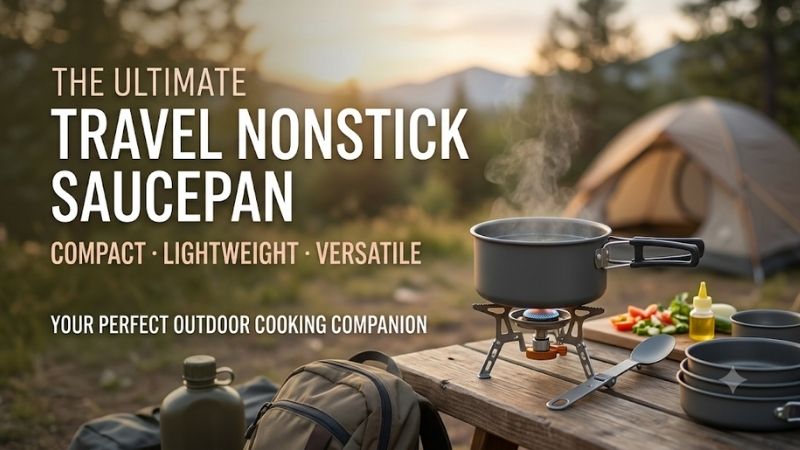
Evaluate compact dimensions and nesting potential
A saucepan’s total footprint includes its cooking body, handle, lid, and any protruding attachments. These details become important when packing cookware into a suitcase, storage bin, or RV cabinet. Models designed for nesting or equipped with detachable handles can reduce storage problems, provided their locking systems are reliable.
Begin by measuring the available storage compartment.
A saucepan with a narrow body but a long fixed handle may be difficult to pack inside a compact bag.
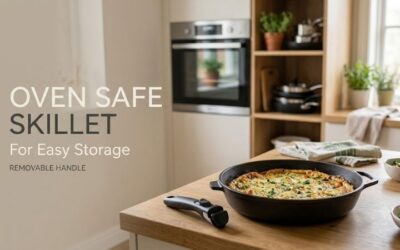
Detachable-handle cookware can solve this problem by separating the cooking vessel from the grip.
However, the attachment mechanism must be rated for the intended weight and cooking conditions.
A loose or poorly secured handle is particularly dangerous when carrying boiling water.
Some camping cookware uses folding handles that lie against the pot during storage.
This design can be convenient, but buyers should confirm that the handles lock securely when extended.
Nesting cookware is another possibility.
A saucepan may fit inside a larger pot or hold compatible utensils during transportation.
However, direct contact between hard objects and the nonstick surface can cause scratching.
Use soft separators or protective bags when packing accessories inside the pan.
The lid should also be considered.
A glass lid may be convenient in a permanent kitchen but is vulnerable to impacts during travel.
A lightweight metal lid can be more practical when minimizing weight and breakage risks.
The best compact design supports safe cooking and convenient storage without introducing unnecessary moving parts.
Match saucepan capacity to travel meal portions
Travel meals often involve small quantities of oatmeal, noodles, soup, rice, or reheated food. A saucepan that is too large occupies unnecessary space, while a very small model may require repeated cooking. Choosing the right capacity helps travelers prepare complete meals with fewer utensils.
A one-quart saucepan can be sufficient for warming a small portion of soup or preparing a single serving of oatmeal.
However, it may become crowded when cooking noodles or rice that expand during heating.
A 1.5-quart model provides slightly more flexibility while retaining compact dimensions.
For two travelers, a two-quart saucepan is often a practical starting point.
It can accommodate modest portions of pasta, grains, and simple one-pot meals.
A three-quart pan may be preferable for families or longer RV trips, but it requires more storage space.
Consider the difference between nominal capacity and safe working volume.
Boiling pasta, rice, or milk can produce foam, so the saucepan should not be filled to the rim.
For travel, it may be better to choose a slightly larger pan that handles ordinary meals comfortably than an extremely small model that constantly overflows.
However, larger cookware also requires more water for cleaning and may be harder to manage over compact burners.
Match capacity to the normal number of servings rather than rare special occasions.
Choose a lid that balances visibility and durability
A saucepan lid helps retain heat, reduce evaporation, and support cooking methods such as simmering or preparing rice. During travel, the lid must also survive packing and frequent handling. Glass and metal designs offer different advantages, so buyers should consider how the cookware will be transported.
Glass lids allow users to monitor food without lifting the cover.
This is useful when preparing rice, oatmeal, or other ingredients that benefit from controlled simmering.
However, tempered glass can still break when dropped or struck against hard objects.
For vehicle-based travel, a protected glass lid may be acceptable.
For frequent packing, a lightweight metal lid may be more practical.
Some camping saucepans use lids with integrated draining holes or straining features.
These can reduce the need to carry a separate colander.
However, the lid must remain securely positioned when draining hot water.
Do not rely on a loose-fitting lid when pouring boiling liquid.
A lid with a prominent knob can also complicate storage.
Flat or low-profile lids may fit more easily inside compact cabinets.
Consider whether the lid can be used for another compatible cooking vessel.
Multipurpose accessories can reduce the number of items needed during a trip.
Nevertheless, versatility should never compromise safe handling.
How to choose a nonstick saucepan for travel by cooking environment
Travel destinations differ in available cooking equipment and operating restrictions. A saucepan intended for an RV induction burner may not work over a portable camping stove, while cookware suitable for a campsite may be inconvenient in a vacation rental. Buyers should identify the actual cooking environment before comparing models.
Check compatibility with gas, electric, and induction burners
Nonstick saucepans are available with different base materials, and not every model works on every type of stove. This becomes especially important during travel because the cooking equipment may differ from the appliances used at home. Confirming compatibility prevents arriving with cookware that cannot be heated effectively.
Gas burners can accommodate many conventional aluminum and stainless steel saucepans.
However, the flame should remain beneath the base rather than extending around the sides.
Flames reaching the handle or nonstick-coated walls can cause damage and create safety risks.
Conventional electric burners also work with many cookware materials, although flat bases improve contact and stability.
Induction cooktops require cookware with an appropriate magnetic base.
A saucepan made entirely from nonmagnetic aluminum will not work on induction unless it includes a compatible magnetic component.
Do not assume that hard-anodized aluminum automatically supports induction.
Check the manufacturer’s specifications for the precise model.
In vacation rentals, the available cooktop may not be known until arrival.
When compatibility is uncertain, an induction-ready saucepan offers greater flexibility across common household stoves.
However, the additional base may increase weight.
For camping, verify that the pan’s diameter is appropriate for the portable burner.
A wide saucepan balanced on a narrow stove support can become unstable.
The safest choice matches the equipment rather than simply offering the broadest advertised compatibility.
Understand limitations of portable camping stoves
Portable camping stoves often produce concentrated heat and may have smaller pot supports than home ranges. Nonstick cookware can be convenient in this environment, but direct exposure to excessive flame can damage coatings and handles. Travelers should select cookware suitable for the stove’s design and use it within the manufacturer’s operating limits.
Some portable gas stoves generate powerful flames relative to their small size.
When a nonstick saucepan is placed over a concentrated flame, the center may become much hotter than the surrounding cooking surface.
This can create uneven heating, especially when the pan is empty or contains very little food.
Begin with moderate heat and avoid unnecessary preheating.
A coated saucepan should not be left empty over an active burner.
Also consider the position of the handle.
A long handle extending toward the flame can become dangerously hot.
Use an appropriate cooking setup with adequate ventilation.
Fuel-burning stoves must never be used in enclosed spaces where carbon monoxide can accumulate.
Follow the stove manufacturer’s restrictions regarding tent use, wind protection, and fuel handling.
A windscreen should not be installed in a way that overheats the fuel canister or creates other hazards.
Choose cookware that fits securely on the stove support.
A stable cooking surface is more important than saving a small amount of packing space.
For extended wilderness use, uncoated metal camping cookware may be more robust than conventional household nonstick saucepans.
Consider RV kitchens and vacation rental cookware needs
RVs and vacation rentals often provide limited counter space, small sinks, and compact cooking appliances. A suitable travel saucepan should fit these constraints while remaining useful for several simple meals. The best choice may differ from cookware intended for backpacking or occasional outdoor cooking.
A two-quart nonstick saucepan is often a convenient size for a couple traveling in an RV.
It provides enough volume for oatmeal, soup, rice, and small pasta portions without occupying excessive cabinet space.
A tempered glass lid may be practical when the cookware remains inside the vehicle.
However, it should be secured during travel to prevent movement and breakage.
For vacation rentals, a compact saucepan can supplement whatever cookware is available at the property.
This is particularly useful when travelers prefer using their own equipment for food preparation.
Nevertheless, check the property’s rules before bringing or operating additional cooking appliances.
Some accommodations prohibit cooking in rooms without designated kitchens.
A saucepan alone does not make an unsafe or unauthorized cooking environment acceptable.
Power restrictions may also affect portable electric burners.
Always use approved appliances and suitable electrical outlets.
Travel cookware should simplify meals within the facilities provided rather than encourage improvised heating arrangements.
Choose between ceramic and PTFE coatings for travel
Ceramic and conventional PTFE-based nonstick coatings both help reduce food sticking, but they differ in chemistry and wear behavior. Travelers should understand these differences because cookware may experience frequent packing, temperature changes, and less convenient cleaning conditions than in a permanent kitchen.
PTFE-based coatings can provide excellent food release when used at appropriate temperatures.
They are particularly convenient for oatmeal, eggs, and other ingredients prone to sticking.
However, excessive heating can damage the surface.
Ceramic nonstick coatings are commonly made using sol-gel technology and may be marketed as manufactured without intentionally added PFAS.
They can also provide convenient food release, especially when new.
However, ceramic coatings may lose their slippery feel over time, even without obvious scratches.
Neither coating type should be treated as indestructible.
During travel, use silicone, wooden, or other suitable utensils according to manufacturer guidance.
Avoid storing sharp camping tools directly against the cooking surface.
A cloth separator or protective bag can help prevent damage during transportation.
For extended outdoor use where cookware may be exposed to rough handling, traditional uncoated stainless steel or aluminum may be more durable.
For occasional trips and gentle cooking, nonstick convenience can outweigh these maintenance concerns.
The best choice depends on the destination, available equipment, and how carefully the pan can be transported.
Practical features that improve travel cooking
A travel saucepan should support easy preparation, safe pouring, and straightforward cleanup. Details such as handle geometry, rim design, lid fit, and interior finish can make a meaningful difference when working in a compact or unfamiliar kitchen. These features deserve attention alongside price and nominal capacity.
Prioritize secure handles and stable pouring
A saucepan filled with hot soup or boiling water becomes difficult to handle if the grip is weak or poorly balanced. Travel cookware may use folding or detachable handles, which introduce additional mechanisms. Buyers should evaluate how securely the handle attaches and whether the pan remains stable during ordinary cooking.
A fixed handle is straightforward because it does not depend on a removable locking system.
However, it increases storage length.
A folding handle saves space but should lock securely in its operating position.
A detachable handle can provide even greater packing flexibility.
Nevertheless, the connection must be appropriate for lifting a loaded pan.
Follow the manufacturer’s weight limits and operating instructions.
Do not detach a handle while the saucepan contains hot liquid unless the design explicitly permits safe removal.
A pouring rim is another valuable feature.
Flared edges can help direct soup or sauce into another container with fewer drips.
However, the pan should not be tilted beyond comfortable control.
For larger quantities of boiling water, using a suitable ladle or another controlled transfer method may be safer.
The goal is cookware that remains predictable when the user is cooking in a narrow or unfamiliar space.
Select easy-clean surfaces for limited washing facilities
Cleaning can be difficult during travel because campground sinks, RV washbasins, and rental kitchens may provide limited space. A nonstick surface reduces the amount of food residue that bonds firmly to the pan, but proper washing remains important for hygiene and coating longevity.
After cooking, allow the saucepan to cool enough for safe handling.
Remove remaining food using a suitable utensil.
Wash with warm water, mild dish soap, and a soft sponge.
Avoid abrasive pads that can scratch the coating.
A small quantity of water may be sufficient for ordinary residue, but the cookware still needs proper cleaning.
Do not assume wiping a pan with a paper towel provides adequate sanitation after preparing perishable food.
For camping, wash cookware in designated facilities and dispose of wastewater according to local rules.
Do not release food residue or dishwater directly into protected waterways.
Dry the saucepan completely before packing.
Moisture trapped inside a closed storage bag can create odors and complicate the next use.
A nonstick pan may reduce scrubbing time, but it does not eliminate the need for responsible cleaning.
Pack cookware to prevent scratches and impact damage
Travel exposes cookware to repeated movement and contact with other objects. A nonstick saucepan that performs well in a kitchen may deteriorate quickly when packed against metal utensils or heavy equipment. Proper organization helps protect the coating and prevents unnecessary replacement.
Begin by cleaning and drying the saucepan before packing.
If the lid fits inside the cooking vessel, place a soft cloth or compatible protector between the surfaces.
Avoid allowing hard lid edges to scrape the nonstick interior.
Utensils can sometimes be stored inside the pan to save space, but they should be wrapped or separated.
Do not place sharp knives directly against the cooking surface.
A dedicated cookware pouch can help prevent contact with other luggage items.
For glass lids, use additional cushioning and avoid placing heavy objects on top.
A detachable handle should be stored so its locking mechanism does not press against the coating.
When traveling by car, secure cookware to prevent movement during braking or sharp turns.
For airline travel, follow the carrier’s baggage policies and destination regulations.
A compact saucepan should be easy to transport, but careless packing can eliminate the advantages of purchasing a better-quality model.
Plan simple meals that suit a compact saucepan
A small travel saucepan is most useful when meals are selected to match its capacity and heating characteristics. Simple recipes can reduce preparation time, limit the number of utensils required, and make cleaning easier. Choosing appropriate ingredients also helps prevent excessive bubbling and overcrowding.
Oatmeal is a practical example because it requires only a small quantity of water or milk and a moderate amount of stirring.
A nonstick surface can reduce residue as the mixture thickens.
Rice and small pasta portions are also possible, provided the saucepan has enough headroom for boiling.
Avoid filling the vessel excessively with water and dry ingredients.
For soup, pre-prepared vegetables and proteins can simplify cooking.
Use ingredients that are appropriate for the available refrigeration and food-storage conditions.
A travel saucepan can also reheat prepared meals, although food must reach a safe temperature.
For perishable leftovers, follow recommended refrigeration and reheating practices.
Do not rely on the nonstick coating to make neglected food safe to eat.
A well-planned travel menu reduces unnecessary cookware requirements.
Instead of transporting several pots, travelers can select meals that share ingredients and use similar preparation methods.
This approach makes compact cookware more practical and keeps kitchen organization manageable.
Buying mistakes, maintenance, and long-term value
Travel cookware often experiences more handling than equipment used at home, so durability and replacement cost deserve consideration. A very inexpensive saucepan may be adequate for occasional trips, but poor construction can become inconvenient over time. Buyers should evaluate how often the pan will travel and whether the convenience features justify the price.
Avoid choosing cookware solely by the lowest price
Budget travel cookware can be useful, but low price should not override basic construction quality. Thin bases, unstable handles, and poorly fitted lids may create problems during cooking. A slightly more expensive saucepan can offer better value when it remains dependable across several trips.
Inspect the handle attachment and overall balance.
A saucepan that rocks on a flat surface may be inconvenient on a compact burner.
Check whether the lid sits securely and whether the cooking surface appears free from visible manufacturing defects.
Stove compatibility is particularly important.
An inexpensive aluminum saucepan may work well on gas but fail entirely on induction.
If destinations vary, a more versatile base may justify the additional cost.
However, premium cookware is not always necessary.
For occasional weekend trips, a basic well-constructed saucepan may be sufficient.
Consider how often the cookware will be packed, washed, and used.
A pan carried every week deserves more attention to durability than one used twice per year.
The best value is the model that reliably supports the intended travel routine without unnecessary features.
Understand the limits of removable-handle designs
Removable handles can make cookware considerably easier to pack, but they also create mechanical connections that require careful use. Buyers should understand how the handle locks and whether the system supports lifting a full saucepan. Convenience should never come at the expense of secure control over hot liquids.
Some detachable-handle systems are designed to work with several compatible pots and pans.
This can reduce storage space because one handle serves multiple cooking vessels.
However, the system must be used according to its instructions.
Check that the handle clicks or locks securely before lifting.
Do not assume every detachable handle can support the same maximum weight.
Wear, residue, or physical damage may interfere with the locking mechanism.
Inspect the connection points regularly.
Avoid exposing removable plastic components to direct flames or oven temperatures beyond their ratings.
When cooking in an RV or campsite, store the handle where it remains easy to locate.
A missing handle can make an otherwise usable saucepan difficult to move safely.
The design is worthwhile when the space savings are meaningful and the connection remains dependable.
Recognize when uncoated cookware is more practical
Nonstick convenience is valuable for delicate foods, but it is not always the best choice for demanding travel conditions. If cookware will be exposed to open flames, rough packing, or frequent high-temperature use, an uncoated stainless steel or aluminum pan may provide greater durability.
A conventional nonstick coating can deteriorate through overheating and abrasion.
This makes it less suitable for careless use over unpredictable flames.
Uncoated stainless steel generally tolerates a broader range of cooking techniques.
It can also be cleaned with methods that might damage a nonstick surface, subject to manufacturer guidance.
However, stainless steel may be heavier and require more effort when removing stuck food.
Uncoated aluminum can be relatively light, although certain acidic foods may react with untreated surfaces.
The best material depends on cooking conditions.
For an RV with a controlled induction burner, a nonstick saucepan can be a convenient everyday tool.
For remote camping with rough handling and intense flames, durable uncoated cookware may be more appropriate.
Buyers should choose equipment based on realistic travel conditions rather than assuming that one coating suits every destination.
Know when to replace worn travel cookware
Nonstick saucepans eventually develop wear, particularly when they are frequently packed and unpacked. Scratches, damaged handles, and deteriorating coatings can reduce convenience or compromise safe use. Regular inspection helps travelers decide whether cleaning, minor maintenance, or replacement is necessary.
Before each trip, inspect the cooking surface under good lighting.
Look for extensive peeling, flaking, or significant scratches.
A pan with severely deteriorated coating should be replaced rather than used indefinitely.
Check the handle for looseness or cracks.
If the saucepan has a detachable handle, verify that the locking system works correctly.
Inspect the base for warping that could make the pan unstable.
A damaged lid should also be replaced if it no longer fits securely.
After travel, clean and dry all components before storing them.
Avoid leaving cookware packed while damp for extended periods.
A simple inspection routine can prevent discovering a problem only after arriving at a destination.
Good travel cookware should be safe, predictable, and easy to use across repeated trips.
Conclusion
The best nonstick saucepan for travel balances compact storage, manageable weight, reliable handles, and compatibility with the cooking equipment available. A 1.5- to two-quart model suits many solo travelers and couples, while larger options accommodate family meals. Prioritize secure construction, appropriate coating care, and practical cleaning over decorative features. With sensible packing and careful heat control, a travel-friendly saucepan can simplify meals in RVs, campsites, and vacation kitchens.




Write Your Review
No reviews yet. Be the first to share your experience!