
A stock pot is essential for preparing homemade broth, large batches of soup, pasta, and family-sized meals. However, capacity, base construction, weight, and lid design can make different models perform very differently. This guide compares seven practical options, from budget stainless steel to premium fully clad cookware, and explains how to choose the right size.
Best stock pot options for everyday family cooking
A dependable stockpot should accommodate substantial quantities of liquid while remaining stable on the stove and manageable during pouring. Stainless steel models are popular because they resist ordinary food acids and require relatively little maintenance. These options balance usable capacity, construction, handling, and practical long-term value.
All-Clad D3 8-Quart Stockpot – Best overall performance
The All-Clad D3 8-Quart Stainless Steel Stockpot combines three-ply bonded construction with a practical capacity for family meals and batch preparation. Its aluminum core extends through the cookware, supporting more consistent heating than a basic thin-walled stainless steel pot when simmering soups, sauces, and stocks.
The eight-quart capacity is a versatile starting point for households that regularly prepare broth or cook for several people.
It provides enough room for a chicken stock containing bones, vegetables, and water without requiring an oversized restaurant-style vessel.
The pot can also accommodate pasta water and larger batches of chili.
One advantage of fully clad construction is that conductive material extends beyond the bottom.
This can help when cooking thick stews or sauces that contact the lower sidewalls.
However, the primary cooking technique remains important.
A fully clad pot does not prevent scorching when a thick mixture is left unattended over excessive heat.
The All-Clad D3 includes sturdy side handles intended for controlled two-handed lifting.
This is valuable because eight quarts of water weigh approximately 16.7 pounds before accounting for the pot itself.
The flared pouring edge can also help when transferring liquid, although a filled stockpot should not be tipped casually.
Using a ladle or carefully controlled transfer method may be safer.
The cookware is compatible with induction and other common stovetops.
Its premium construction also makes it suitable for a broad range of oven-based preparations within the manufacturer’s limits.
However, the purchase price is substantial compared with basic disc-bottom stainless steel stockpots.
The D3 is most worthwhile for people who frequently prepare recipes requiring controlled simmering and appreciate fully clad construction.
Advantages: Three-ply bonded construction, versatile eight-quart capacity, sturdy handles, induction compatibility, and broad cooking applications.
Limitations: Premium price, substantial weight when filled, and more construction than simple water-boiling tasks require.
Best for: Frequent home cooks who want a durable multipurpose stockpot for soups, pasta, and long-simmered meals.
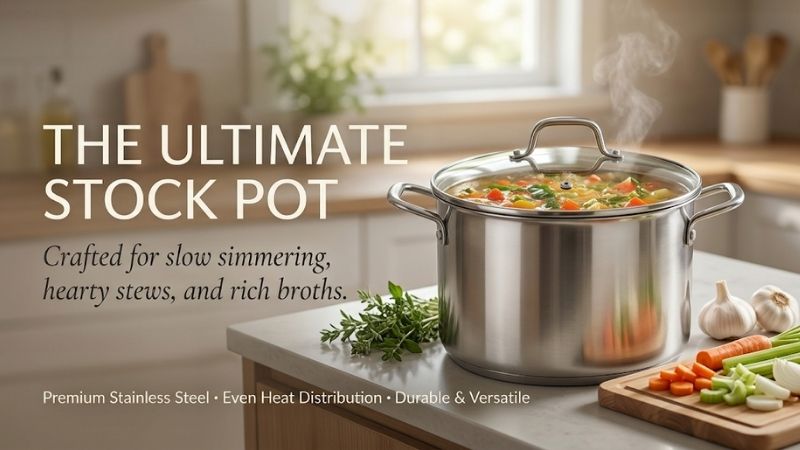
Tramontina Gourmet 12-Quart Stockpot – Best family-size value
The Tramontina Gourmet 12-Quart Stainless Steel Stockpot offers generous capacity without requiring the premium price associated with fully clad cookware. Its 18/10 stainless steel construction, magnetic tri-ply base, and riveted handles make it suitable for larger batches of soup, broth, pasta, and seafood.
The most compelling advantage is capacity.
A 12-quart stockpot provides substantially more room than an eight-quart model, making it useful for families who regularly cook ahead.
For example, preparing several containers of chicken stock can be easier when the ingredients fit in one large vessel.
The additional volume also provides headroom when cooking foods that foam or expand.
However, maximum capacity should not be treated as the recommended fill level.
Boiling liquid needs space to move without spilling over the rim.
Tramontina uses a magnetic tri-ply base rather than extending the conductive layers throughout the sidewalls.
This construction is practical for boiling water and simmering liquid-heavy recipes.
However, very thick foods may require more frequent stirring because the heating behavior differs from fully clad cookware.
The stainless steel body is suitable for ordinary acidic ingredients such as tomatoes.
Its riveted side handles provide a secure lifting arrangement, although they become hot during prolonged cooking.
The pot is compatible with induction, gas, electric, and ceramic glass cooktops.
It is also described as dishwasher-safe, which may appeal to households seeking convenient maintenance.
Nevertheless, a 12-quart vessel may be too large for a standard household dishwasher or sink.
The greatest limitation is storage.
A large stockpot occupies substantial cabinet space, particularly when its lid must be stored separately.
Advantages: Large capacity, accessible price positioning, stainless steel construction, induction compatibility, and practical side handles.
Limitations: Bulky storage, heavy when filled, and disc-bottom rather than fully clad heating.
Best for: Families preparing large batches of soup, stock, pasta, or meal-prep recipes.
Cuisinart MultiClad Pro 8-Quart Stockpot – Best midrange choice
The Cuisinart MultiClad Pro 8-Quart Stockpot provides fully clad stainless steel construction at a more approachable price than many premium competitors. Its aluminum-core design supports consistent heating, while the eight-quart capacity suits family dinners, homemade stock, and a variety of liquid-based recipes.
The MultiClad Pro series uses triple-ply construction with conductive material extending through the cookware.
This is especially useful when preparing recipes that contain both liquids and ingredients that may settle against the bottom.
For example, a hearty potato soup can thicken as the potatoes break down and starch enters the liquid.
A well-constructed pot helps distribute heat, but the cook must still stir regularly to prevent scorching.
The eight-quart size provides useful flexibility without occupying as much space as a 12- or 16-quart stockpot.
It is suitable for everyday pasta, several servings of soup, and moderate batches of homemade broth.
The stainless steel interior also allows acidic ingredients to be simmered without the seasoning maintenance required by bare cast iron cookware.
Its side handles support two-handed lifting.
However, the pot can still become difficult to manage when nearly full.
For draining pasta, a separate colander or insert may be safer than trying to hold the lid while tipping a heavy pot.
The MultiClad Pro is compatible with induction and other common heat sources.
Its main limitation is that the fully clad construction may increase weight and cost compared with a simpler stockpot intended mainly for boiling water.
For many households, this is a worthwhile compromise.
Advantages: Fully clad triple-ply construction, versatile capacity, induction compatibility, durable stainless steel interior, and practical midrange value.
Limitations: More expensive than basic disc-bottom cookware and heavy when filled.
Best for: Home cooks who want premium-style construction without paying the highest prices.
Premium stock pot options for frequent cooking
Premium stockpots often use additional conductive layers, refined handles, and carefully finished interiors. These features may improve the experience of preparing soups, thick sauces, and large meals, but they are less important when the only task is boiling water. The following options are best evaluated according to actual cooking frequency and complexity.
Made In Stainless Clad 8-Quart – Best for versatile batch cooking
The Made In Stainless Clad 8-Quart Stock Pot uses five-ply construction with conductive layers extending from the base through the walls. Its design is intended for cooks who want one substantial vessel for preparing stocks, pasta, vegetables, stews, and other recipes requiring dependable heating.
Made In’s five-ply construction is a central selling point.
The conductive layers support heating throughout the pot rather than concentrating the additional metal solely beneath the base.
This can be useful when simmering substantial quantities of sauce or stew.
However, five-ply construction should not be interpreted as automatically superior to every three-ply design.
Actual material thickness, burner performance, and cooking technique all influence results.
The eight-quart capacity is particularly useful for moderate batch cooking.
It can accommodate ingredients for a substantial vegetable soup without the storage requirements of a larger commercial-style stockpot.
Made In also offers other capacities, allowing buyers to select a size that matches their household.
The cookware includes two looped side handles and a pouring rim.
These features help with lifting and transferring liquid, although users should exercise caution when the pot contains a large quantity of hot stock.
The stainless steel interior is suitable for acidic ingredients.
This expands its versatility beyond ordinary broth preparation.
The manufacturer also offers compatible accessories such as pasta and steamer inserts for certain configurations.
These can make the stockpot more useful, but buyers should confirm whether accessories are included or sold separately.
The main drawback is price.
For someone who mainly boils pasta once per week, simpler cookware may provide comparable practical results.
Advantages: Five-ply construction, versatile eight-quart capacity, induction compatibility, durable materials, and optional accessory configurations.
Limitations: Premium cost, additional weight, and features that may be unnecessary for basic boiling.
Best for: Frequent cooks preparing varied large-batch recipes who want one versatile premium stockpot.
Cuisinart Chef’s Classic 12-Quart – Best affordable large pot
The Cuisinart Chef’s Classic Stainless 12-Quart Stockpot offers a large cooking vessel for households that need substantial capacity at an accessible price. Its stainless steel body, encapsulated aluminum base, and covered design make it suitable for pasta, broth, soups, and occasional gatherings.
This model emphasizes capacity and straightforward cooking rather than premium multilayer construction.
The encapsulated aluminum base helps distribute heat beneath the cooking surface.
For liquid-heavy recipes, such as boiling pasta or preparing chicken stock, this arrangement can provide practical performance.
Large quantities of liquid also circulate as they heat, reducing the importance of highly conductive sidewalls for basic boiling.
However, thick stews and sauces require more attention.
Ingredients that settle against the bottom may scorch if the heat is excessive or stirring is insufficient.
The 12-quart capacity is useful when cooking for several guests.
It can also accommodate meal-prep recipes intended to produce multiple refrigerated or frozen portions.
However, the pot’s size should be evaluated against available storage and burner dimensions.
A very large vessel on a small burner may heat slowly or unevenly.
Its side handles are intended for two-handed movement, but a filled pot can be extremely heavy.
Use a ladle or another controlled method when transferring hot liquid.
The stainless steel cooking surface is relatively straightforward to maintain.
For households that need large capacity only occasionally, this model may offer better value than a premium fully clad alternative.
Advantages: Generous capacity, accessible pricing, stainless steel construction, aluminum base, and practical everyday functionality.
Limitations: Bulky storage, heavy when filled, and less sophisticated heating than fully clad premium designs.
Best for: Budget-conscious households preparing large batches and occasional meals for guests.
Specialty stock pot materials and convenient alternatives
Stainless steel is not the only stockpot material worth considering. Enamel-coated steel and ceramic-coated aluminum designs can offer different benefits involving weight, appearance, and cleanup. Their suitability depends on the recipes prepared and whether buyers prefer a traditional uncoated surface or an easier-release coating.
Le Creuset Enamel on Steel 8-Quart – Best lightweight decorative choice
The Le Creuset Enamel on Steel 8-Quart Stockpot combines a lightweight carbon steel body with a porcelain enamel coating. Its colorful appearance, relatively manageable construction, and nonreactive interior make it an attractive option for households that want a large pot for soups, pasta, and broth.
Unlike Le Creuset’s heavy enameled cast iron Dutch ovens, this stockpot uses a thinner steel body.
That distinction is important because buyers sometimes assume all products from the brand have the same substantial weight and heat retention.
The enamel-on-steel stockpot is designed for relatively responsive heating and large liquid-based recipes.
It can bring water to boiling temperature without the mass associated with a thick cast iron vessel.
The porcelain enamel surface is nonreactive in ordinary cooking applications.
This makes it suitable for soups containing tomatoes or other acidic ingredients.
The enamel also resists flavor absorption, which can help when switching between different recipes.
However, enamel is a coating and can be damaged through severe impacts or unsuitable handling.
Users should avoid striking the rim with heavy utensils or exposing the pot to unnecessary thermal shock.
The pot is compatible with induction and other common stovetops.
Its decorative finish may appeal to households that leave cookware visible on open shelves.
However, visual appeal should not be the only purchasing consideration.
The manufacturer recommends handwashing, and buyers should avoid using abrasives that could damage the finish.
Advantages: Lightweight steel construction, colorful enamel finish, nonreactive surface, induction compatibility, and useful eight-quart capacity.
Limitations: Enamel can chip, handwashing is recommended, and the thin steel body differs from heavy cast iron.
Best for: Households wanting a lighter stockpot with attractive presentation and straightforward liquid-based cooking performance.
GreenPan Valencia Pro 8-Quart – Best ceramic nonstick alternative
The GreenPan Valencia Pro 8-Quart Stockpot uses a hard-anodized aluminum body with a ceramic nonstick cooking surface and induction-compatible base. It offers an alternative for buyers who want substantial capacity alongside an easier-release interior for soups, stews, and everyday family cooking.
The Valencia Pro’s ceramic coating is manufactured without intentionally added PFAS.
This differentiates it from conventional PTFE-based nonstick cookware.
The hard-anodized aluminum body provides a strong foundation and supports relatively efficient heating.
Its eight-quart capacity is suitable for substantial batches of soup, stock, and pasta.
A glass lid allows users to monitor simmering without removing the cover repeatedly.
However, coated stockpots introduce maintenance considerations not associated with uncoated stainless steel.
A ceramic surface may gradually lose its food-release properties after repeated heating and cleaning.
This does not necessarily make the cookware unusable, but it can reduce the convenience that justified the initial purchase.
Low and medium heat are generally preferable for many coated cookware tasks.
The manufacturer specifies separate temperature limits for the pot and lid, which should be checked before oven use.
Although the cookware is listed as dishwasher-safe, handwashing can help preserve the coating.
Another consideration is long-term value.
An uncoated stainless steel stockpot may remain useful for decades, while a coated model may require replacement when the interior deteriorates significantly.
The Valencia Pro is most attractive to buyers who prioritize easier cleanup over maximum service life.
Advantages: Ceramic nonstick interior, induction compatibility, generous capacity, hard-anodized construction, and glass lid.
Limitations: Finite coating life, careful utensil requirements, and potential availability fluctuations.
Best for: Households that want a large ceramic-coated pot for soups and everyday meal preparation.
How to choose a stock pot for home cooking
The most important buying considerations are capacity, stove compatibility, construction, and safe handling. A stockpot should support the household’s normal recipes without becoming unnecessarily large or difficult to clean. Understanding these trade-offs helps buyers choose practical cookware that remains useful for years.
Choose between six-, eight-, and twelve-quart capacities
Stockpots are available in many capacities, but six, eight, and twelve quarts cover a large proportion of ordinary home-cooking needs. The correct size depends on household size, typical recipe volume, and whether the pot will be used for daily meals or occasional large-batch preparation.
A six-quart stockpot suits smaller households and moderate quantities of soup or pasta.
It occupies relatively little space compared with larger models and may be easier to clean in a standard kitchen sink.
An eight-quart stockpot offers greater flexibility.
For many families, it provides enough volume for homemade broth, meal-prep soup, and ordinary pasta cooking.
A twelve-quart model is attractive when preparing substantial batches for freezing or feeding large groups.
However, larger pots can become extremely heavy when filled.
One US quart of water weighs approximately 2.09 pounds.
A twelve-quart pot filled with water therefore contains about 25 pounds of liquid before accounting for the cookware.
This makes safe lifting and pouring important.
Buyers should also consider the maximum useful fill level.
A pot filled to the rim cannot safely accommodate vigorous boiling, foam, or ingredient expansion.
Choose a size that provides adequate headroom for normal recipes.
Avoid buying oversized cookware solely because it appears more versatile.
Compare fully clad and encapsulated-base construction
Stockpots use different methods to distribute heat. Fully clad models extend conductive layers through the body, while encapsulated-base designs concentrate aluminum or another conductive material beneath the cooking surface. Both can work well, but their advantages depend on the type of food being prepared.
For boiling water or simmering liquid-heavy broth, a well-made encapsulated-base stockpot can provide practical performance.
The liquid circulates as it heats, helping distribute energy throughout the contents.
Fully clad cookware becomes more attractive when ingredients are thick, dense, or prone to sticking.
For example, a substantial tomato-based stew may contact both the bottom and lower sidewalls.
Conductive layers extending through the walls can help reduce sharp temperature differences.
However, fully clad construction does not eliminate the need for stirring.
A thick soup can scorch if left over excessive heat.
Buyers should also consider weight and cost.
Premium multilayer stockpots are often more expensive than basic disc-bottom models.
For someone who mostly boils pasta, the additional investment may provide limited practical benefit.
For cooks preparing varied soups, sauces, and stews, fully clad construction can offer greater flexibility.
The best choice reflects cooking habits rather than the number of bonded layers alone.
Evaluate handles, lids, and safe liquid transfer
A large stockpot can contain a substantial amount of hot liquid, making safe handling one of the most important design considerations. Strong side handles, stable lids, and predictable pouring behavior matter more than decorative finishes when a heavy vessel must be moved.
Look for handles that are securely attached and large enough to grip while wearing oven mitts.
Small or sharply shaped handles can become uncomfortable when the pot is filled.
Riveted handles are common, although some premium designs use alternative attachment methods.
The key is a secure connection and comfortable lifting position.
A fitted lid helps retain heat and reduce evaporation during simmering.
However, lifting a hot lid can release steam toward the user’s hands and face.
Open the lid carefully and allow steam to escape away from the body.
When transferring stock, avoid casually tipping a completely full pot.
A ladle can remove some liquid before the remaining contents are poured.
For heavy batches, a controlled draining or transfer arrangement may be safer.
The pot should also fit securely on the burner.
A large vessel extending far beyond a compact stovetop can create handling and heating problems.
A practical stockpot should be safe to use at normal working volumes, not merely impressive when empty.
Clean large stockpots without damaging the finish
Large stockpots can be difficult to wash because of their height and capacity. Cleaning methods vary by material, but most models benefit from prompt residue removal and careful drying. Understanding the surface finish helps users preserve cookware performance and avoid unnecessary damage.
Uncoated stainless steel is relatively forgiving.
Warm water, mild dish soap, and a nonabrasive sponge are sufficient for ordinary cleaning.
For stubborn residue, soaking or manufacturer-approved stainless steel cleaners may help.
Enamel-coated steel requires more attention to impacts and abrasion.
Avoid using cleaning methods that could chip or scratch the finish.
Ceramic nonstick stockpots should be cleaned gently to preserve the coating.
Even when dishwasher use is permitted, handwashing may be preferable for long-term maintenance.
Large cookware should be dried thoroughly before storage.
Moisture trapped beneath a lid or around handle attachments can create odors or staining.
Store the lid separately or slightly open if needed to allow ventilation.
Avoid placing heavy equipment directly against delicate coated interiors.
A good cleaning routine makes large-batch cooking more convenient and reduces the need for premature replacement.
Conclusion
The best stock pot depends on capacity, cooking frequency, and the recipes prepared most often. All-Clad D3 and Made In offer premium fully clad construction, while Cuisinart MultiClad Pro provides strong midrange versatility. Tramontina and Cuisinart Chef’s Classic deliver practical large-capacity value. Le Creuset offers lightweight enamel-coated steel, and GreenPan provides a ceramic nonstick alternative. For many households, an eight-quart stainless steel stockpot is the most versatile starting point.


Write Your Review
No reviews yet. Be the first to share your experience!